Name/Title
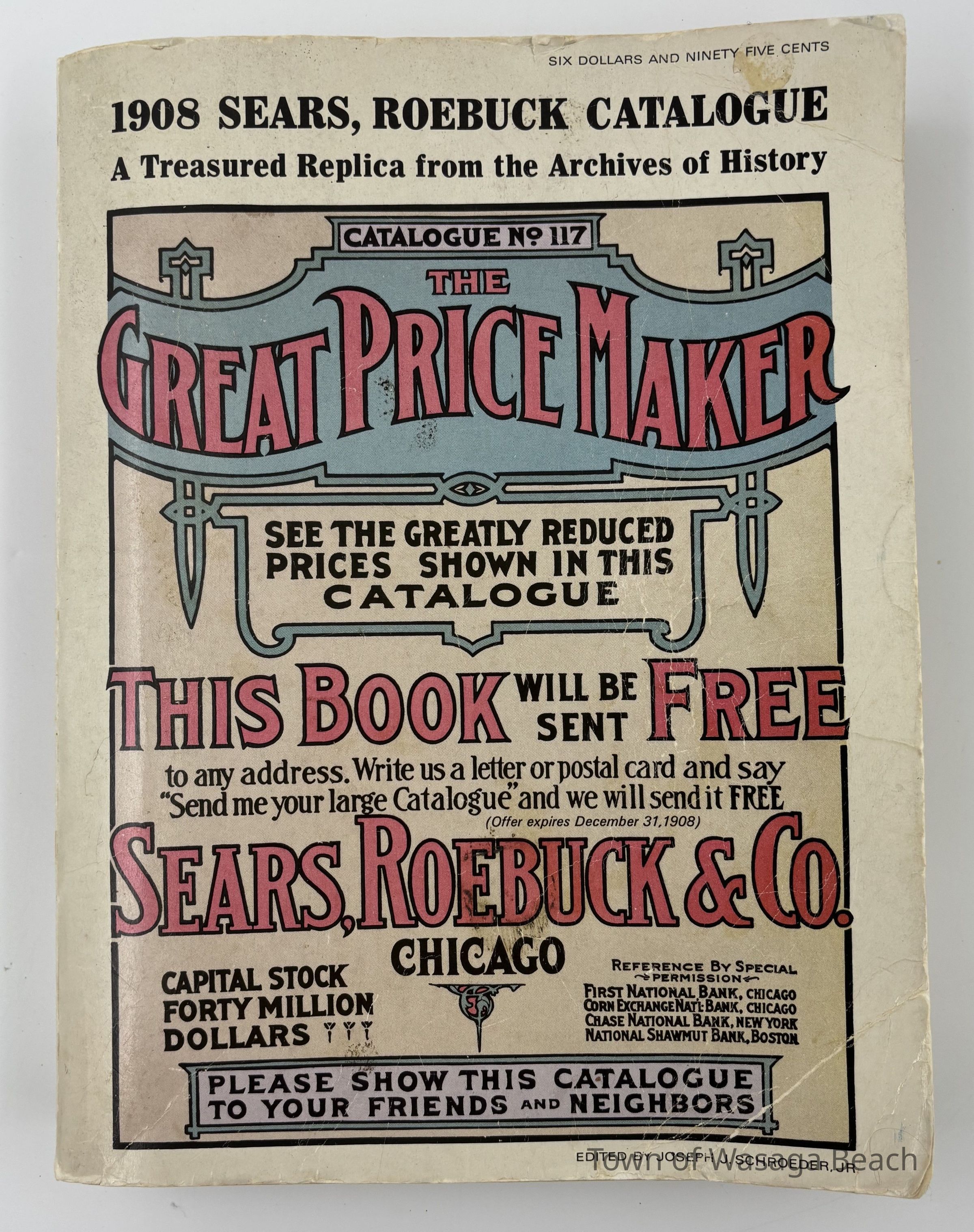
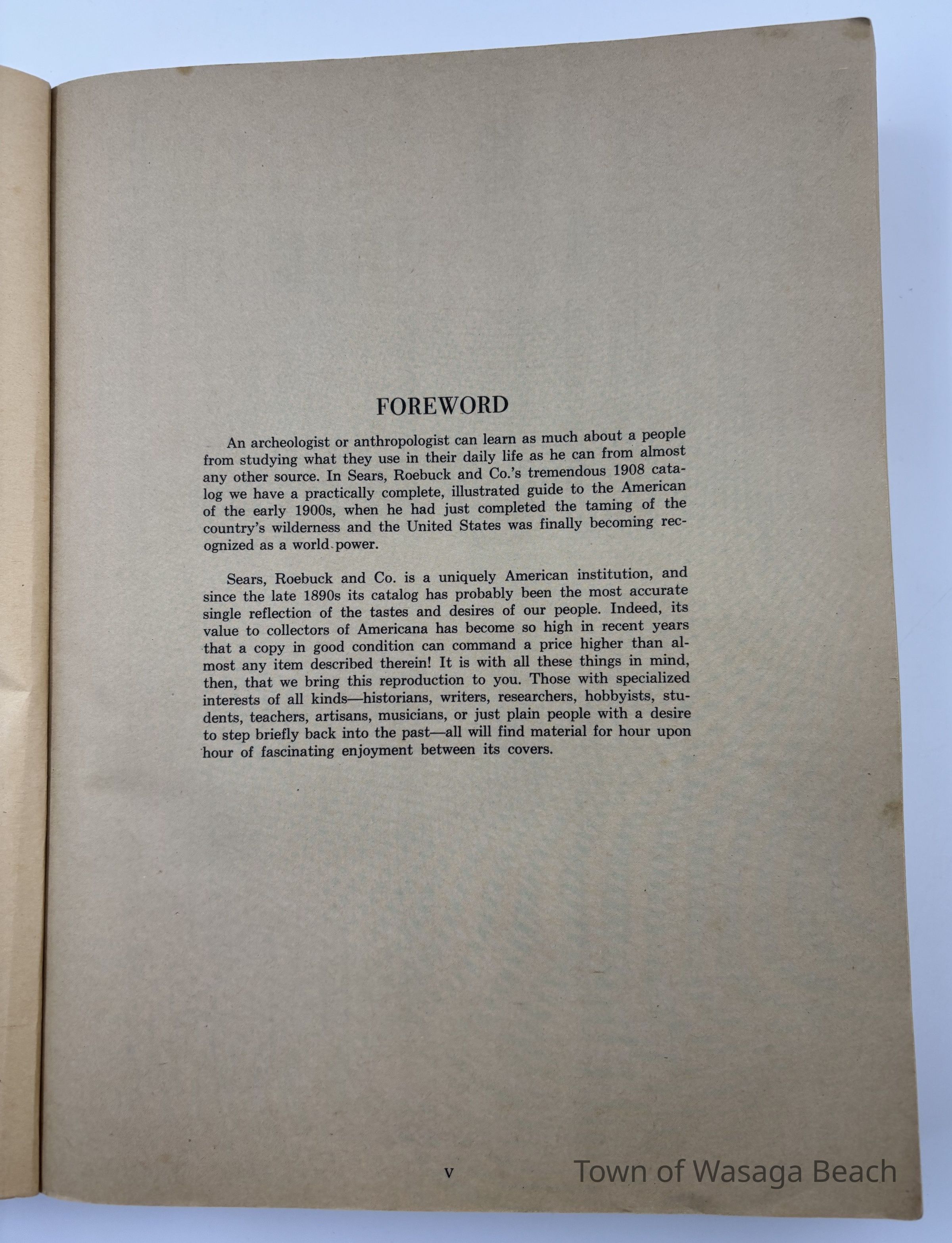
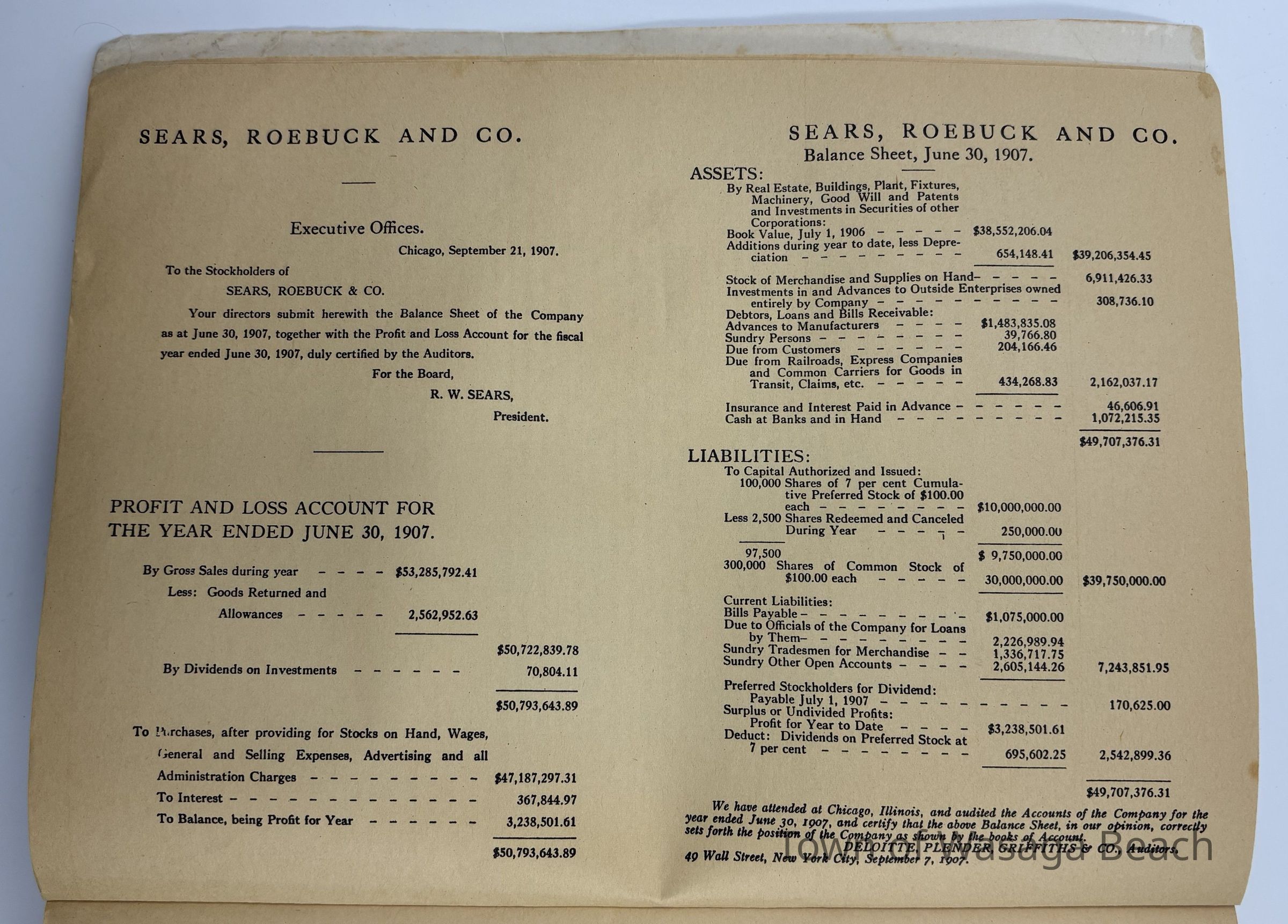
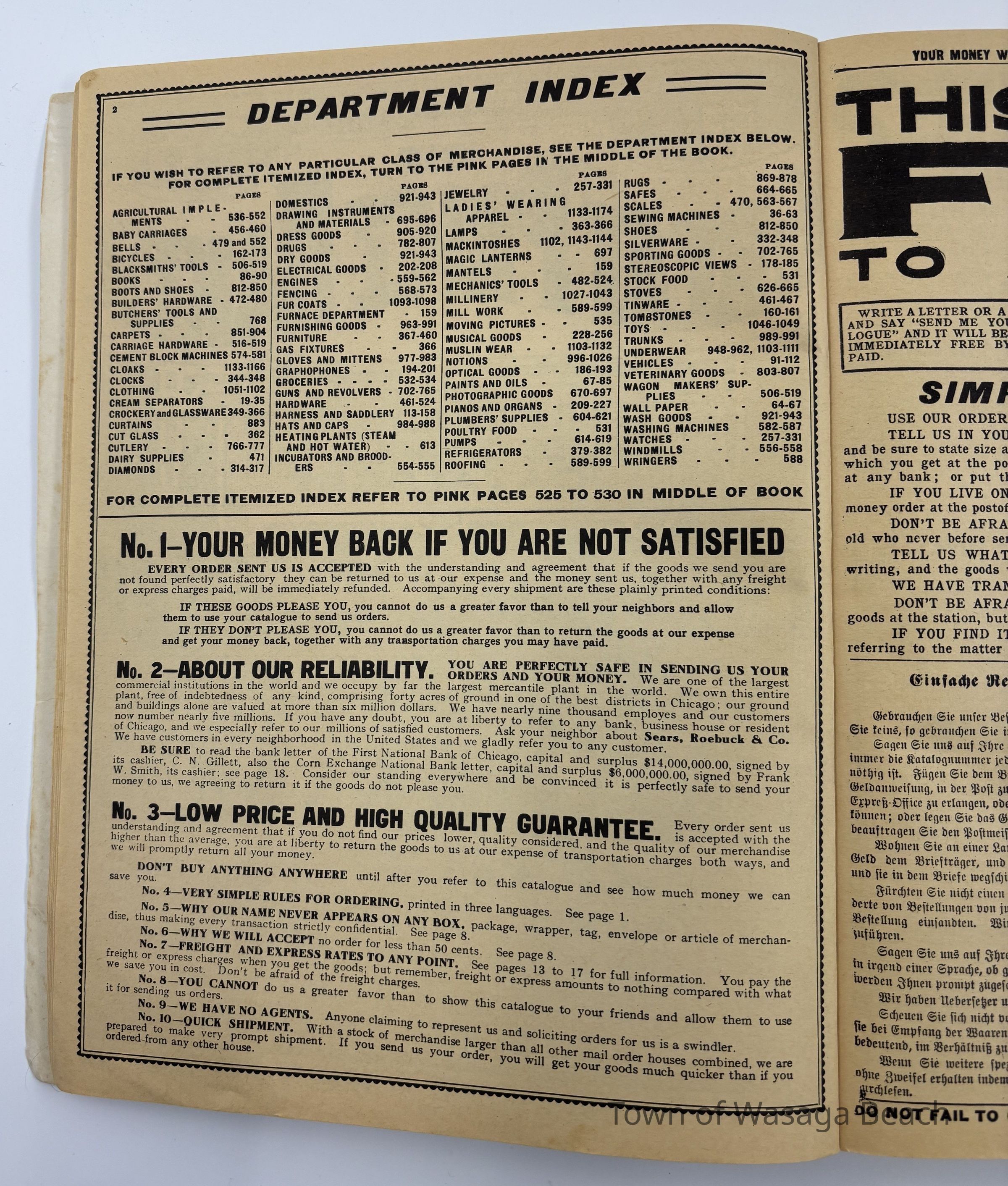
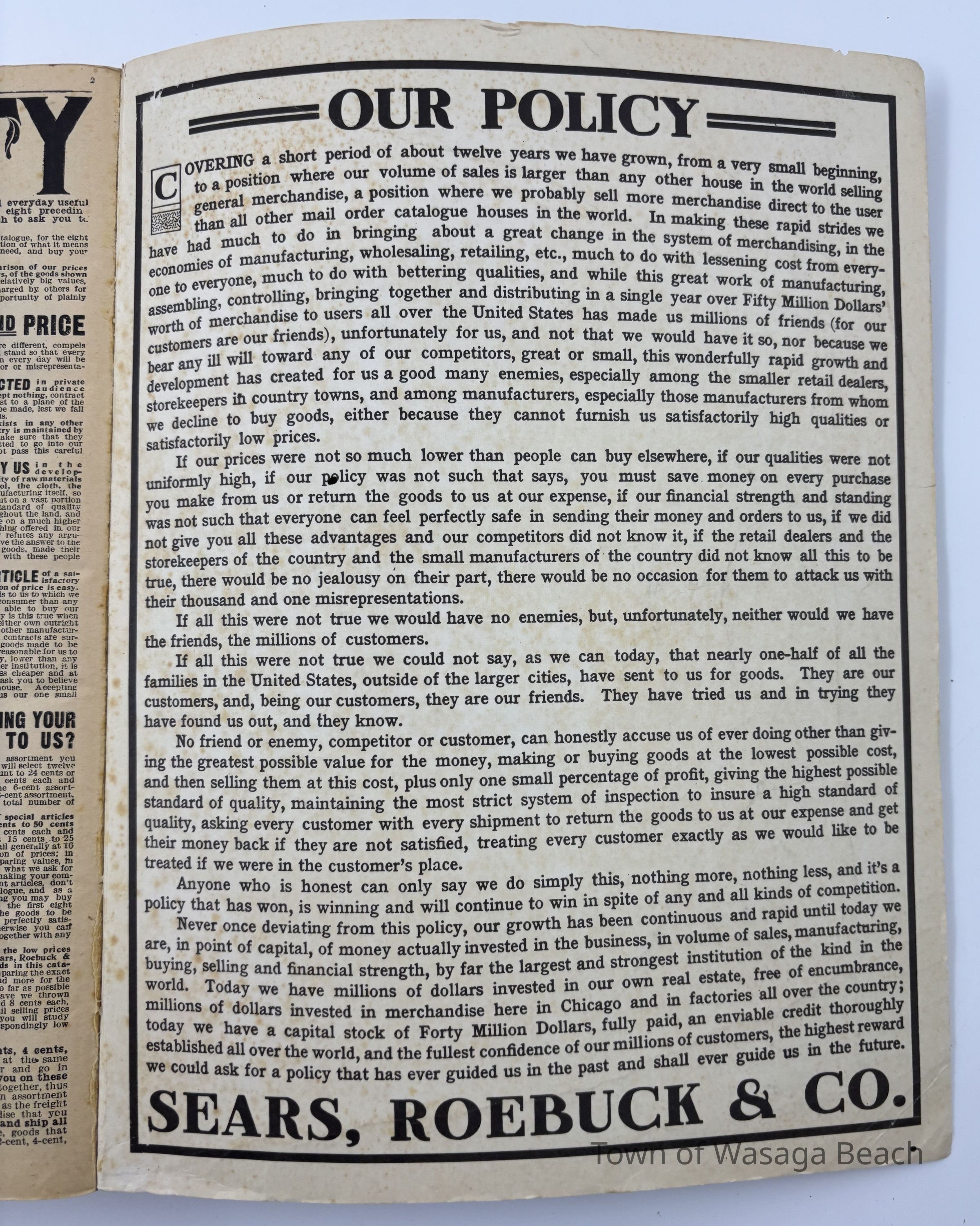
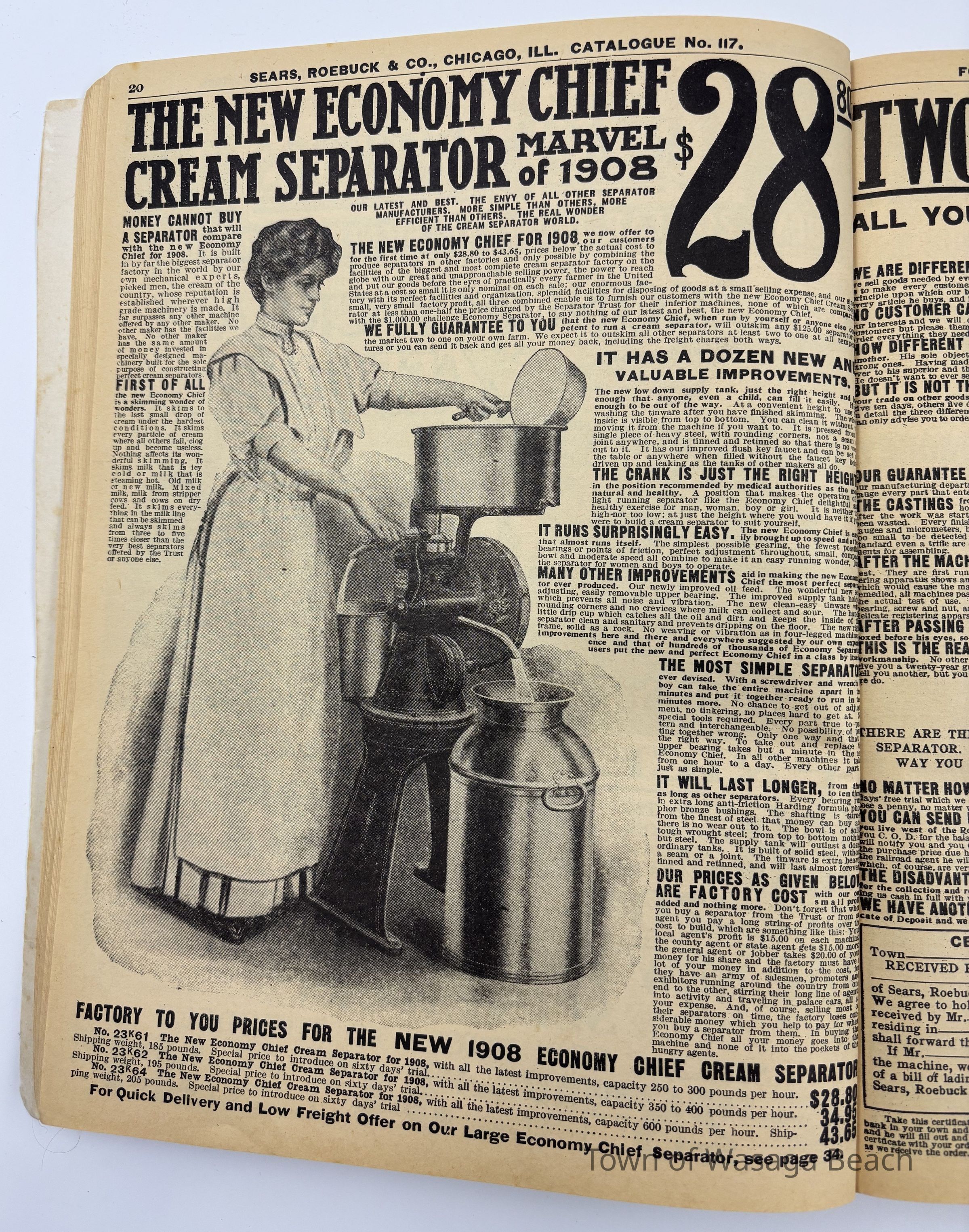
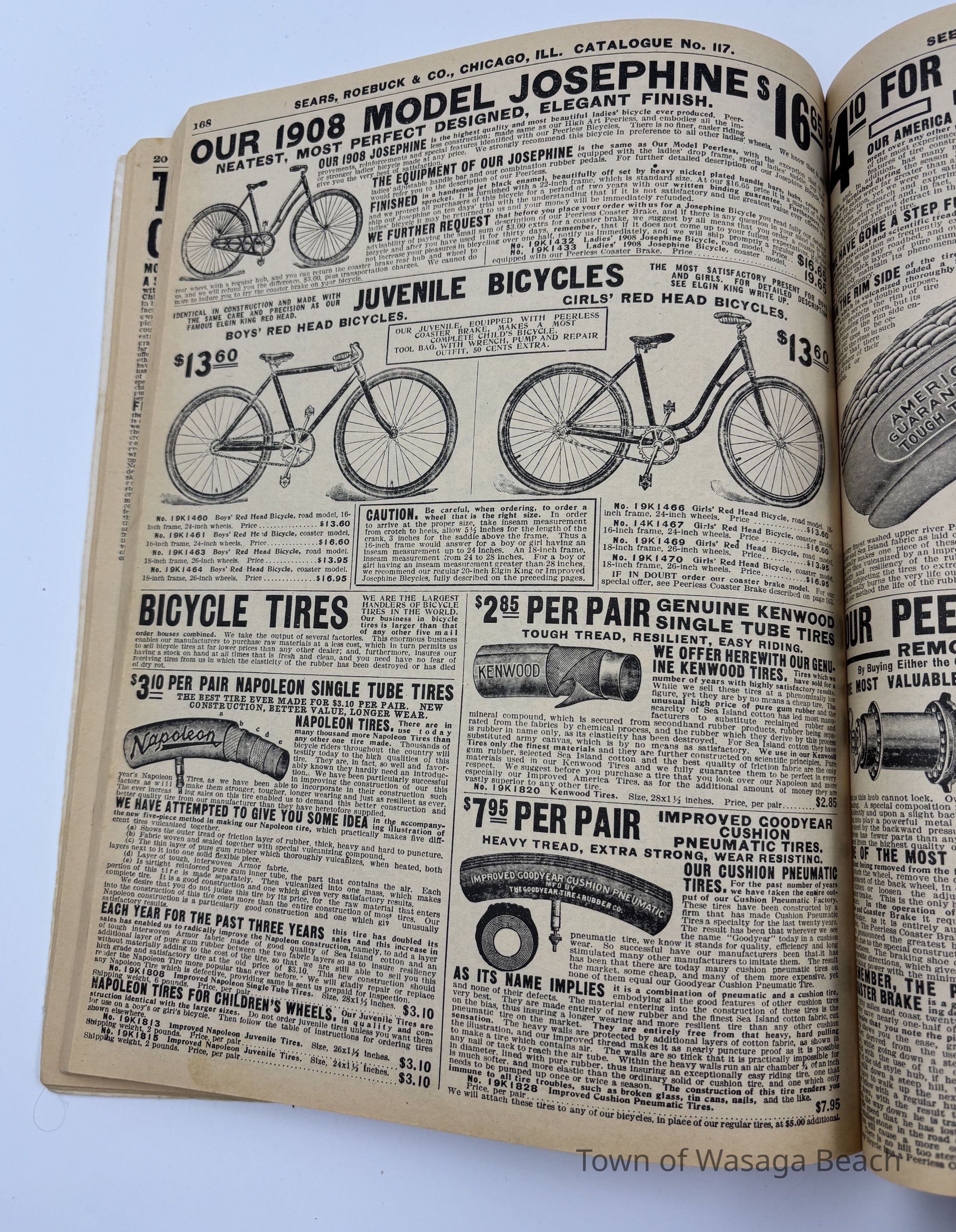
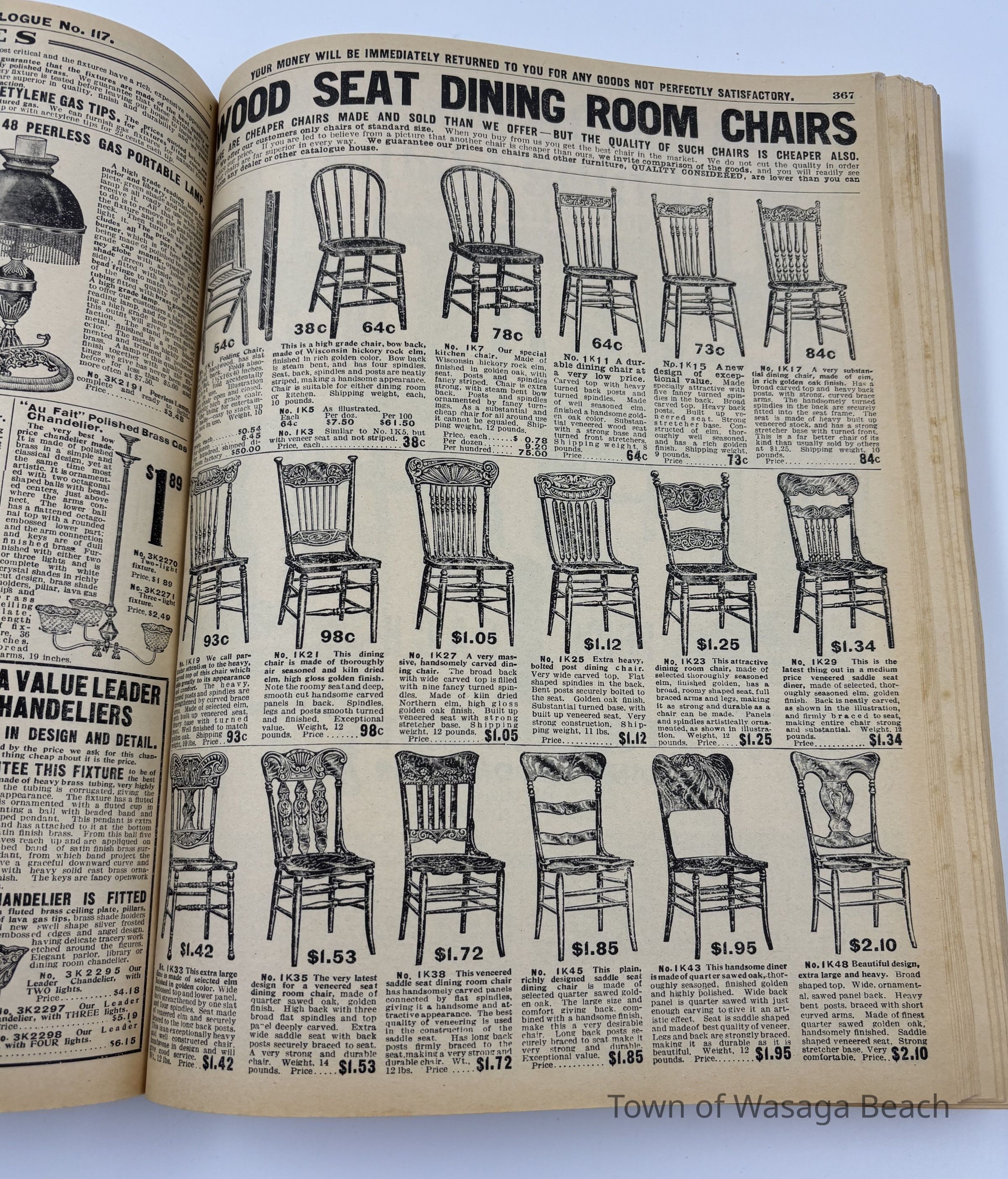
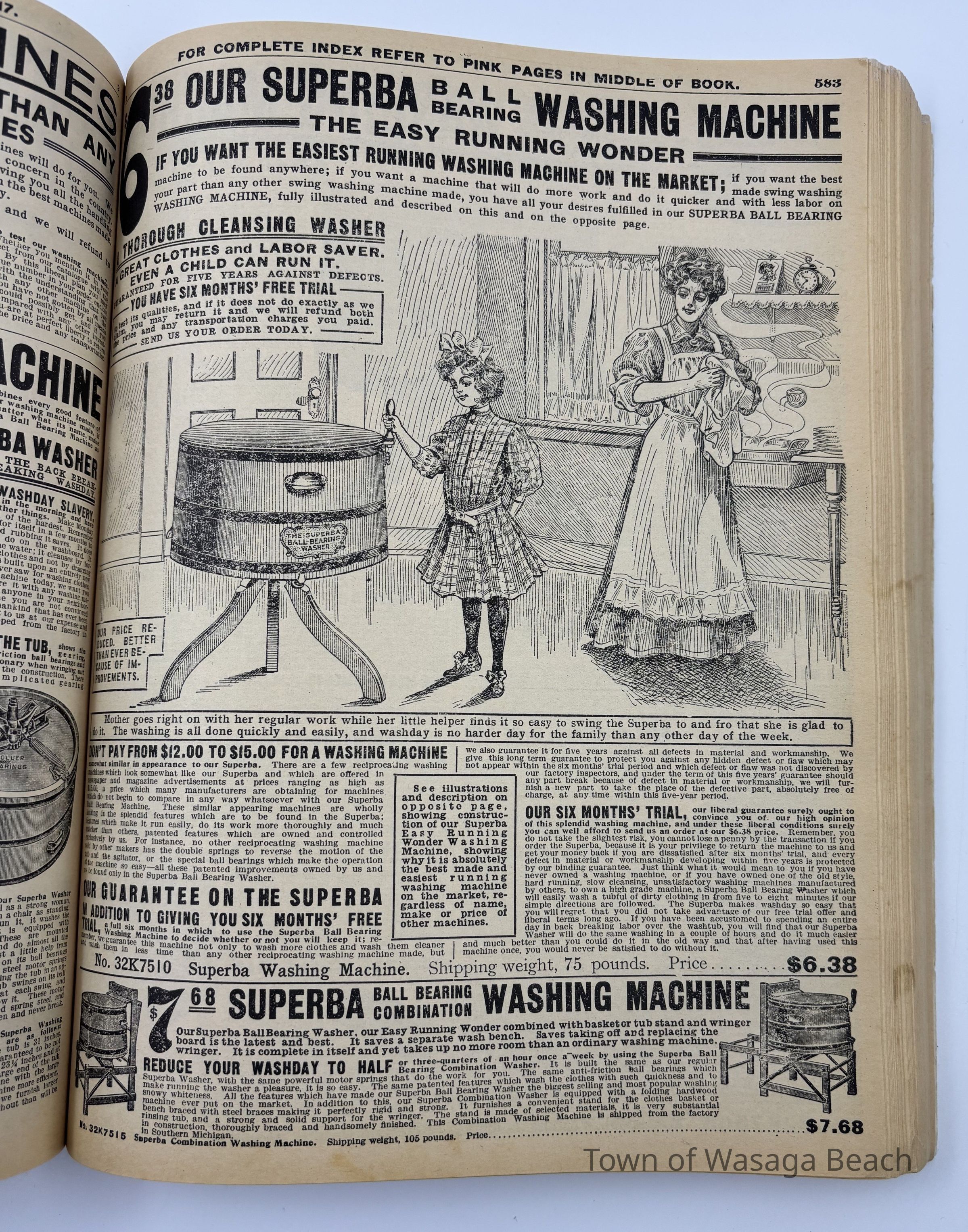
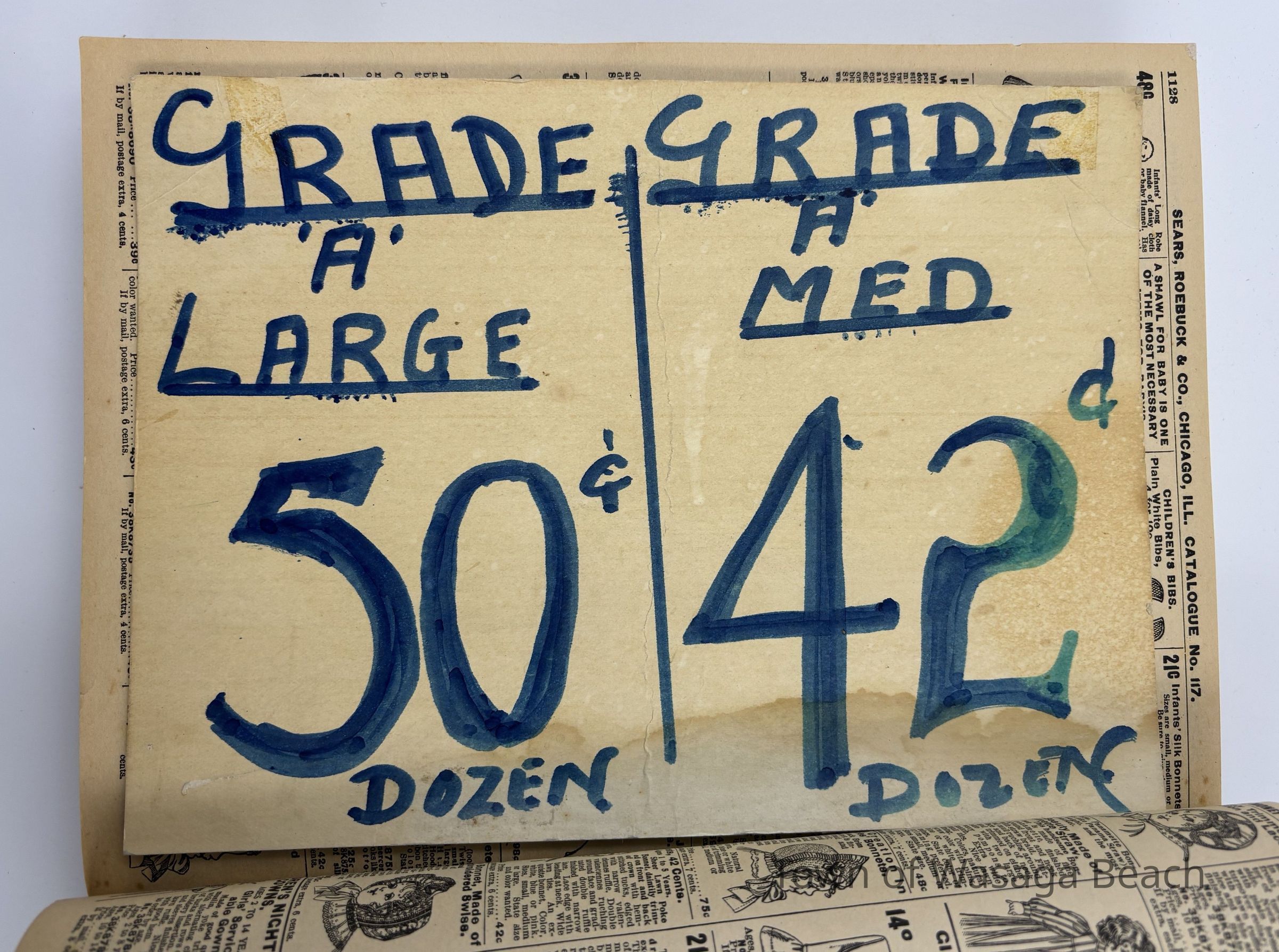
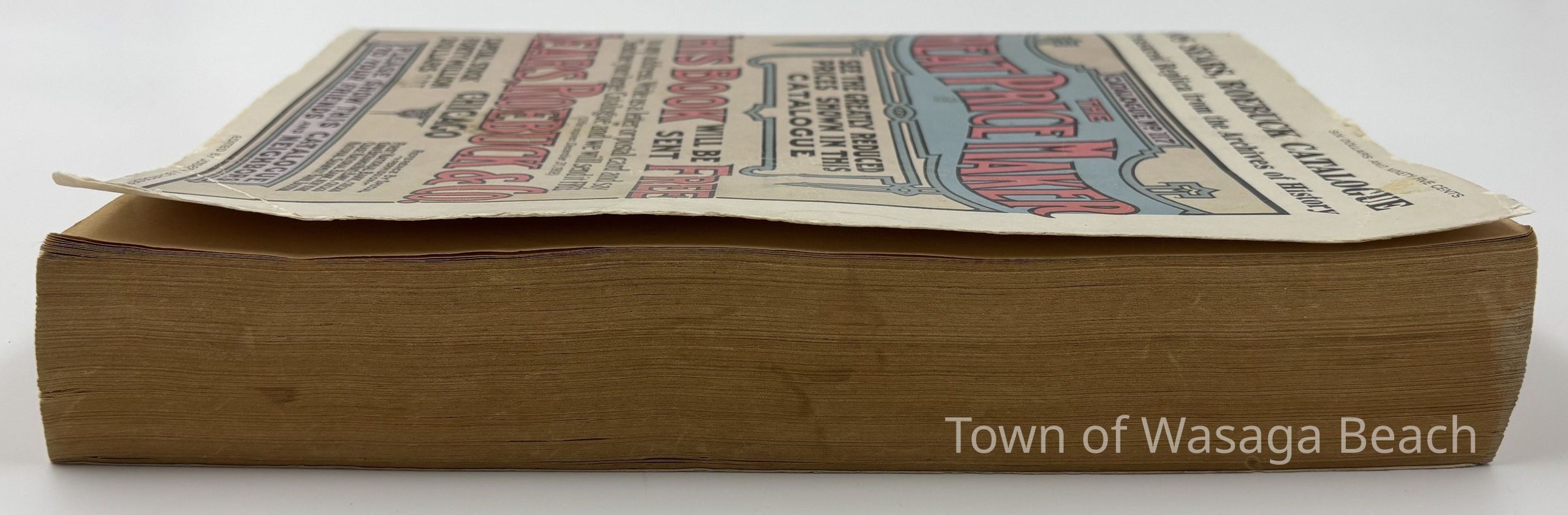
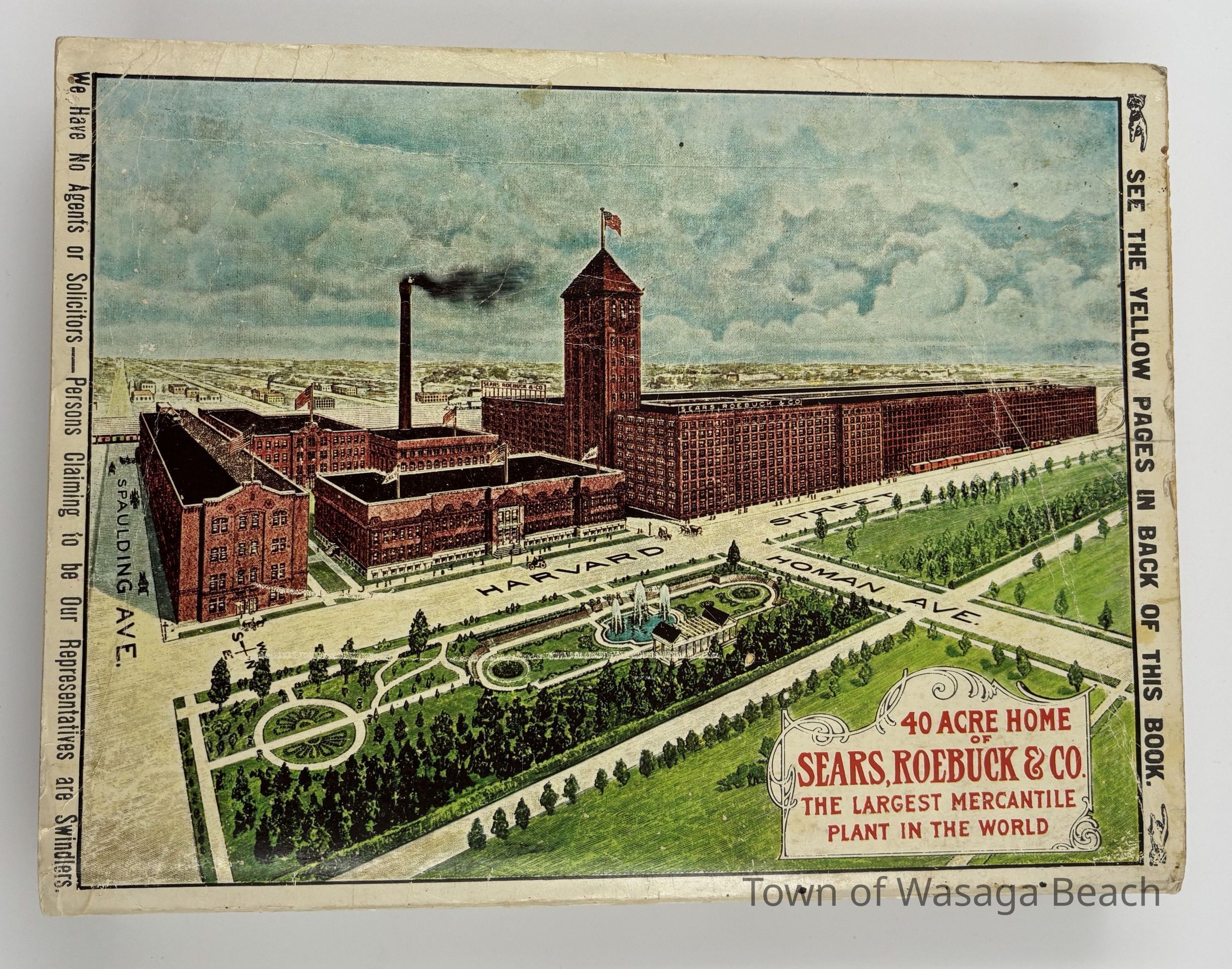
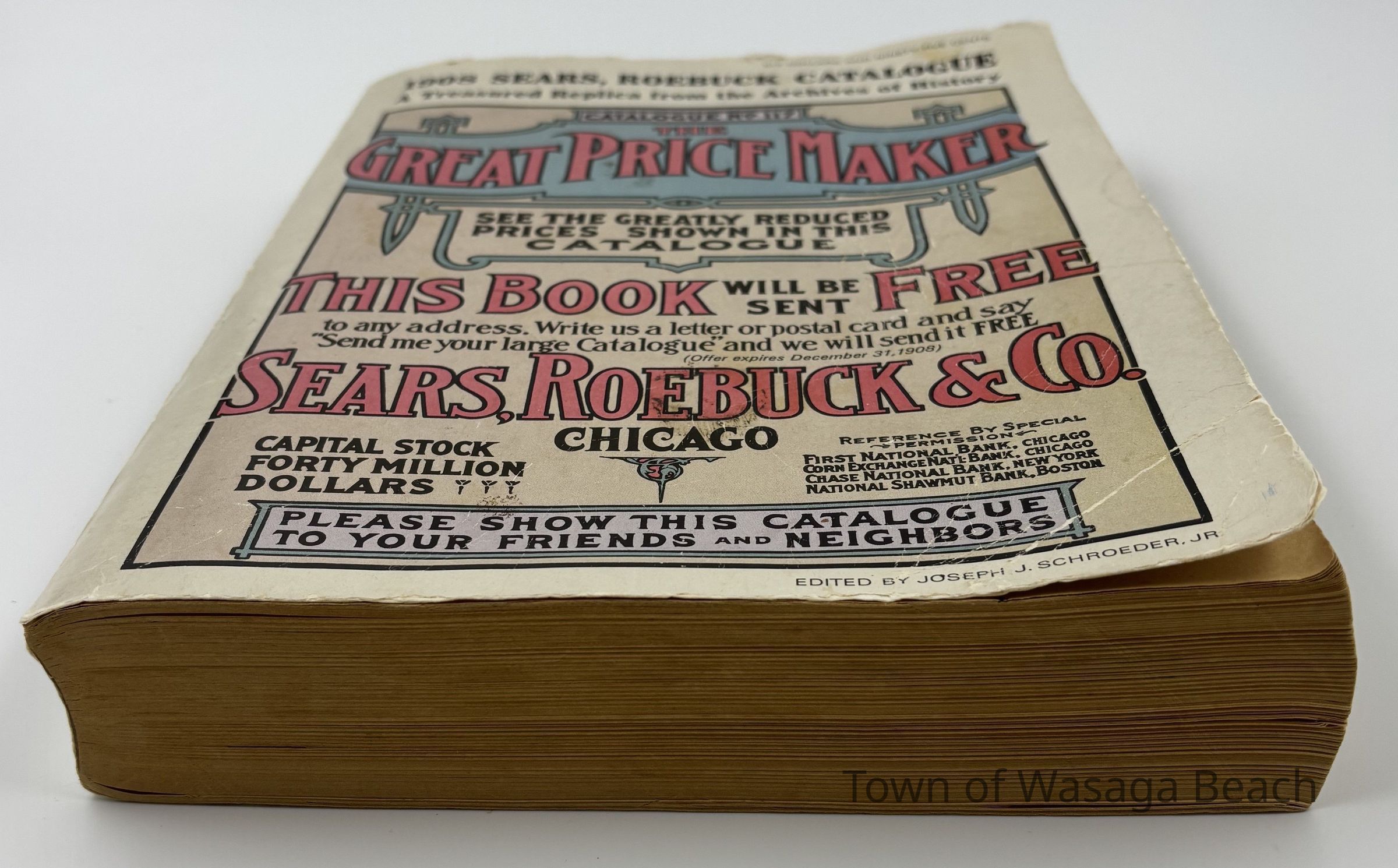
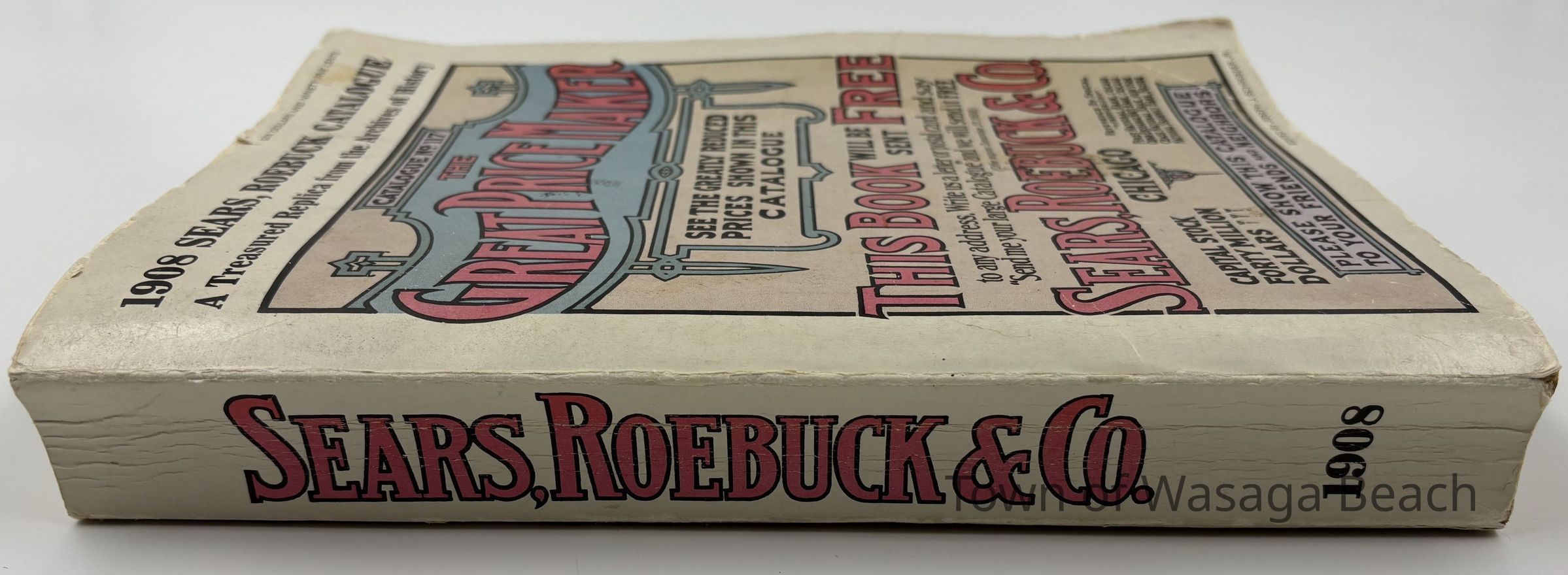
Sears, Roebuck and Co. Catalogue 1908, reproduction 1969Entry/Object ID
2020.182.1Scope and Content
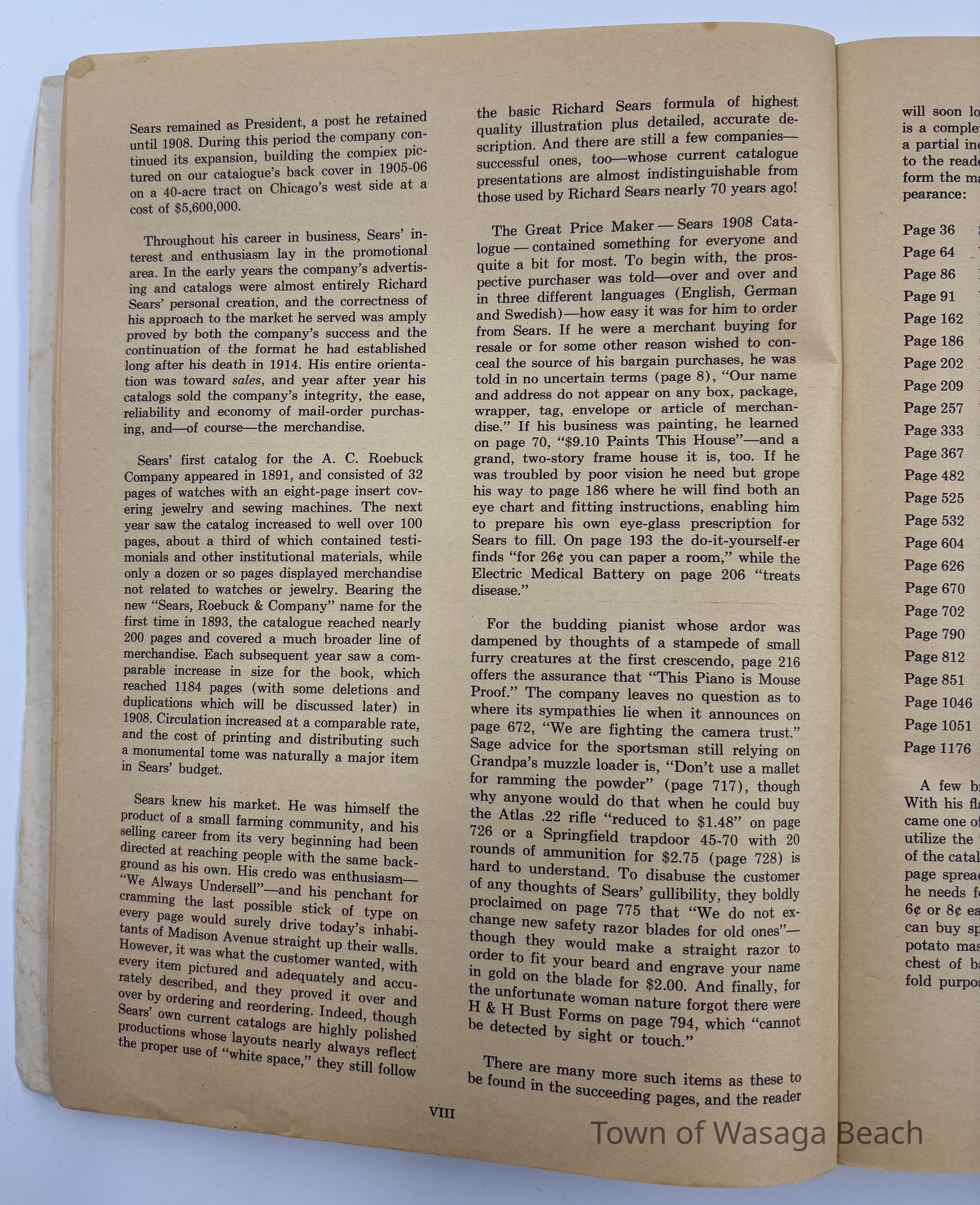
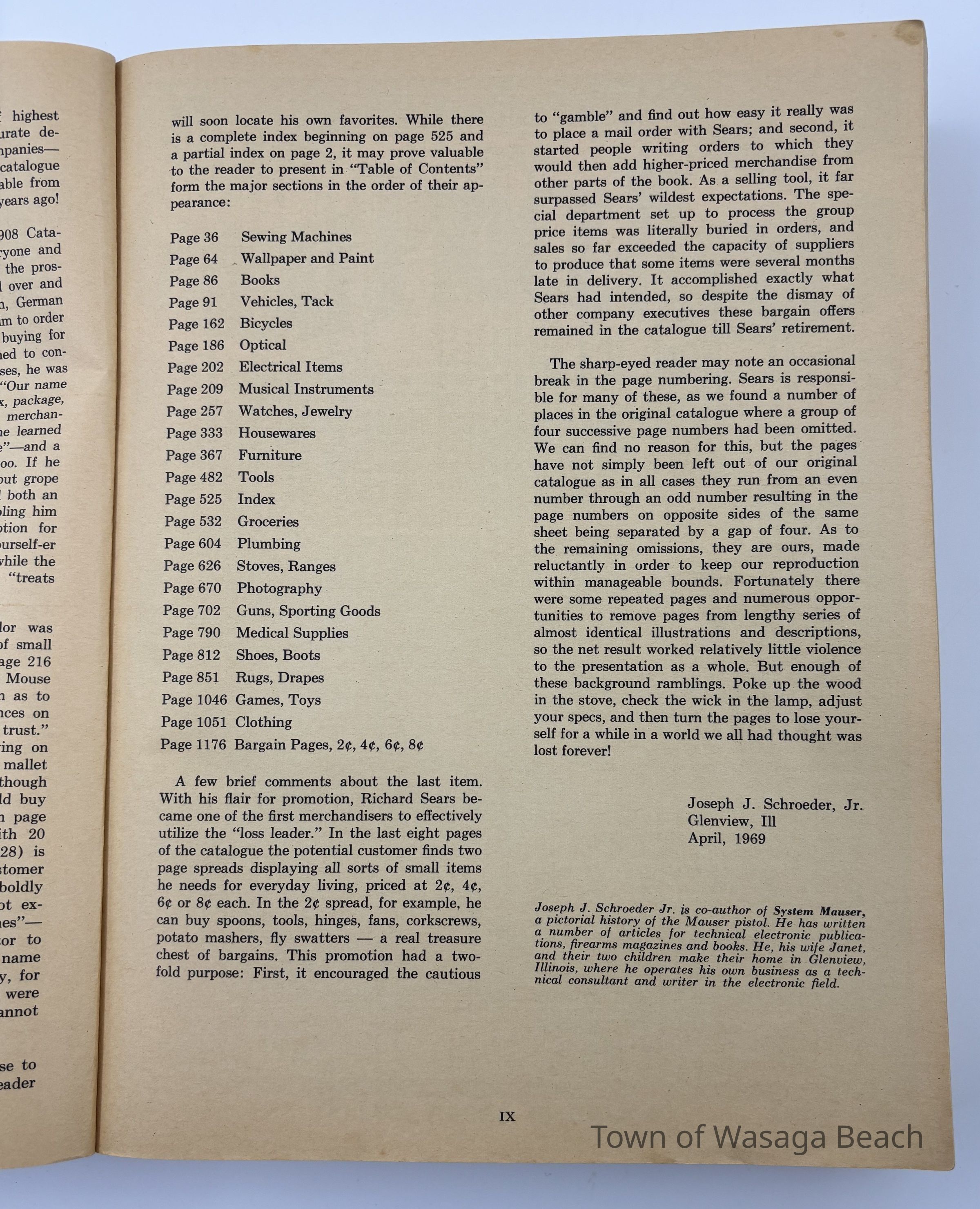
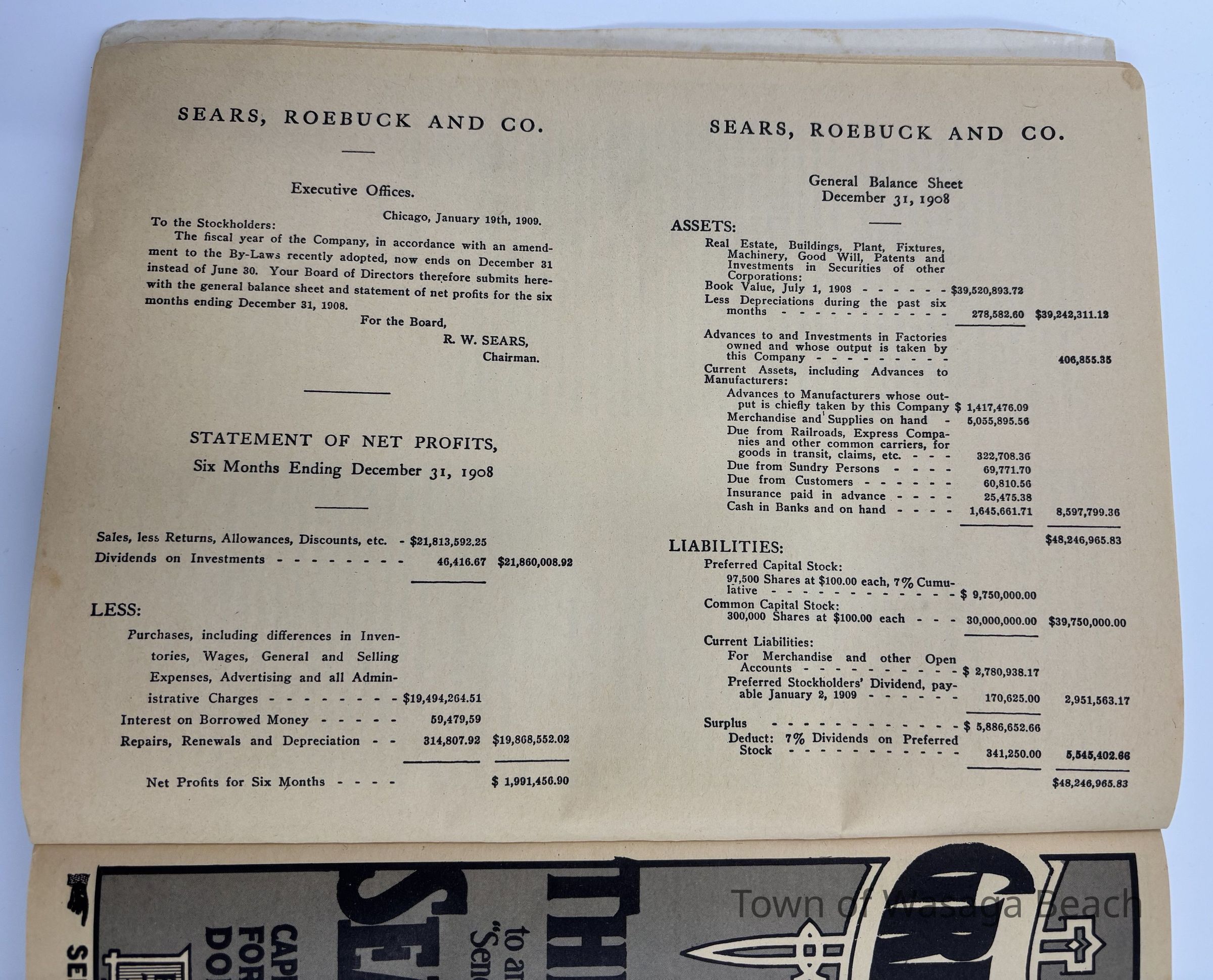
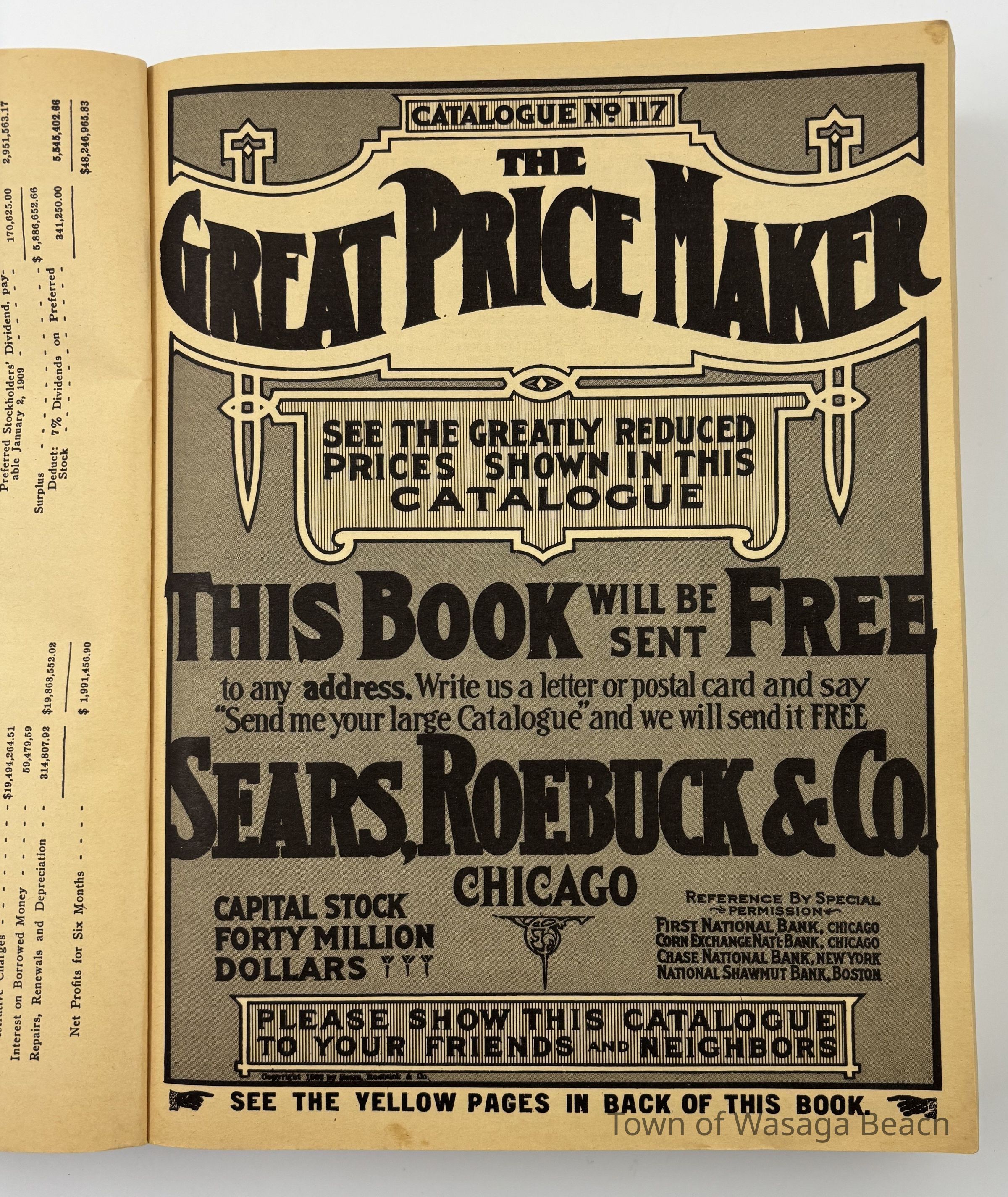
A reproduction in 1969 of the 1908 Sears, Roebuck and Company catalogueContext
From Collingwood.ca by Mary Harris:
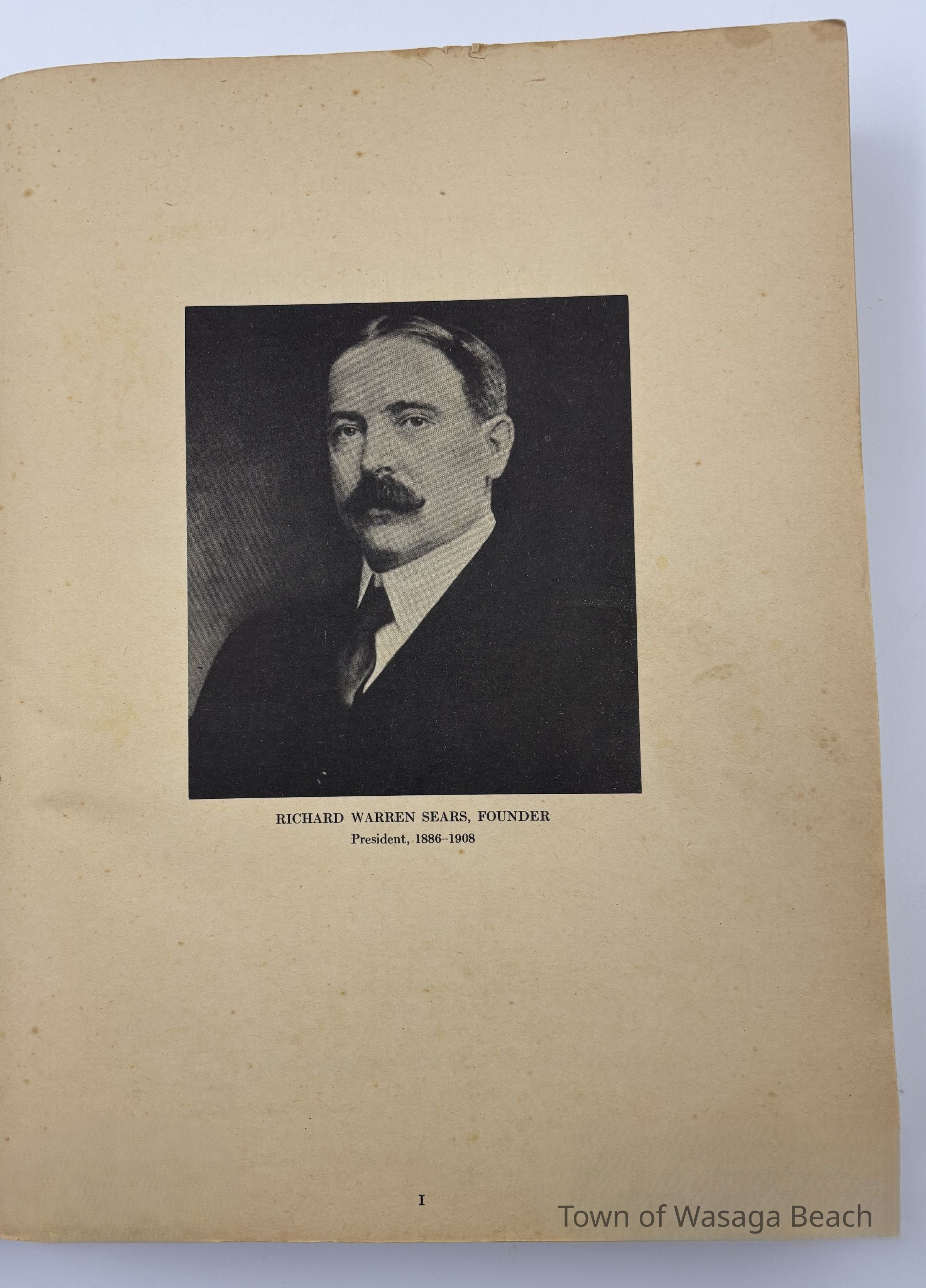
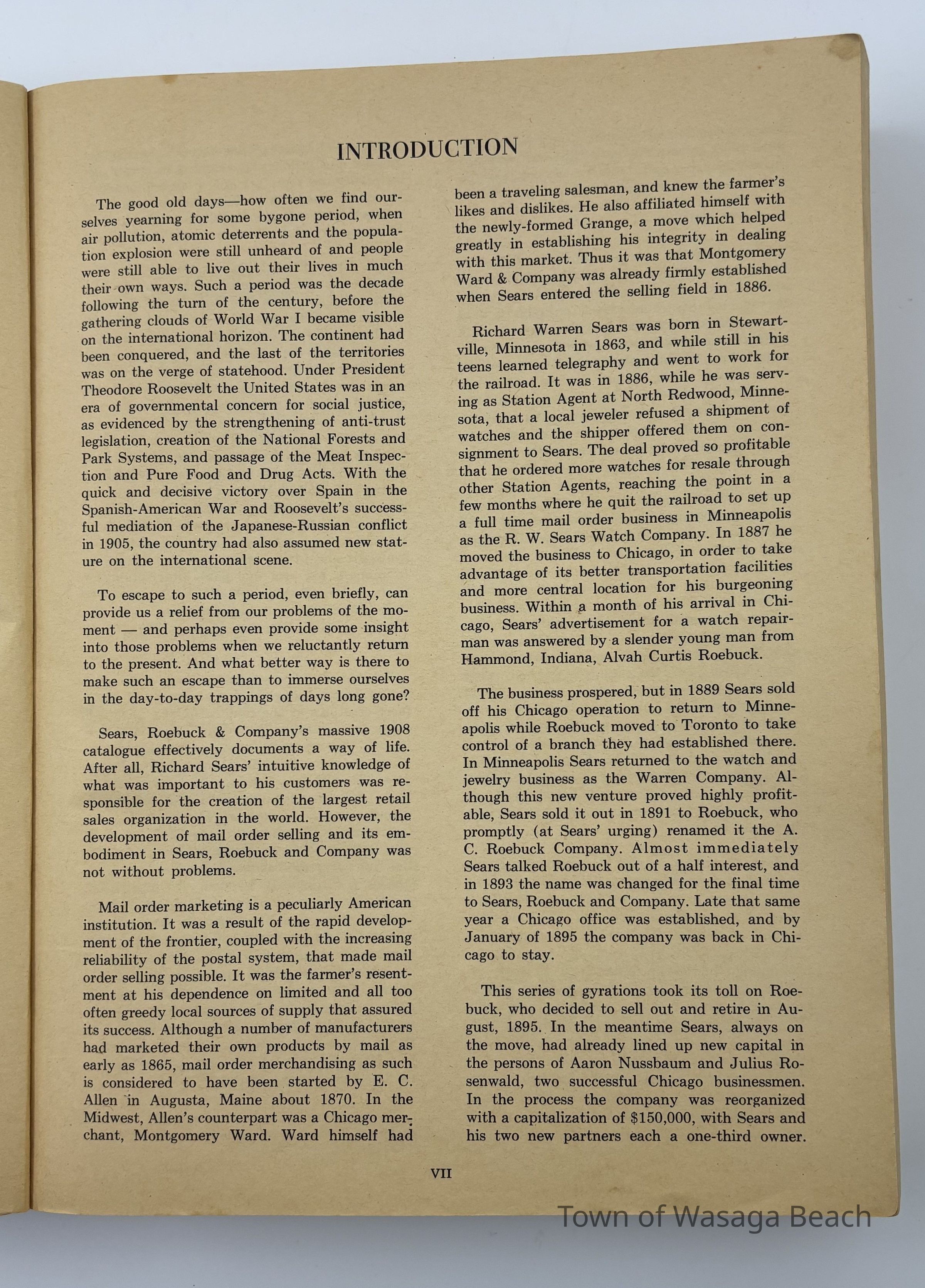
"It all started with Richard Warren Sears, a young man forced as a teenager to support his family after his once-wealthy father lost all of his fortune through bad investments and then died. While working with the railway in Minnesota, young Sears got stuck with a shipment of watches that were rejected by the intended recipient. He sold them all through the postal service, made a bundle of money and started his own mail-order company.
In just over five years, the business had exploded. The headquarters moved to Chicago where R.W. Sears produced a 507 pages catalogue, writing most of the copy himself. Sears also advertised widely.
In 1933, R.W. Sears was gone but the company that he built was thriving and could see that a Christmas catalogue, in addition to their semi-annual Big Book catalogue, would be a sure winner. The Christmas Book was created but almost immediately it became more commonly known by its nickname, the Wish Book or Book of Wishes.
It wasn’t until 1968 that the yearly Christmas catalogue was officially named the Wish Book. Just in time for my earliest memories of the book to begin.
The Wish Book’s Canadian roots lie with the Simpson’s Company. Robert Simpson, a 21-year-old Scottish grocery clerk, was not long in this country when he opened his own dry goods mercantile in Newmarket, Ontario. His initial success was stalled when an 1871 fire destroyed his shop. After that, Simpson moved his operation to Toronto.
By 1905, Simpson had expanded into mail order business and, in 1952, the American Sears-Roebuck company asked to partner with them in order to access the Canadian market. After this, the name Simpson-Sears appeared above shops and catalogue centres all over the country.
In the late 1970s, Simpson’s and Sears attempted to merge their linked but not unified company. Sears-Roebuck, the largest shareholder, was expected to form the new company. A last-minute offer by the Hudson Bay Company was successful but eventually the Bay sold out to Sears-Roebuck and Sears Canada was born.Acquisition
Accession
2020.182Source or Donor
UnknownAcquisition Method
Gift