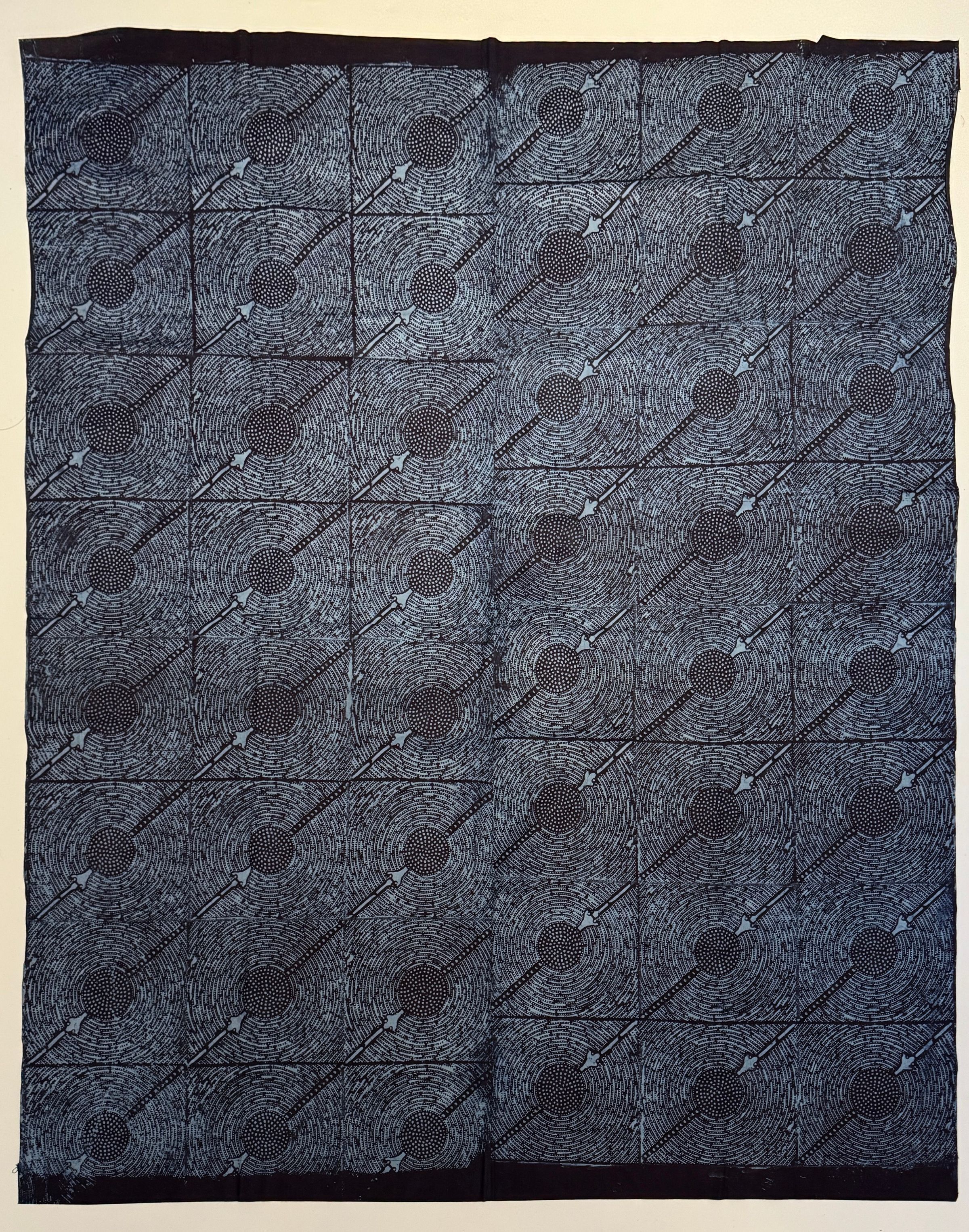
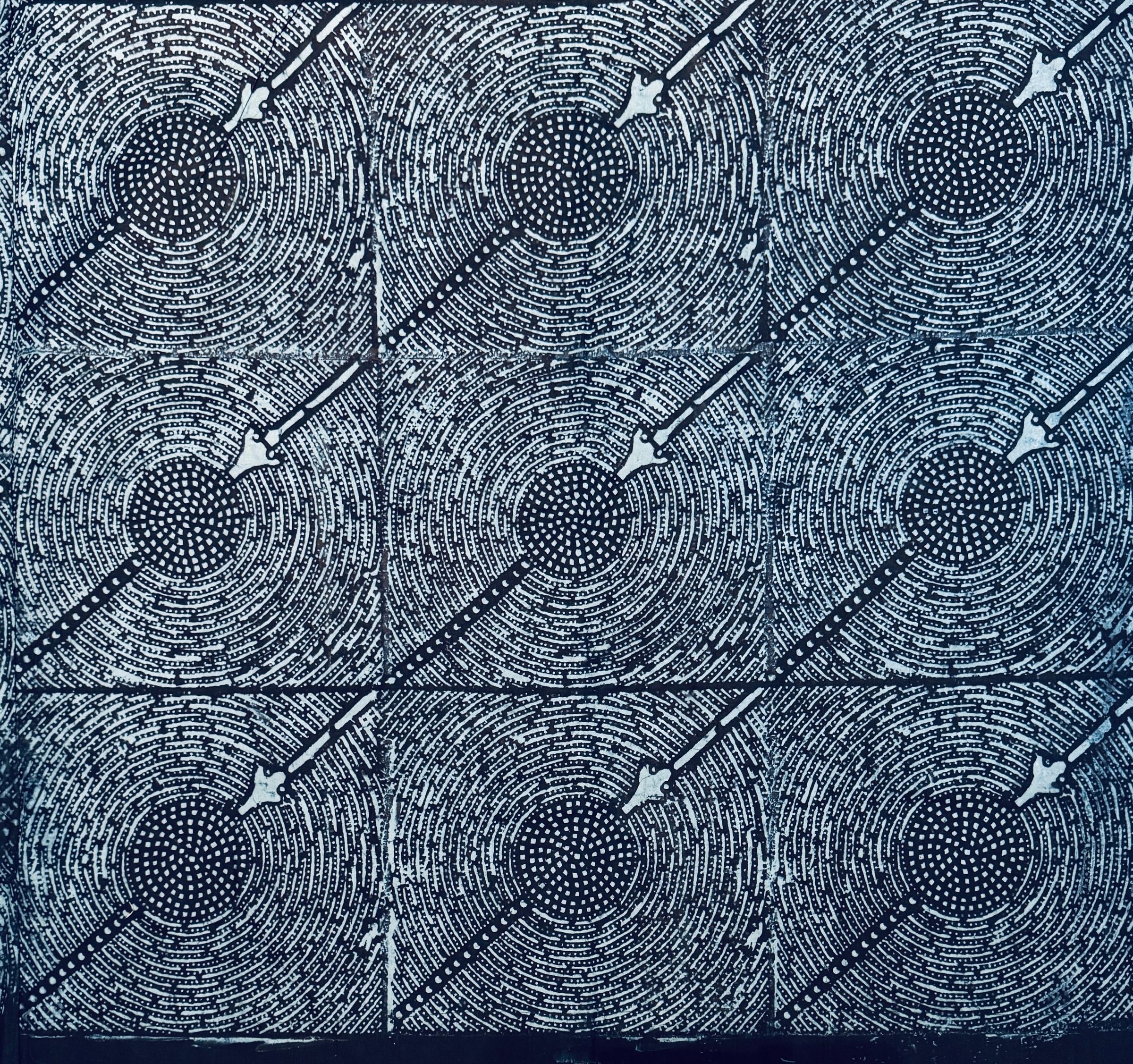
Nigeria Woman's Wrapper Cloth
Name/Title
Nigeria Woman's Wrapper ClothEntry/Object ID
2023.2.7Description
This textile is an example of a traditional indigo-dyed cotton textiles with resist-dyed patterns known as adire. Made by women, the pattern was created using a stencil to apply the resist paste, usually made from cassava. material. The term adire means tie (adi) and dye (re). After successive immersions into an indigo-dye vat, the resist paste was washed away to reveal the design. The ground fabric consists of two pieces of stiff, commercially woven cloth sewn together.Acquisition
Accession
2023.2Source or Donor
Estate of Paul J. SmithCredit Line
Gift of the Paul J. Smith EstateMade/Created
Artist
Unknown MakerTime Period
2nd half of 20th CenturyTextile Details
Technique
Batik (paste-resist dyeing)Ethnography
Cultural Region
Country
NigeriaCulture/Tribe
Yoruba