Note Type
Historical NoteNote
Francisco José de Goya
(1746 Fuendetodos, Spain—1828 Bordeaux, France)
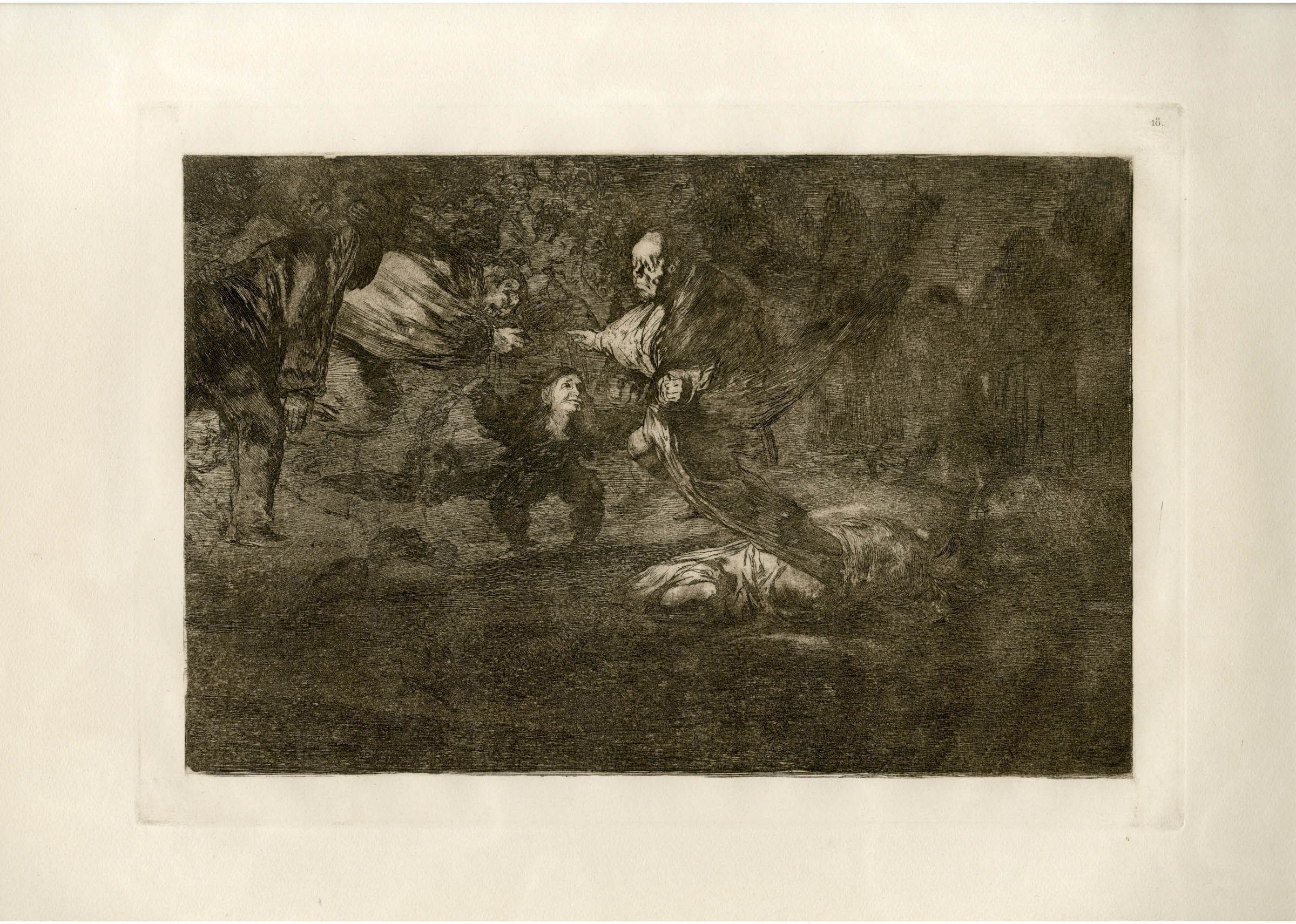
Francisco José de Goya y Lucientes (1746–1828) is regarded as the most important Spanish artist of the late eighteenth and early nineteenth centuries. Over the course of his long career, Goya moved from jolly and lighthearted to deeply pessimistic and searching in his paintings, drawings, etchings, and frescoes. Born in Fuendetodos, he later moved with his parents to Zaragoza and, at age fourteen, began studying with the painter José Luzán Martínez (1710–1785). In 1746, the year of Goya’s birth, the Spanish crown was under the rule of Ferdinand VI. Subsequently, the Bourbon king Charles III (r. 1759–88) ruled the country as an enlightened monarch sympathetic to change, employing ministers who supported radical economic, industrial, and agricultural reform. Goya came to artistic maturity during this age of enlightenment. In Madrid, the painter brothers Francisco (1734–1795) and Ramón Bayeu y Subías (1744–1793) had set up shop in 1763, and Goya soon joined their studio, eventually marrying their sister Josefa. He visited Italy in 1770, after two failed attempts in drawing competitions at the Real Academia des Bellas Artes in San Fernando. Goya’s introduction to the royal workshops, a relationship that lasted the rest of his life and spanned four ruling monarchies, began in 1774. As Goya continued to move in circles of royal patronage, he received more commissions from the aristocracy. At the age of forty, Goya was appointed painter to King Charles III, and, in 1789, he was promoted to court painter under the newly accessioned Charles IV (r. 1788–1808). The year 1789 also marked the fall of the French monarchy (with Charles IV unwilling to assist his cousin Louis XVI), and in 1793 France declared war on Spain. Around this time, Goya traveled to Cádiz in Andalusia with Sebastián Martínez y Pérez, a wealthy businessman and art collector. Having survived an extended period of illness in Cádiz, Goya emerged months later completely deaf, but able to return to Madrid in 1793. In 1799, he completed and published a suite of eighty allegorical etchings called the Caprichos. Having no royal commissions during the tumultuous monarchy of Ferdinand VII, Goya became isolated from political and intellectual life in Madrid. Between 1820 and 1823, he completed a series of very private works in fresco at his small country retreat, Quinta del Sordo (the Deaf Man’s House). Today referred to as the Black Paintings, they are compelling for their sinister, often horrifying scenes and dark, emotional undertones.
Dissatisfied with political developments in Spain, Goya retired to Bordeaux in 1824 under the guise of seeking medical advice. His final years were spent there and in Paris.
Reference: The MET. Timeline of Art History.