Note Type
Artist’s Intent NoteNote
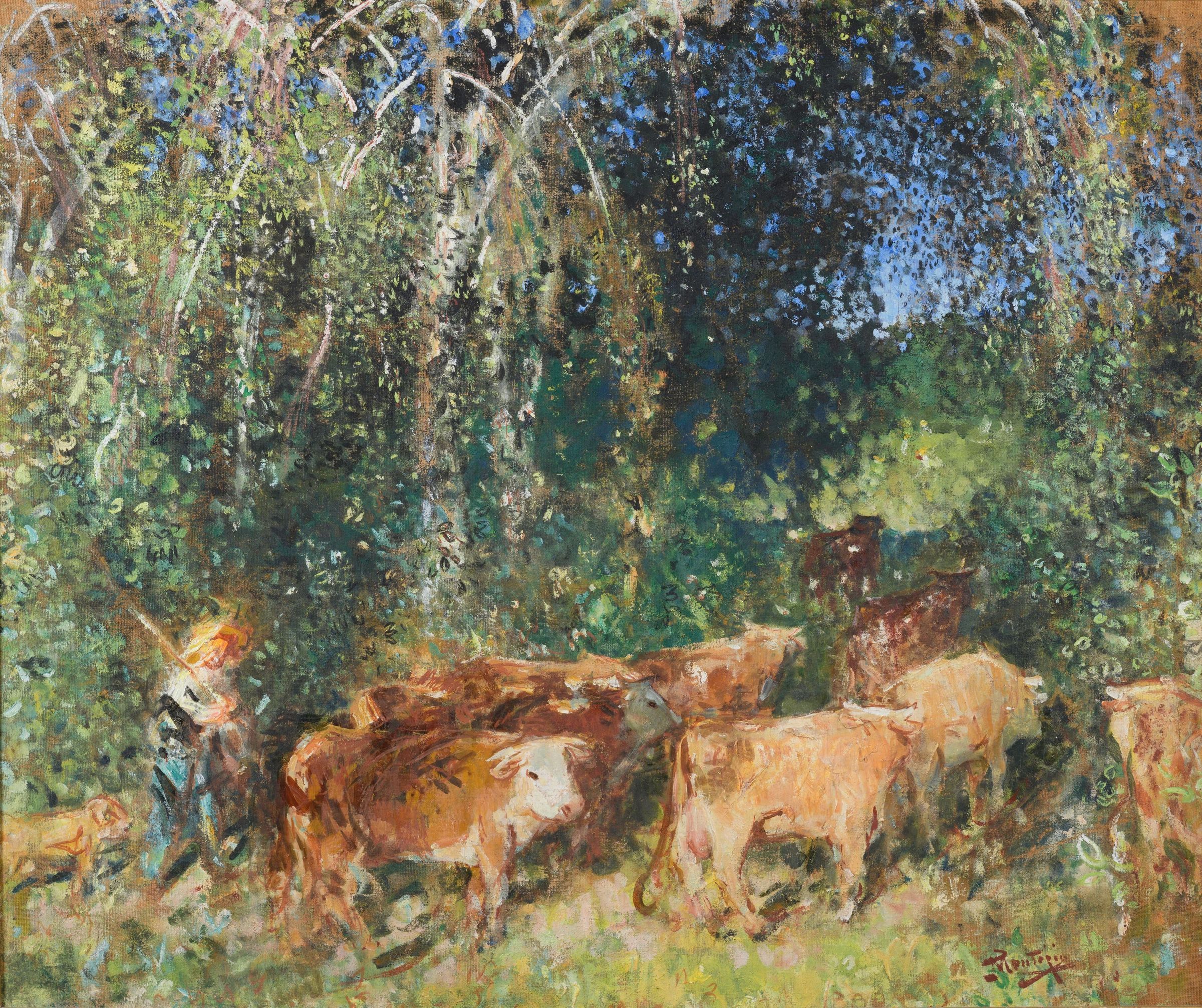
"Building upon the immediacy and spontaneity of his Impressionist predecessors, Montézin committed himself to revealing the ways in which humans, animals, and the natural world are endlessly intertwined. He demonstrated an adept ability to render the atmospheric effects of light, diversity of native foliage, and the quotidian routines of an agrarian world animated by the changing seasons. The Herd depicts cattle, goaded by children, seeking shade beneath the dappled shadows of trees overhead. Woodlands burst forth in joyous displays of pink and chartreuse at springtime. Falling leaves and shifting branches suggest the blustery chill of a late afternoon, where light on wet pavement dances beneath the feet of ducks and figures with umbrellas. Collectively taken, these works evoke the everyday landscapes that provided Montézin with inexhaustible inspiration" (Impressionist Legacies 40-41).Note Type
Historical NoteNote
It was during this period that Montézin was unanimously elected as jury president of the Salon de Artistes Français in 1933, an exhibiting body that had for a decade refused to include his early artistic work. Following the conclusion of World War II, he died while on a painting expedition along the Brittany coast. With eight works in total, Montézin is the most well-represented artist within the Rusinko Kakos Collection" (Impressionist Legacies 40).