Note
Object Name:
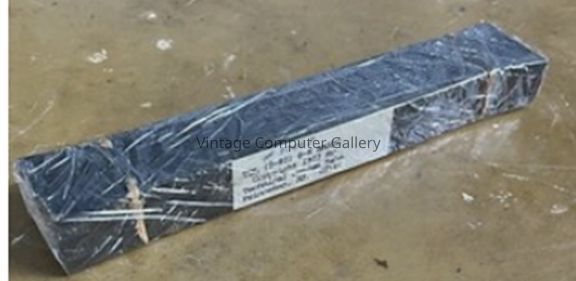
Technical Design Labs 8‑K BASIC — Paper Tape Edition (1977)
Maker:
Technical Design Labs (TDL), founded by Carl G. Helmers — the creator and founding editor of BYTE Magazine
Date of Manufacture:
1977
Description:
A 1977 paper‑tape distribution of TDL 8‑K BASIC, an early implementation of the BASIC programming language designed for 8080‑based microcomputer systems. Technical Design Labs, founded by BYTE Magazine creator Carl Helmers, was known for producing high‑quality hardware and software for early S‑100 bus computers, including the Xitan system and a suite of monitors, utilities, and language tools.
This paper‑tape edition represents one of the earliest and most compact forms of software distribution in the microcomputer era. The 8‑K BASIC interpreter provided a full programming environment within extremely limited memory, supporting integer and floating‑point arithmetic, control structures, string handling, and I/O routines suitable for hobbyist and early commercial applications.
Paper tape was a common medium for software distribution in the mid‑1970s, especially for systems without disk drives or cassette interfaces. Users loaded the interpreter via a high‑speed reader connected to their S‑100 or compatible machine.
Historical Significance:
This artifact captures a pivotal moment in personal computing history—when software was still distributed on punched paper tape, and memory constraints shaped language design. TDL played a key role in the early microcomputer ecosystem, and its founder Carl Helmers was already a major figure in the computing world for launching BYTE Magazine, one of the most influential publications of the era.
TDL’s 8‑K BASIC is representative of the ingenuity of early 8‑bit computing, delivering a full programming environment within tight memory limits. Paper‑tape software from this period is increasingly rare, as most surviving examples were discarded once floppy disks and cassettes became dominant.
Collector’s Notes:
Paper‑tape software is highly collectible due to its fragility, scarcity, and historical importance. TDL items are especially desirable among S‑100 collectors, early BASIC historians, and archivists documenting pre‑disk software ecosystems. Condition details (tape integrity, leader presence, spool condition, labeling) should be noted for archival accuracy.