Note
Object Name:
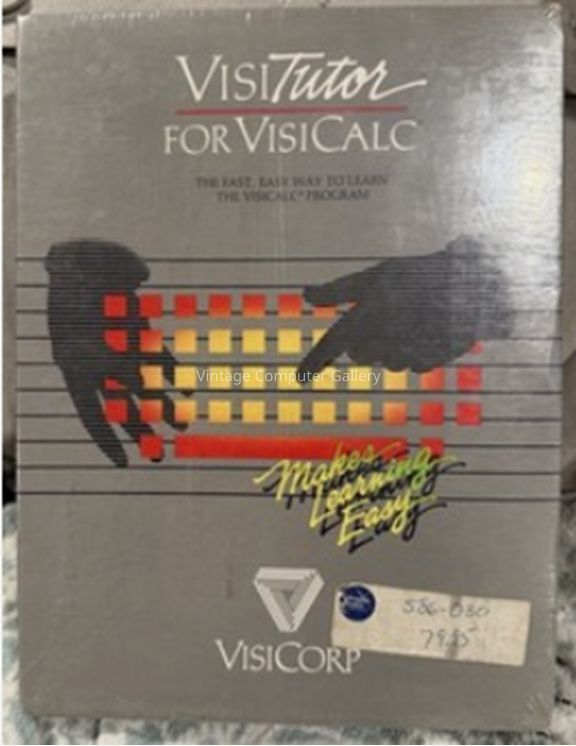
VisiTutor for VisiCalc — Version 1.0 (IBM Personal Computer Edition, Factory Sealed)
Maker:
Software Arts / Personal Software, Inc.
(VisiCalc created by Dan Bricklin and Bob Frankston)
Date of Manufacture:
1982–1983 (early IBM PC software period)
Description:
Factory‑sealed retail package of VisiTutor for VisiCalc, Version 1.0, designed for the IBM Personal Computer. VisiTutor was an interactive training program created to teach new users how to operate VisiCalc, the first widely adopted spreadsheet program and one of the most influential pieces of software in personal computing history.
This edition was tailored for the IBM PC’s DOS environment and typically includes tutorial disks, printed instructional materials, and guided lessons that walk users through spreadsheet fundamentals: entering data, formulas, recalculation, formatting, and worksheet navigation. VisiTutor used step‑by‑step interactive demonstrations, making it one of the earliest examples of PC‑based computer‑assisted instruction.
The packaging reflects early 1980s business‑software aesthetics—clean, utilitarian, and designed to accompany the VisiCalc retail box on store shelves.
Historical Significance:
VisiCalc is often credited with helping legitimize personal computers in business environments, and training tools like VisiTutor played a crucial role in making spreadsheet concepts accessible to first‑time PC users. This software represents the dawn of interactive learning on microcomputers, predating later tutorial systems and multimedia training packages.
A factory‑sealed copy is especially significant because most VisiTutor packages were opened and heavily used in offices, classrooms, and training centers. Sealed examples from the early IBM PC era are rare.
Collector’s Notes:
This new/sealed IBM PC edition is a preservation‑grade artifact from the formative years of personal computing. Collectors of VisiCalc, early IBM PC software, and business‑application history value VisiTutor for its connection to the spreadsheet that changed the industry. Condition details (wrap integrity, corner compression, price stickers) should be documented for archival accuracy.