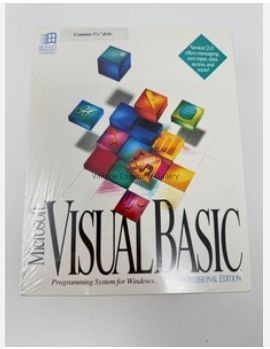
Visual Basic 2.0 built directly on the success of VB 1.0, refining the development environment and expanding the capabilities available to Windows programmers.
Key points:
Release date: November 1992.
Major new features:
ODBC Level 1 support, enabling more robust database connectivity.
MDI (Multiple Document Interface) forms, allowing more complex, multi‑window applications.
Object variables, improving the language’s flexibility and paving the way for more advanced programming patterns.
Professional Edition introduced: The first VB version to ship with both Standard and Professional editions, expanding the toolset for advanced developers.
Performance improvements: Programs ran roughly 20% faster than VB 1.0, and the development environment gained a more efficient property window and toolbar.
Enhanced UI design tools: New graphics controls and improved memory usage for drawing operations.
Overall, VB 2.0 strengthened Visual Basic’s position as the leading rapid‑application‑development tool for Windows, smoothing the workflow and expanding the ecosystem that would explode further with VB 3.0 and Access.