Note
Release History
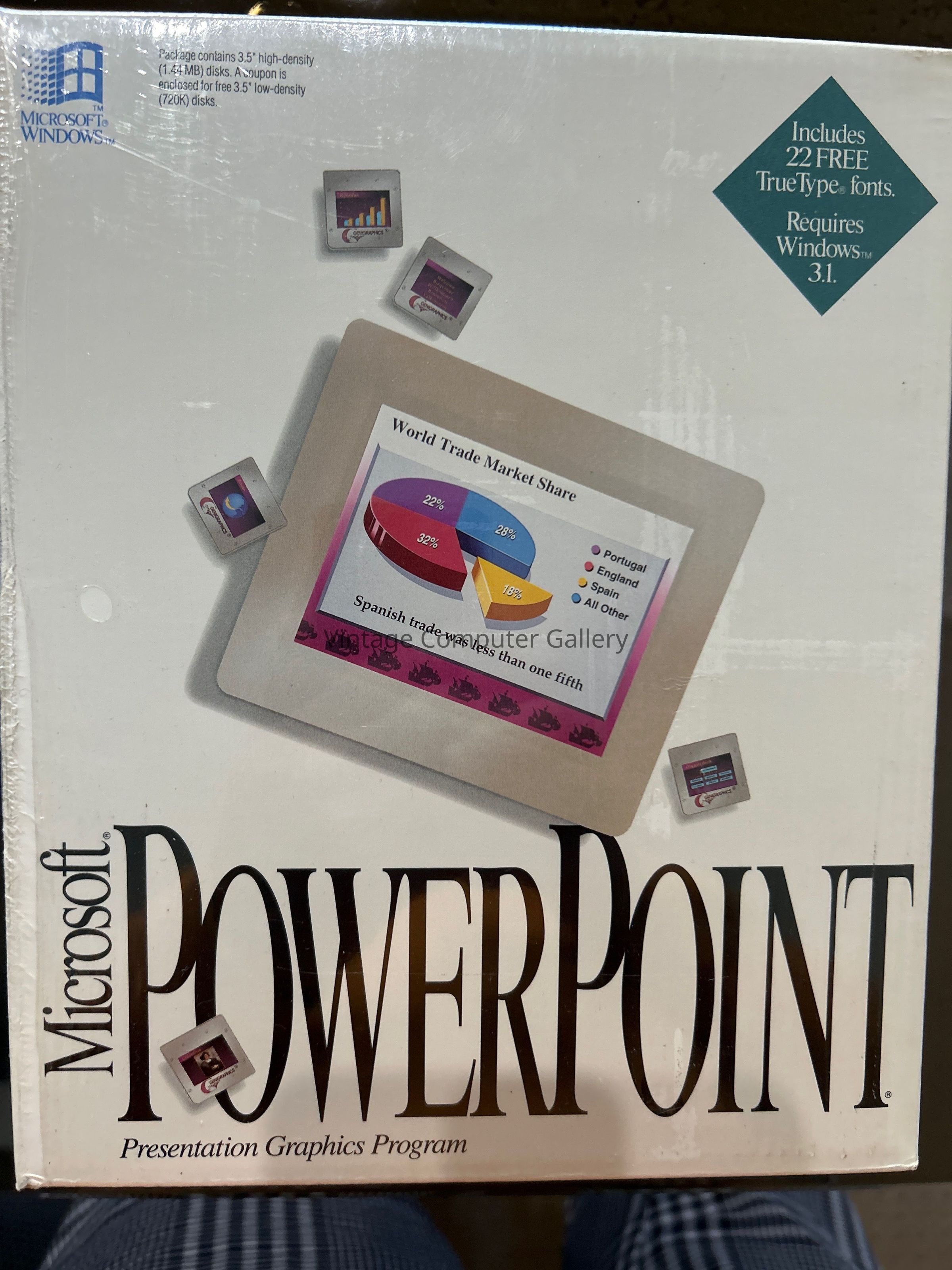
PowerPoint 3.0 was released in 1992, coinciding with the launch of Microsoft Office 3.0 (also known as Office 92) on August 30, 1992. It was available for both Windows and Macintosh platforms:
Windows version: Announced alongside Windows 3.1 in early 1992, with full release in May 1992.
Macintosh version: Released around the same time, bundled in Microsoft Office 3.0 for Mac, which included Word 5.0, Excel 4.0, PowerPoint 3.0, and a mail client.
This version skipped a "2.0" numbering for Windows to align with the Office suite's progression, following PowerPoint 2.0 for Windows (mid-1990) and Mac (May 1988). It was the first PowerPoint to support TrueType font embedding, enabling easier distribution of presentations without font mismatches.
Key Features
PowerPoint 3.0 introduced several innovations that transformed it into a versatile tool for visual communication:
Virtual Slideshow Mode: The now-standard on-screen presentation view, allowing slides to be projected electronically via conference-room computers rather than printed transparencies.
Slide Transitions: Basic animations between slides, with options for sound effects, making presentations more engaging.
Multimedia Support: Integration of audio clips, video, and graphics directly into slides.
Presentation Templates: Pre-designed layouts to speed up creation, including color schemes and backgrounds.
Object Manipulation Tools: Features like freeform drawing, rotation, scaling, flipping, alignment, and picture transformations.
PowerPoint Viewer: A free companion app for viewing .ppt files without the full software, also released in 1992 for both platforms.
These additions built on earlier versions' text-and-graphics basics, emphasizing collaboration and portability.
Significance and Legacy
PowerPoint 3.0 helped solidify Microsoft's dominance in office productivity software, as it was bundled in the first widespread Office suite. It catered to the growing business need for digital presentations amid the PC boom of the early 1990s. By enabling "freely distributed" electronic slideshows, it democratized visual storytelling in corporate, educational, and community settings. Subsequent versions (e.g., 4.0 in 1994) expanded on these with rehearsal modes and hidden slides, but 3.0's core innovations—like transitions and templates—remain staples today.