Note
Historical Context
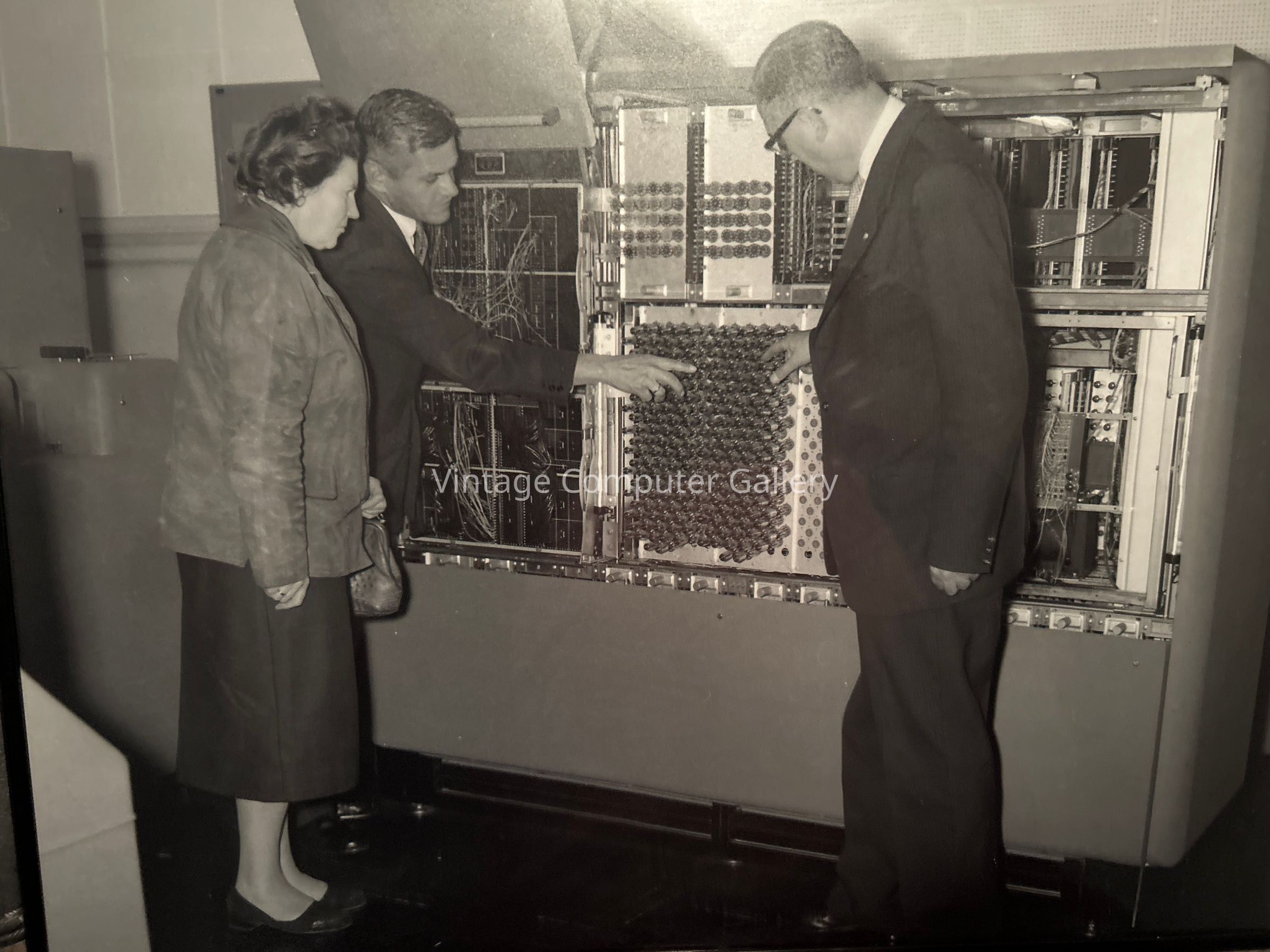
The UNIVAC 120, developed by Remington Rand in the early 1950s, was one of the first commercial computers designed for business data processing. It used:
Vacuum tube technology for logic.
Magnetic drum memory (not magnetic core).
A decimal architecture instead of binary, oriented toward business calculations.
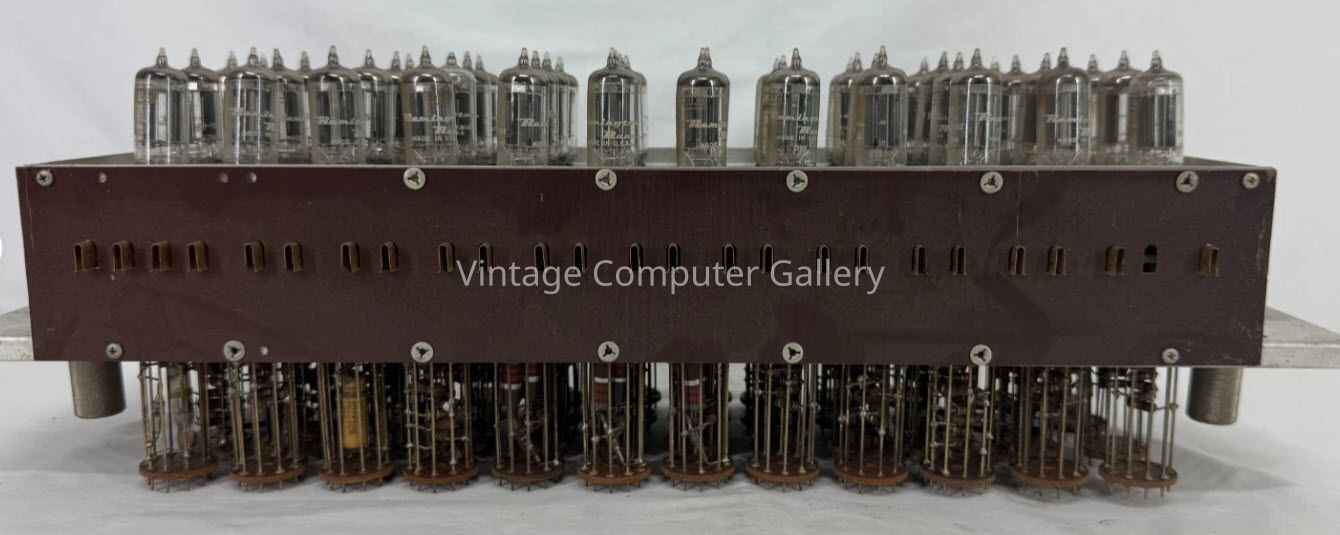
Each of these plug-in modules represented a functional logic block, such as:
Adder or subtractor circuits
Counters or registers
Logic gates (AND/OR/NOT)
Flip-flops (bistable multivibrators) for memory elements
Engineering Significance
These modules were part of a modular architecture—technicians could replace a failed logic block by pulling the module and plugging in a spare, a precursor to modern printed circuit board replacement.
Each module:
Contained multiple vacuum tubes (typically 10–20 per module).
Drew substantial power (each tube ~1–2 W).
Required extensive manual wiring and testing.
Legacy
The UNIVAC 120’s modular vacuum tube assemblies represent the transition era between electromechanical relay systems and fully solid-state (transistorized) logic. These modules are rare collector’s items today, often preserved in computer museums and restoration projects.