Name/Title
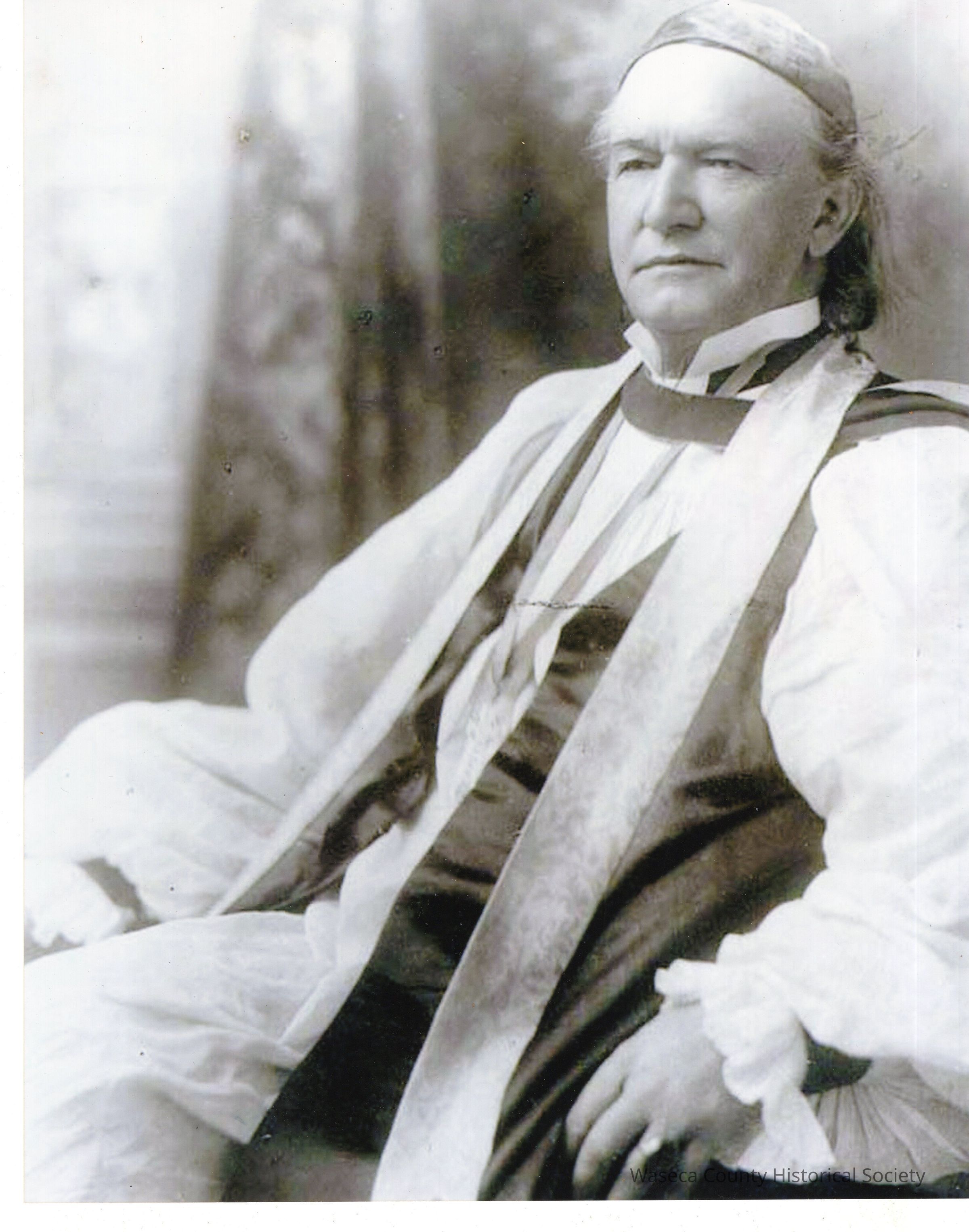
Bishop Henry WhippleEntry/Object ID
2026.1.113Description
The image depicts a distinguished man seated, dressed in elegant clerical attire, including a richly adorned robe and cap, identified as Bishop Henry Whipple, the first Episcopalian Bishop in Minnesota; served a congregation in Janesville, Minnesota; and was known widely as a friend to the Native American people during the settlement of Waseca County and the state of Minnesota.Photograph Details
Type of Photograph
ReprintSubject Person or Organization
Whipple, Henry (Bishop)Context
The Life of Bishop Henry Benjamin Whipple (1822–1901)
Bishop Henry Benjamin Whipple was a towering figure in 19th-century American religious and social history. Known by the Dakota people as "Straight Tongue" for his honesty, he was a tireless advocate for Native American rights during a period of intense conflict and systemic injustice.
Early Life and Ordination (1822–1859)
1822: Born on February 15 in Adams, New York.
1839–1843: Initially pursued a career in business and politics, influenced by his father’s merchant background and New York political circles.
1849: Feeling a religious calling, he began studying for the ministry; he was ordained a deacon in the Episcopal Church.
1850: Ordained a priest.
1851–1857: Served as rector of Zion Church in Rome, New York.
1857–1859: Moved to Chicago to serve as the first rector of the Church of the Holy Communion, where he gained a reputation for reaching out to the marginalized and working-class "plain people."
The "Apostle to the Indians" (1859–1862)
1859: Consecrated as the first Bishop of Minnesota at St. James Church, Richmond, Virginia.
1860: Moved to Faribault, Minnesota, and established it as his see. He immediately began visiting Dakota and Ojibwe missions, shocked by the corruption of the federal "Indian Agent" system.
1862 (August): The Dakota War broke out in Minnesota. While many settlers called for the total extermination of the Dakota, Whipple became a lonely, powerful voice for justice.
Advocacy and National Influence (1862–1890)
1862 (December): Whipple traveled to Washington D.C. to meet with President Abraham Lincoln. He pleaded for mercy for the 303 Dakota men sentenced to death. Lincoln later credited Whipple for his decision to commute the sentences of 265 of them.
1860s–1870s: Continued to lobby for "Peace Policy" reforms. He was often criticized by fellow Minnesotans for his perceived "sentimentality" toward Native Americans, but his national stature grew.
1862–1869: Oversaw the construction of the Cathedral of Our Merciful Saviour in Faribault, the first Episcopal cathedral in the U.S. that was not a converted parish church.
1888: Attended the Lambeth Conference in England, gaining international recognition for his missionary work.
Later Years and Legacy (1890–1901)
1894: Published his autobiography, Lights and Shadows of a Long Episcopate, which detailed his struggles and successes in the mission field.
1897: Represented the Protestant Episcopal Church of the United States at the Diamond Jubilee of Queen Victoria.
1901: Died on September 16 in Faribault, Minnesota. He is buried beneath the altar of his beloved Cathedral of Our Merciful Saviour.Cataloged By
PfenCreate Date
May 15, 2026Update Date
May 15, 2026