Name/Title
Mill, CoffeeEntry/Object ID
1081aDescription
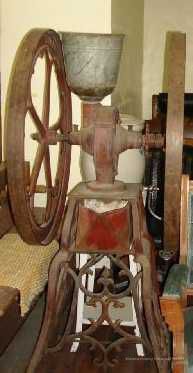
Material: metal, wood. Size: 32 1/2" W. x 60" H. Description: red painted iron - steel grinding apparatus mounted on four tall splayed legs - decorative iron work support rods between legs - one large metal operating wheel on each side - wooden crank handle extends from one wheel - tin bean hopper at top of grinder - red painted metal, grounds collection container below grinder - stamped inside wheel: "Woodruff & Edwards Co. Elgin, Ill." - stamped on wheel exterior: "Coffee Mill Elgin National" - stamped on middle piece: "Empire".Context
From Peterson Brothers Grocery. Herman & Levine donated by Einer Iverson in 1965. In 1889 the C. H. Woodruff foundry introduced the Elgin National coffee mill for groceries, hotels, and restaurants.
The first mills were painted black or maroon with gilt striping. The hoppers were either black or polished nickel. The grinding burrs were steel. The two large turning wheels were adapted for use by either hand or motor power.
Heavy pig iron was unloaded from a railroad side track at the North State Street plant and taken to the cupola in an elevator. The molten metal was poured into sand molds. The castings which emerged were then placed in rattling machines which cleared away the hardened sand. After the rough edges were ground off, the castings were bored and the parts assembled. The last stages in the manufacturing process were painting and japanning.
Elgin National mills were later made in both counter top and floor models and were finished in red, blue, and gold bronze colors. The largest was 68-1/2 inches high, had wheels 34 inches in diameter, and weighed 365 pounds. It could hold up to nine pounds for grinding. The smallest, for household use, was only about a foot high and weighed 20 pounds.
Before production ended in 1917, when a fire destroyed the molds, coffee mill wheels were used by Elgin boys on the pushmobile and coaster cars they built during the years of the Elgin Road Races. The Elgin Nationals are now highly prized by antique collectors and can be seen as period pieces in many historical exhibits. One way of determining the age of an Elgin made mill is the name of the manufacturer on the wheel. The C. H. Woodruff Company did not become Woodruff & Edwards until 1900.Cataloged By
Legacy Photo ImportLexicon
Nomenclature 4.0
Nomenclature Tertiary Object Term
Mill, CoffeeNomenclature Secondary Object Term
Mill, CulinaryNomenclature Primary Object Term
Tool, Food GrindingNomenclature Sub-Class
Food Preparation EquipmentNomenclature Class
Food Processing & Preparation T&ENomenclature Category
Category 04: Tools & Equipment for MaterialsCreate Date
May 2, 2007Update Date
November 21, 2024