Bagatelle & Crickatelle
Name/Title
Bagatelle & CrickatelleEntry/Object ID
2025.1.1088Description
Bagatelle & Crickatelle Parlour GameContext
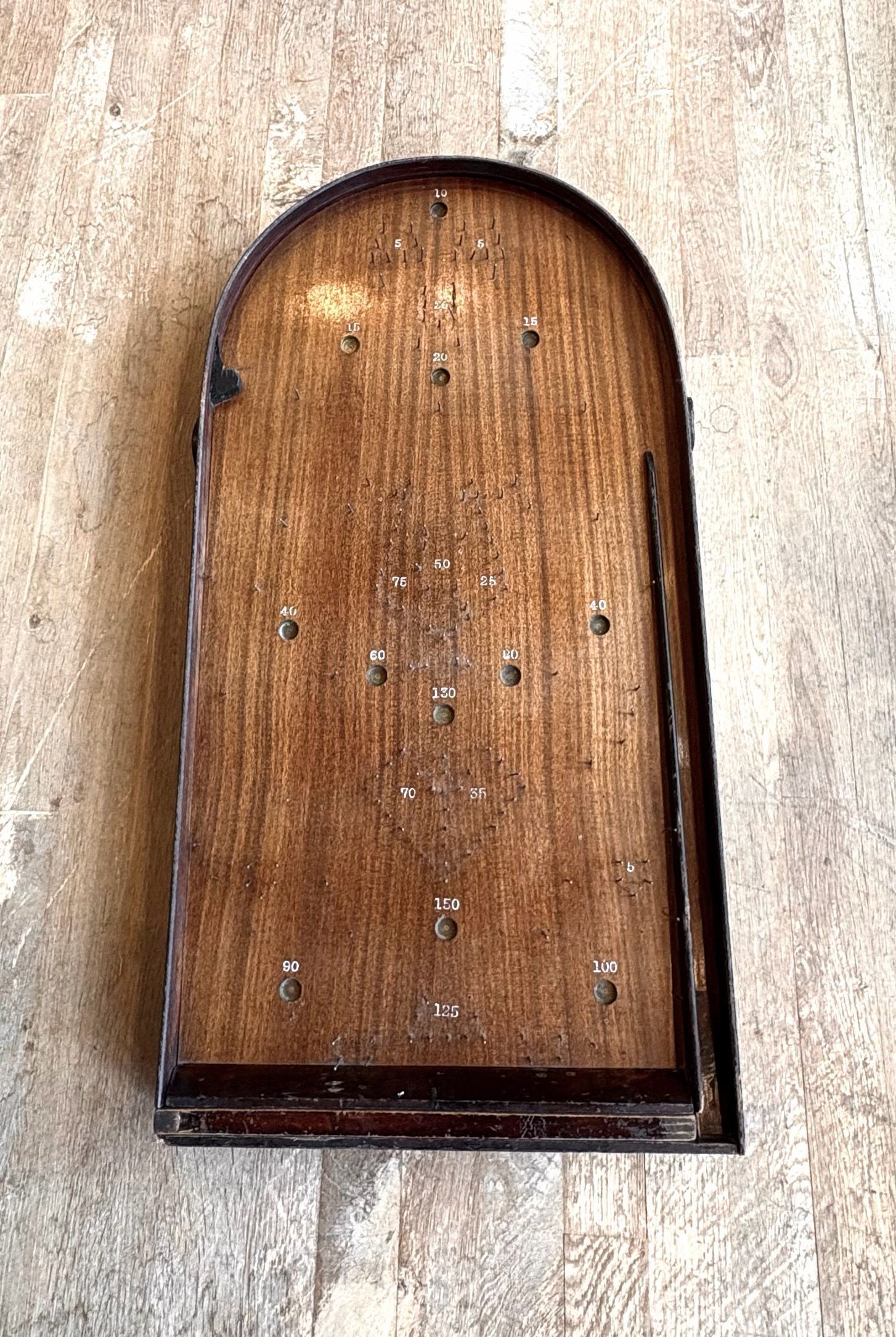
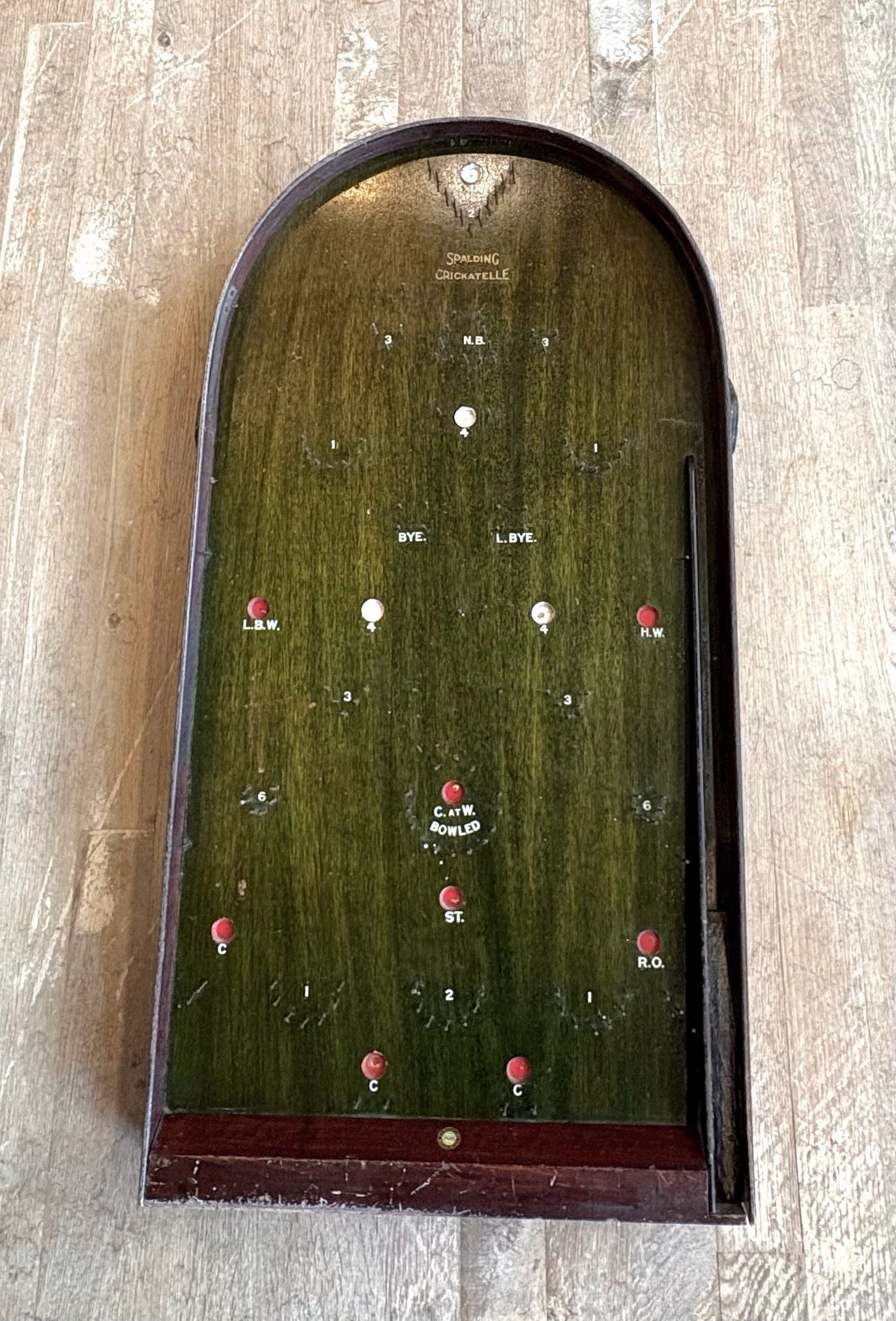
This double-sided Bagatelle and Crickatelle parlour game board by A.G. Spalding & Bros. was manufactured in the mid-1930s, approximately between 1934 and 1937. Double-Sided Board: A hallmark of this specific Spalding release is its two-in-one value. One side features a standard Pin Bagatelle layout (a precursor to the modern pinball machine), while the reverse side features a specialized Cricket-themed game board, called Crickatelle. The boards were typically built using sturdy wood (often walnut or mahogany) adorned with fixed metal or brass pins. These pins act as layout obstacles to deflect rolling steel ball bearings.The Mechanism: This early iteration required players to strike the balls up a side channel using a mini wooden cue stick. Later variants integrated a spring-loaded mechanical plunger to launch the balls. Bagatelle takes its name from the French, and the game's earliest form is generally traced to 18th-century France, where billiards-style table games were a fashionable pastime. The word itself suggests something small and trifling — a light amusement rather than a serious sport. The basic idea travelled readily. A ball, a cue, an inclined surface, and a set of targets gave players a game that needed little space and could be enjoyed by all ages. It sat naturally alongside other table pastimes that crossed the Channel and settled into British homes. By the time it reached Britain, bagatelle had found a receptive audience. The country already had a deep affection for table games, from chess to draughts, and bagatelle slotted in beside them as another way to pass an evening indoors. What set it apart was its blend of luck and judgement. A skilled player could read the angles and the spacing of the pins, yet the bounce of the ball always kept the outcome uncertain. That tension made it endlessly repeatable.Cataloged By
Colin WhittleCategory
Children