Bee skep
Bee skep
Name/Title
Bee skepEntry/Object ID
2025.1.969Description
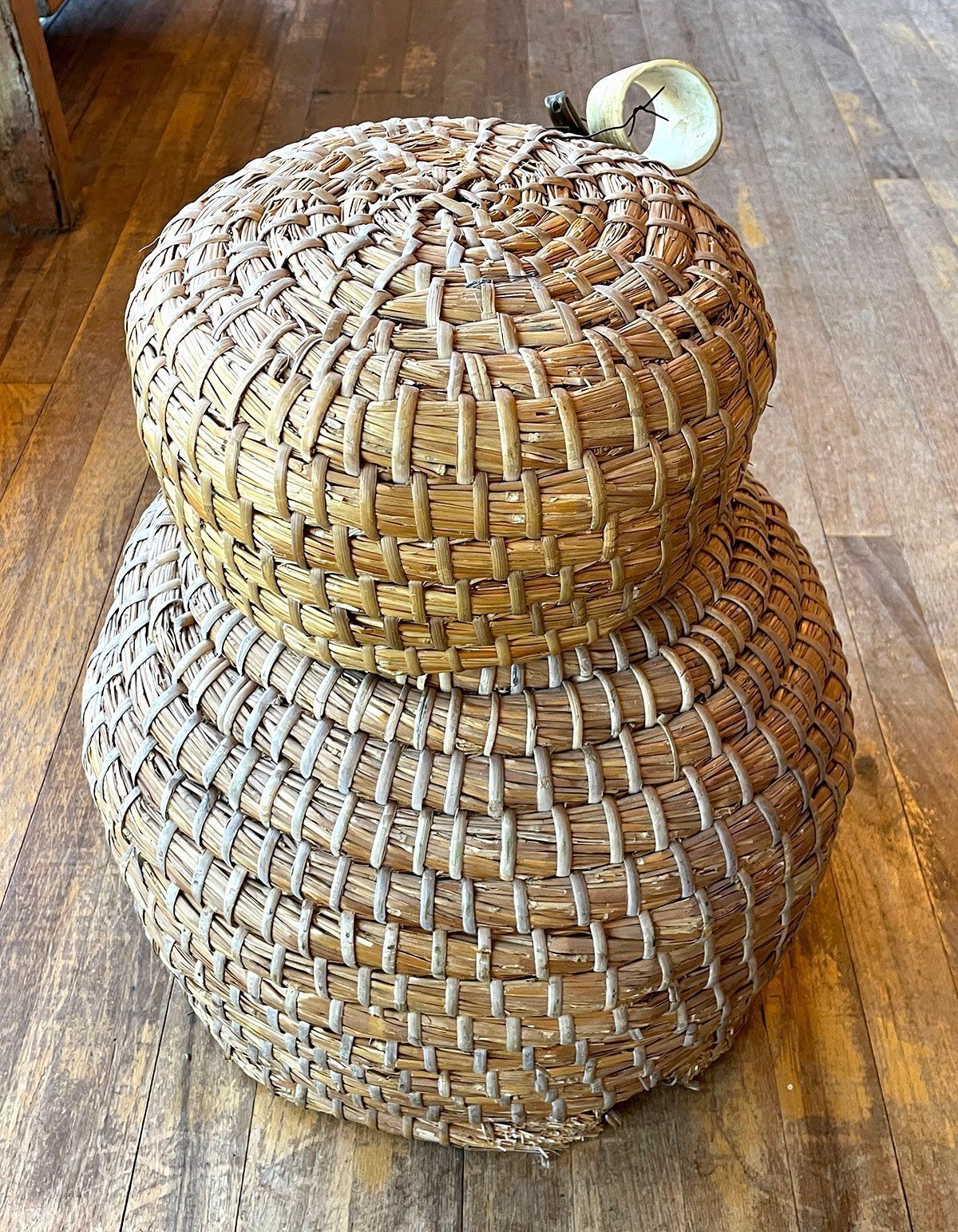
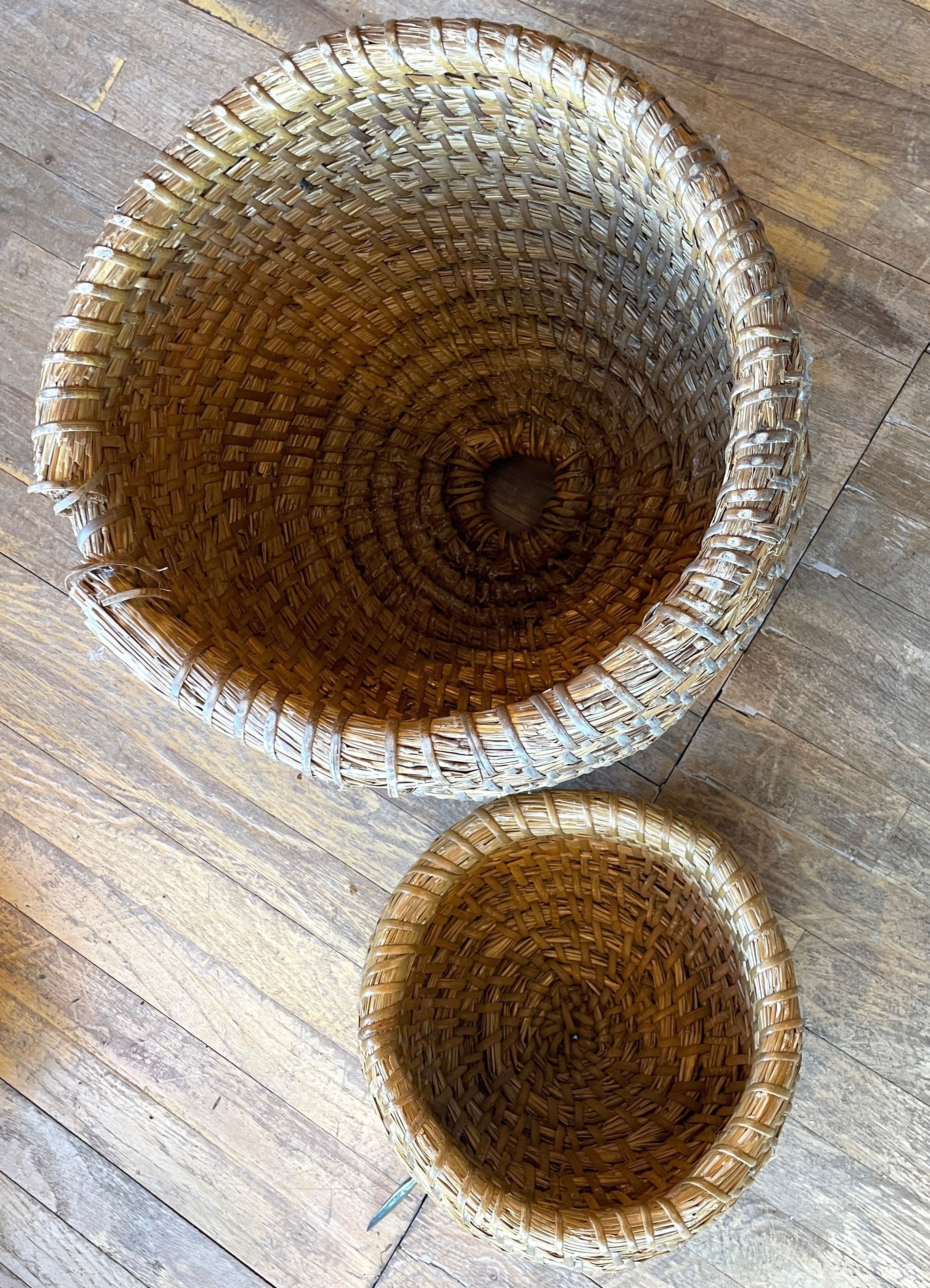
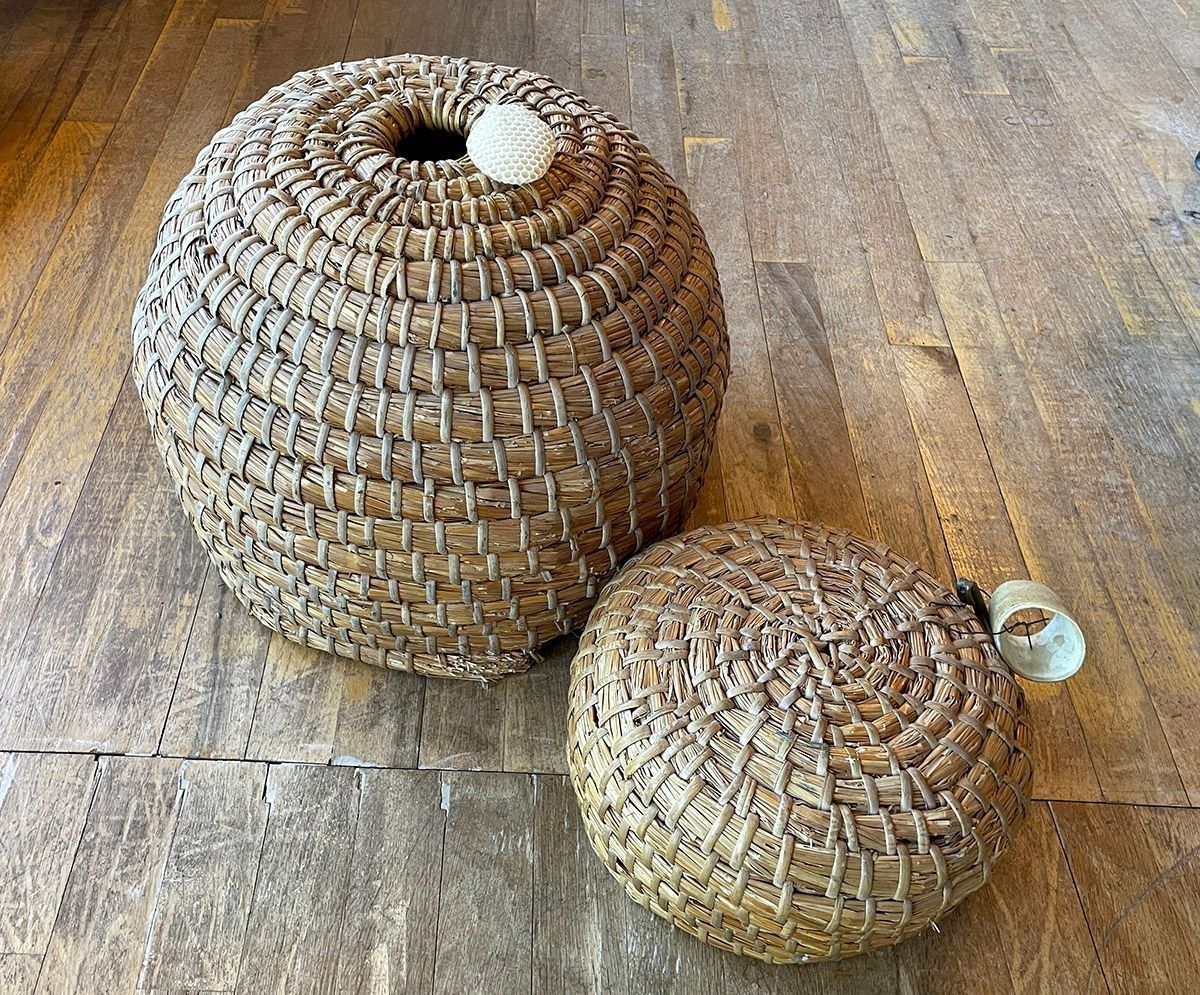
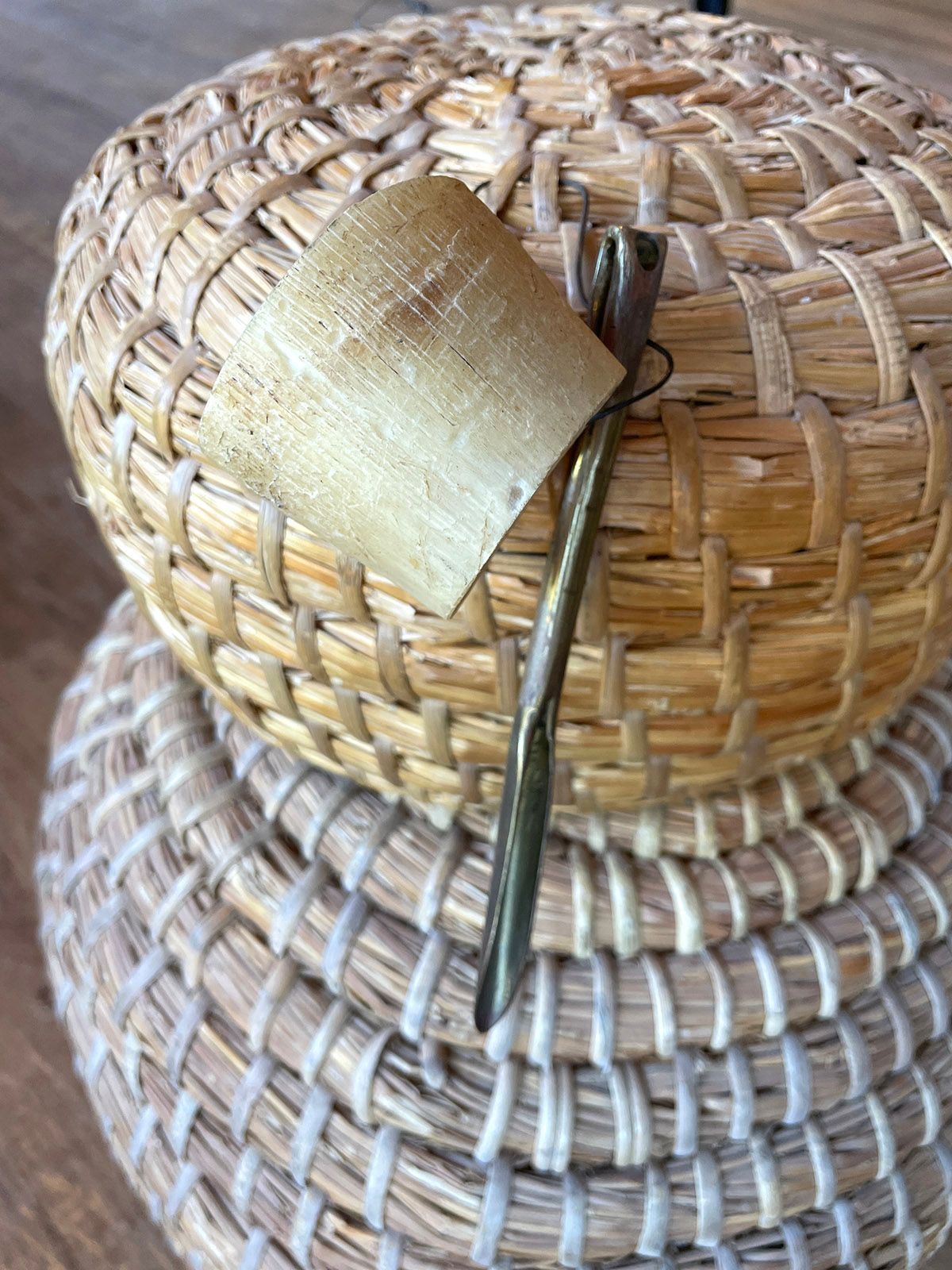
Handmade straw woven bee skep, in two parts, a top (a hackle) and bottom - both spherical. At the base of the bottom skep is a break in the coil, making a square aperture, for the bees to enter. Sometimes this hole was higher up the skep or if the hive was placed on a wooden board, there was no hole but a groove in the wood to allow the bees to fly in. Attached to the skep is a bodkin and a piece of cow-horn, the tools used to make the bee skep.Context
The word skep is thought to have originated from the Icelandic Norse word 'skeppa' meaning straw basket and a grain measure - a half bushel of grain. The Saxons are believed to have used straw skeps but before that a hive may have been made of bramble and hazel twigs, to keep the straw together, weatherproofed with a mixture of cow dung and ashes or lime. The skep is made from a coil of rope (variously made from oat straw, rushes or purple moor grass) wound in a circle and stitched firmly into place to make the baskets. The bodkin is used to pierce the rope and the cow horn ensure a consistency in the size of the rope. A straw bee-skep provides excellent insulation (it takes 6" of wood to provided the equivalent one inch insulation of straw) for bees and can last for a century or more if treated properly. The bees themselves add a layer of insulation inside the hive of a kind of jelly.Cataloged By
Felix LamCategory
Occupation, Country & Rural activities, Domestic