Smock - Country / Farming
Name/Title
Smock - Country / FarmingEntry/Object ID
2025.1.486Description
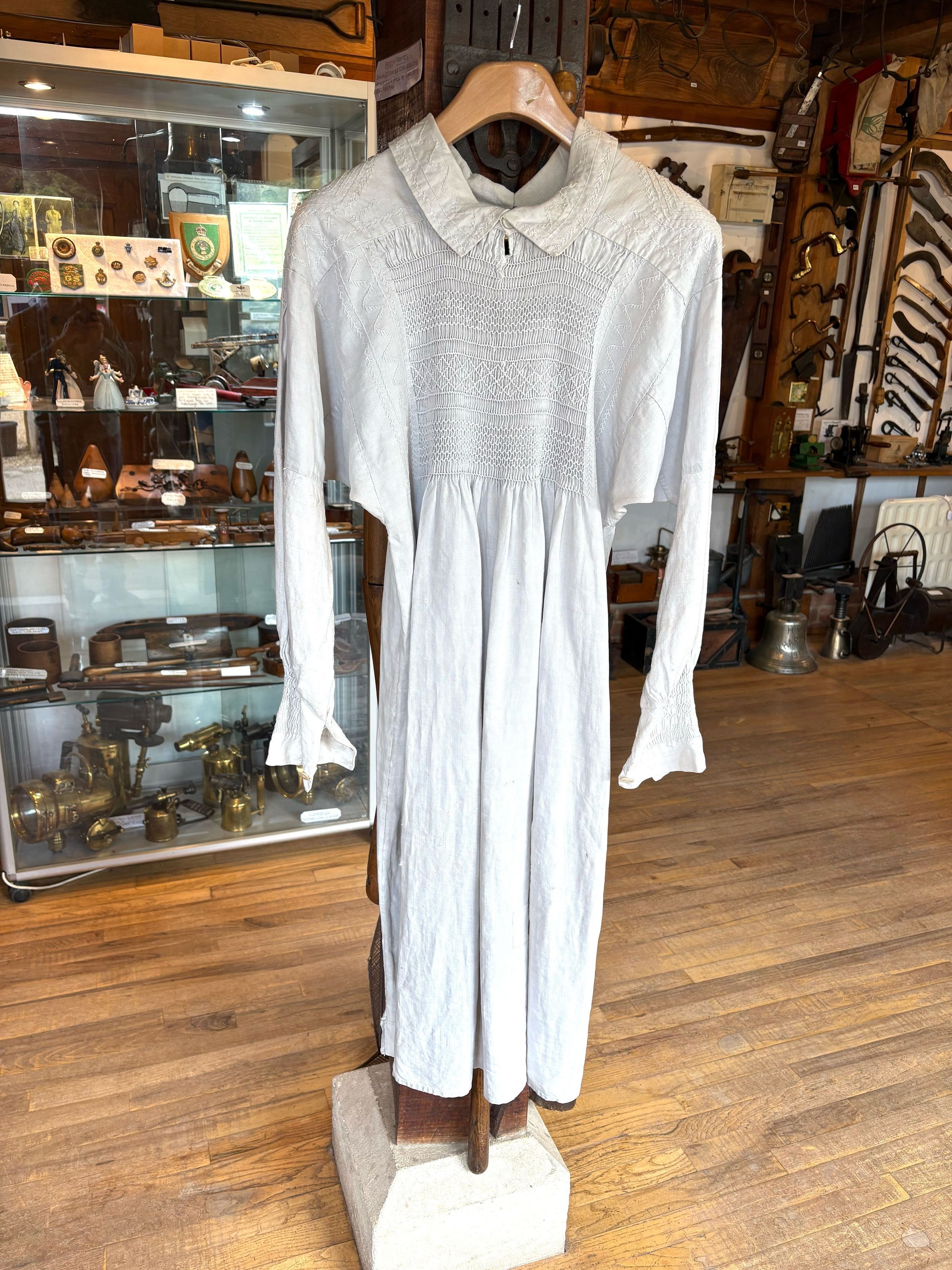
Smock worn by Country / Farming FolksContext
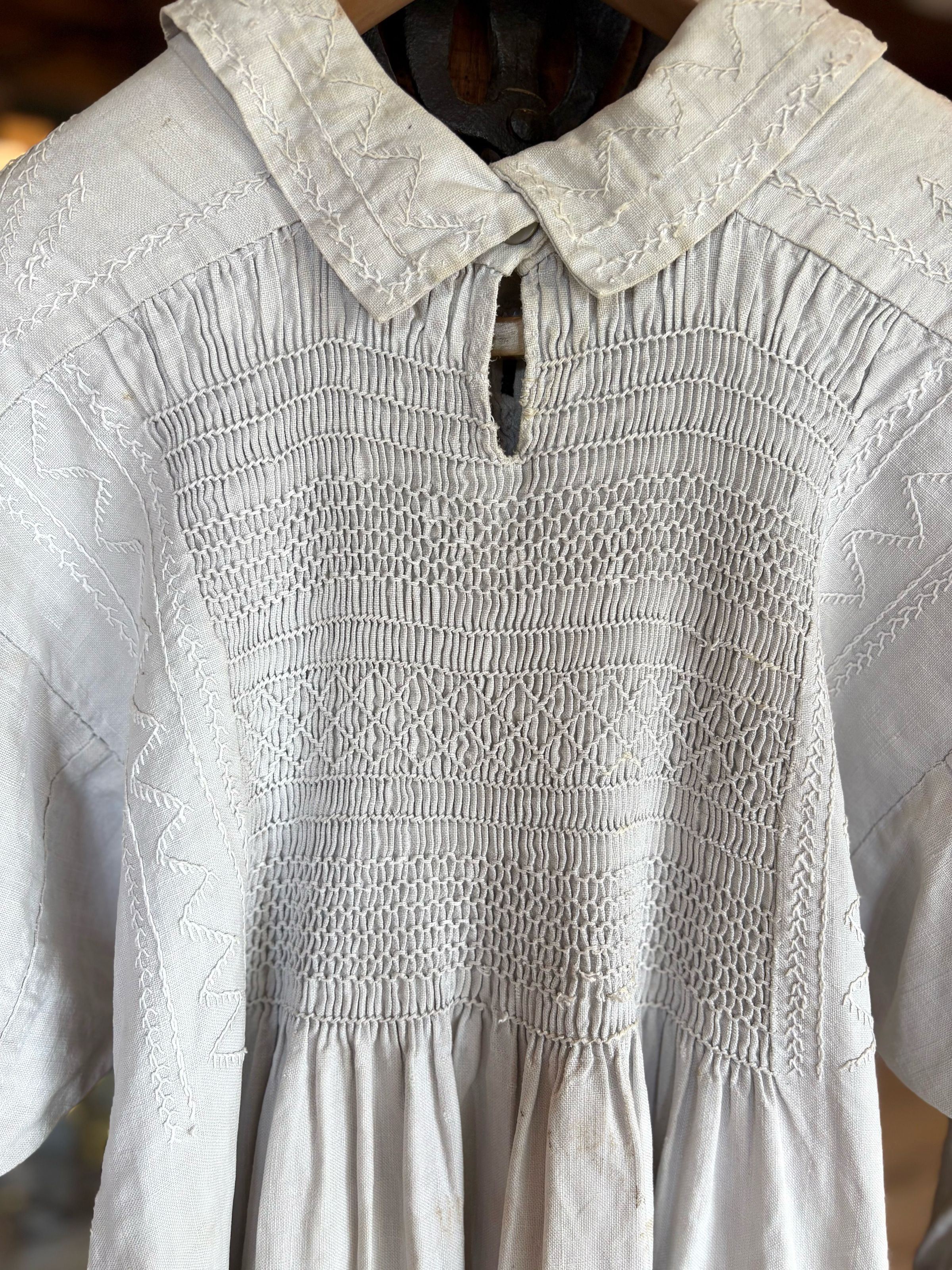
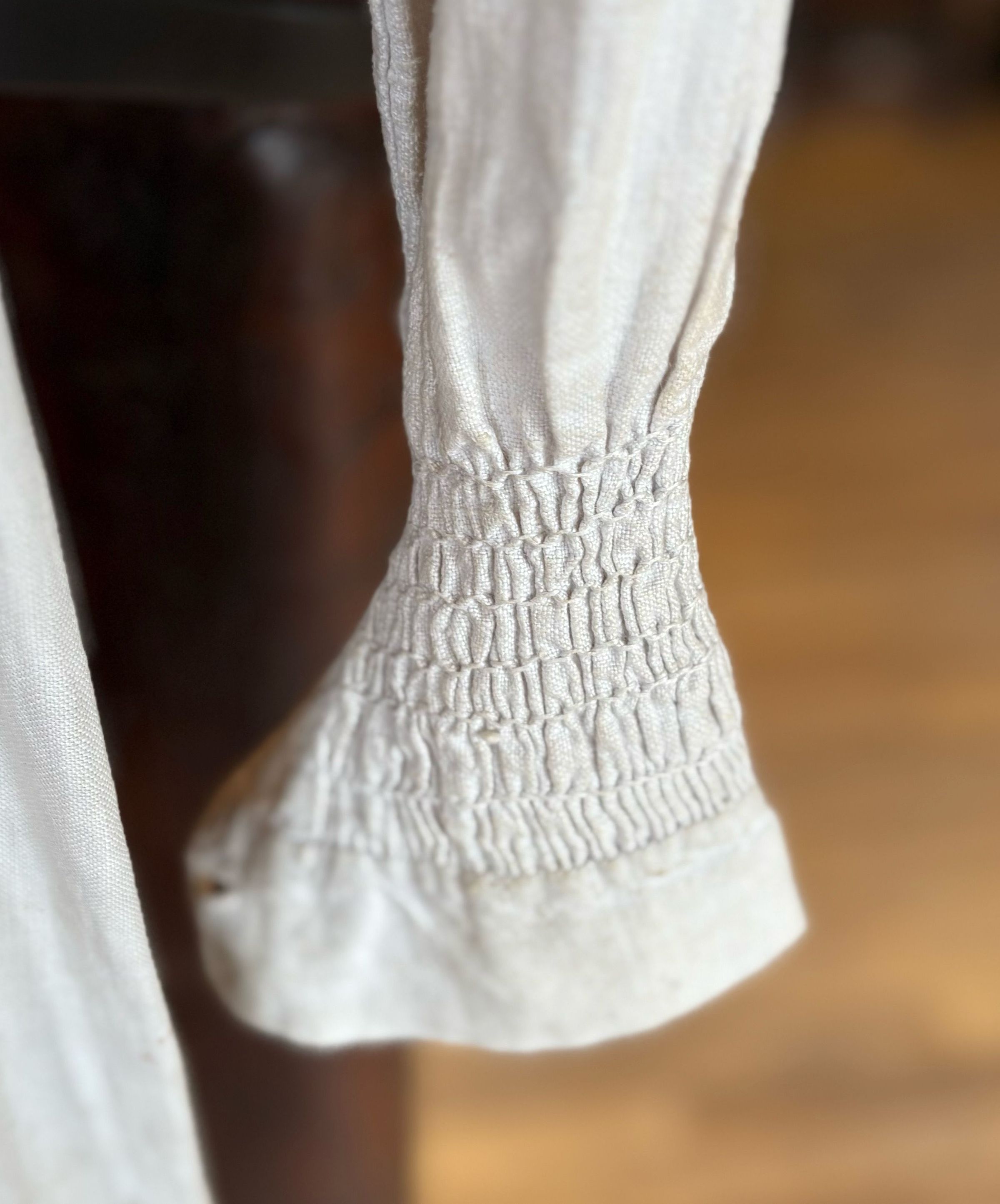
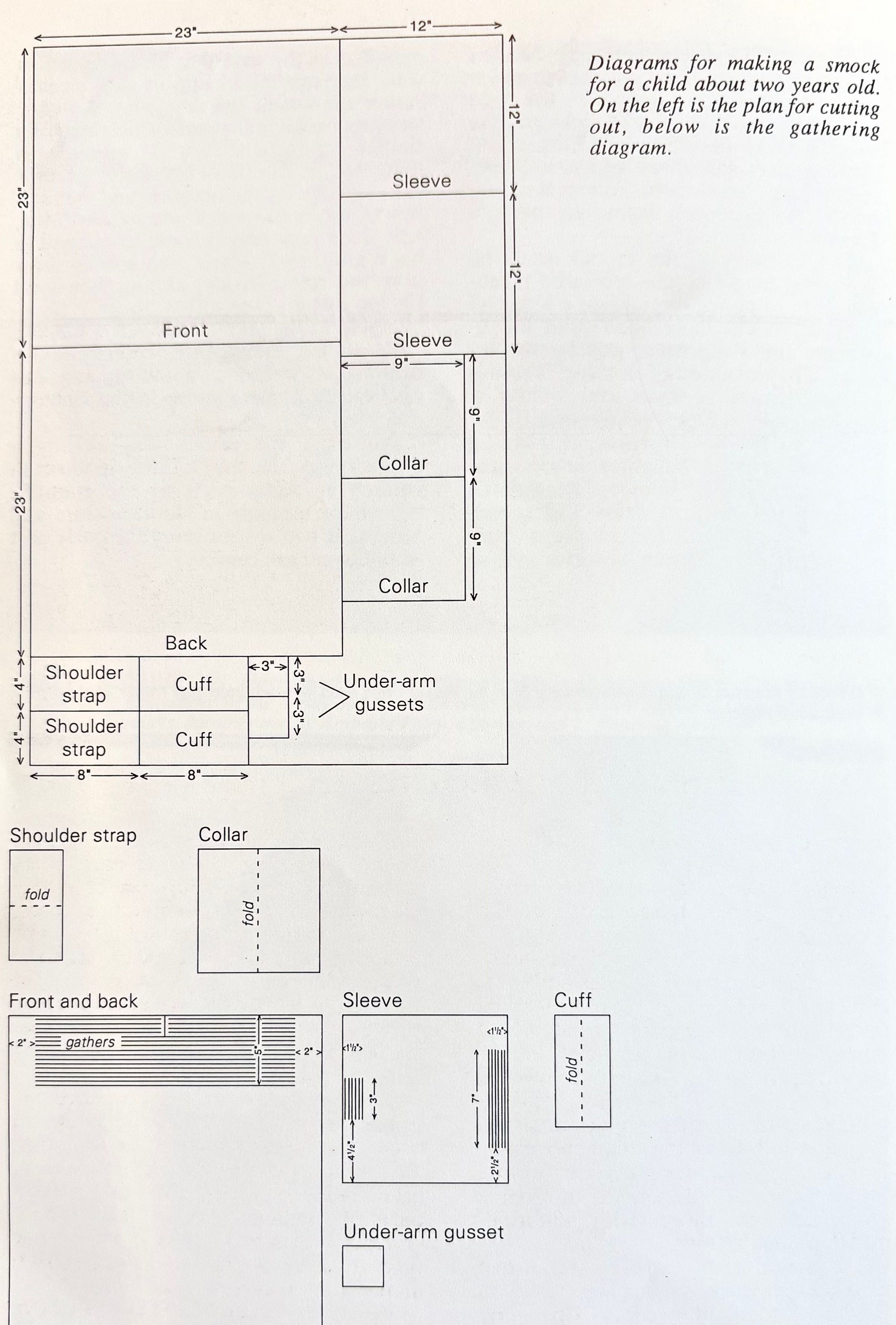
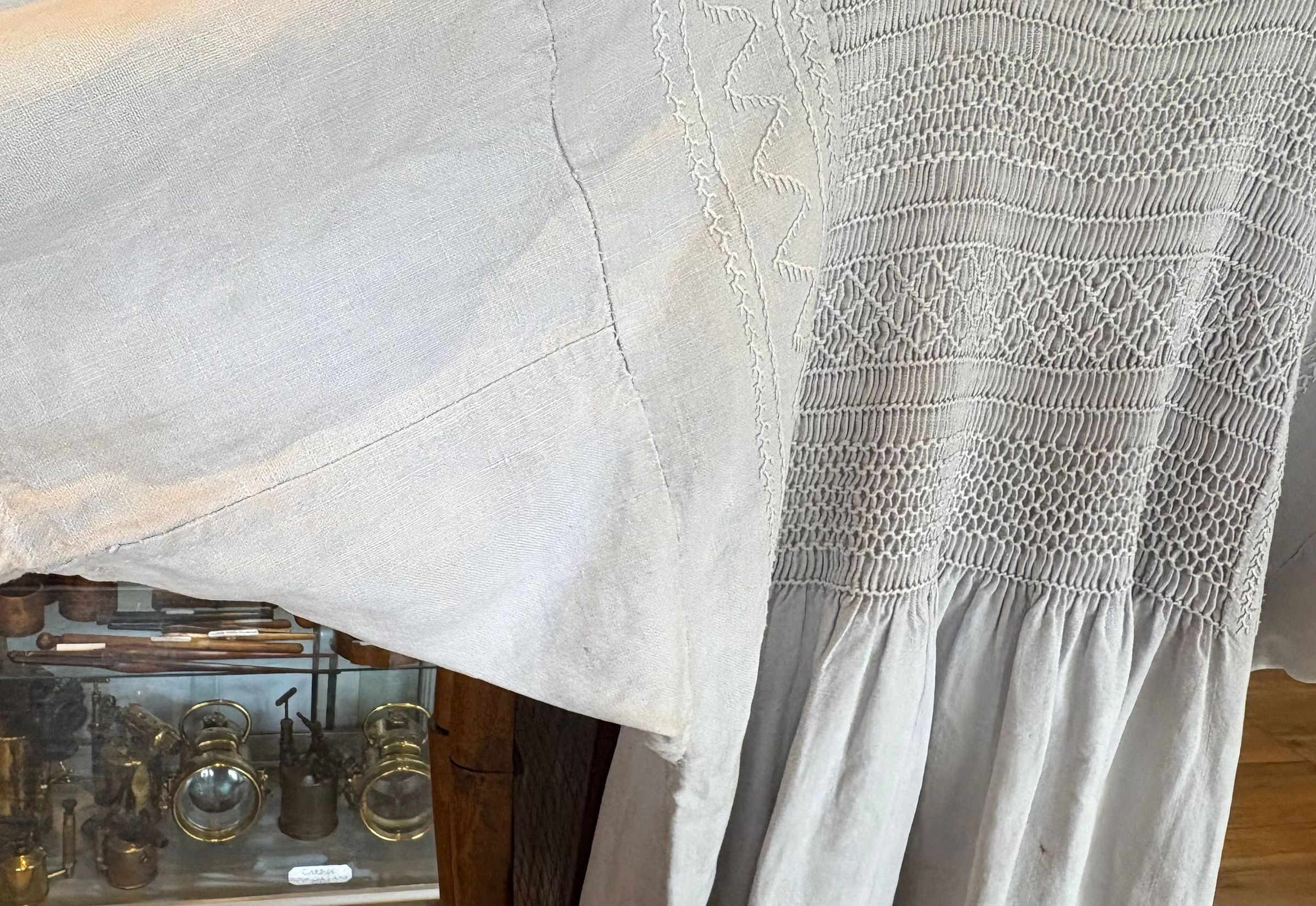
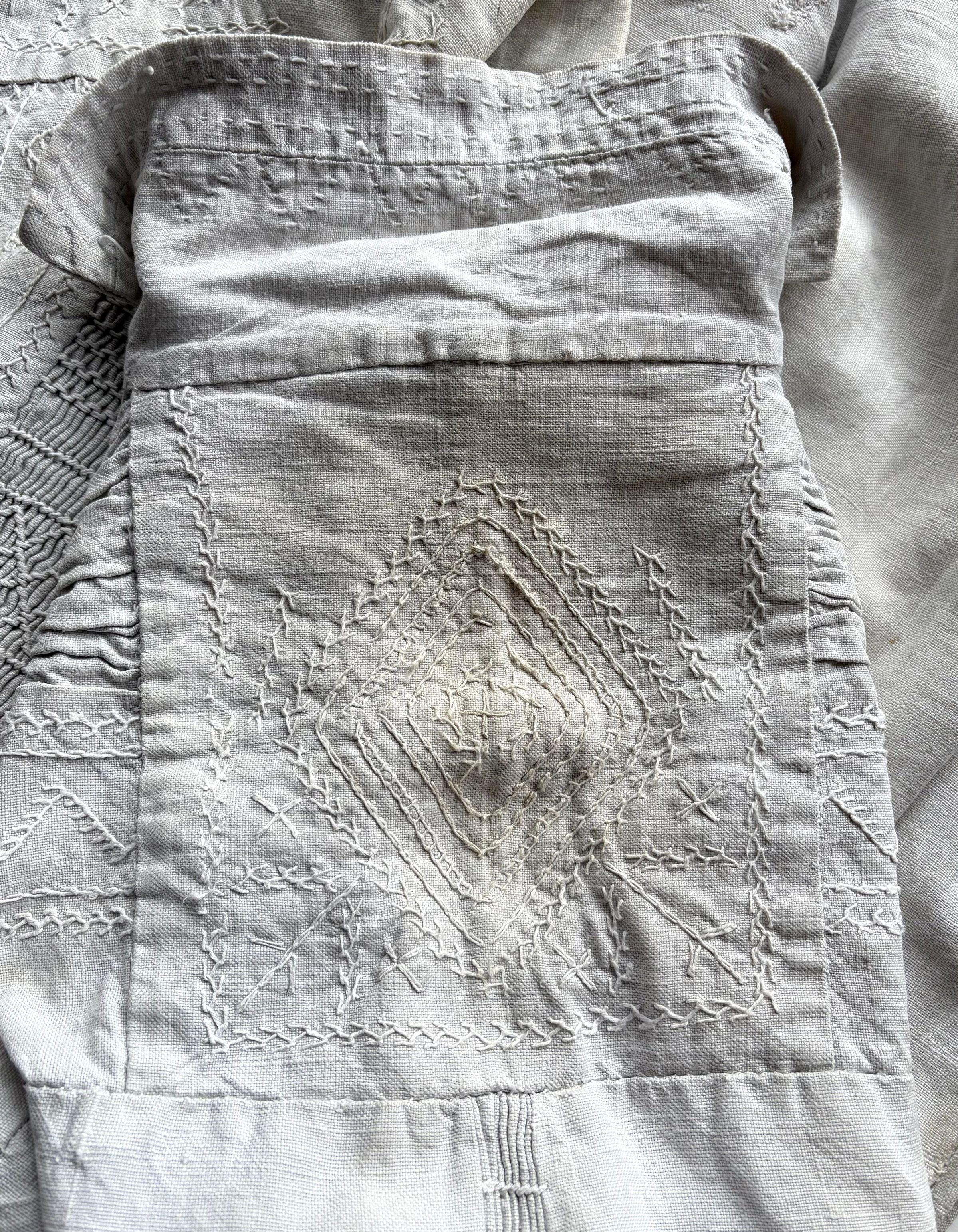
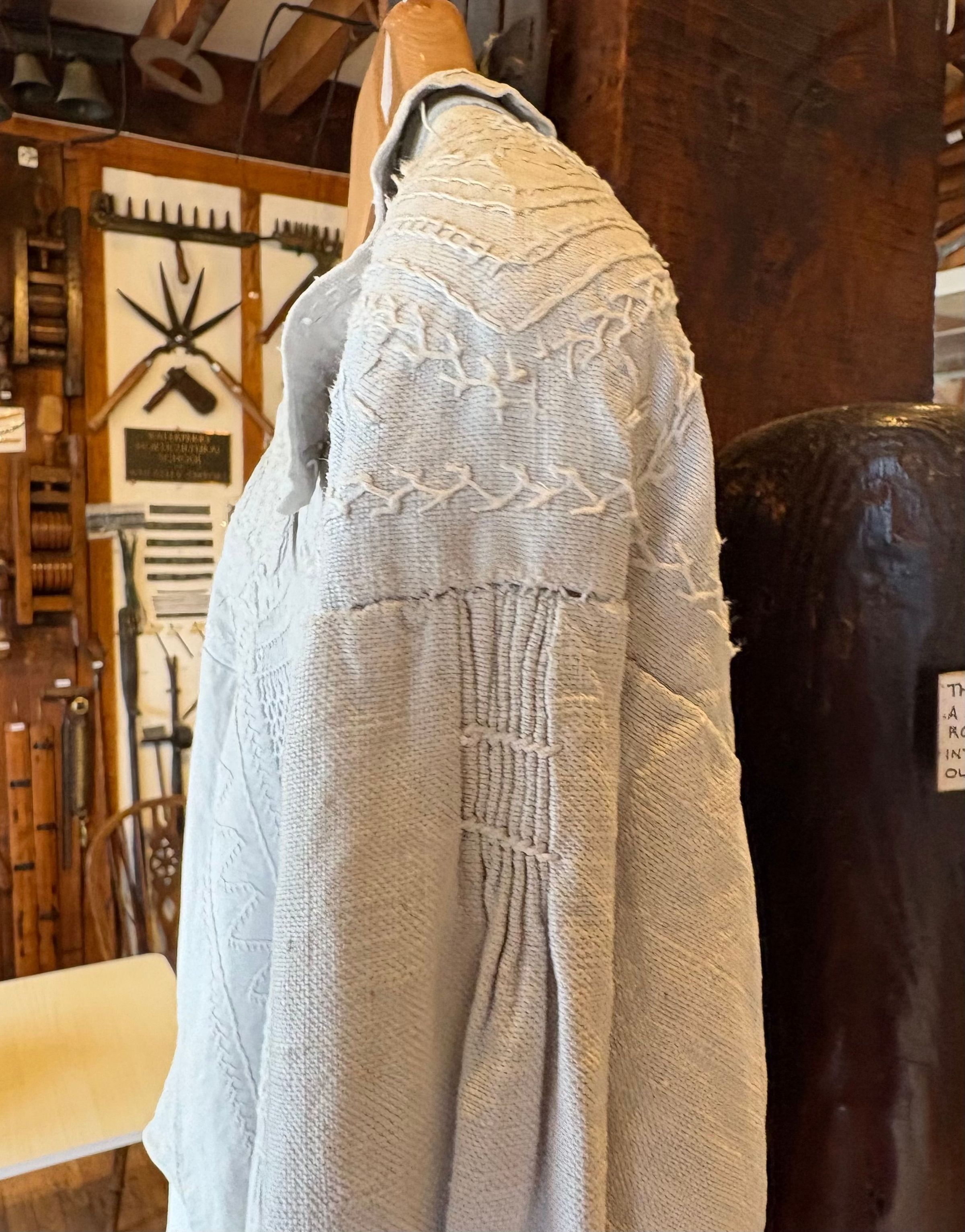
Smocks are worn over the wearer’s clothes. They are usually made from cotton, mostly twill weave, also known as ‘drabbet’, or linen. Most smocks are naturally coloured, ranging from creamy white to dark brown. This is a nineteenth century ‘round’ smock. It is identical back and front so that it can be worn either way round, reserving the clean side for Sunday best. This style of round smock, shirt-shaped with a buttoned neck opening, was typically worn in the Vale of White Horse and distinguished from the other two styles of Oxfordshire smocks by being less heavily smocked and decorated. It is a hand-stitched garment, commonly made of undyed linen or cotton. It is constructed throughout from rectangular and square pattern pieces, with shaping in the sleeves and body of the garment created by gathering and smocking stitches. The smocking at the chest and back gives extra thickness, providing warmth and protection from the elements. A noticeable feature of this particular smock is the difference in fabric of the lower sleeves, which could be replacements. They are made of a coarser fabric of a slightly darker colour, though the smocking and cuff decoration matches that of the main garment. Other features are the repairs to the skirts of the smock, made by both patching and darning, and finely worked. In contrast there are roughly stitched repairs at the neck opening below the collar, where the binding has failed. The smocking at the chest and back is worked in a fairly simple design consisting of rows of single cable stitch and a deeper band of wave stitch forming a trellis pattern. The smocking at the sleeve head is minimal, and the wrist is smocked with rows of single cable and a row of rope stitch. The side panels are decorated with vertical lines of feather stitch and chain stitch. Each shoulder strap has a geometric design of concentric diamonds with a cross within a wreath at the centre, worked in chain stitch, blanket stitch, and feather stitch. The collar is decorated with rows of zigzag blanket stitch, chain stitch, and feather stitch. The buttons at the cuffs and neck opening are likely to be of a natural material; bone or horn being commonly used for buttons at this time. The identity of the maker is not known, but it is recorded that the nearby village of Wheatley was a centre for smock making, with eight women listed as being smock-makers in 1871. In addition, Christine Bloxham, local historian, writes: ‘William Kimber of Headington Quarry recalled that his mother made two smocks per week, receiving two shillings and twopence for each. William used to help his mother by waxing her needles so that they pierced the heavy material more easily.’ SOurces: Oxford Museums Services Information Sheet 16, Oxfordshire Smocks, 1980 and Jan Purrett, November 2025Cataloged By
Colin WhittleCategory
Clothing