Horse brass - Thame
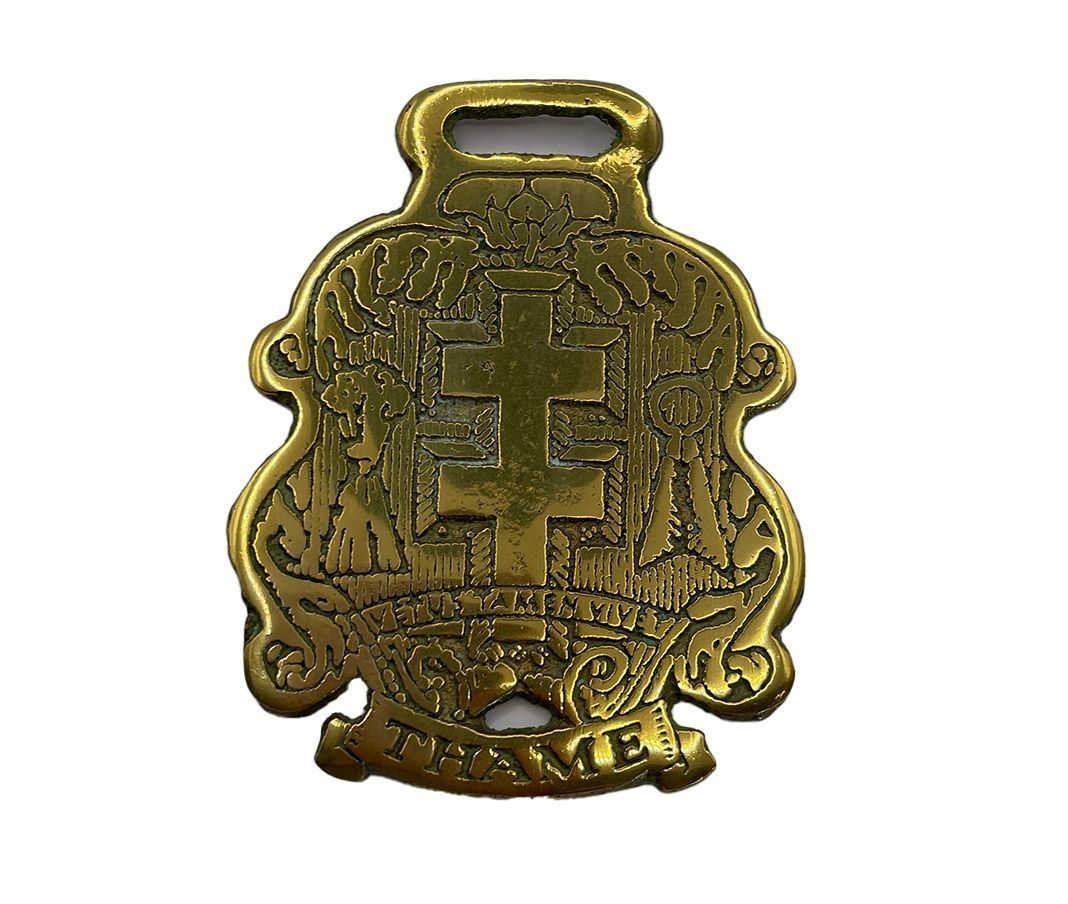
Horse brass - Thame
Name/Title
Horse brass - ThameEntry/Object ID
2025.1.205Description
A horse brass, with the name ThameContext
Although there is evidence that horses have been ornamented since Roman times the horse brasses we are most familiar with belong to the 20th century.The heyday of horse brasses was between 1850 and 1914 and over 2000 different design are believed to have existed. A shire horse could carry 100 brasses on various parts of their harnesses. It is possible that the farmers and carters desired to decorate their horses and carts in the same manner as carriage horses, so started by decorating the blinkers with studs and adding crests with bells. These latter had a real purpose in warning of their coming along narrow lanes. This brass illustrates the emblem of Thame Town Council. In 1940 the Thame Hoard was discovered in the mud on the banks of the river Thame. The hoard consists of five rings and a group of coins. The most splendid of the rings was obviously ecclesiastical, with a long ornate box, to hold a reliquary, surmounted with a carved single piece of amethyst of a double traverse cross. The Town Council adopted the emblem of the cross which is flanked by a wheat-sheaf on one side and a pair of wool shears on the other - representing two trades that brought wealth to the town in the middle ages. The latin motto is of 20th century origin - 'Vetus Tamen Vivet' - meaning either 'Ancient Thame survives' or 'Ancient but Alive'! (Tamen in Latin can be translated as "yet" or it can be viewed as a pun on Thame without an 'h'). The Thame Hoard can be viewed at the Ashmolean Museum, Oxford.Cataloged By
Felix LamCategory
Horse Brasses