Metal button-hole hook
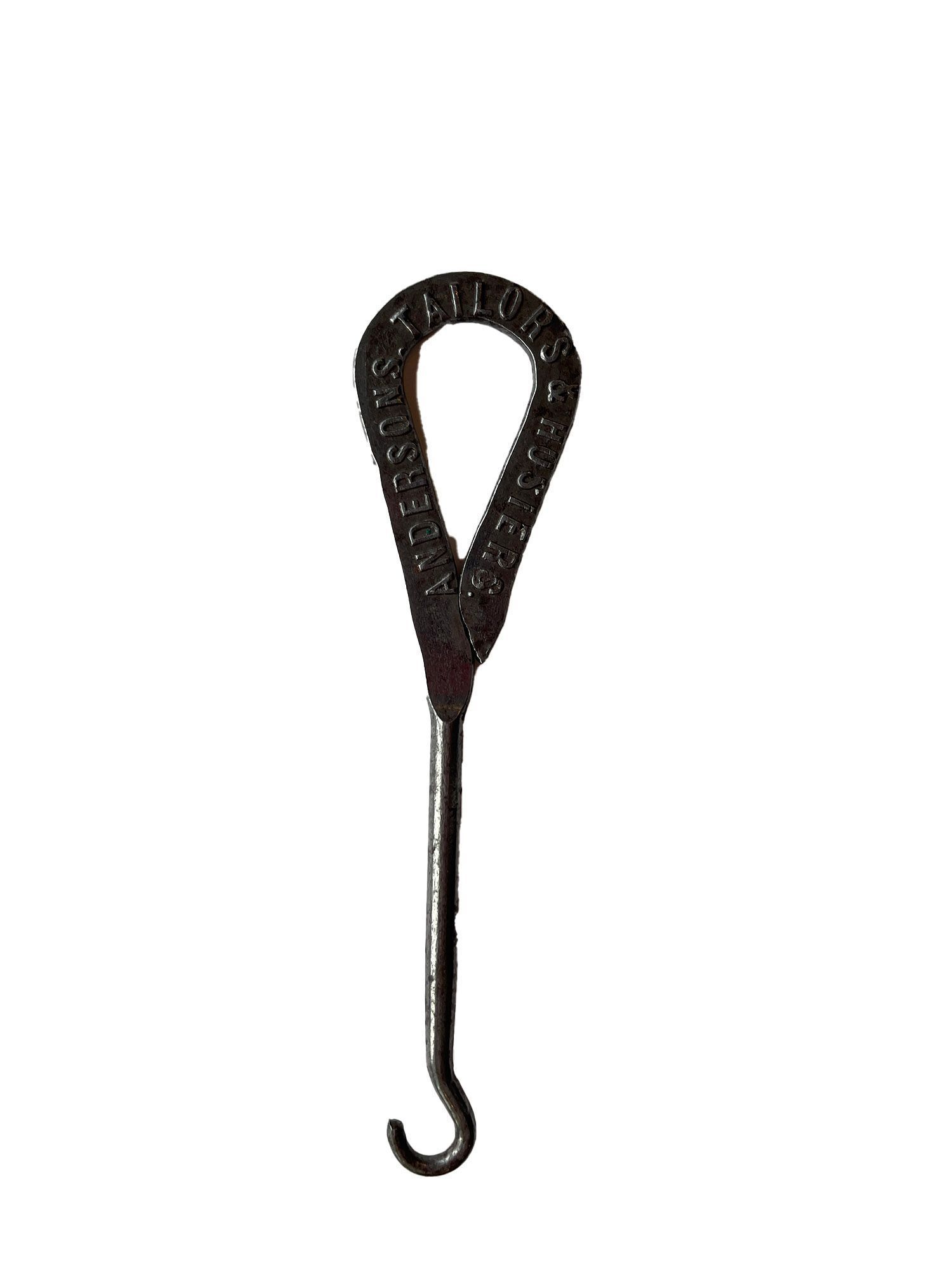
Metal button-hook advertising Anderson' Tailors & Hosiers, York, UK
Name/Title
Metal button-hole hookEntry/Object ID
2025.1.739Description
Metal object with a hook at one end and oval shape at the other end.Context
Button-hooks were not only used to fasten boots but also collars, gloves and cuffs. They may have been first designed for use with gaiters. Their use became more essential as women's fashion in the 1870s increased the number of buttons on their clothing - up to 24 buttons on a glove which was required to fit tightly, so the button-hook was needed to ease fastening. This button-hook is marked with 'Andersons Tailors Hosiers' on one side of the handle and 'Coney Street, York' on the other, and was probably a give away as an advertising gimmick. Coney Street is one of York's oldest streets and runs along the course of a stretch of Roman road which lay just outside the Roman fortress and which ran almost parallel to the eastern bank of the River Ouse. The earliest record of Coney Street's name is in 1213 when it was called Cuningstreta, deriving from the Viking word Konungra and straet - a street. Konungr means king - thus it was King's street. Coney Street was once divided into three stretches - Old Coney Street to the north of St Helen's Square, Coney Street in the middle and Little Coney Street to the south. Old Coney Street is now called Lendal, and Little Coney Street is now called Spurriergate.Cataloged By
Felix LamCategory
Domestic, Tools