Label Type
Cultural/Historical ContextLabel
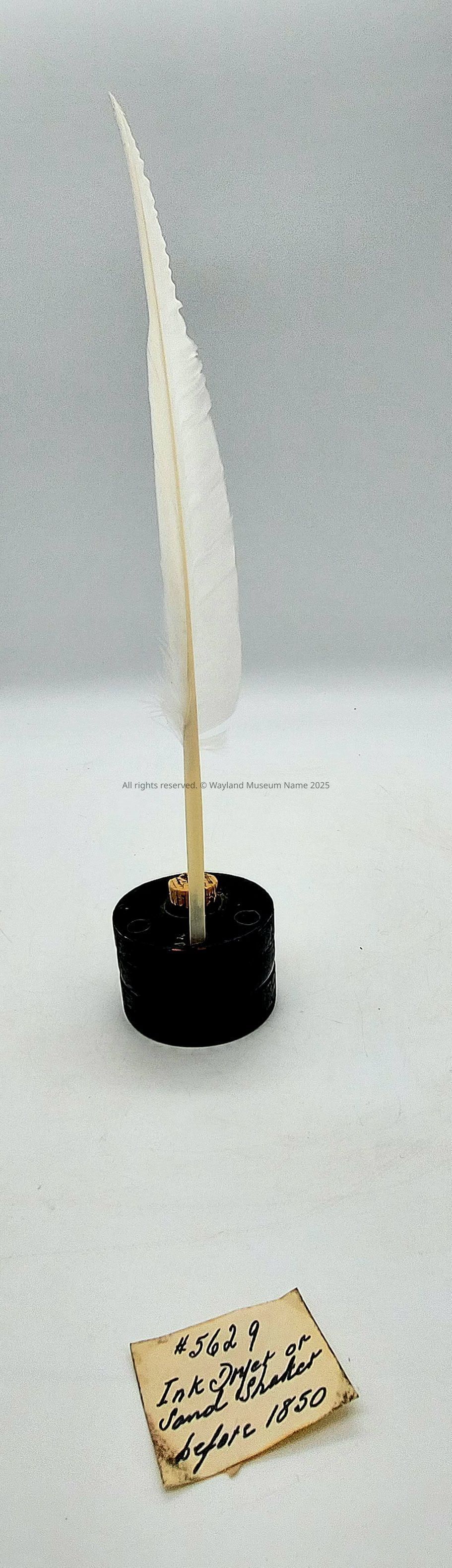
This small, heavy glass inkstand might seem unremarkable at first glance. But consider what instruments like this one made possible. The Declaration of Independence was written with a quill dipped in ink. Poems by Phillis Wheatley Peters. So were the letters Lydia Maria Child sent to senators and abolitionists from Wayland. So were the petitions, newspapers, sermons, and personal correspondence that shaped American public life for centuries. Before the typewriter, before the keyboard, the written word passed through objects like this: a pen, a bottle of ink, a hand.
Writing was how liberty got articulated, the Goldem Ball Tavern in Weston has a large quill sculpture out front their museum. Quills also were how people were documented as property, denied citizenship, or erased from the record. The same tool served the enslaver's ledger and the freedom seeker's narrative.
As America marks 250 years: Who has had access to the tools of expression? Whose words have been preserved, and whose have been lost? What does it mean to put something in writing, or type, and what remains unwritten still?