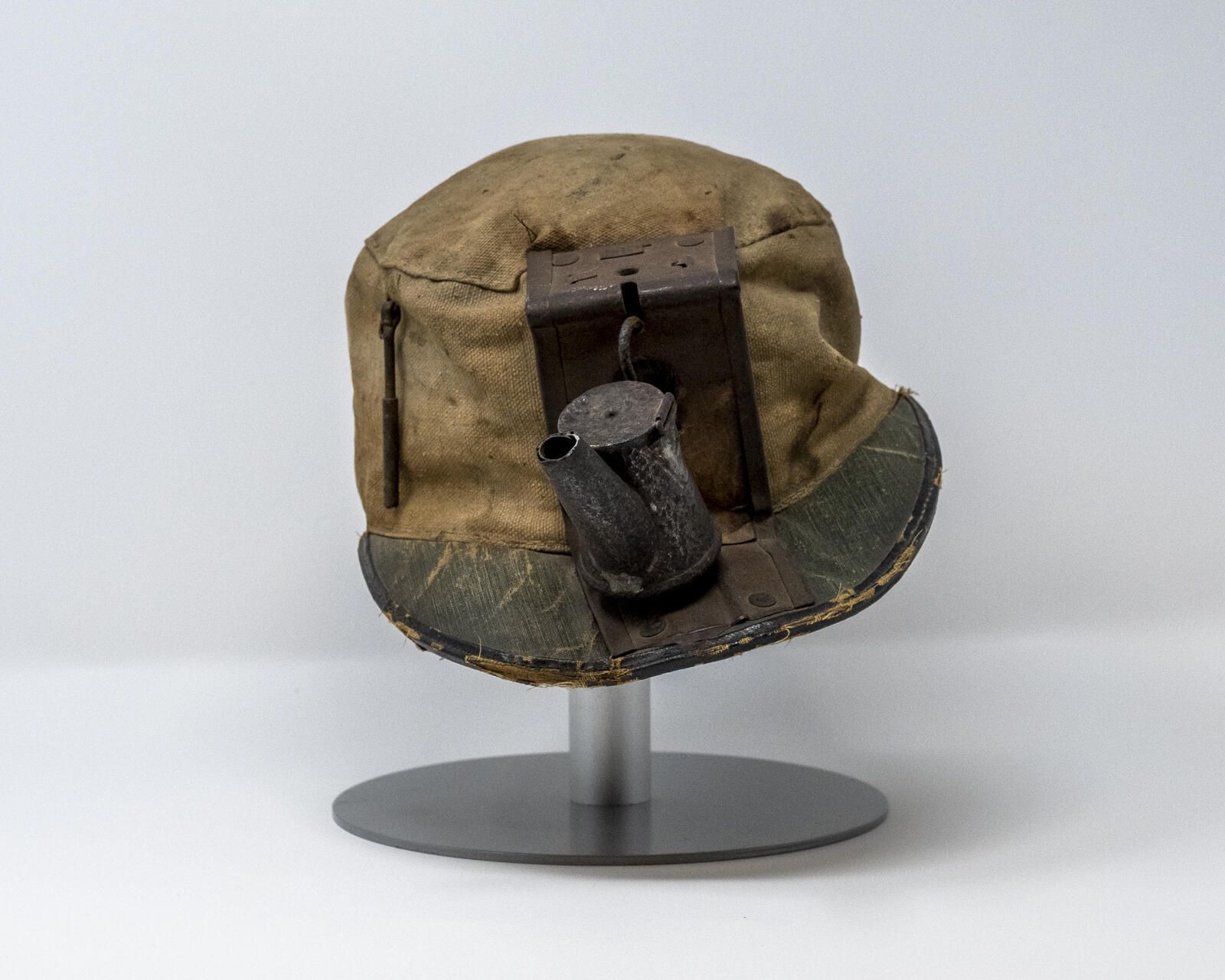
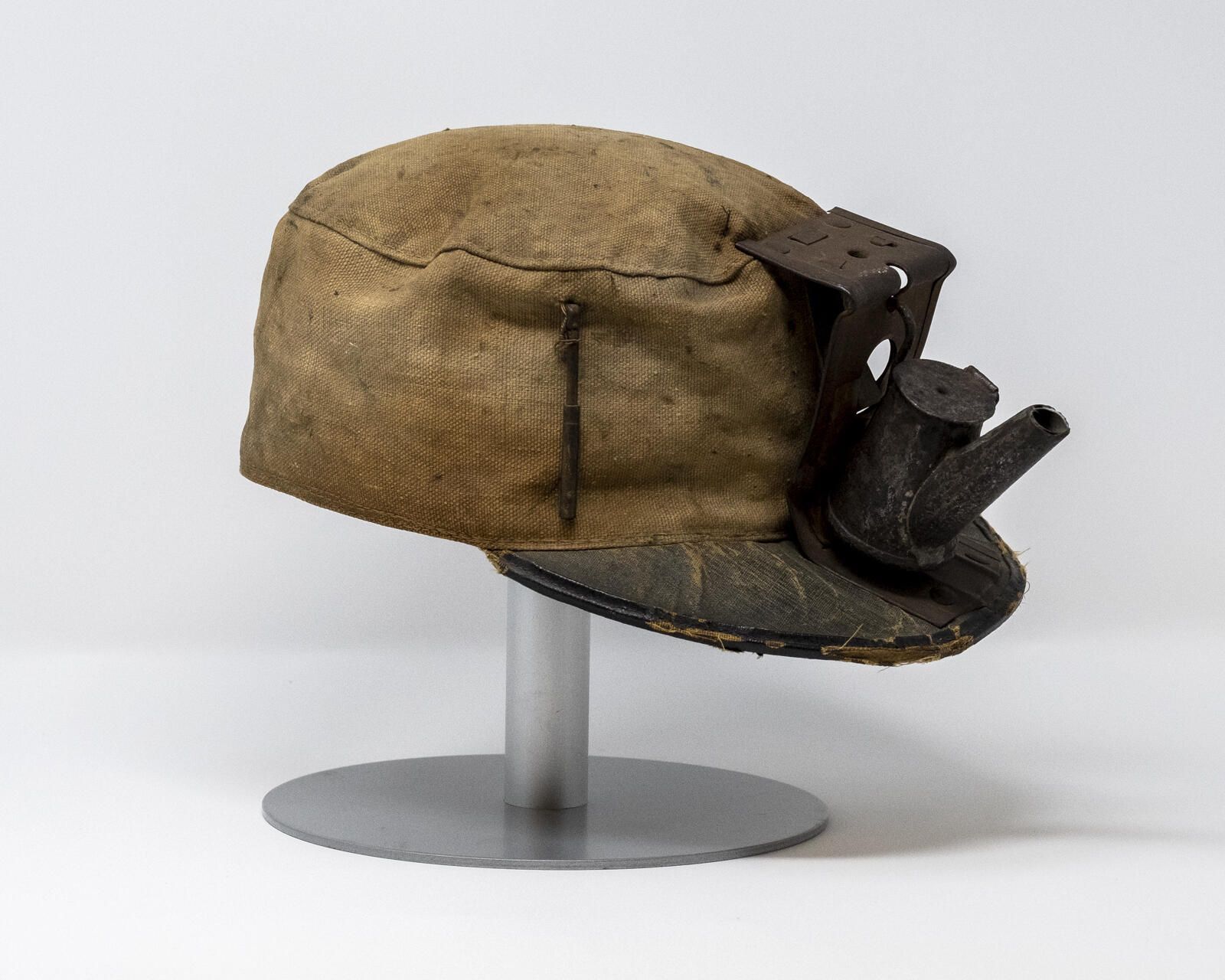
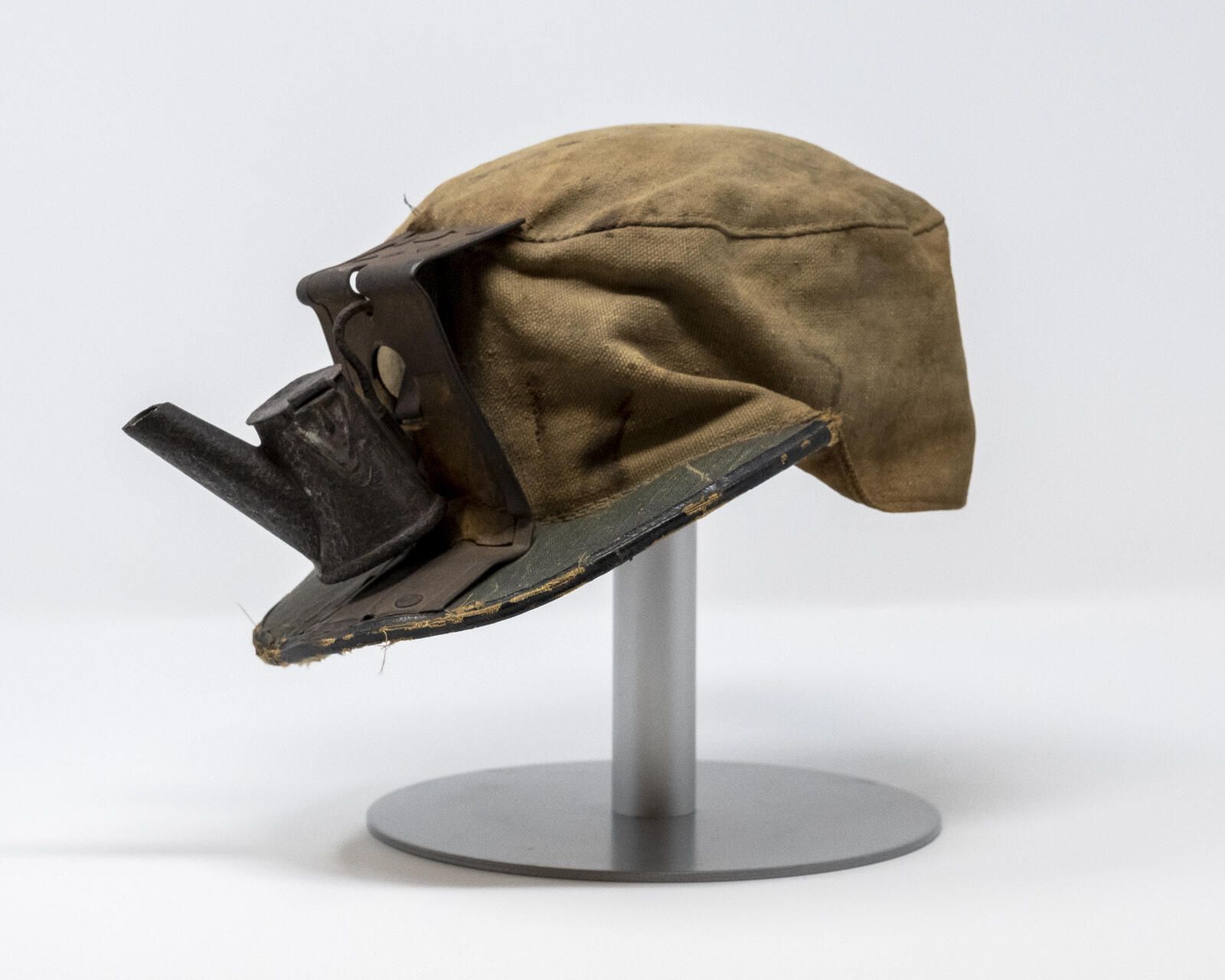
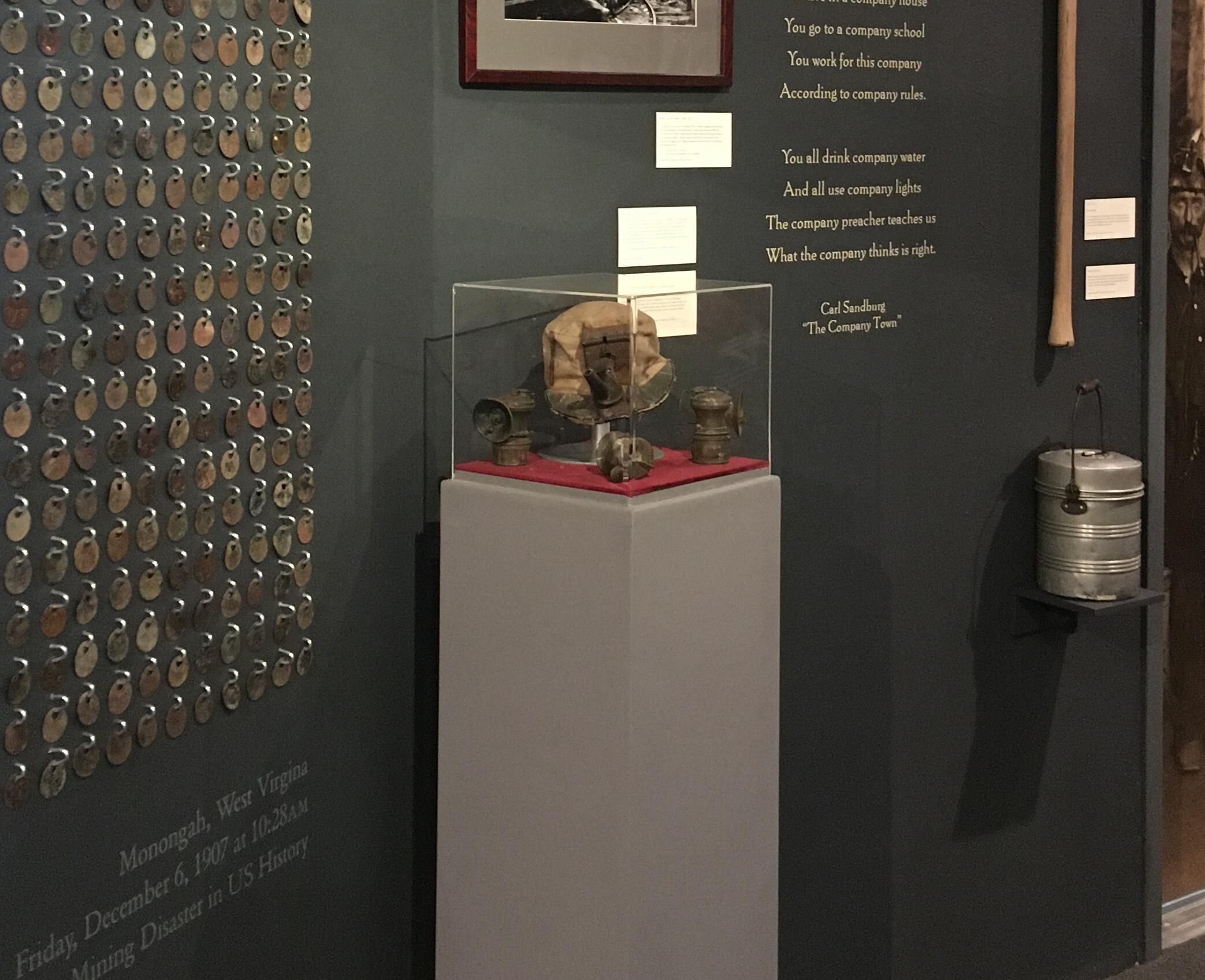
Cloth miner's cap with leatherette brim and attached oil wick "teapot" lamp. Wire cleaning brush is attached to one side of the hat with a wire stitch.
Use
Coal Mining
Context
Style of headgear used by coal miners, primarily as a fixture for open-flame oil-wick lanterns used for visibility in the dark mines. Predates "turtleshell" style helmets, which provided actual protection to the head. Oil lamps were replaced by the carbide lamp, developed in 1910.
Collection
Coal Mining Tools
Acquisition
Source (if not Accessioned)
Wilma Steele
Notes
this was a gift to Wilma Steele from David Alan Corbin
Clothing/Dress/Costume Details
Article of Clothing/Dress/Costume
Hat
Textile Details
Fabric
Canvas
Notes
brim is leatherette
Made/Created
Date made
circa 1900
Time Period
20th Century
Accessories
Accessory
Stand
Notes
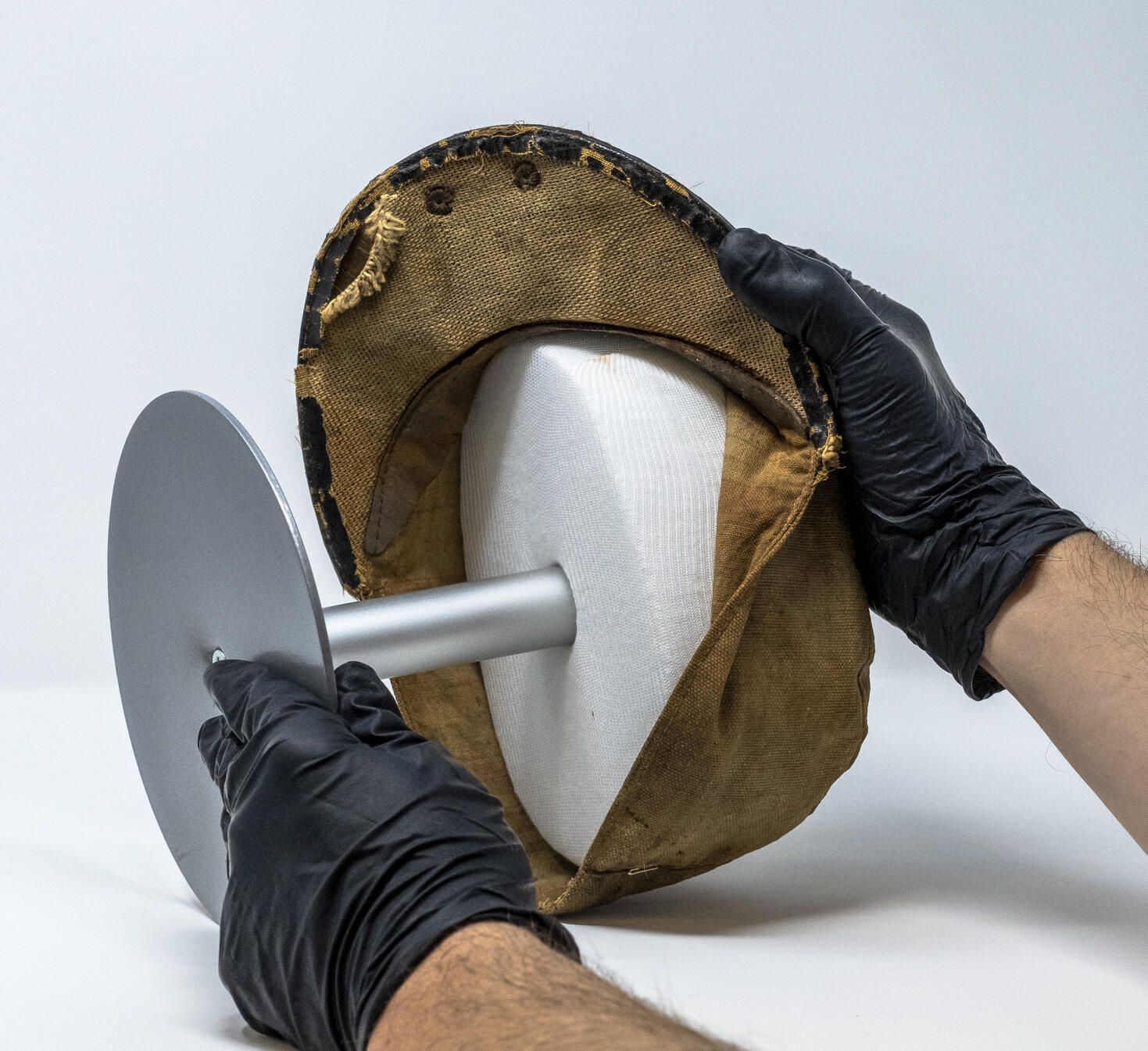
pinned to dedicated hat stand
Location
Location
* Untyped Location
Exhibition, encased
Category
Exhibit
Date
August 21, 2020
Notes
This plexi case is not secured by locking screws.
Relationships
Related Person or Organization
Person or Organization
Wilma Steele, David Alan Corbin
Provenance
Notes
gift of David Alan Corbin
Exhibition
Life in the Coal Camps
Interpretative Labels
Label Type
Usage Label
Label
“Around 1850, the oil-wick lamp was invented in Scotland. The lamp issued a bare flame, giving off enough light for miners to see what was in front of their face, but not much further. The oil-fueled flame was exceedingly smoky, and could easily ignite flammable gases (mainly methane) found in coal mines. These lamps were worn on soft caps that offered little in the way of protection and were mainly worn for the convenience of having a light source in front of the miner's face.”
- Smithsonian National Museum of American History
collection of Wilma Steele