Label Type
Object LabelLabel
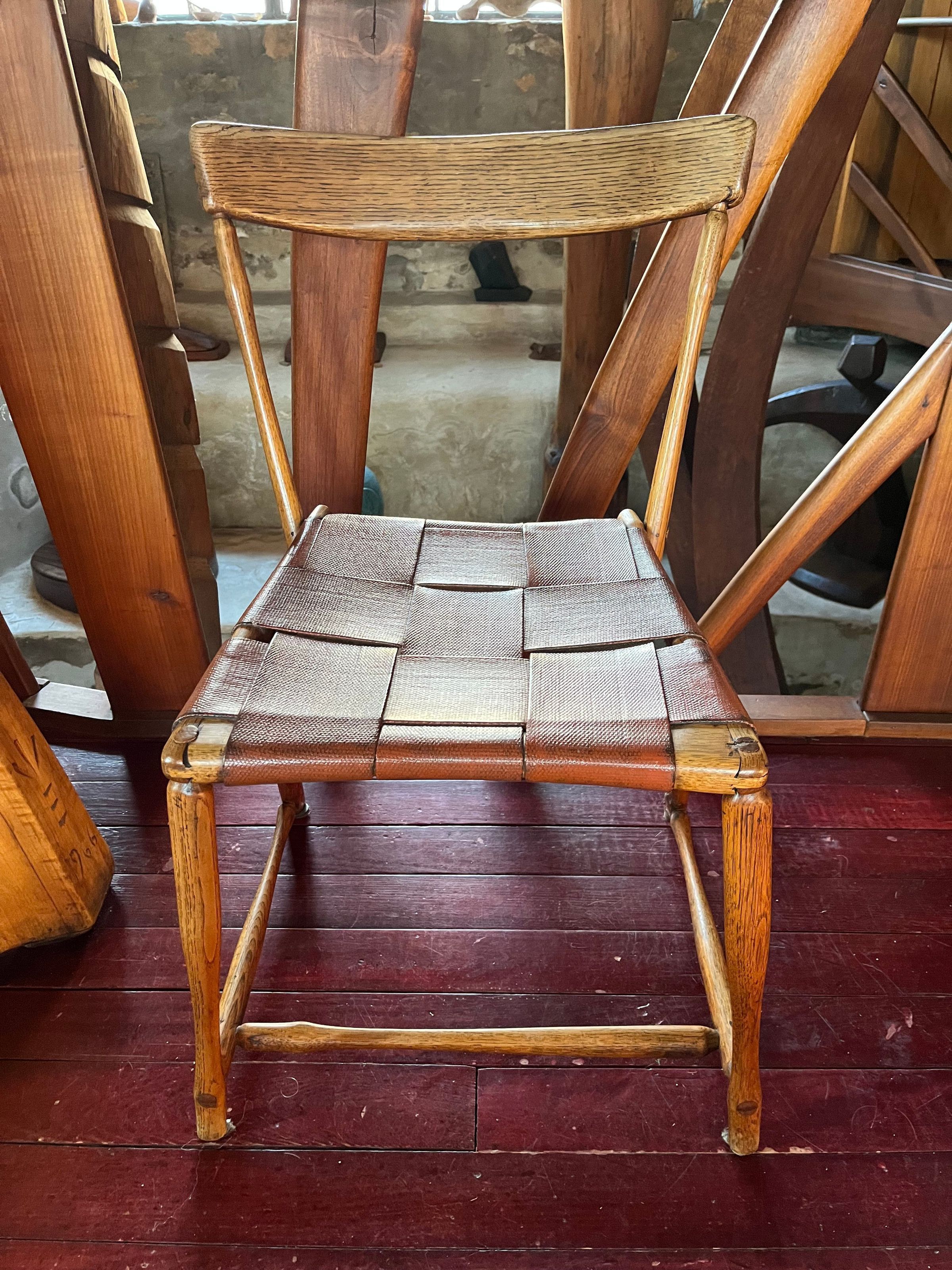
The hammer handle chair was a form Esherick began to develop in the late 1930s and continued over succeeding decades. Each chair incorporates up to 12 different handles originally intended for axes and different types of hammers. The seats are made from common canvas machine belting that Esherick painted with colors he mixed himself.
These two hammer handle chairs are from the original set of 36 that Esherick made for the Hedgerow House’s common room in 1938. That year Esherick, with the help of the cabinetmaker John Schmidt, made a total of 45 of these chairs in four batches, each batch an experiment with different construction. The chair with yellow belting is the earliest iteration and the red belted chair is from the second.
It is unclear exactly where Esherick acquired the two barrels of tool handles used to construct these chairs. Some stories claim they were acquired at an auction for a defunct woodturning company, while others claim Esherick acquired them at a Phoenixville hardware store selling surplus inventory. In either case, they illustrate Esherick’s search for cheap material during the Depression.