Cradle Of Kraut Cutter

Object/Artifact

-

Wildwood Historic Center

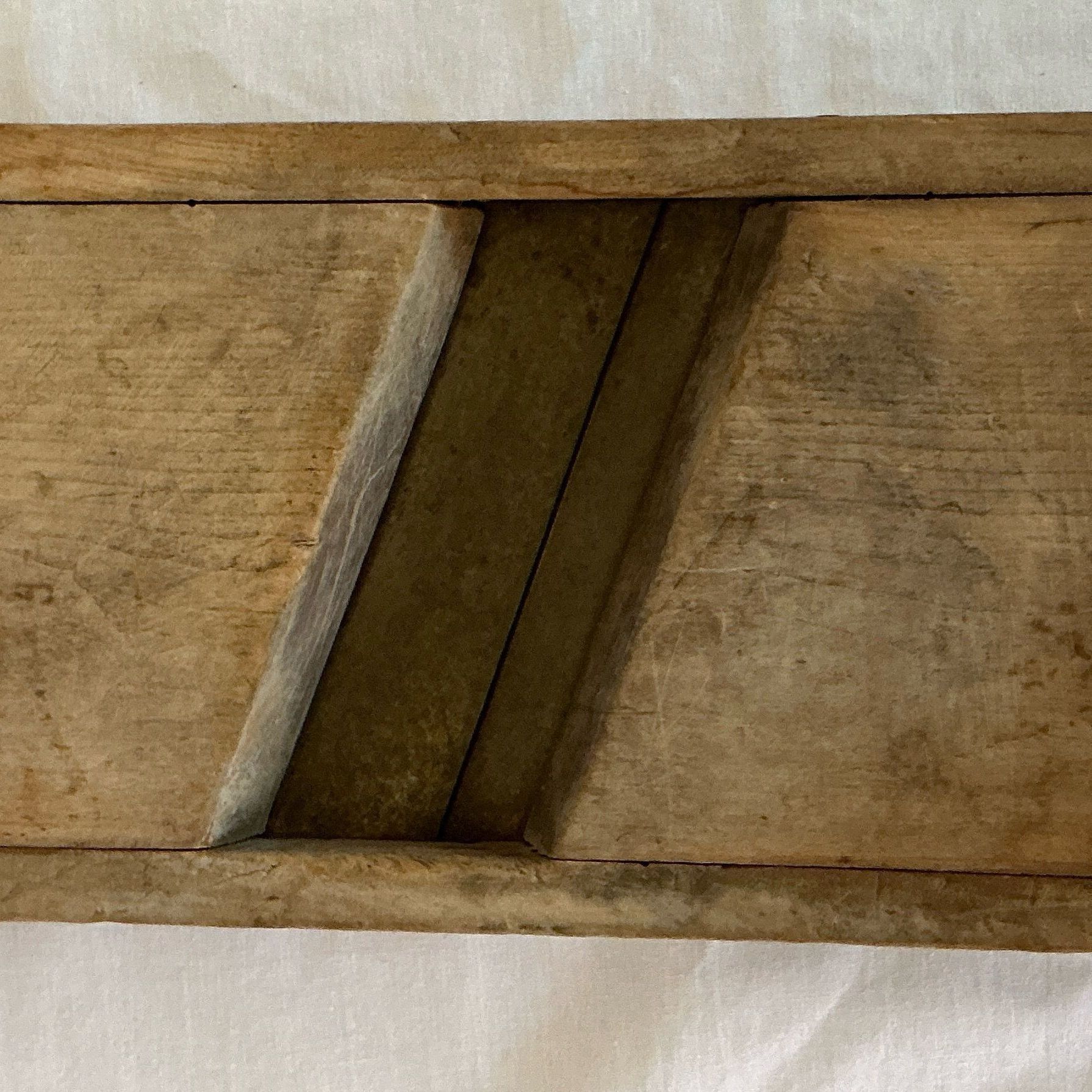
Back side if kraut cutter.

Back side if kraut cutter.

Name/Title

Cradle Of Kraut Cutter

Entry/Object ID

1969.024.001

Description

Wooden cradle with metal blades toward center. Hole in center at one end.

Collection

Wildwood Historic Center [primary collection]

Acquisition

Accession

1969.024

Lexicon

Nomenclature 4.0

Nomenclature Tertiary Object Term

Cutter, Cabbage

Nomenclature Secondary Object Term

Cutter, Vegetable

Nomenclature Primary Object Term

Tool, Food Cutting

Nomenclature Sub-Class

Food Preparation Equipment

Nomenclature Class

Food Processing & Preparation T&E

Nomenclature Category

Category 04: Tools & Equipment for Materials
Dimensions

Width

6-3/4 in

Length

18 in

Dimension Description

Blades

Width

5-3/4 in

Length

3-1/4 in

Location

Wall

North Wall

Room

Pantry

Floor

First Floor

Building

Wildwood House

Condition

Overall Condition

Poor

Provenance

Notes

There should be a head of cabbage was cut in half and placed in this square, flat side down and slid back and forth over the blades to shred the cabbage Making Kraut You will need a 50 pound bag of cabbage, 1 pound of canning salt, one large tub, two clean crocks and a kraut cutter. 1. Wash and clean cabbage heads, remove core, cut in half or quarters (depending on the size of your cutter/shredder and shred all. 2. In a large bowl (5 lbs of shredded cabbage at a time) mix cabbage with three tablespoons of canning salt. Let stand 15-20 minutes to wilt a little. 3. Pack the cabbage firmly into the crock. Using hands, pack down firmly and evenly. Repeat this step until crock is filled within 4 inches from the top. 4. Pack the cabbage down until the juice covers the top. If there isn't enough juice to cover the top, make a brine using 5 cups water and 2 tablespoons of canning salt. Place in stainless steel pan and bring to a boil, stirring to help salt dissolve. Cool the brine and then pour over cabbage until covered about 1/2 inch above cabbage. 5. Cover crock with cheesecloth (making sure the piece of cheesecloth is large enough that the ends go over the sides of the crock a little. Tie string around neck of crock to hold cheesecloth in place. Place cookie sheet across top of crock and weight it down with a brick or heavy rock. 6. Gas bubbles means fermentation is working. Remove and discard scum formation everyday. 7. A room temperature of around 70 degrees should be maintained for best fermentation of the cabbage. 8. The fermentation process should be done in 3 to 6 weeks (You'll be able to tell when no more bubbles form.