Damask Towel

Object/Artifact

-

Wildwood Historic Center

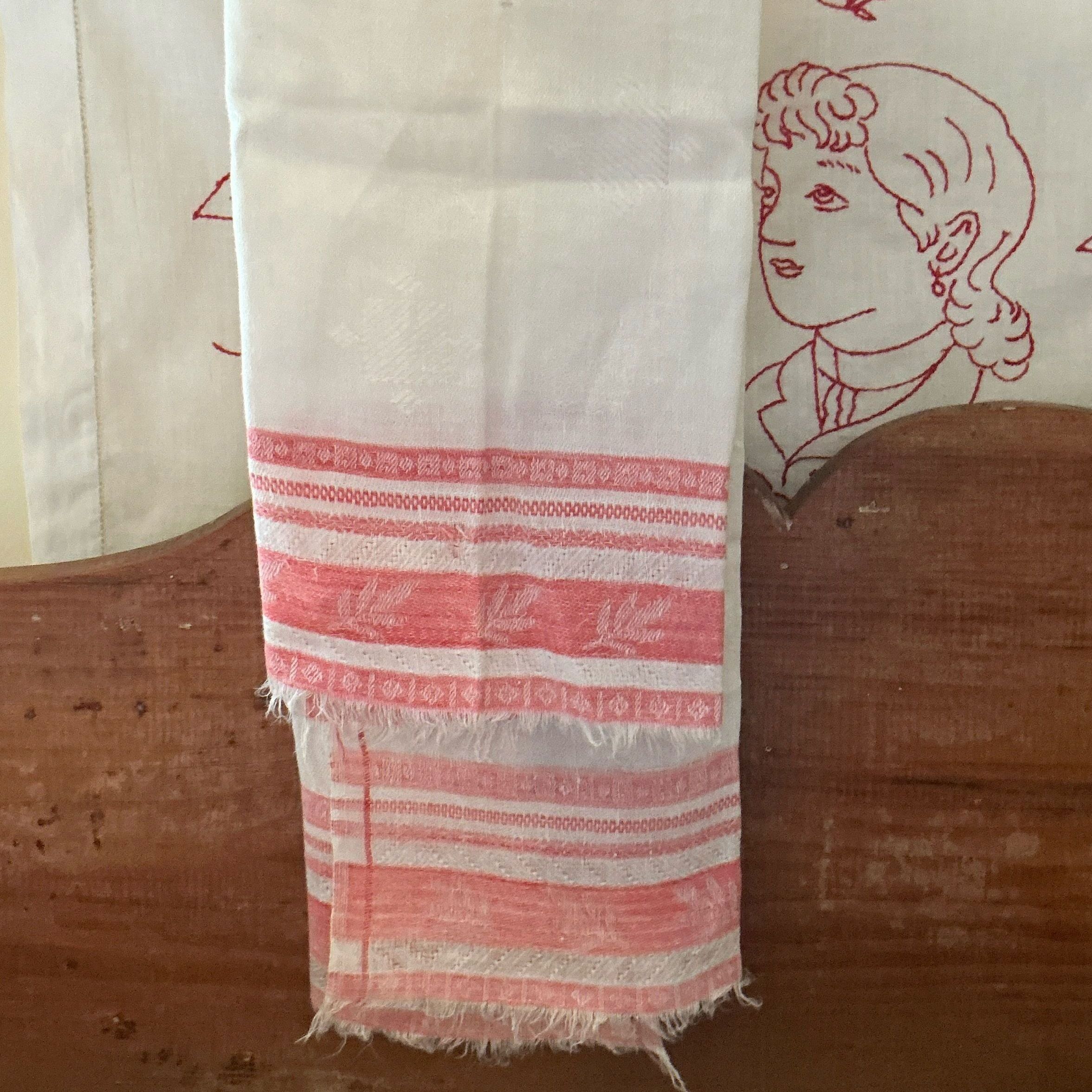
Towel on rack.

Towel on rack.

Name/Title

Damask Towel

Entry/Object ID

2017.163.042

Description

White damask hand towel with red leaf design and narrow stripes woven into border on either end. Fringe worn short. Narrow red stripe down either long side.

Collection

Wildwood Historic Center [primary collection]

Acquisition

Accession

2017.163

Source or Donor

163 Mrs. Bill Moore

Acquisition Method

Gift

Lexicon

Nomenclature 4.0

Nomenclature Secondary Object Term

Towel, Hand

Nomenclature Primary Object Term

Towel

Nomenclature Sub-Class

Hygiene Objects

Nomenclature Class

Toilet Articles

Nomenclature Category

Category 03: Personal Objects

Dimensions

Width

20 in

Length

34 in

Location

Cabinet

Pie Safe

Wall

East Wall

Room

Kitchen

Floor

First Floor

Building

Wildwood House

Condition

Overall Condition

Fair

Provenance

Notes

As the Industrial Revolution spread across Europe, chemists and manufacturers sought new red dyes that could be used for large-scale manufacture of textiles. One popular color imported into Europe from Turkey and India in the 18th and early 19th century was Turkey red. Beginning in the 1740s, this bright red color was used to dye or print cotton textiles in England, the Netherlands and France. Turkey red used the root of the rubia plant as the colorant, but the process was long and complicated, involving multiple soaking of the fabrics in lye, olive oil, sheep's dung, and other ingredients. The fabric was more expensive but resulted in a fine bright and lasting red, similar to carmine, perfectly suited to cotton. The fabric was widely exported. In 19th-century America, it was widely used in making the traditional patchwork quilt.[1]