Name/Title
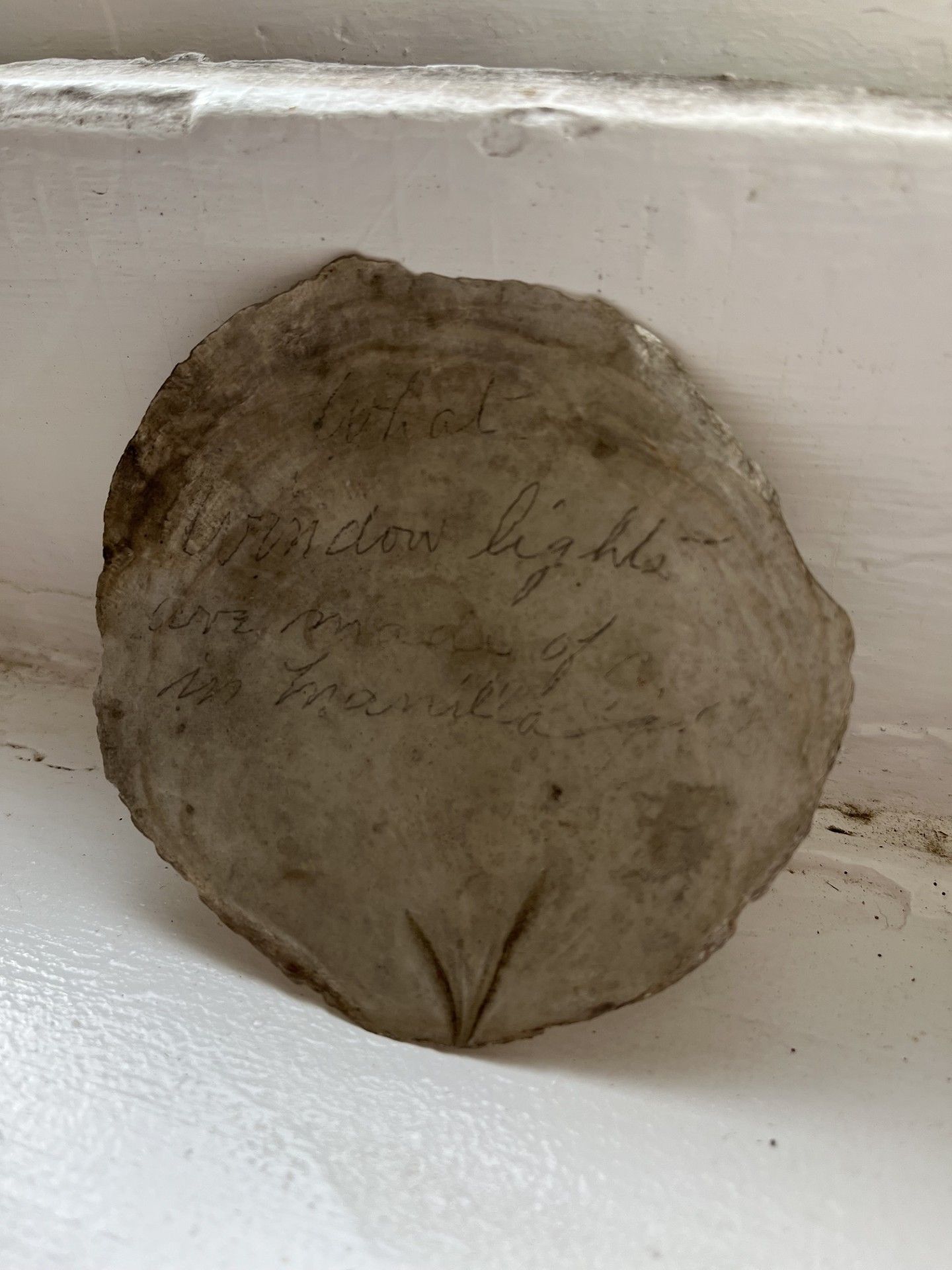
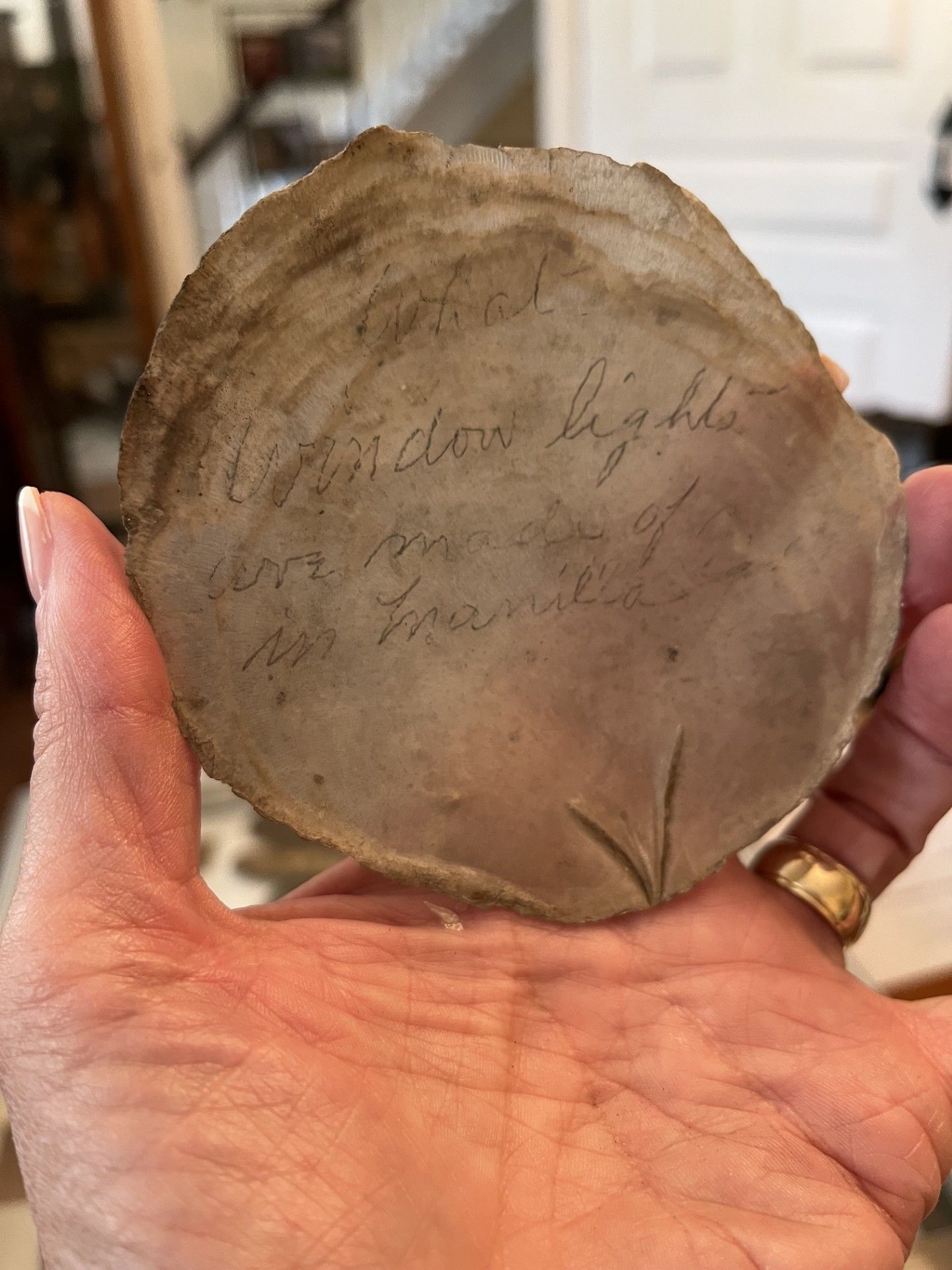
Capiz shell (the translucent shell of the windowpane oysterEntry/Object ID
100440Scope and Content
(AI) This is a capiz shell (the translucent shell of the windowpane oyster, Placuna placenta).
Inscription Text
The handwritten pencil inscription reads:
"What window lights are made of in Manila"
Context & Historical Use
Translucent Shell Windows: Capiz shells are naturally flat, thin, and translucent, allowing diffuse sunlight to pass through while providing protection from wind and rain.
Philippine Architecture: Before modern sheet glass became widely available or affordable in Southeast Asia, these shells were cleaned, cut into squares, and set into wooden grid frames to serve as window panes (often called "capiz windows") in traditional Spanish Colonial houses across the Philippines, particularly around Manila and Cavite.
Souvenir / Specimen Object: American travelers, traders, and sailors visiting Manila in the late 19th and early 20th centuries frequently brought back individual capiz shells inscribed with notes like this one as historical curiosities or souvenirs.