Name/Title
Magazine article "They call it TAC" pg 49 Capt. Richard G BullEntry/Object ID
001466Tags
Richard G BullScope and Content
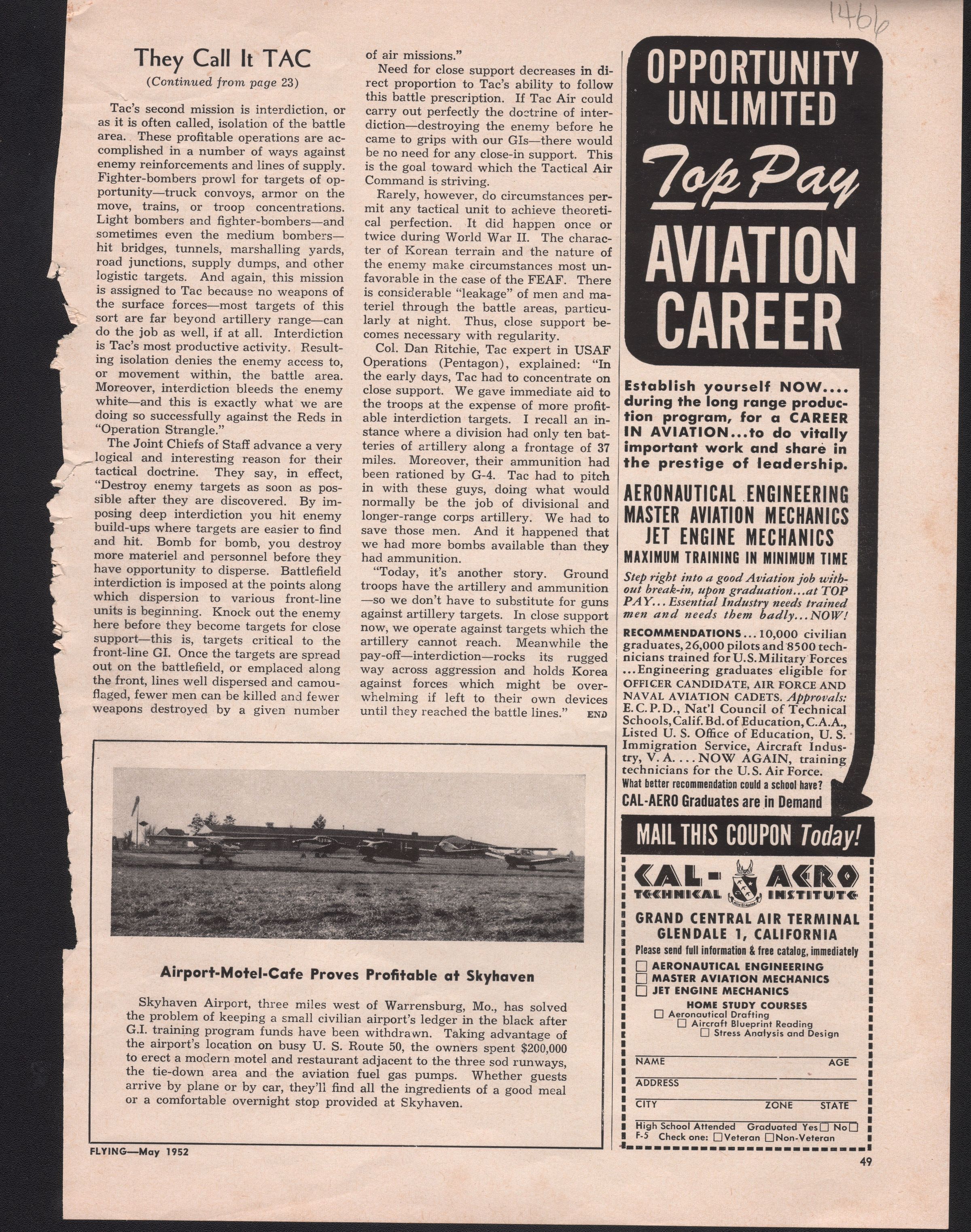
The 1952 article "They Call It TAC" explains the strategic philosophy of the Tactical Air Command (TAC) during the Korean War, specifically focusing on the shift from immediate "close support" to long-range "interdiction."
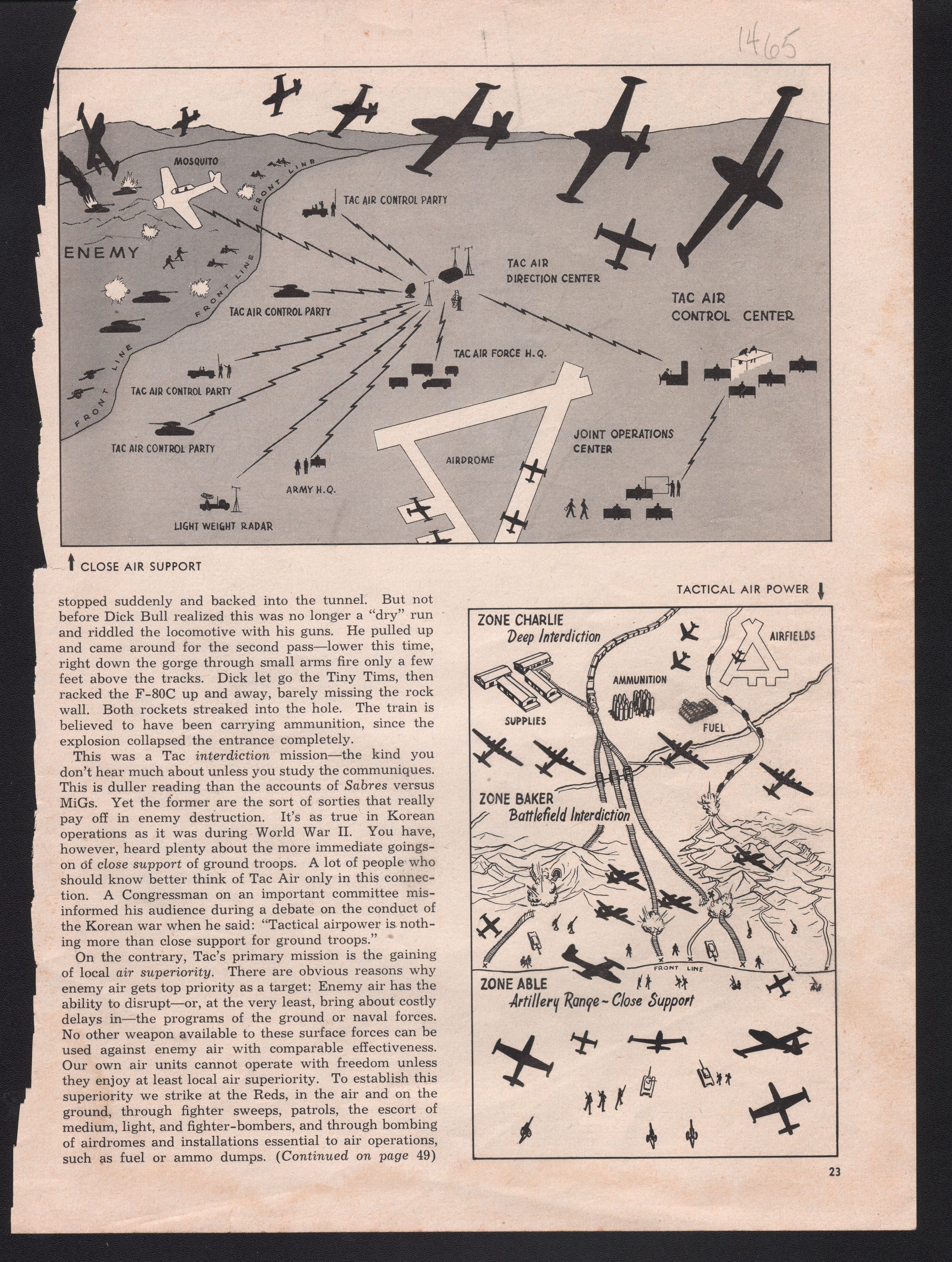
The Core Strategy: Interdiction
The article argues that interdiction—striking the enemy’s supply lines and reinforcements far behind the front lines—is the most effective use of air power. The logic is based on several key points:
Efficiency: It is easier and more effective to destroy a concentrated truck convoy or a bridge than it is to hunt down individual soldiers once they have dispersed and camouflaged themselves at the front.
"Operation Strangle": By hitting "targets of opportunity" (trains, ammo dumps, and road junctions), the Air Force "bleeds the enemy white" before they can ever reach the battlefield.
The "Perfect" Goal: Ideally, if interdiction were performed perfectly, the enemy would be neutralized before ever reaching the GIs, theoretically eliminating the need for ground support entirely.
Close Support: The Reality Check
While interdiction is the priority, the article acknowledges that "theoretical perfection" is rarely achieved due to:
Terrain and Nightfall: In Korea, the rugged terrain and the enemy's ability to move under the cover of night allow for "leakage" through the lines.
Emergency Substitution: In the early days of the war, TAC had to act as "flying artillery" to save divisions that were low on ammunition or outmatched by enemy numbers.