Name/Title
Transcribed copy of Goodwill Notes Mar 1966 by Margaret Moon pg16Entry/Object ID
001742Tags
Chistopher Denne, Sarah WellsScope and Content
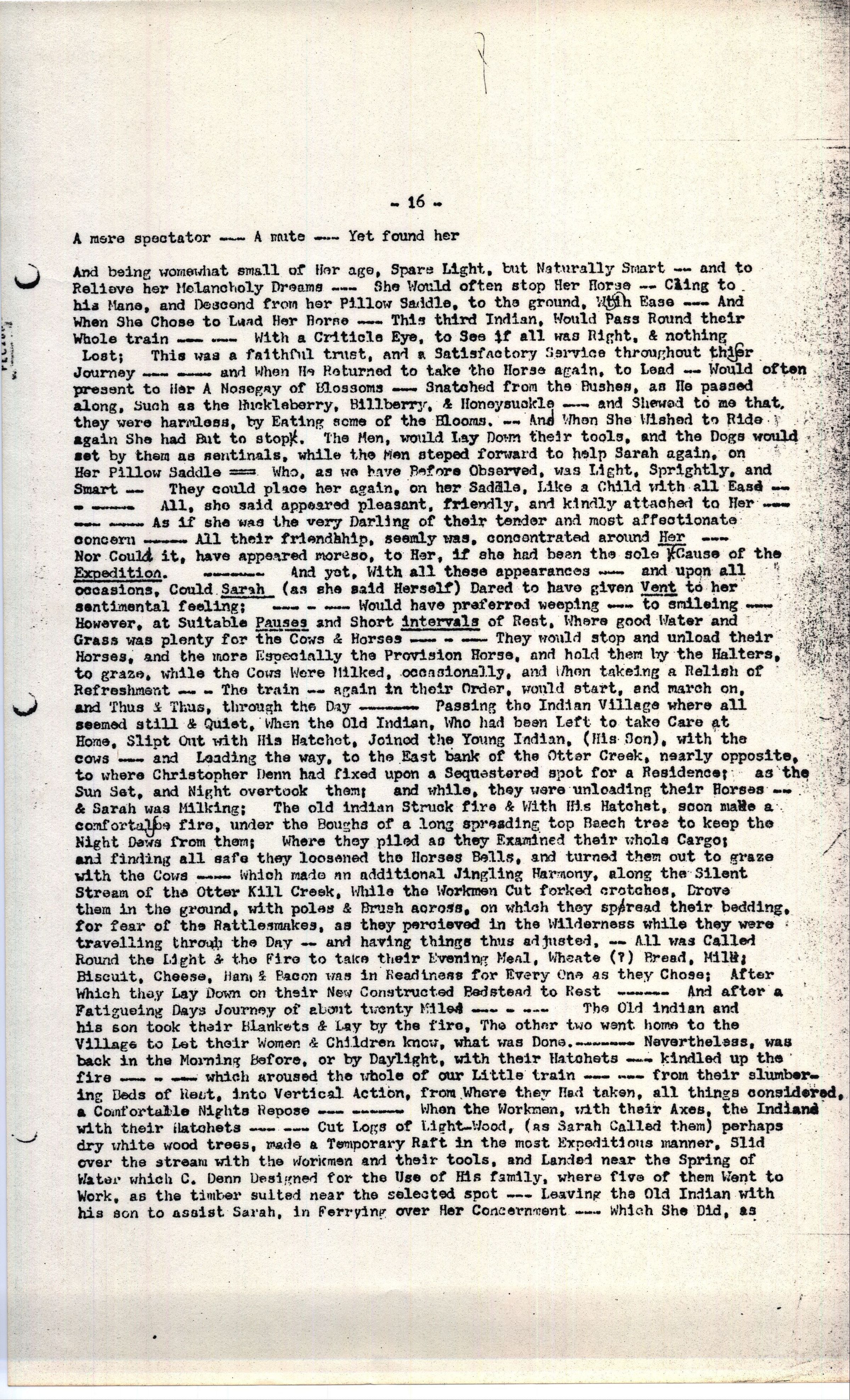
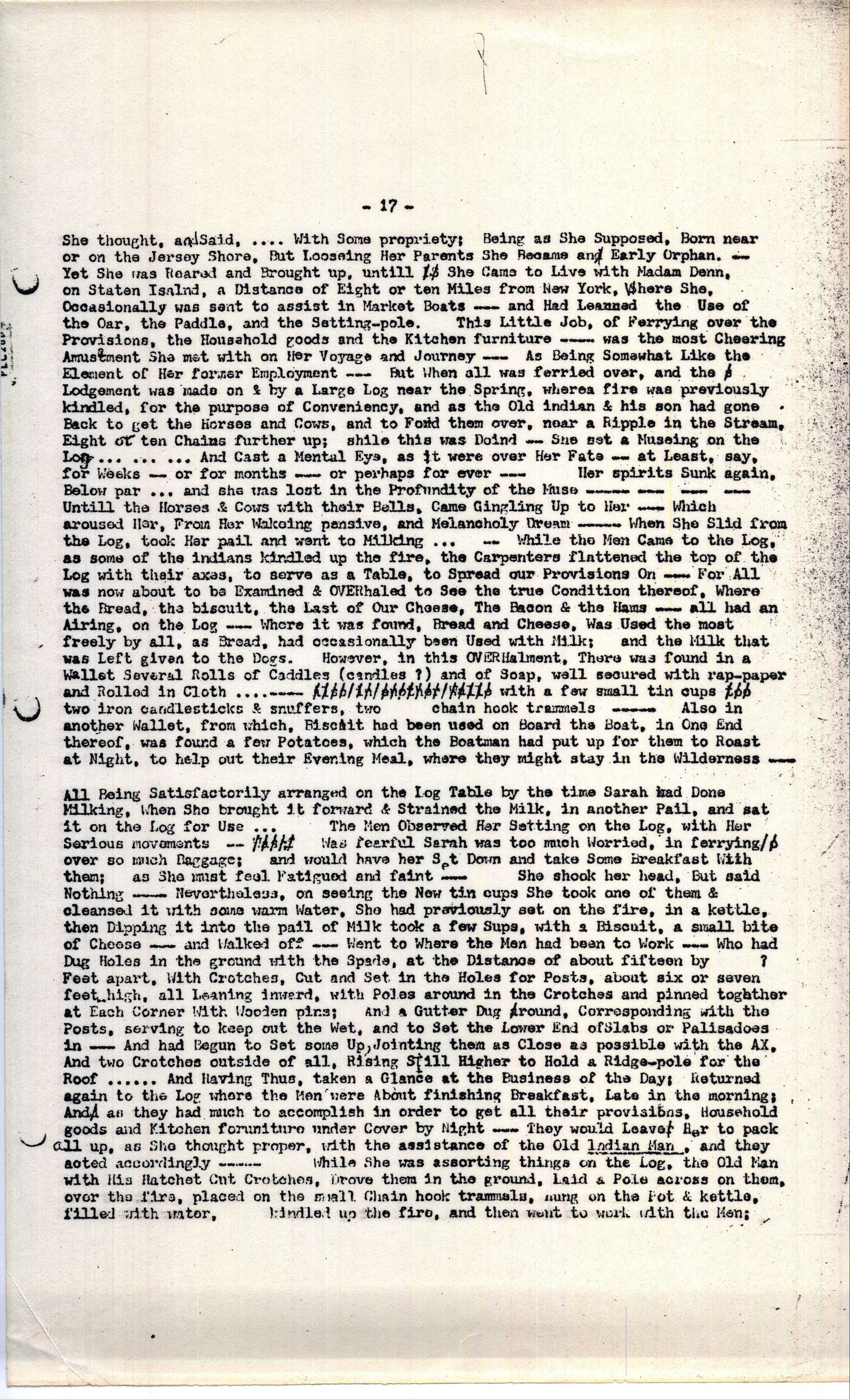
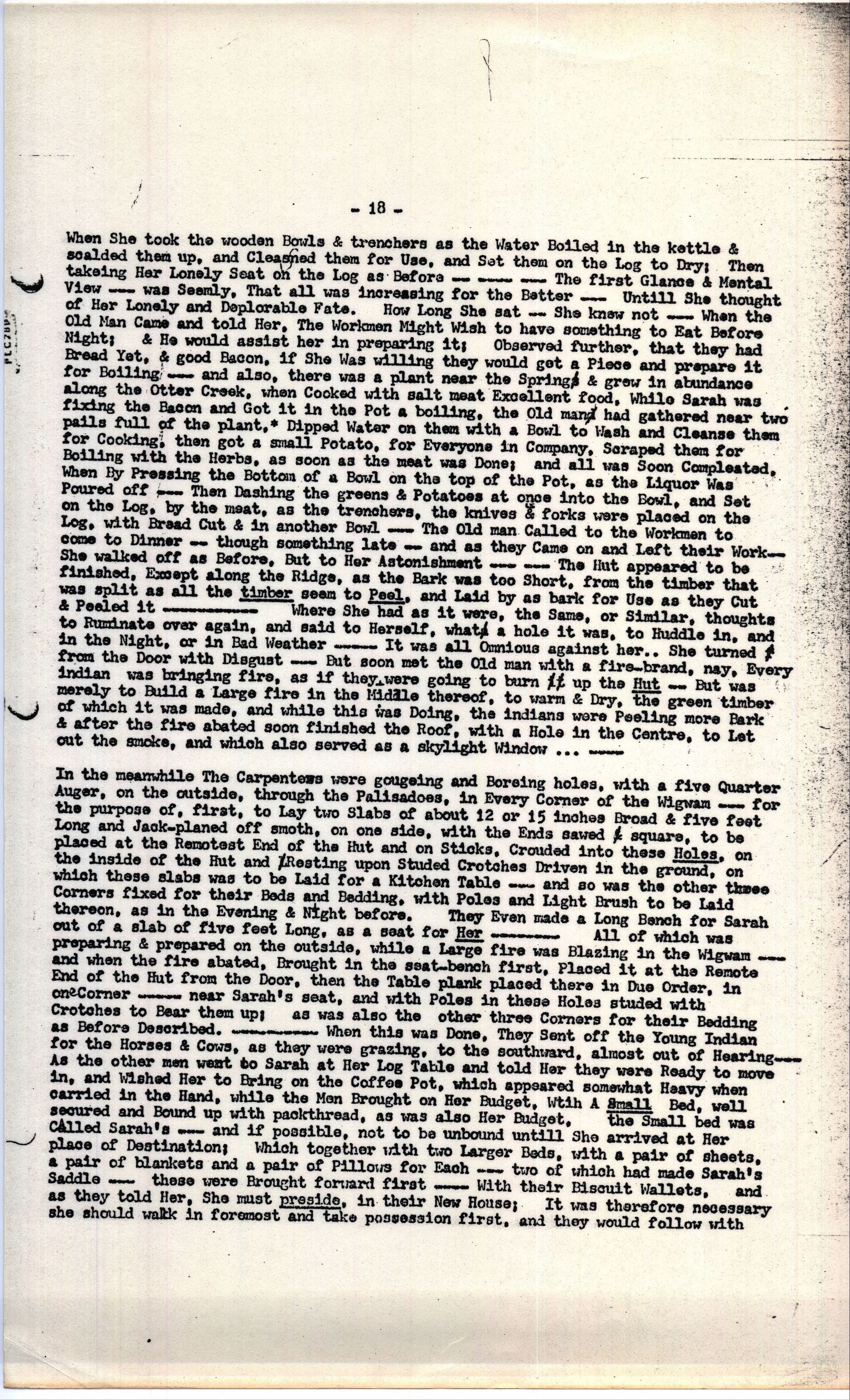
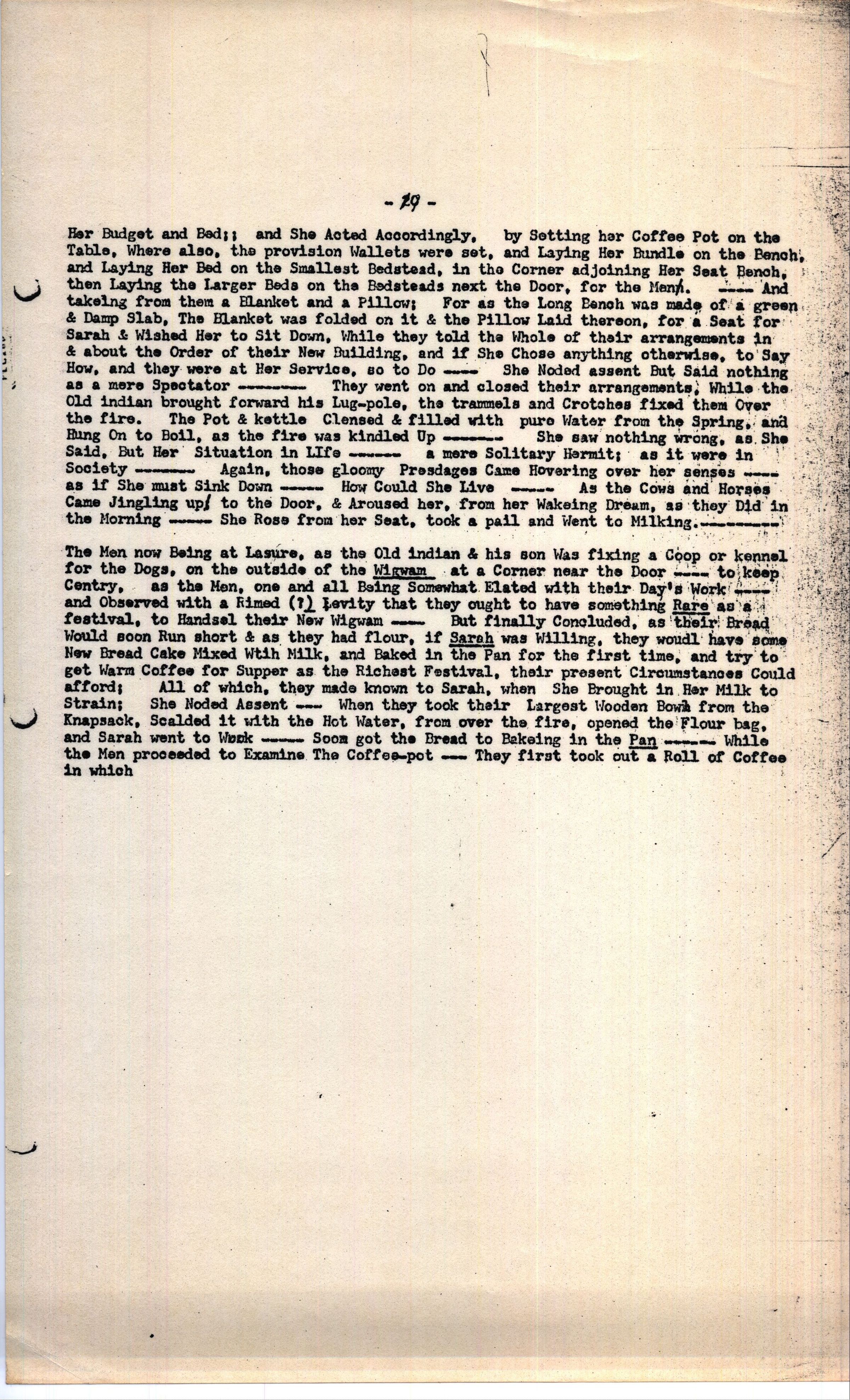
These pages 16-19, recount a pivotal moment in the 1712 settlement of the Wawayanda Patent in Orange County, New York. The narrative centers on Sarah Wells, the young orphan ward of Christopher Denn, who was sent into the wilderness to establish a legal residence on the land.
Frontier Construction: The text provides a detailed technical description of building a "Wigwam" or temporary hut. It describes the use of "crotches" (forked branches), palisadoes (slabs), and bark roofing with a central smoke hole. The men use hand tools like axes, augers, and hatchets to craft basic furniture—including a table and Sarah’s designated bench—directly into the structure.
Intercultural Cooperation: There is significant detail regarding the relationship between the white settlers (carpenters and laborers) and the "Old Indian" and his son. The indigenous guides are portrayed as essential to the mission, providing logistical support, gathering edible plants for meals, and managing the livestock.
Sarah’s Experience: Despite the laborers' attempts to comfort her—offering her the "seat of honor" and bringing her wildflowers—Sarah is depicted as being in a state of "melancholy" and "pensive dream." She feels like a "solitary hermit," reflecting the immense psychological pressure of being a young woman tasked with holding a claim in a remote wilderness populated by rattlesnakes and unknown dangers.
Domestic Life: The document chronicles the transition from travel to habitation, describing the first meal cooked in the new shelter (boiled salt meat with local herbs, followed by "New Bread Cake" and coffee), which the men consider a "Richest Festival" to celebrate their progress.