Name/Title
1789 Indenture between Joshua Brown & John Vail to John & Peter BullEntry/Object ID
002562Tags
Joshua Brown, Peter Bull, John BullScope and Content
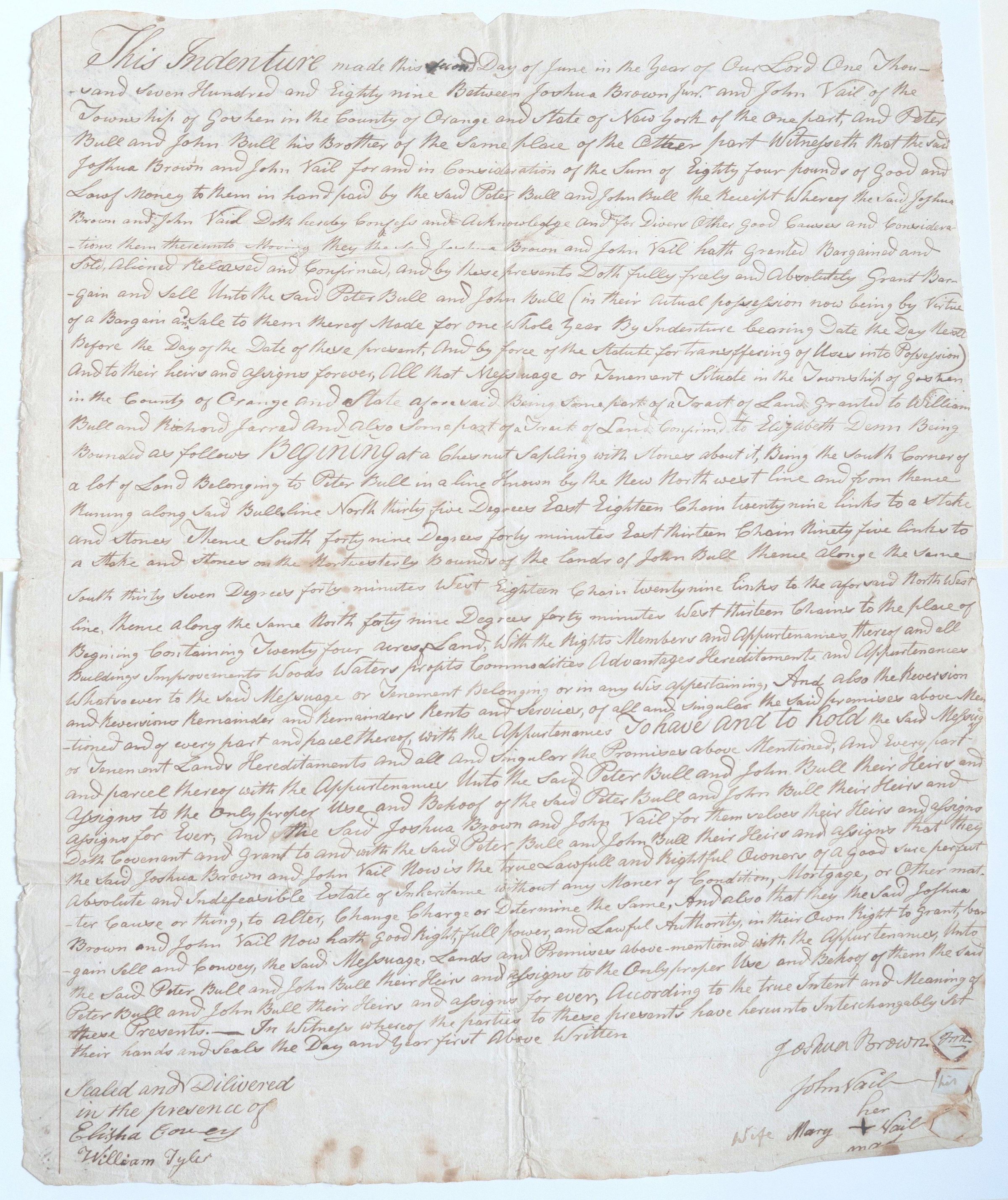
This 18th-century legal document is a land indenture (deed) dated June 2, 1789, for a property transfer in Goshen, Orange County, New York.
The document details the sale of approximately 24 acres of land for the sum of 84 pounds.
Key Participants
Sellers (Grantors): Joshua Brown Jr. and John Vail (along with John’s wife, Mary Vail).
Buyers (Grantees): Peter Bull and John Bull (brothers).
Official/Witnesses: William Wickham (Judge), Elisha Coney, and William Tyler.
Property Description
The land is described as a "Messuage or Tenement" located in the Township of Goshen. It was part of a larger tract originally granted to William Bull and Richard Gerard. The boundaries are defined by specific surveyor landmarks of the era:
Starting Point: A "Chesnut Sapling with stones about it" at the south corner of Peter Bull’s land.
Survey Lines: The boundary runs along the "New North West line" and the "Bull line," measured in Chains and Links (a traditional surveying method where 1 chain = 66 feet).
Features: Includes all buildings, woods, waters, and "appurtenances" (rights and privileges) associated with the land.
Legal Context
The Transaction: This is a "Lease and Release" style of conveyance, common in English and early American law. The text mentions the buyers were already in "actual possession" via a bargain and sale for one year, a legal maneuver used to bypass certain older property transfer restrictions.
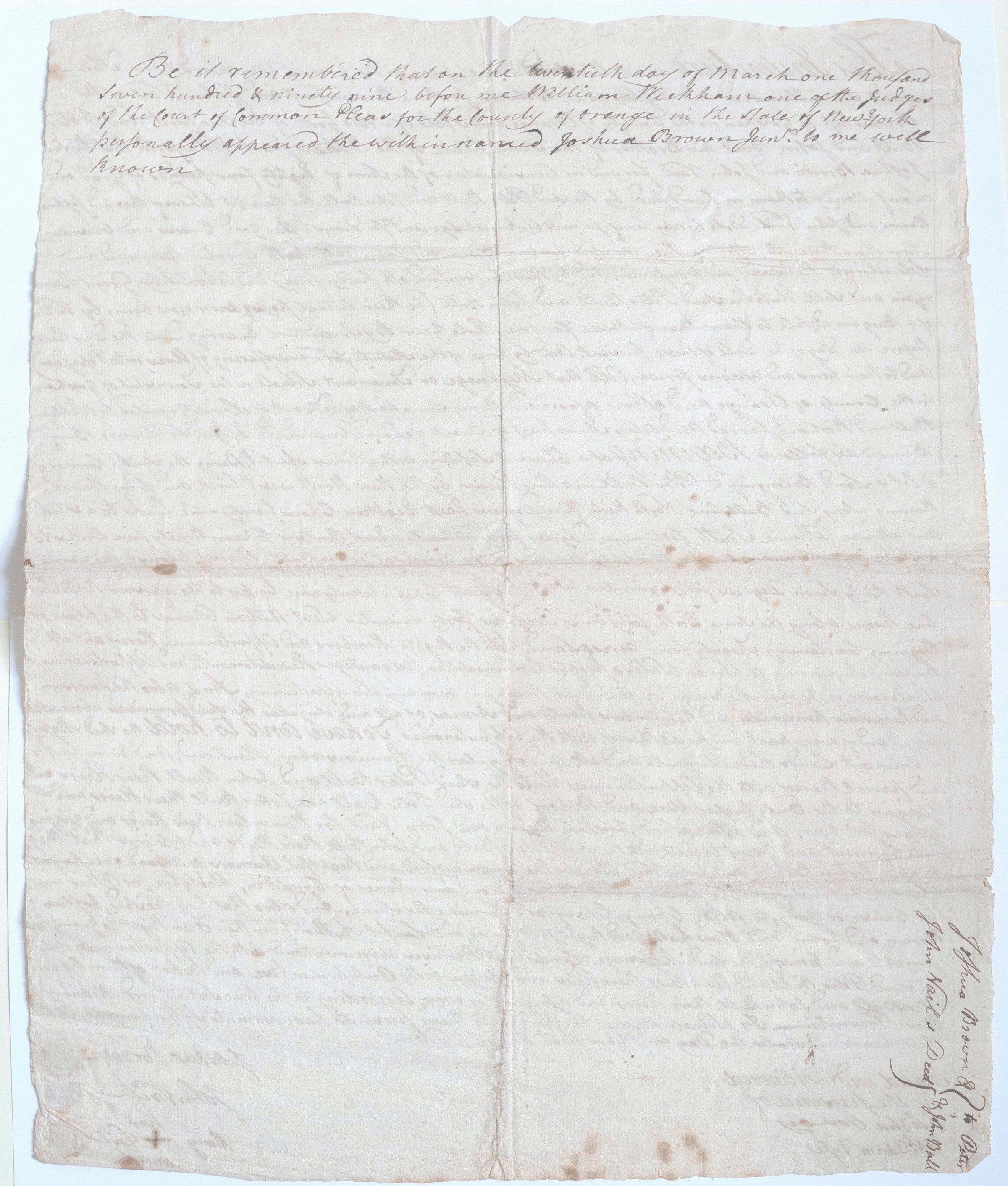
Authentication: The back of the document (the first image) contains a certification dated March 20, 1799. Joshua Brown Jr. appeared before William Wickham, a Judge of the Court of Common Pleas for Orange County, to officially acknowledge the deed ten years after the initial sale.
Signatures: The deed is signed and sealed by Joshua Brown Jr. and John Vail. Mary Vail signed with her "mark" (an 'X'), which was standard for women or individuals who did not write at the time.
Historical Significance
This document provides a clear snapshot of the Bull family history in Orange County. The Bulls were prominent early settlers in the region (famously associated with the Stone House in Hamptonburgh). The use of Pounds as currency in 1789—three years after the U.S. Mint was established—highlights the slow transition from British colonial currency to the U.S. Dollar in rural post-Revolutionary New York.