Name/Title
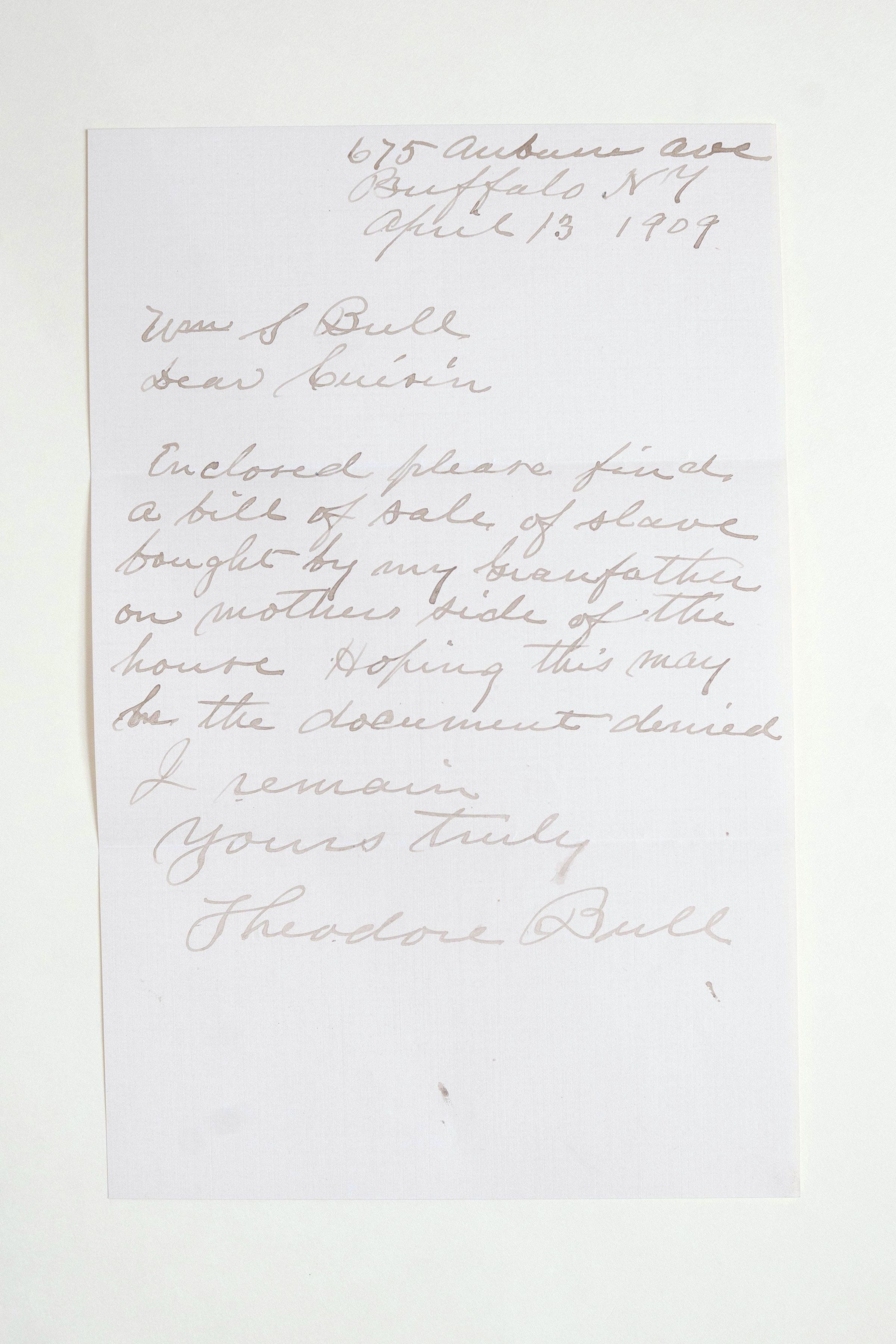
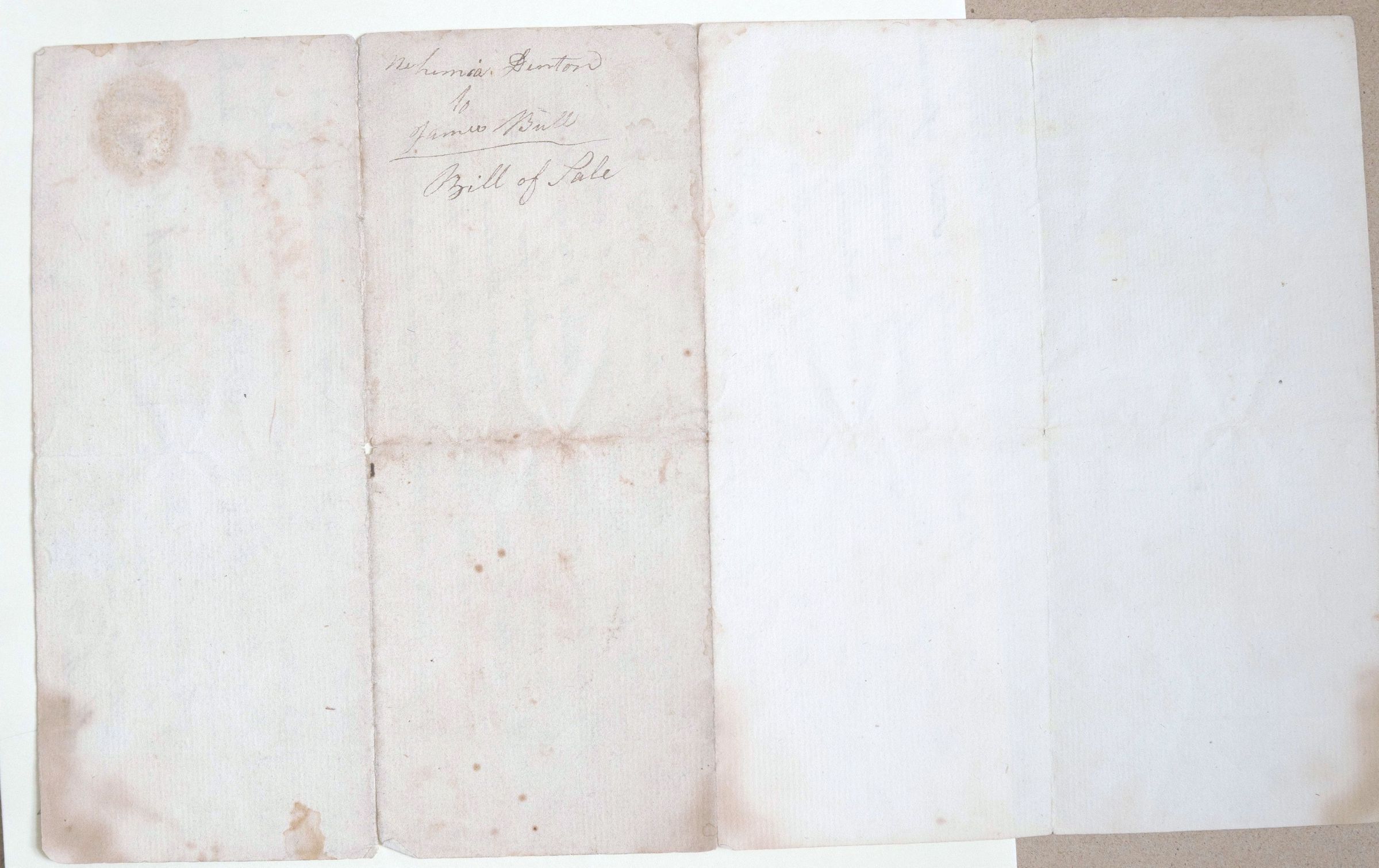
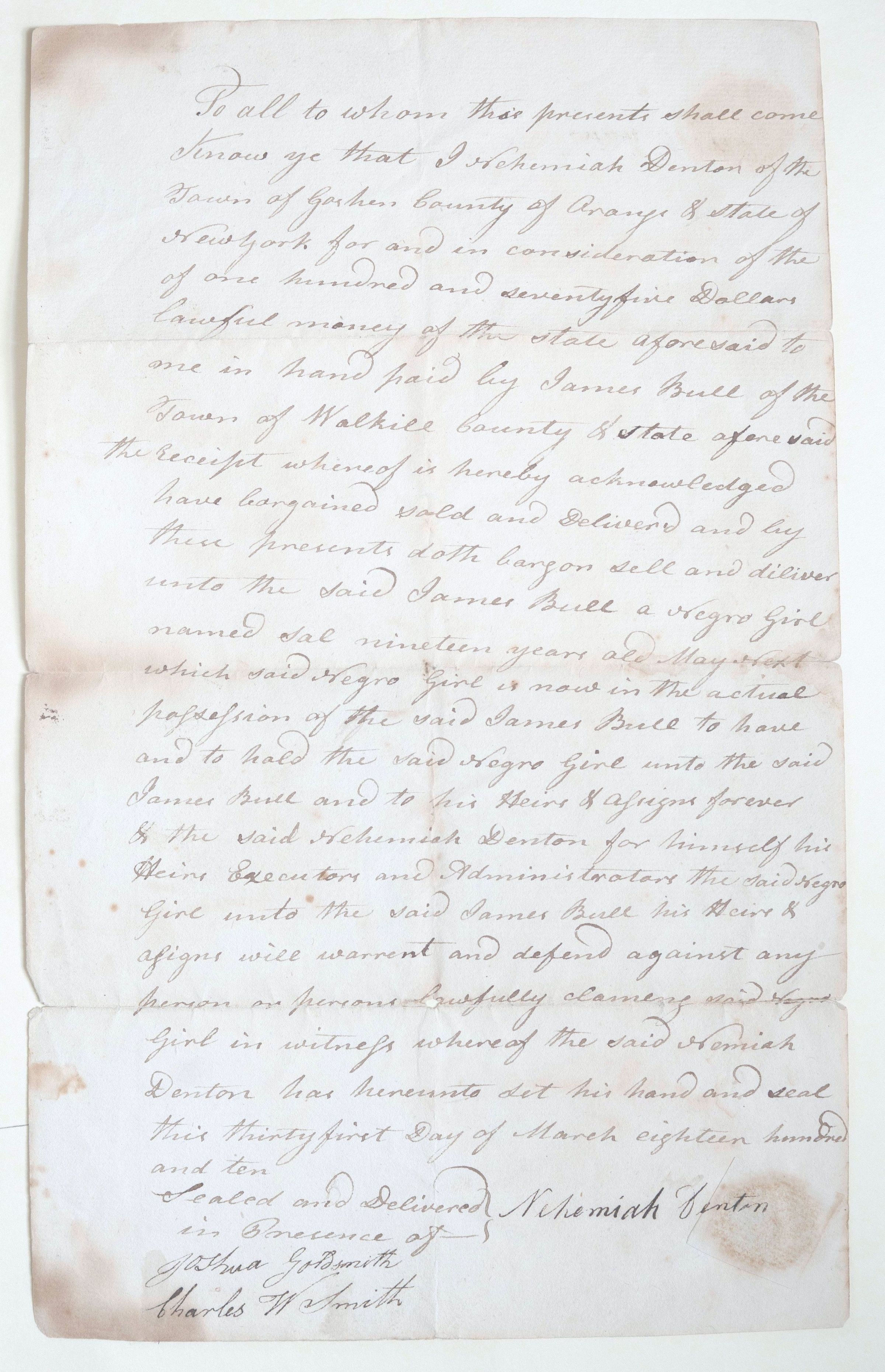
Letter April 13, 1909 with attached deed of sale of Sal - negro slave in 1810Entry/Object ID
002599Tags
Nehemiah Denton, James BullScope and Content
These two documents represent a somber and direct link to the history of slavery in the Northern United States. They consist of an original bill of sale for an enslaved person from 1810 and a transmittal letter from 1909 passing the document down through the Bull family.
1. The Bill of Sale (March 31, 1810)
This is a legal contract recording the sale of a human being in Orange County, New York. Despite being a "free state" later on, New York practiced gradual emancipation during this era.
Seller: Nehemiah Denton of the Town of Goshen.
Buyer: James Bull of the Town of Wallkill.
The Subject: A nineteen-year-old girl named Sal.
Price: $175 (lawful money of the state).
Key Phrase: The document states that James Bull is to have and hold Sal "to his Heirs & Assigns forever," and Denton promises to "warrant and defend" the sale against any other claims.
Witnesses: Joshua Goldsmith and Charles W. Smith.
2. The Transmittal Letter (April 13, 1909)
This letter, written nearly a century later, provides the provenance (custodial history) of the bill of sale.
From: Theodore Bull (675 Auburn Ave, Buffalo, NY).
To: Wm. S. Bull ("Dear Cousin").
Content: Theodore is sending the 1810 bill of sale to his cousin. He notes that the slave was bought by his "grandfather on mother’s side of the house."
Significance: This letter shows how such documents were preserved as family artifacts/records long after slavery was abolished in New York (which occurred fully in 1827).
Historical Context
These documents are significant because they highlight that slavery was not exclusively a Southern institution. In 1810, the year Sal was sold, New York still held approximately 15,000 people in bondage. Sal, being 19 at the time, would have been caught in the complex "Gradual Emancipation" laws of the state, which often required enslaved people to serve until their mid-to-late 20s before gaining legal freedom.