Name/Title
Jan 1826 Shawangunk, NY Peter Mulliner born 1684 - Peter & Ency BullEntry/Object ID
002615Tags
Peter Mullinner, Peter Bull, Ency Bull, Margaret WellingScope and Content
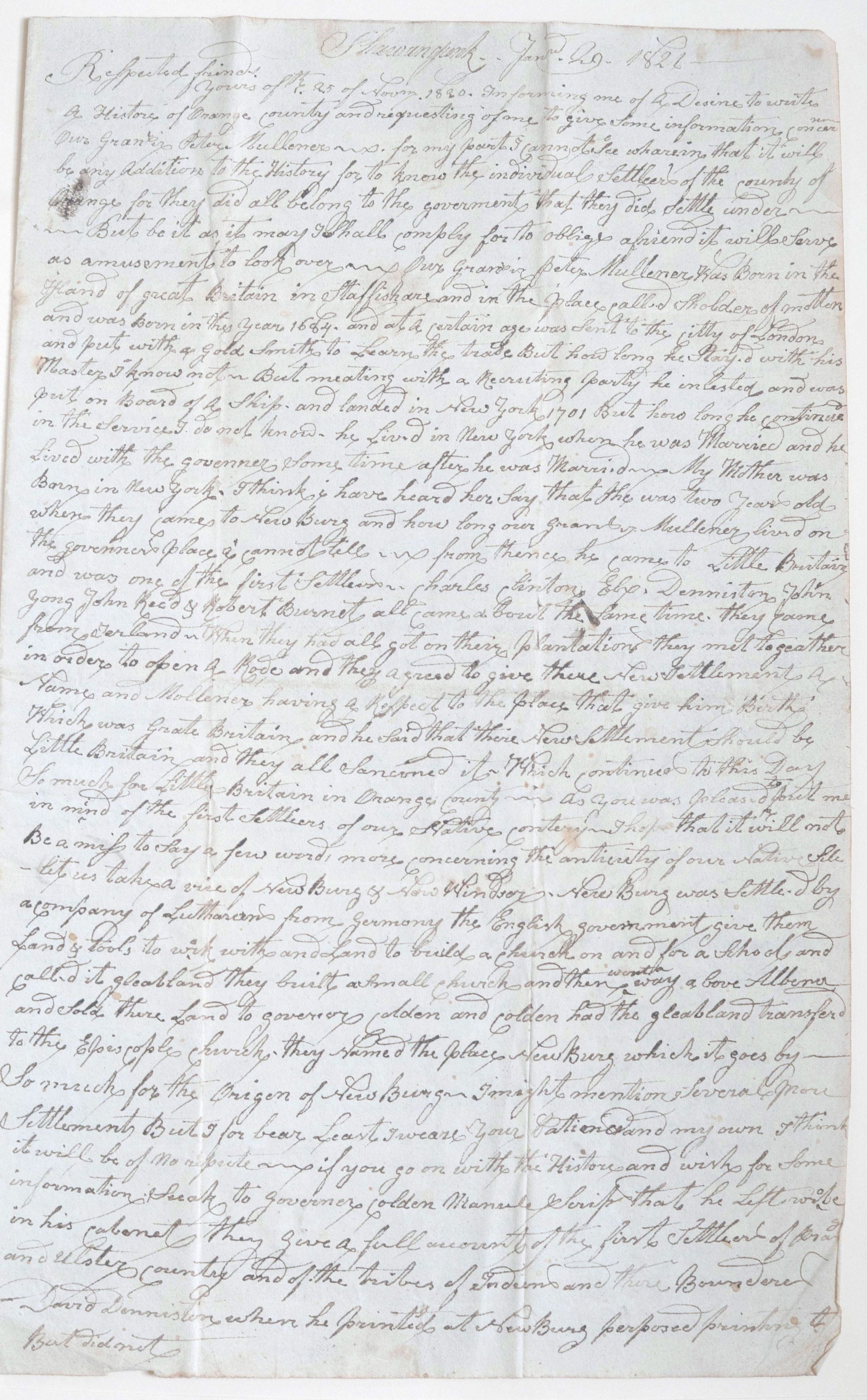
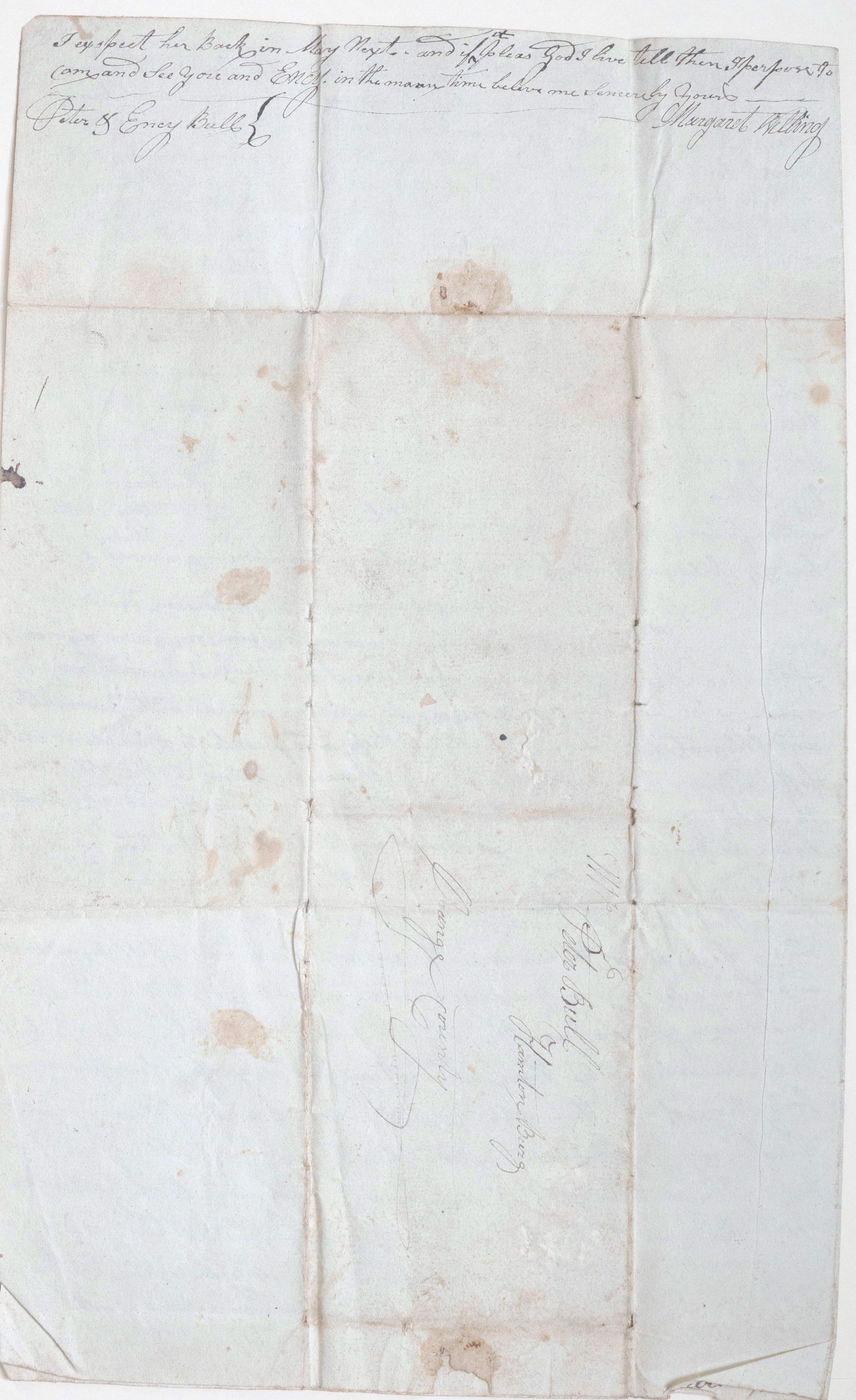
This is a fascinating historical document—a multi-page letter dated January 29, 1821, written by Margaret Welling to a "Respected friend" (addressed on the reverse to Mr. Peter Bull of Hamptonburgh).
The letter serves as a rich genealogical and local history resource, focusing on the early settlement of Orange County, New York, specifically the areas of Newburgh and Little Britain.
1. The Mulliner Family & Early Settlement
Ancestry: Welling provides a detailed account of her grandfather, Peter Mulliner, born in 1684 in "Staffishire" (Staffordshire), England, in a place called "Sholder of mutton" (likely Shoulder of Mutton).
Journey to America: He was apprenticed to a goldsmith in London but joined a "Recruiting Party" and landed in New York in 1701. He eventually married and lived with the Governor for a time.
Founding of Little Britain: The author describes how her grandfather was one of the first settlers of Little Britain, NY, alongside names like Charles Clinton, Alexander Denniston, and John Reed. They agreed to name the settlement "Little Britain" in honor of their homeland.
Newburgh Origins: She recounts the "Palatine" settlement of Newburgh by German Lutherans who were given land and tools by the English government to build a church and school (the "Glebeland").
2. Personal Reflections & Family Updates
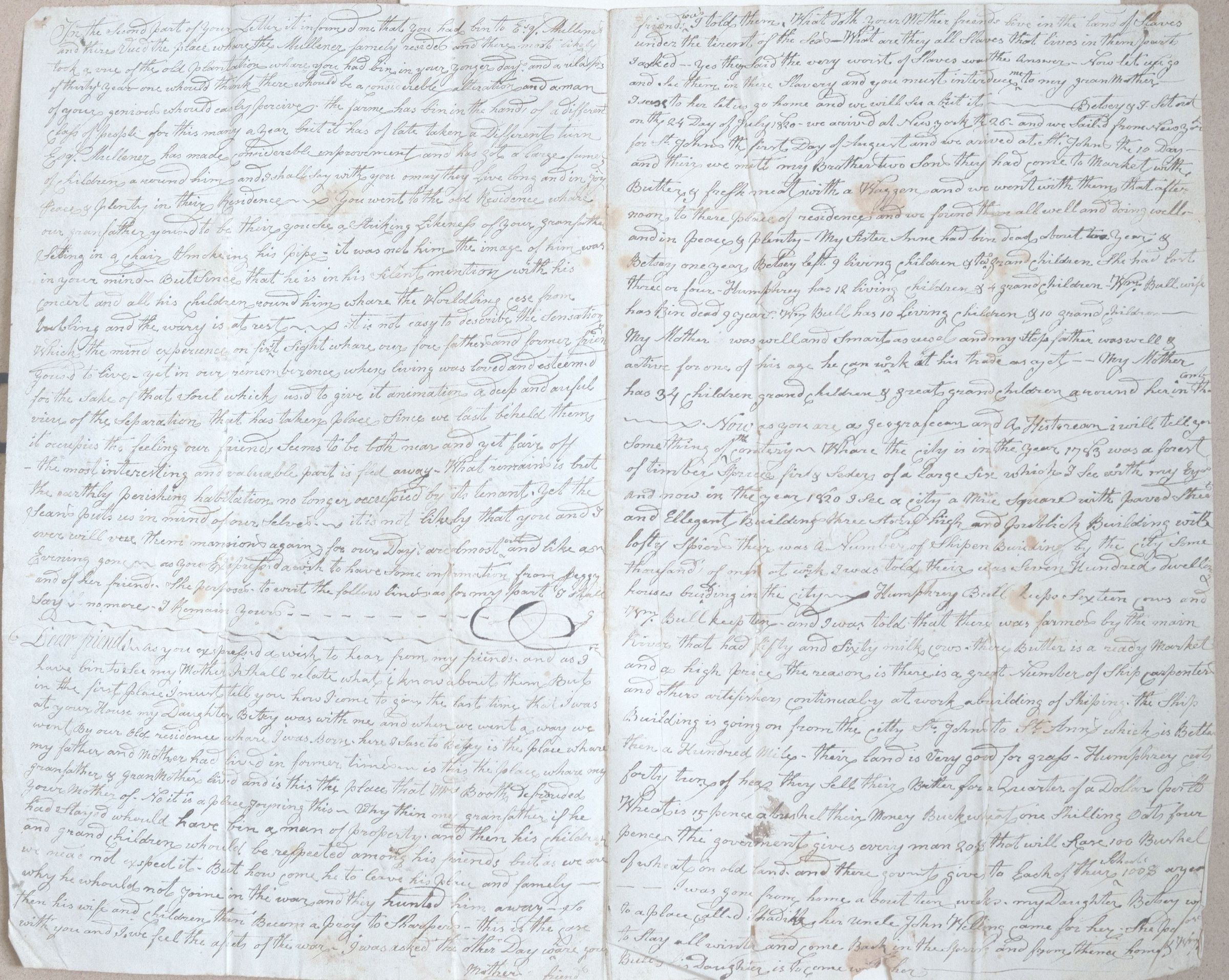
The Old Homestead: Welling reflects on a visit to her childhood home and the "striking likeness" of her grandfather she felt while there. She expresses a deep, melancholy connection to the "earthly perishing habitation" of her ancestors.
Family Vital Statistics: The second page acts almost like a census, listing the health and offspring of various relatives:
Anne: Deceased for 10 years.
Betsy: Deceased for 1 year, leaving 9 children and 15 grandchildren.
Humphrey Bull: Has 12 children and 4 grandchildren; keeps 16 cows.
Wm. Bull: Has 10 children and 10 grandchildren; keeps 10 cows.
The Mother: At an advanced age, she has a staggering 34 children, grandchildren, and great-grandchildren around her.
3. Observations on Growth and Economy (1820s)
Urbanization: Welling marvels at the transformation of the landscape. She notes that in 1783, the area was a forest of "timber spruce firs & Cedars," but by 1820, it had become a city a "Mile Square" with paved streets and elegant three-story buildings.
Market Conditions: She provides a snapshot of the local economy, mentioning that butter is a "ready Market" and a "high price" due to the high number of ship carpenters and "artifishers" working in the shipyards from "St. Johns to St. Anns."
Prices: Wheat is 15 pence a bushel, buckwheat is one shilling, and oats are four pence.
4. Revolutionary War Context
Welling briefly touches upon the hardships of the Revolutionary War, mentioning how her grandfather was "hunted... away" from his place and family because he would not join the war, leading his family to become "a prey to sharpers."
Summary of the Physical Document:
Date: Jan 29, 1821
From: Margaret Welling
To: Peter Bull (Hamptonburgh)
Tone: Highly literate, nostalgic, and detailed.
Significance: It bridges the gap between the original European pioneers of the early 1700s and the rapidly industrializing New York of the early 19th century.