Name/Title
150th Anniversary of HamptonburghEntry/Object ID
000600Tags
Sarah WellsScope and Content
The Founding of Hamptonburgh: "It Started with a Woman"
The Pioneer Journey (1712): The settlement of Hamptonburgh began in May 1712 with a 16-year-old orphan girl named Sarah Wells. Sponsored by her foster parent, Christopher Denne (one of the tract's landowners anxious to settle the area), she traveled from the banks of the Hudson River through dense forest to the Otterkill.
The First Settlement: Accompanied by three Native Americans, several carpenters, horses, dogs, and cows, Sarah spent her first night in a wigwam on the east bank of the rain-swollen Otterkill (along what is now the Sarah Wells Trail). A log house was quickly built, marking the official beginning of the town.
The Foster Parents' Arrival: Christopher Denne and his wife joined Sarah at the campsite the following day to establish the settlement.
The Story of William Bull
A Rough Start in America: William Bull, an English stonemason, arrived in America under difficult circumstances. After a stone bridge he contracted to build in Dublin, Ireland, collapsed just before completion, he fled to America in despair with only five guineas.
Indentured to the Land: Unable to fully afford his ship passage, he faced being sold to pay the remaining balance. Fortunately, Daniel Cromline—another local prominent landowner—paid off his debt upon learning of his masonry skills and sent him to Hamptonburgh to work.
A Historic Union: William fell in love with Sarah Wells. In 1718, they were married in the very first wedding ceremony in the precinct of Goshen (which Hamptonburgh was then a part of).
Artistic Depictions
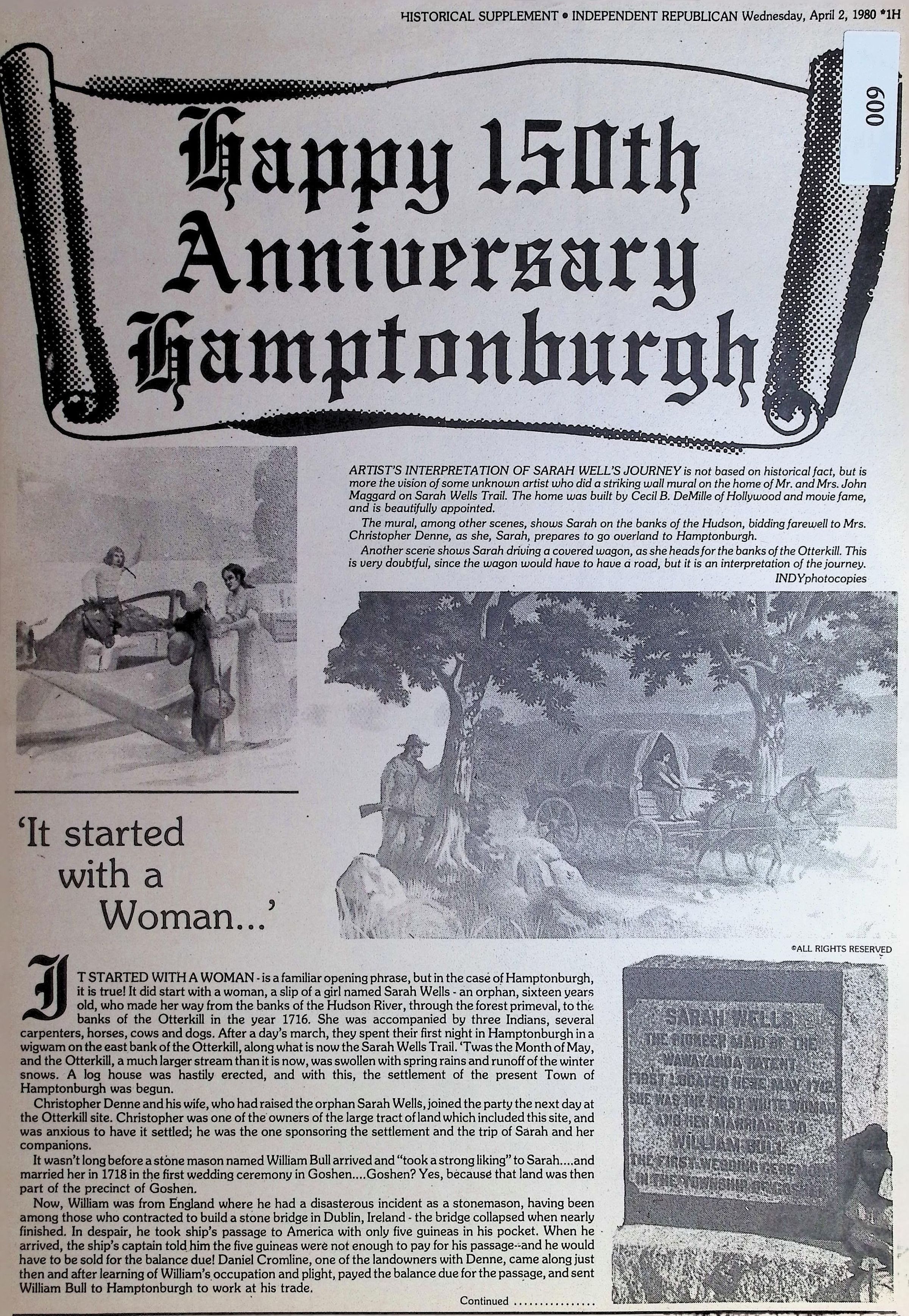
The page also highlights a mural painted in a home built by famous Hollywood director Cecil B. DeMille along the Sarah Wells Trail. The mural depicts stylized, though historically inaccurate, scenes of Sarah’s journey—including bidding farewell to Mrs. Denne on the Hudson and driving a covered wagon (which would have been impossible at the time due to the lack of roads).