Name/Title
1828 Newspaper clipping various topicsEntry/Object ID
000737Tags
Unknown NewspaperScope and Content
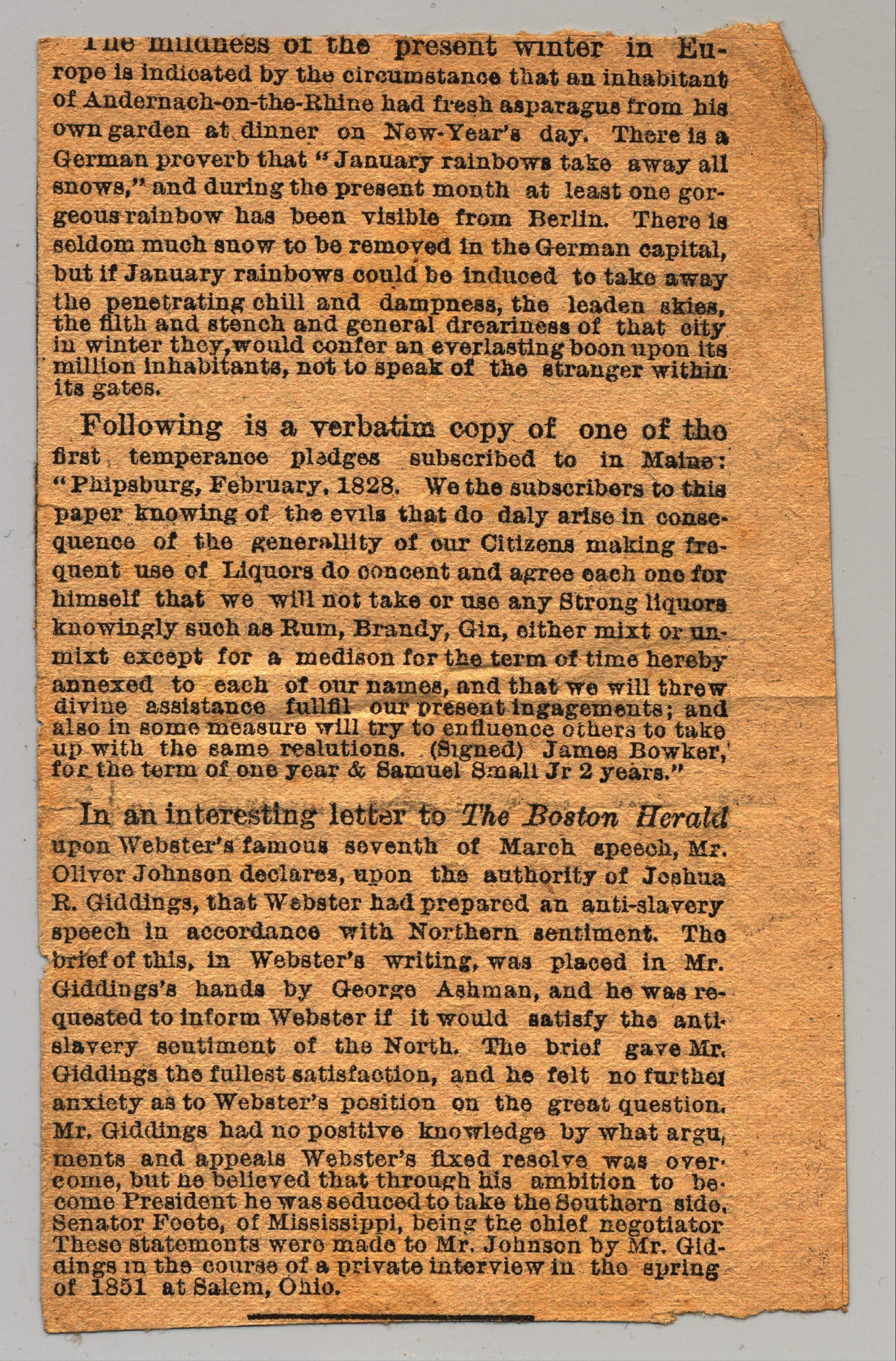
The mildness of the present winter in Europe is indicated by the circumstance that an inhabitant of Andernach-on-the-Rhine had fresh asparagus from his own garden at dinner on New-Year’s day. There is a German proverb that “January rainbows take away all snows,” and during the present month at least one gorgous rainbow has been visible from Berlin. There is seldom much snow to be removed in the German capital, but if January rainbows could be induced to take away the penetrating chill and dampness, the leaden skies, the filth and stench and general dreariness of that city in winter they would confer an everlasting boon upon its million inhabitants, not to speak of the stranger within its gates.
Following is a verbatim copy of one of the first temperance pledges subscribed to in Maine: “Phipsburg, February, 1828. We the subscribers to this paper knowing of the evils that do daly arise in consequence of the generality of our Citizens making frequent use of Liquors do concent and agree each one for himself that we will not take or use any Strong liquors knowingly such as Run, Brandy, Gin, either mixt or unmixt except for a medison for the term of time hereby annexed to each of our names, and that we will threw divine assistance fullfil our present ingagements; and also in some measure will try to enfluence others to take up with the same reslutions. (Signed) James Bowker, for the term of one year & Samuel Small Jr 2 years.”
In an interesting letter to The Boston Herald upon Webster’s famous seventh of March speech, Mr. Oliver Johnson declares, upon the authority of Joshua R. Giddings, that Webster had prepared an anti-slavery speech in accordance with Northern sentiment. The brief of this, in Webster’s writing, was placed in Mr. Giddings’s hands by George Ashman, and he was requested to inform Webster if it would satisfy the anti-slavery sentiment of the North. The brief gave Mr. Giddings the fullest satisfaction, and he felt no further anxiety as to Webster’s position on the great question. Mr. Giddings had no positive knowledge by what arguments and appeals Webster’s fixed resolve was overcome, but he believed that through his ambition to become President he was seduced to take the Southern side, Senator Foote, of Mississippi, being the chief negotiator These statements were made to Mr. Johnson by Mr. Giddings in the course of a private interview in the spring of 1851 at Salem, Ohio.