Name/Title
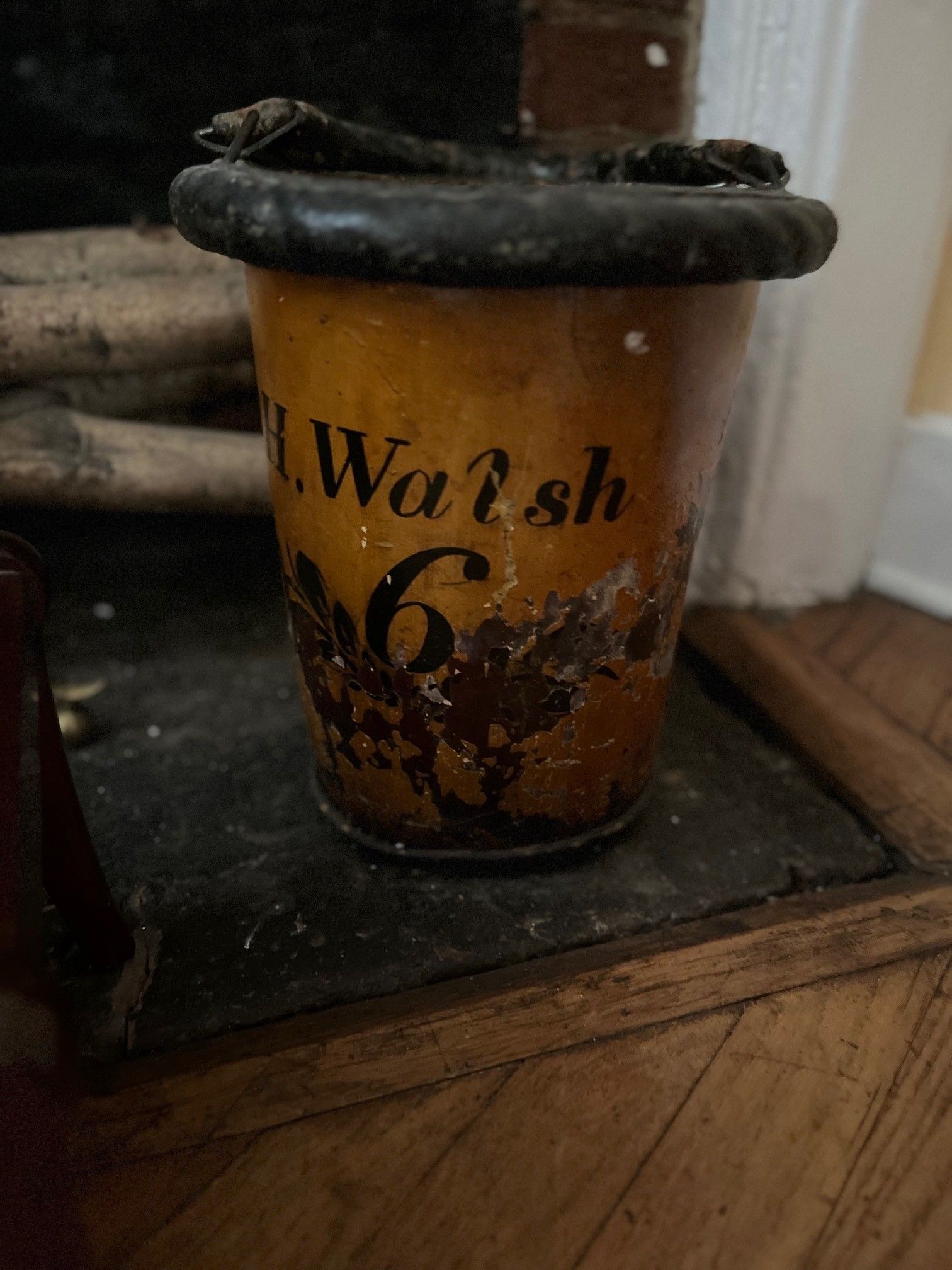
American folk art fire bucketEntry/Object ID
100153Tags
Henry James Walsh, Pamela BullScope and Content
Donated by daughter Mary Lagasse Ahrens daughter of Pam and John LaGasse about 2019
AI) of early American folk art and firefighting history: an original 19th-century leather fire bucket.
The Law: In the 18th and early 19th centuries, many towns had laws requiring every homeowner to own at least one or two leather fire buckets. They had to be kept near the front door or hearth, completely ready for an emergency.
The Brigade: When the fire alarm sounded, citizens would rush to the scene and form two parallel lines between the water source (a well or river) and the fire. Full buckets were passed down one line, dumped onto the flames, and the empty buckets were tossed down the second line to be refilled.2. The Markings: "H. Walsh" & "6"The Name: The name "H. Walsh" painted across the front was a crucial feature. Because hundreds of citizens would throw their empty buckets into a chaotic pile after a fire was put out, having your name boldly emblazoned on the front ensured you could reclaim your expensive, custom-made bucket from the town square the next day.
The Number 6: The number "6" typically designates either the owner's assigned number within a specific local fire society/ward, or it indicates that this bucket belonged to Fire Engine Company No. 6.3. Materials & Construction If you look closely at the thick rolled rim at the top, you can see how it was constructed. These were made by local leather artisans out of heavy, vegetable-tanned cowhide. The leather was soaked, wrapped around a tapered wooden block, stitched tight, and reinforced with a thick wire or wooden ring inside the top rim to keep it open under the weight of sloshing water. You can also see the metal rings at the top where the original thick leather handle (now aged and resting back) attaches. value ?