Name/Title
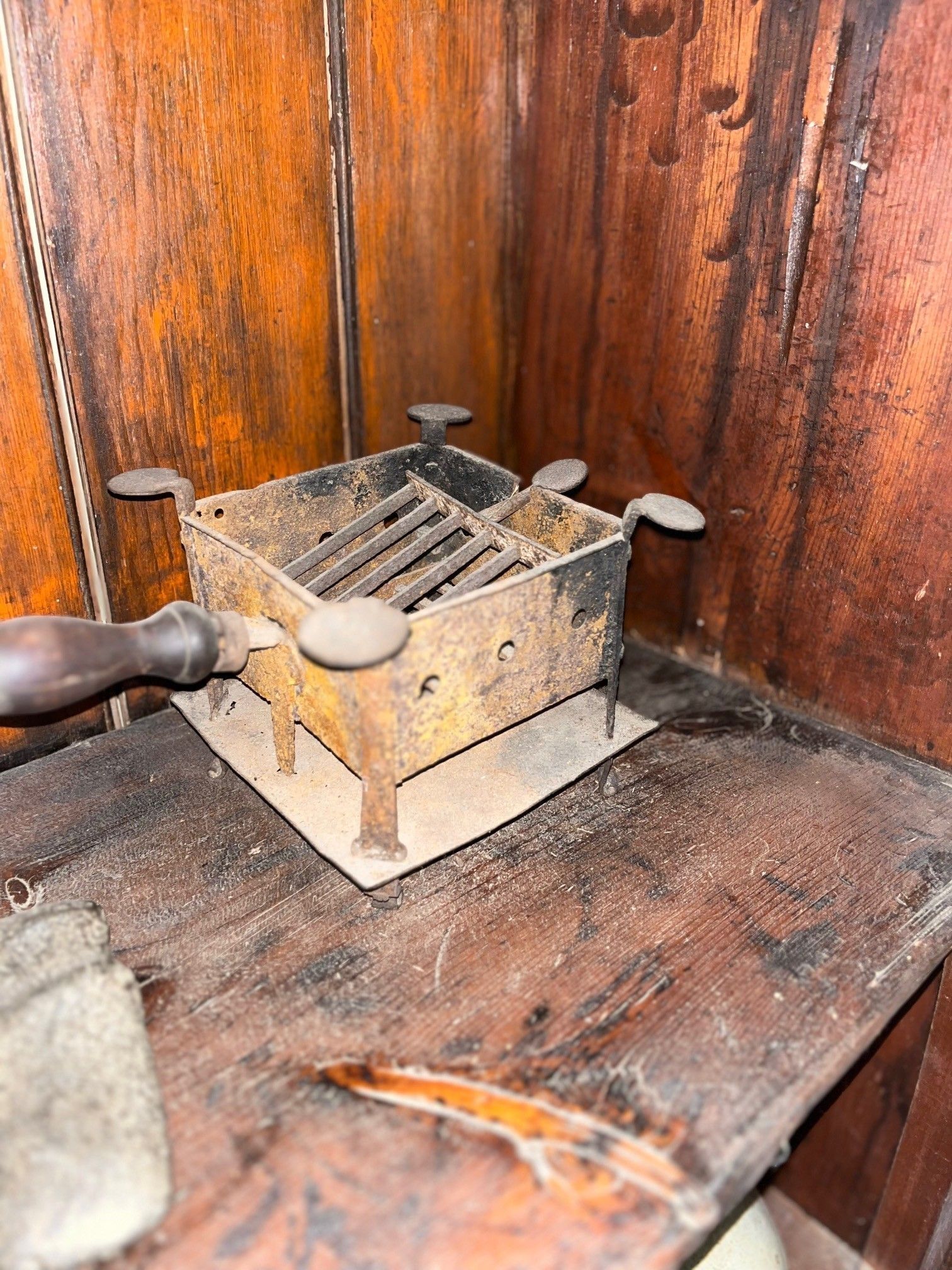
Antique charcoal burning iron heater sometimes called a laundry stove or flat iron heaterEntry/Object ID
100139Scope and Content
1980 Michael Bertolini Treasure 1 Heating Tool - 1720
2008 Roberson's Auctions
Heating tool - 1720 (treasure moved downstairs) value $500.00
(AI) This is an incredibly neat piece of late-19th to early-20th-century laundry tech: an antique charcoal-burning sad iron heater (sometimes called a laundry stove or flatiron heater).
Before electricity made ironing a simple plug-and-play task, getting the wrinkles out of clothes required an enormous amount of continuous heat management, and this little box was designed to do exactly that.
How It Worked
The Internal Coals: The main box body would be filled with burning charcoal or hot wood embers from the fireplace hearth. The top grate allowed heat to rise, and slots along the lower body provided the airflow necessary to keep the coals glowing hot.
The "Wings" or Side Tabs: The flat, extended metal tabs sticking out from the top corners or edges were designed to support multiple flat irons (sad irons) at once. You would rest the heavy iron flat against the side of the heated metal box so it could absorb the maximum amount of heat.
The Wooden Handle: Because the entire iron structure would get blistering hot, the sturdy turned-wood handle on the side allowed the person doing the laundry to safely move the heater around, shake out the ashes, or carry it to the ironing table without burning themselves.
Why This Was a Game-Changer
In an old household, heating a single heavy sad iron on a main kitchen cooking stove was an exhausting back-and-forth process. The iron would get covered in soot (which could ruin clean white linens), and you'd have to keep walking back to the stove every few minutes as the iron cooled down.
A portable heater like this could sit right next to the ironing board, heating two or three irons simultaneously. As soon as one iron started losing its heat, you would simply swap it out for a piping-hot one resting on the box and keep working.
What an incredible collection of domestic antiques you’ve shared today—from lighting and seating to historic menswear and winter survival gear! Which of these pieces is your personal favorite? value ?