Name/Title
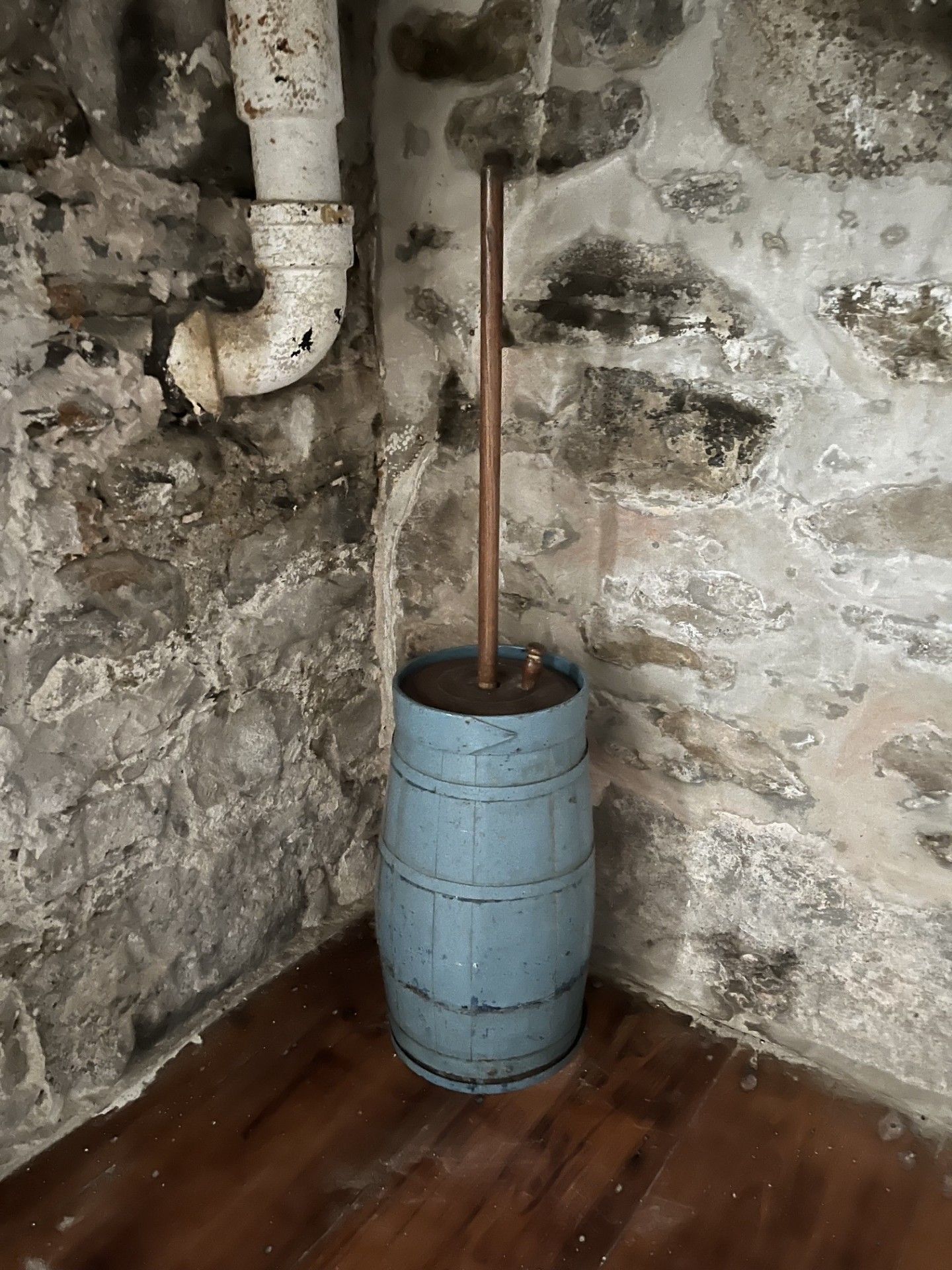
Dasher Churn in blueEntry/Object ID
100051Scope and Content
(AI)
1. The Paint ("Country Blue")
The most striking feature of this piece is its color.
In the 18th and 19th centuries, utilitarian farm items were often painted to protect the wood. Milk paint made with natural pigments was standard.
A muted, grayish-blue—often referred to by collectors as "country blue," "primitive blue," or "Robins egg blue"—is highly sought after by antique collectors. Original, un-restored paint like this adds significant value to early American or European country primitives.
2. Construction and Anatomy
Stave Construction: The barrel is made using coopers' techniques, where vertical wooden slats (staves) are bound together tightly by metal hoops.
The Dasher: The long wooden handle sticking out of the top is called the dash or dasher. At the bottom (inside the barrel), it attaches to a perforated wooden cross or disc. Agitating this handle up and down is what separated the cream into butter and buttermilk.
The Lid: It has a well-fitted wooden guide-lid to keep the cream from splashing out during the churning process.
3. Historical Context & Placement
Age: Based on the iron banding and the style, this likely dates from the mid-to-late 19th century (c. 1850–1890).
Setting: Spotting it against a stone foundation wall is historically perfect. Butter making required cool temperatures so the fat wouldn't melt or spoil during the laborious churning process, making stone-walled basements, root cellars, or dedicated "springhouses" the traditional workspace for this chore.
Inventory Dasher Churn in Blue - 19th C, 24 in H value $275.00