Name/Title
Ca 1800 Slat Back Hickory ChairEntry/Object ID
100106Scope and Content
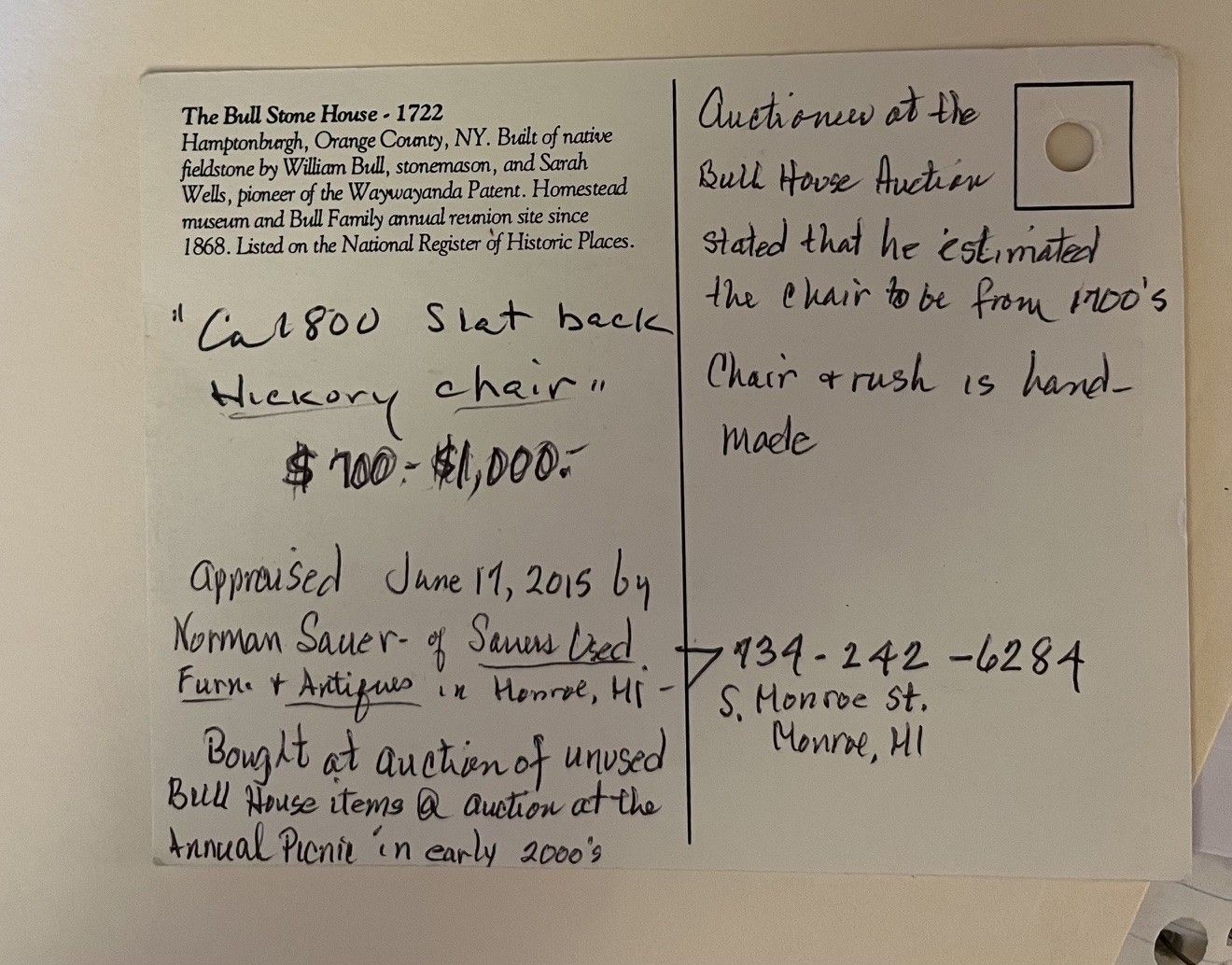
Handwritten Text (Left Side):
"Ca 1800 Slat back Hickory chair" $700.-$ 1,000.- Appraised June 17, 2015 by Norman Sauer - of Sauers Used Furn. & Antiques in Monroe, MI - Bought at auction of unused Bull House items @ auction at the Annual Picnic in early 2000's Handwritten Text (Right Side):
Auctioneer at the Bull House Auction stated that he estimated the chair to be from 1700's Chair & rush is hand-made 734-242-6284 S. Monroe St. Monroe, MI
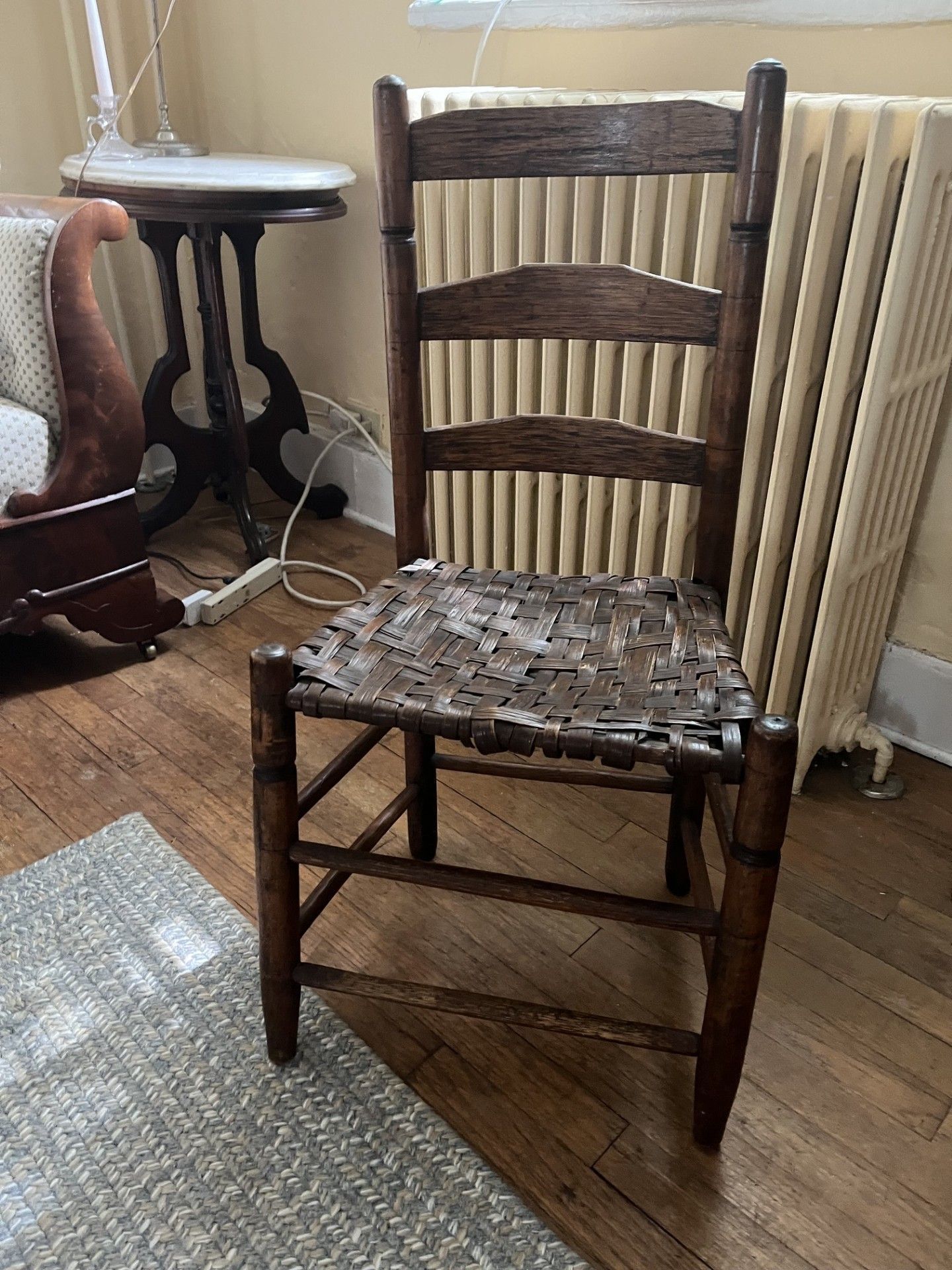
(AI) This is a wonderful example of a classic American ladderback side chair (also traditionally known as a slat-back chair) featuring a hand-woven splint seat.
This style is one of the most enduring designs in American furniture history. While the form originated in Europe, it became a staple of early American colonial life—particularly in New England and the Mid-Atlantic regions—because it was lightweight, incredibly sturdy, and could be made by local woodturners using native hardwoods.
Here is a breakdown of what makes this piece special:
Defining Features
1. The "Ladderback" Design
The chair gets its name from the horizontal wooden slats across the back that resemble the rungs of a ladder.
Your chair is a three-slat ladderback.
Notice the gentle, stylized slat arches along the top edges of the slats. This subtle shaping gives an otherwise utilitarian country chair a touch of elegant craftsmanship.
The vertical posts terminate in simple, rounded button finials at the very top.
2. The Woven Splint Seat
Unlike chairs that use rushed cord or cane, this seat is woven using wood splints (traditionally made from flexible, pounded strips of ash, oak, or hickory).
The wide, flat strips are woven in a classic over-under basketweave pattern.
Wood splint seats were highly favored for everyday country furniture because the materials were readily available on the farm, breathable in the summer, and remarkably resilient.
The deep, rich color of this seat suggests it has either aged beautifully over many decades or was treated with a traditional dark stain or varnish to protect the weave.
3. The Turned Frame & Stretchers
The legs and cross-pieces (stretchers) are round-turned on a lathe. You can see simple, decorative score lines or rings turned into the wood near the joints.
The multiple tiers of stretchers at the bottom aren’t just for looks—they act as a structural brace, tying the legs together so the frame doesn't wobble or warp under weight over time. The front features two tiers of stretchers, a common trait for added durability.
Dating and Context
Because this simple, rustic aesthetic was produced continuously from the 1700s well into the 20th century (especially during the Colonial Revival era), dating them precisely from a photo can be tricky. However, the thickness of the slats, the shape of the turnings, and the overall wear match the style of a late 19th-century country kitchen or dining chair. value ?