Name/Title
Foot Warmer for Sleigh and Carriage Rides or churchEntry/Object ID
100138Scope and Content
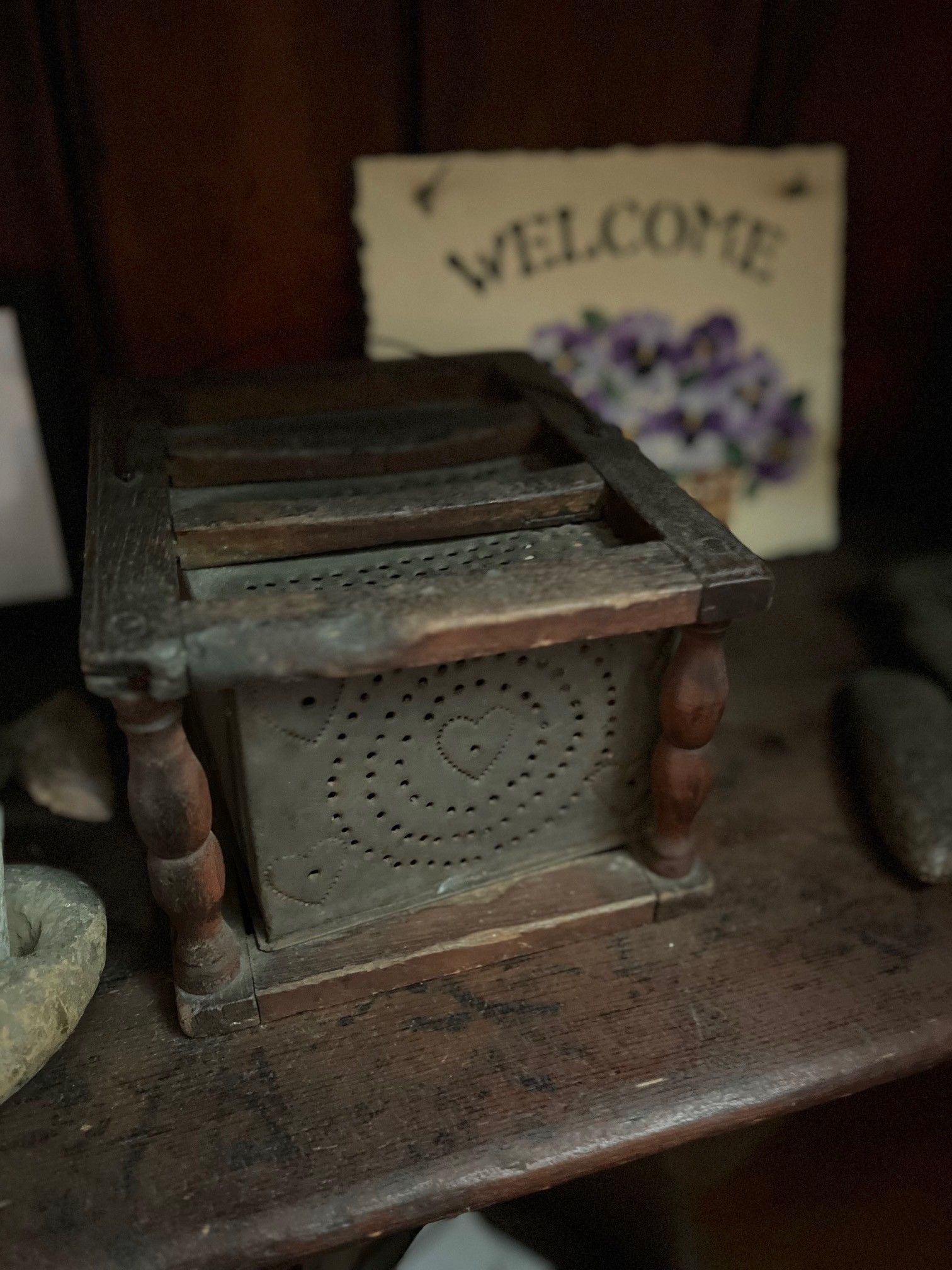
(AI) 19th-century antique punched-tin foot warmer (often simply called a foot stove) framed in wood.
Before modern heating systems or automobiles, these little boxes were a literal lifesaver for surviving long winters. Here is how this clever piece of early technology worked:
How It Worked
The Heat Source: There is a small door on one side of the metal box. A family member would open it and slide out a small internal iron or earthenware pan. They would fill that pan with glowing, hot embers raked directly from the hearth or stove, then slide it back inside and latch the door.
The Punched Tin: The metal walls are perforated with tiny holes, which serves two vital purposes: it allowed oxygen to sneak in so the coals would stay alive, and it slowly radiated heat outward without letting any dangerous open sparks escape.
The Wooden Frame & Handle: The outer wooden frame acted as an insulator so you wouldn't burn yourself. Most of these had a wire bail handle attached to the top loops, allowing you to carry it around like a lantern.
Where Was It Used?
The "Meetinghouse" (Church): Early American churches were notoriously freezing because they lacked fireplaces (due to fire hazards and puritanical beliefs about enduring discomfort). Churchgoers would bring these along, place them on the floor of their pews, and rest their feet on the wooden top slats to keep from freezing during multi-hour sermons.
Sleigh and Carriage Rides: They were tucked under heavy wool blankets on long, bitter winter carriage rides to keep passengers' toes warm.
Inventory 2008 Tin Foot Warmer 9 in square value $50.00