Name/Title
Henry Pierson Will June 7, 1859Entry/Object ID
002843Tags
Henry Pierson, HamptonburghScope and Content
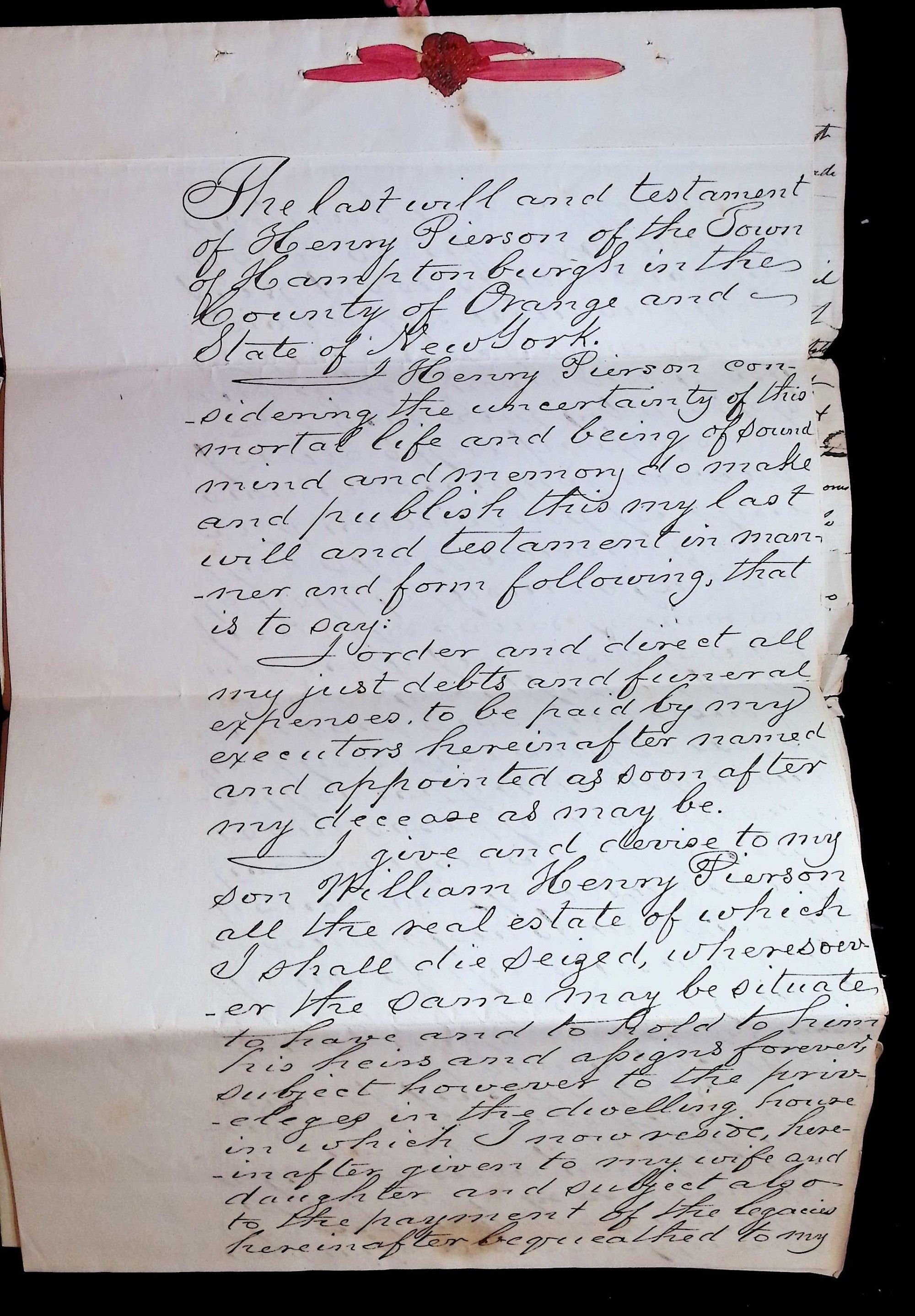
The Testator: Henry Pierson, a resident of Hamptonburgh, Orange County, New York.
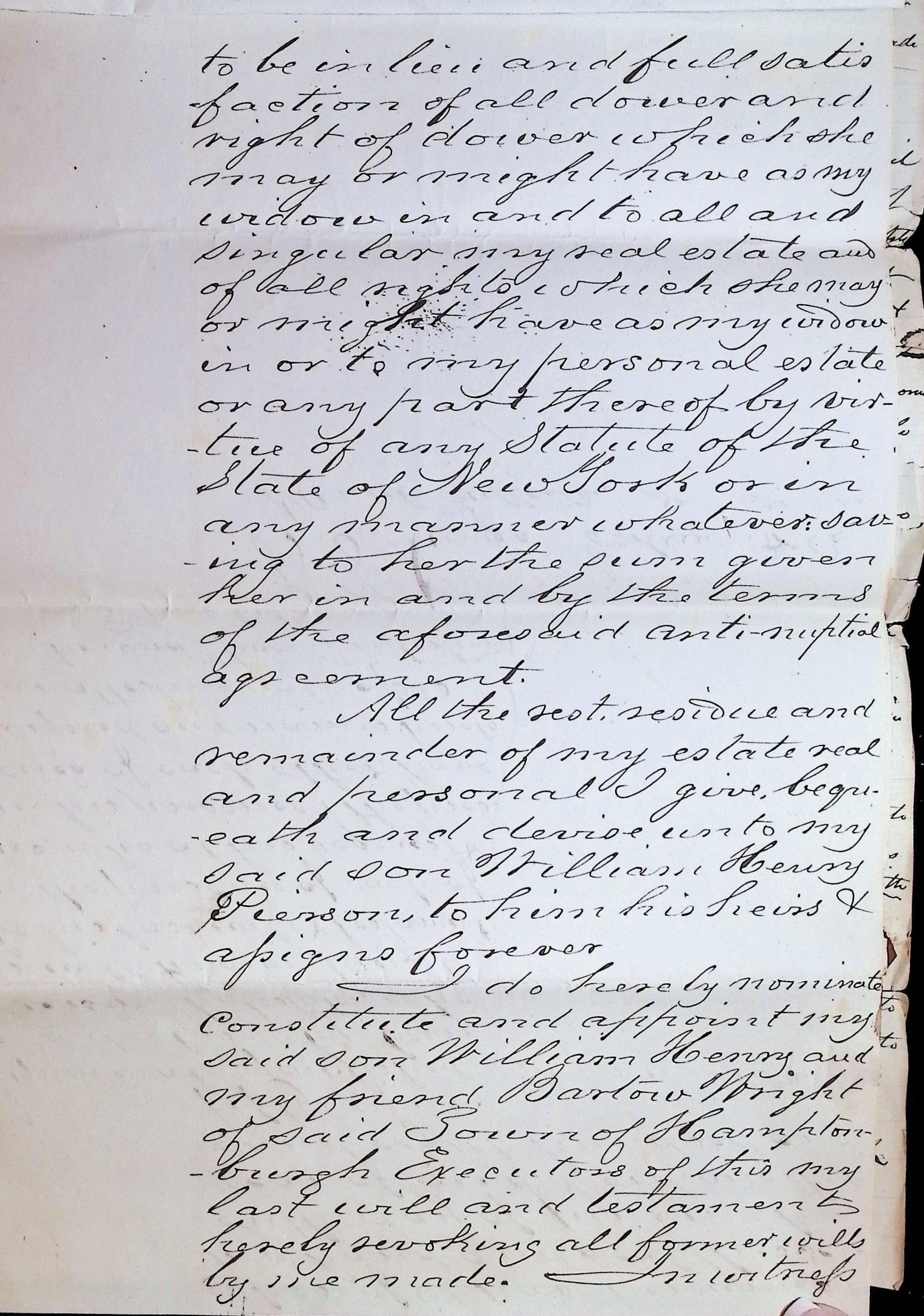
Primary Real Estate Beneficiary: His son, William Henry Pierson, inherits all real estate holdings. However, this inheritance carries heavy conditions: it is burdened with financial liens to pay out family cash legacies, and specific structural spaces within the homestead are carved out for his stepmother and sister.
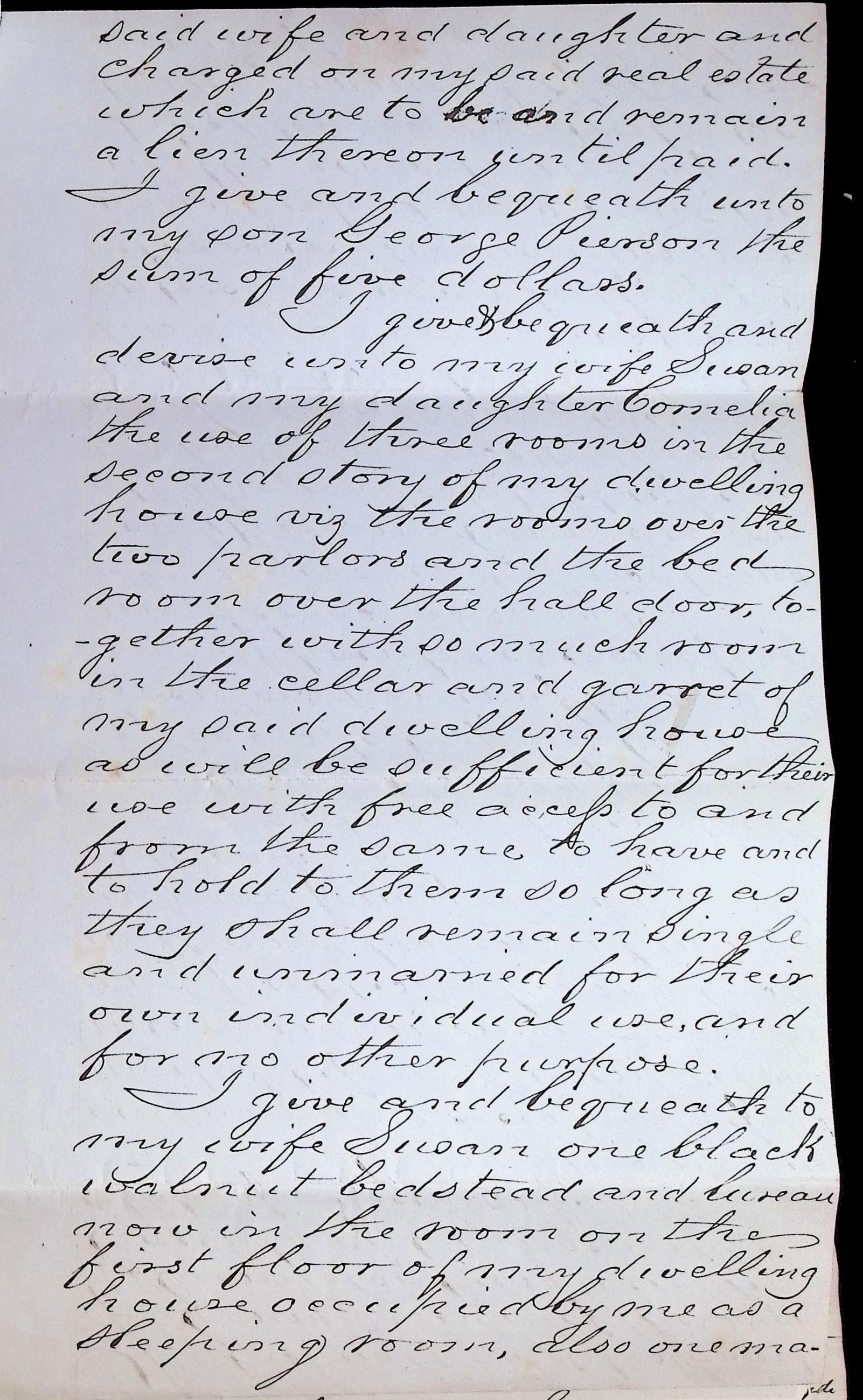
Dismembered Inheritance: His other son, George Pierson, is left a token sum of exactly five dollars, indicating an intentional disinheritance or prior advancement.
Provisions for the Wife (Susan) and Daughter (Cornelia): * They are jointly granted specific residency rights in the family homestead, encompassing three rooms on the second story (the rooms over the two parlors and the bedroom over the hall door), alongside shared access to the cellar and garret. Notably, this domestic sanctuary remains valid only so long as they remain single and unmarried.
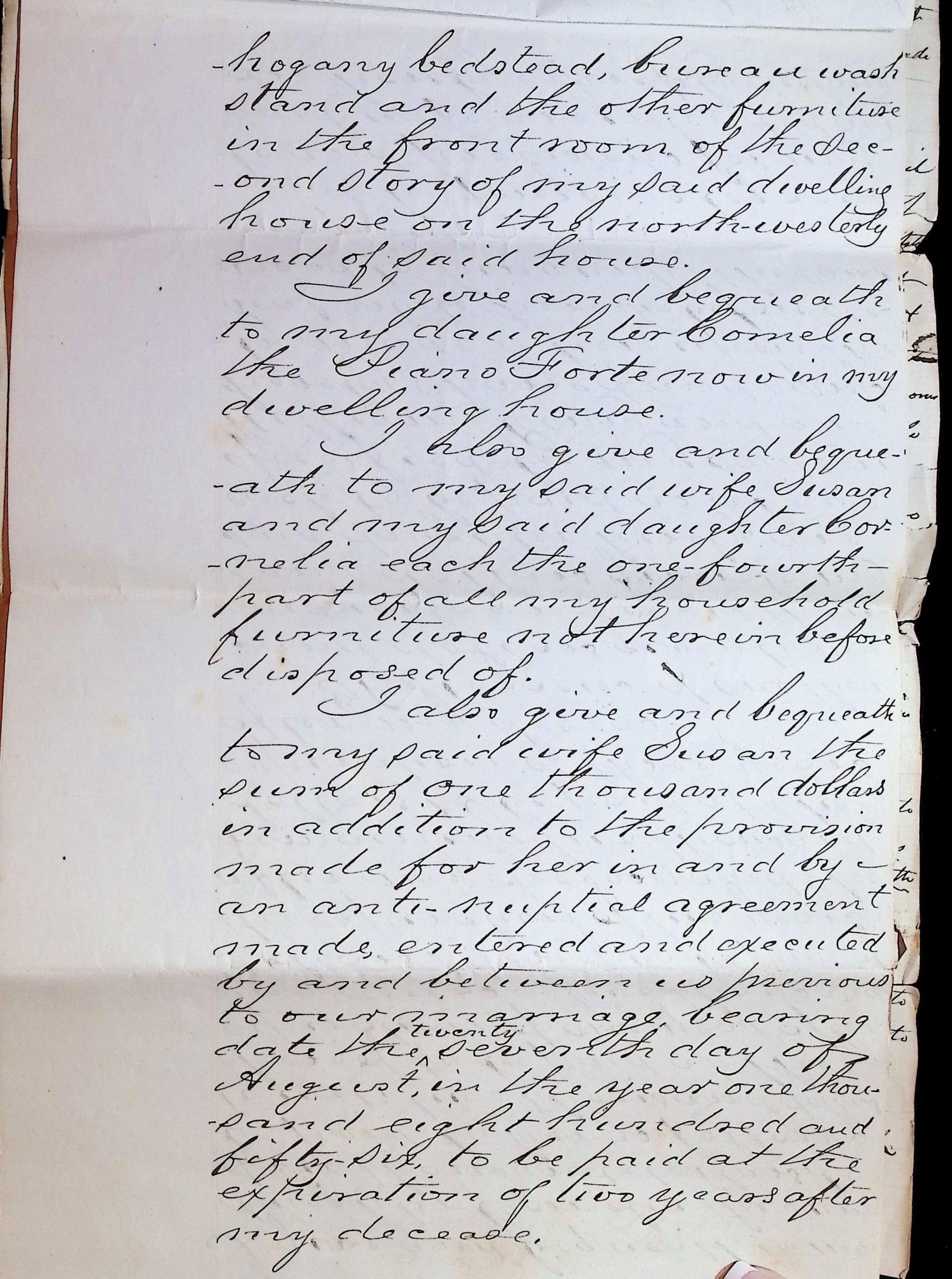
Susan is bequeathed a black walnut bedstead/bureau set, a mahogany bedstead/bureau/washstand set, one-fourth of the general household furniture, and a $1,000 cash legacy (payable 2 years post-mortem). This cash is structured explicitly in addition to a pre-existing antenuptial agreement dated August 27, 1856, and stands in strict lieu of her traditional widow's dower rights under New York State law.
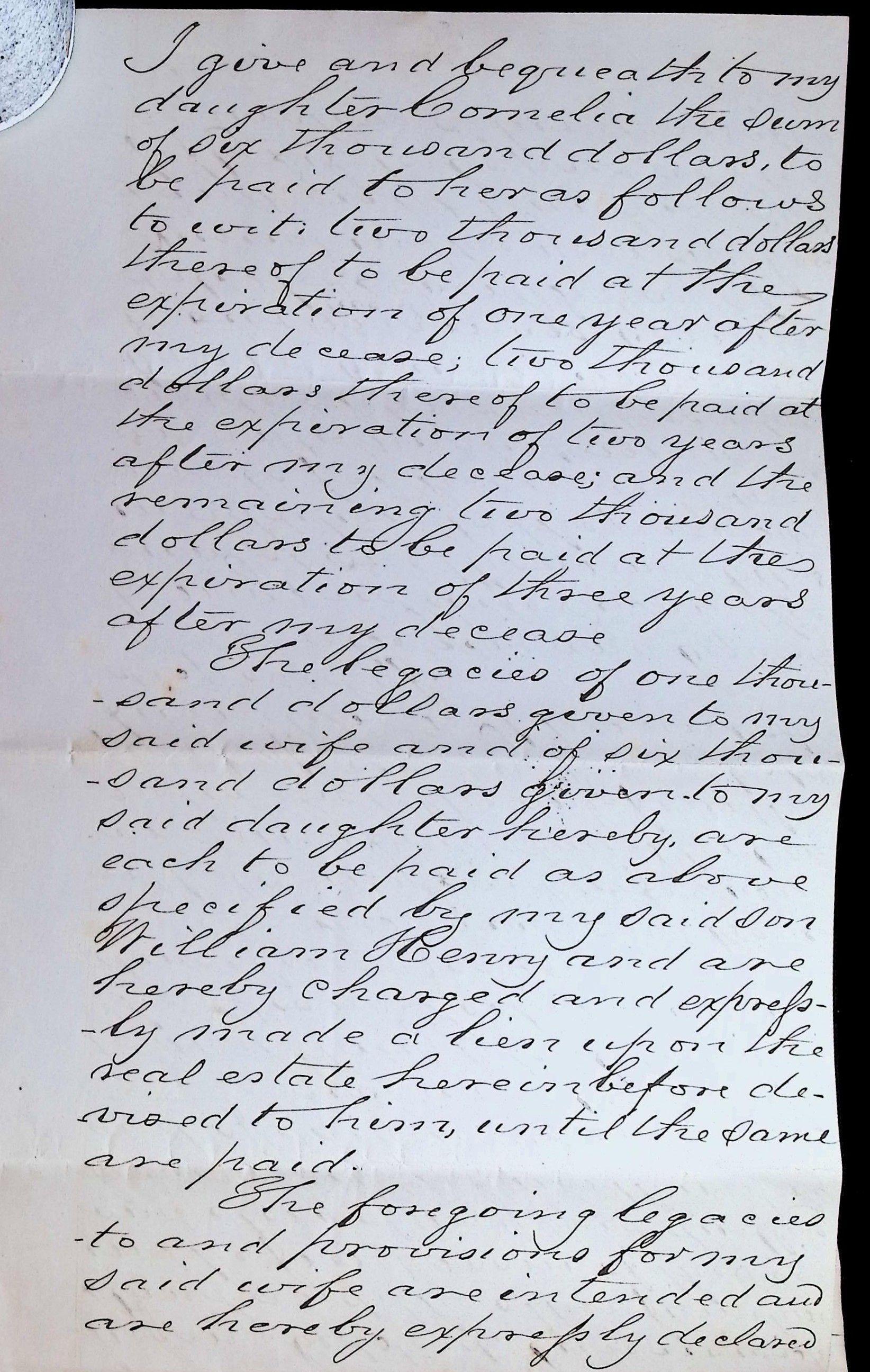
Cornelia receives the family "Piano Forte," one-fourth of the household furniture, and a substantial $6,000 cash legacy paid out in $2,000 annual installments over three years.
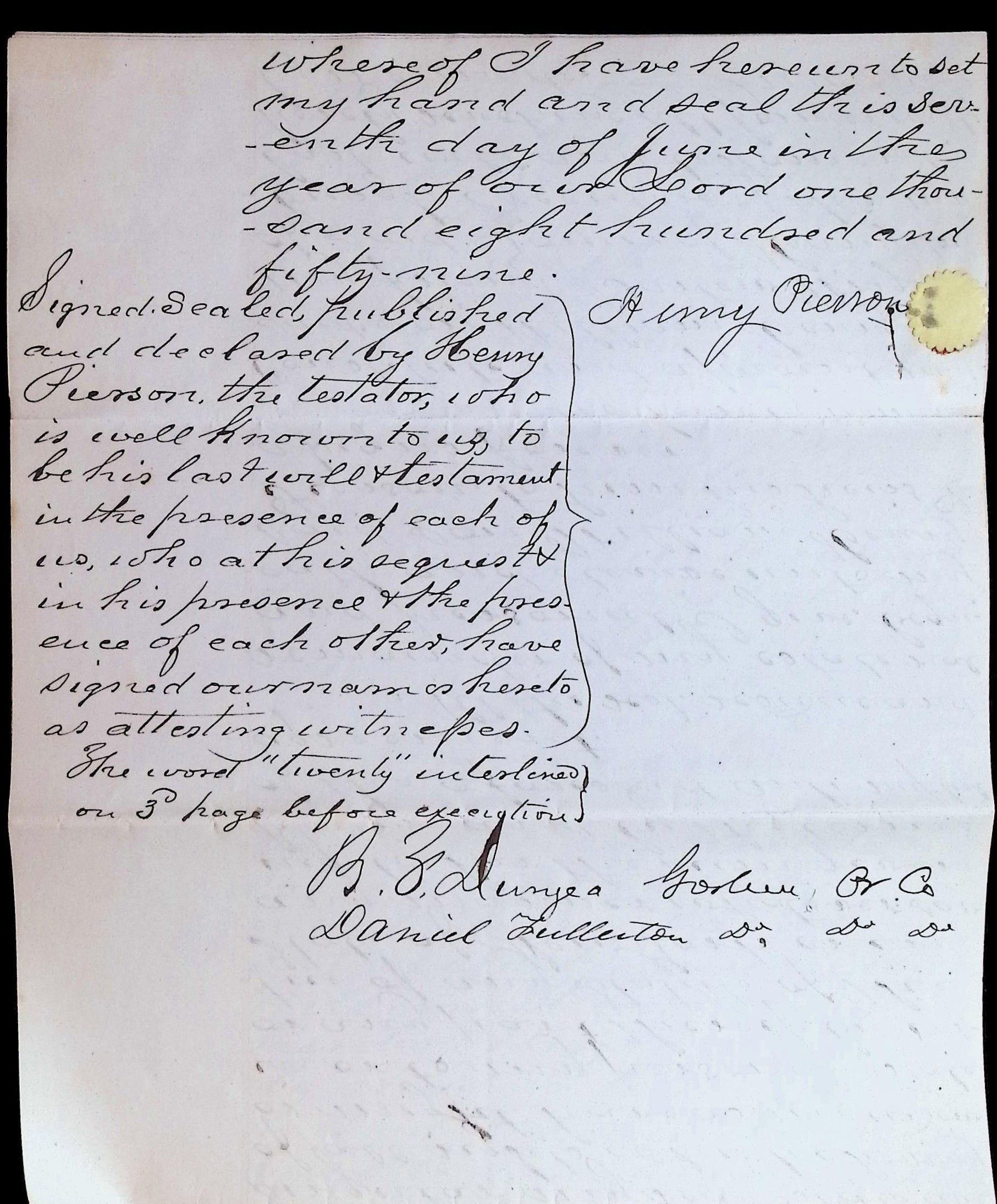
Executors & Witnesses: Managed by son William Henry Pierson and friend Barlow Wright. Witnessed by Goshen attorneys/residents B. F. Duryea and Daniel Fullerton.
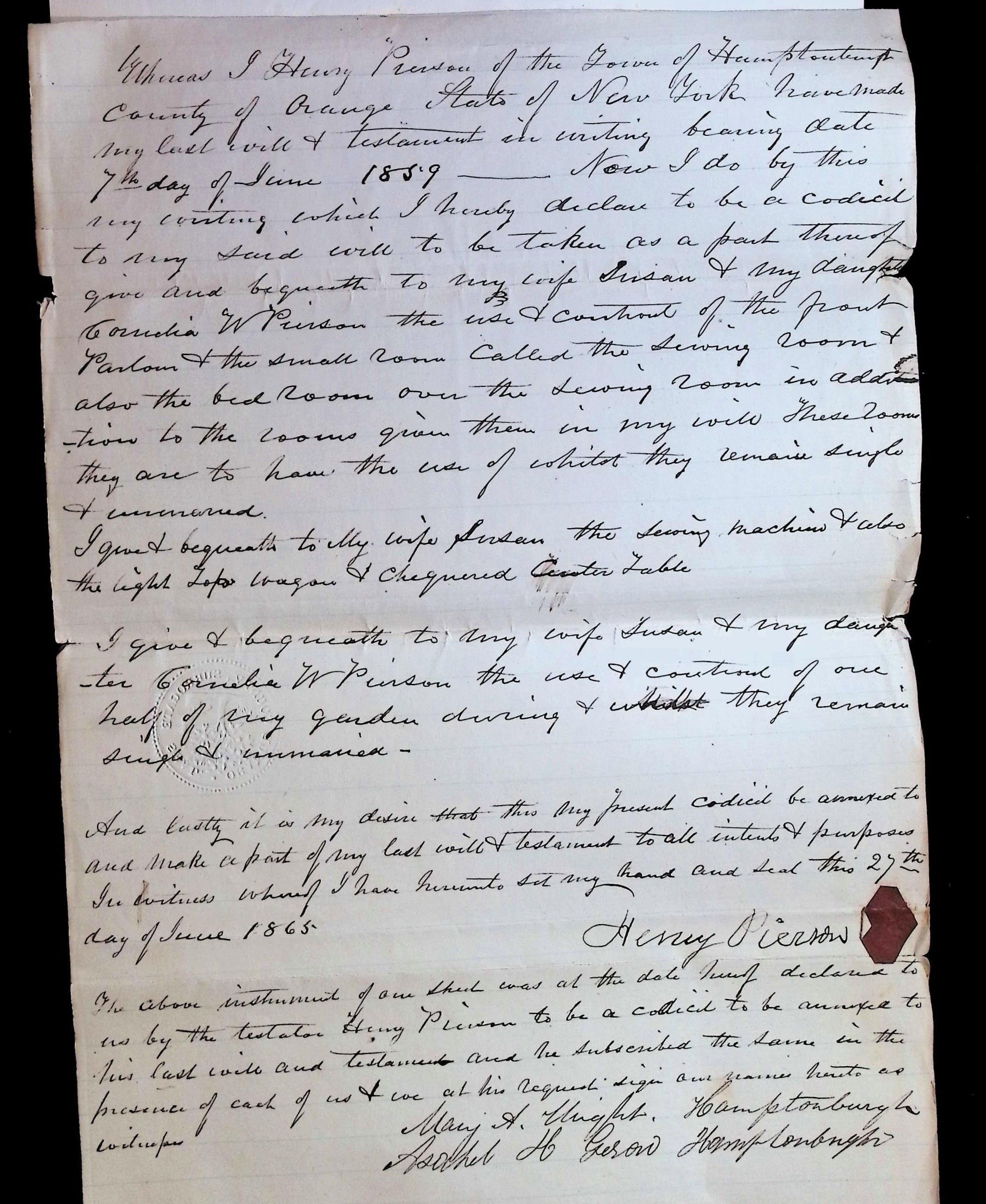
The Codicil (Executed June 27, 1865)
Written six years later near the end of the American Civil War, Henry expands the domestic comforts of his wife and daughter.
He broadens their residential enclave to include the use and control of the front Parlour, a sewing room, the bedroom above it, and half of the estate's garden (similarly restricted to the duration of their unmarried single lives).
Susan is additionally given a sewing machine (a high-value technological asset for a household in 1865), a light Top Wagon, and a checkered center table.
Witnessed by Mary A. Wright and Asathel H. Gerow of Hamptonburgh.
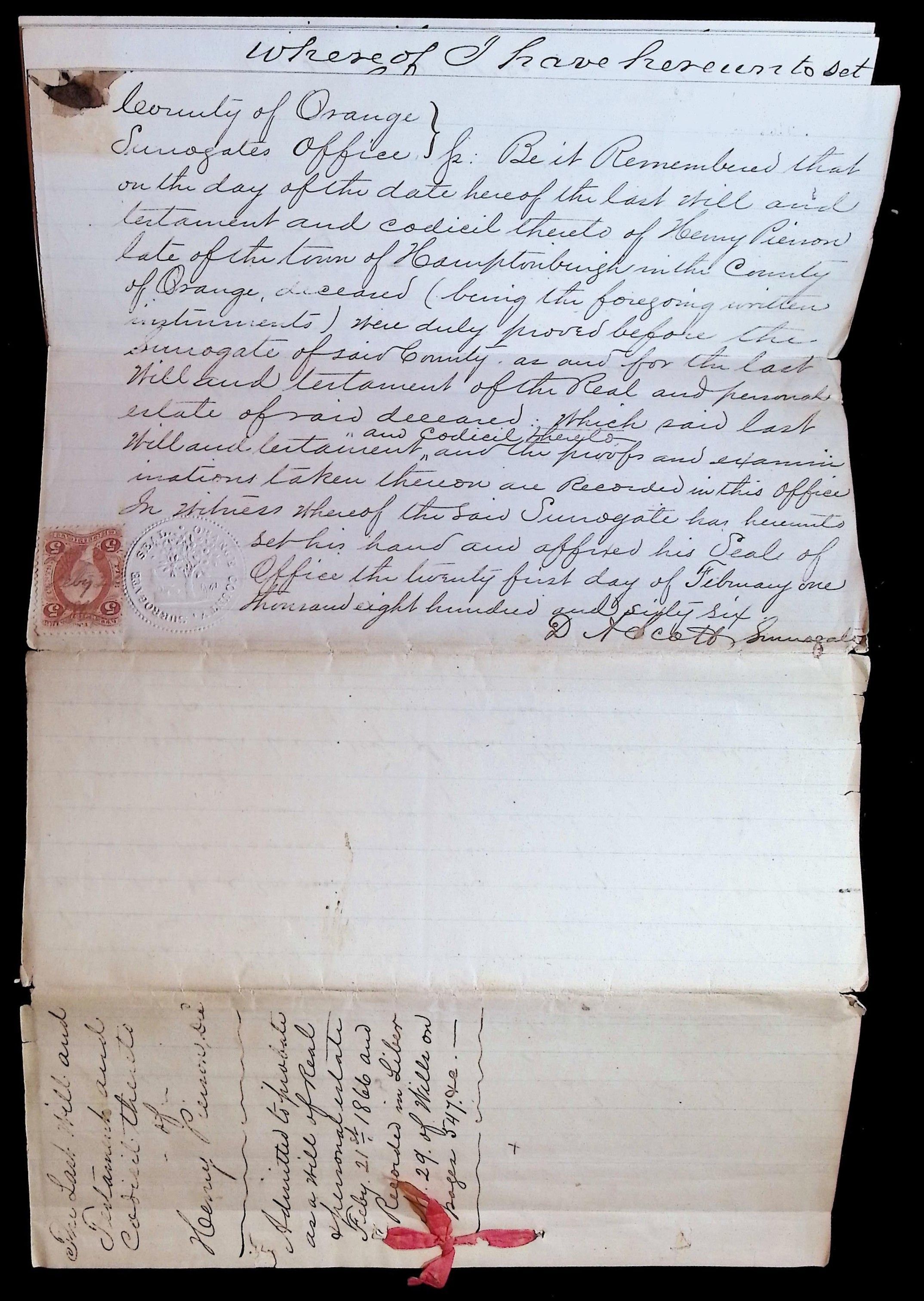
Probate and Record (February 21, 1866)
Following Henry Pierson's death, the estate passed through the legal system. Orange County Surrogate G. A. Scott officially admitted both the Will and Codicil to probate on February 21, 1866. The historical record was formalized in Liber 29 of Wills, pages 547 forward.