Name/Title
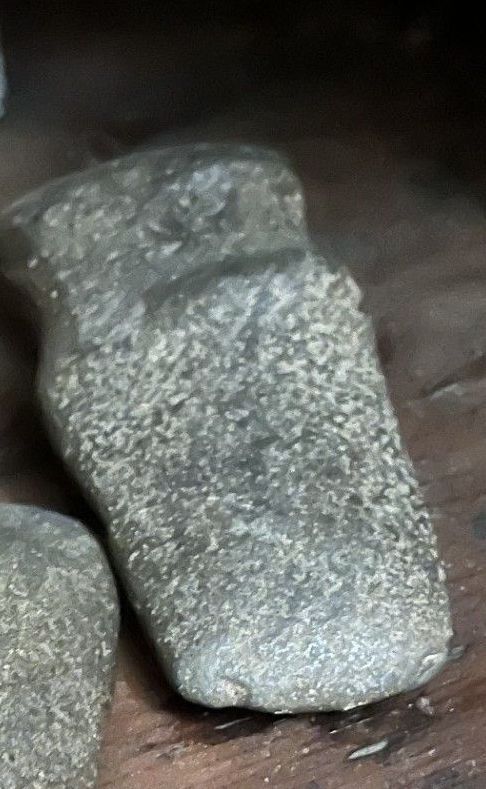
Indian Stone hatchet or Indian hammer headEntry/Object ID
100273Scope and Content
(AI) 1. The Grooved Axe / Celt (Top Right)
The wider stone in the back is a classic grooved axe head or celt.
The Groove: If you look closely near the top (butt end) of the stone, you can see a distinct, smooth depression or channel carved all the way around its circumference. This was intentionally pecked out using another hard stone so that a split-wooden handle could be wrapped around it and securely lashed in place with wet rawhide.
The Edge: The opposite end tapers down into a flat, blunt, or once-sharp edge used for heavy tasks like felling trees, splitting wood, or shaping dugout canoes.
2. The Celt or Pestle / Whetstone (Bottom Left)
The elongated, tapered cylinder stone in the foreground could serve a couple of different purposes based on its wear pattern:
A Celt: It may be a highly polished, ungrooved axe head (called a celt). These were fitted directly into a hole burned or carved into a heavy wooden club handle.
A Pestle: If the wide end is completely flattened or pitted from impact, it was likely used as a hand-held pestle for grinding corn, nuts, seeds, or pigments on a flat stone mortar (a metate).