Name/Title
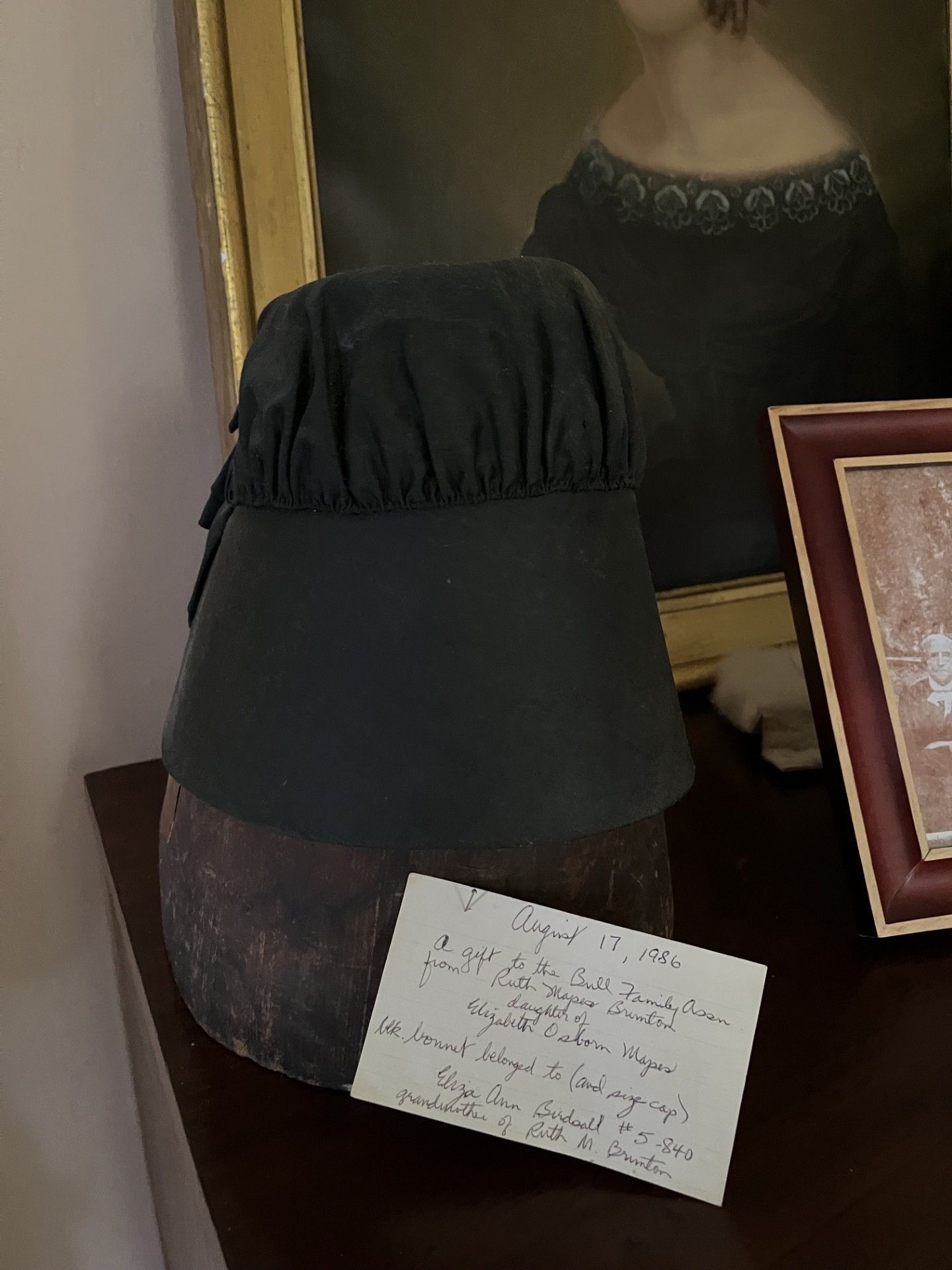
Mourning Bonnet & Hat BlockEntry/Object ID
100082Tags
Ruth Mapes Bruton, Eliza Ann BirdsallScope and Content
Bonnet Mold Pine value $50.00
2 Bonnets - 5 hats value $175.00
(AI )This is a poignant and beautifully preserved piece of 19th-century attire. What you have here is an authentic Victorian mourning bonnet (sometimes referred to as a "slat bonnet" or poked front bonnet depending on the stiffening structure), resting on a wooden hat block.
Just like the coffin plate and the fine china, this item highlights how deeply the Victorian era structured its personal lives around family landmarks, respect for the deceased, and social etiquette.
The Artifact: Mourning Bonnet & Hat Block
The Bonnet: Made of a deep, solid black fabric, this bonnet features a structured, smooth front brim designed to shield the face, paired with a gathered, ruffled fabric crown at the back.
The Hat Block: It is displayed on a heavy, solid wood milliner's hat block. Milliners (hat makers) used these carved wooden heads to stretch, mold, and sew fabric or straw into the correct shape.
The Background: Notice that it is sitting right in front of a stunning, dark oil portrait of a woman wearing a dress with an intricate white lace collar—perhaps a relative from the exact same era.
The Provenance
The handwritten curatorial index card dated August 17, 1986, outlines a precise line of descent:
"A gift to the Bull Family Assn from Ruth Mapes Brinton, daughter of Elizabeth Osborn Mapes. Blk. bonnet belonged to (and sz. cap) Eliza Ann Birdsall # 5-840, grandmother of Ruth M. Brunton."
Historical Context: Victorian Mourning Culture
In the 1800s, especially following the protracted mourning of Queen Victoria for Prince Albert, the rules for grieving were strictly codified. When a husband, child, or close relative passed away, women were expected to enter a period of "Deep Mourning" (or Full Mourning) lasting anywhere from a year to two years.
During this initial phase, etiquette dictated that a woman could only wear solid, non-reflective black clothing. Shiny silks or jewelry were forbidden; matte fabrics like wool, crepe, or dull cotton were mandatory. A heavy black bonnet like this, often paired with a long black crepe veil that covered the face in public, was the universal symbol of a woman in deep grief. in Master bedroom