Name/Title
Presentation at 1932 William Bull and Sarah Wells PicnicEntry/Object ID
001951Tags
William Bull, Sarah WellsScope and Content
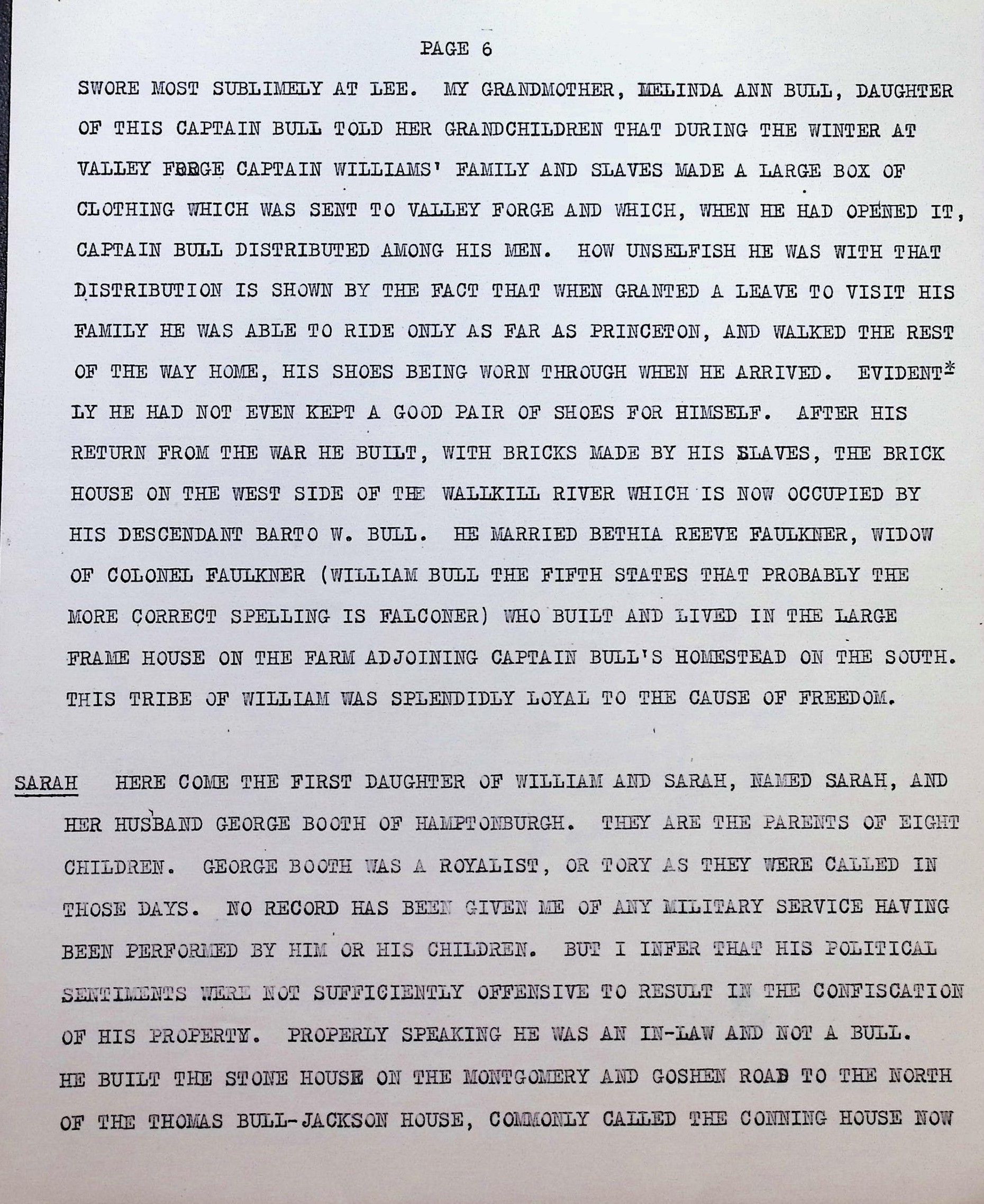
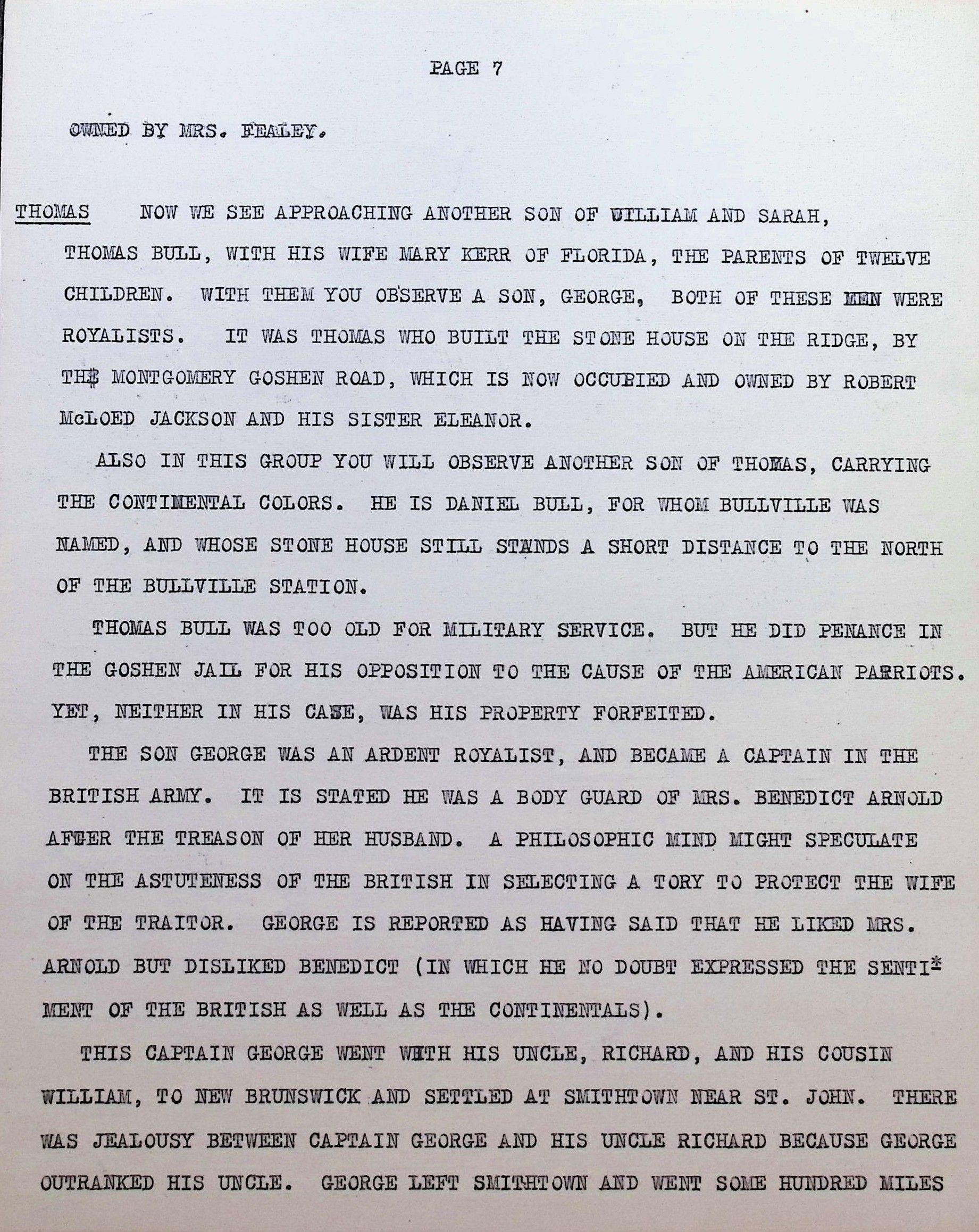
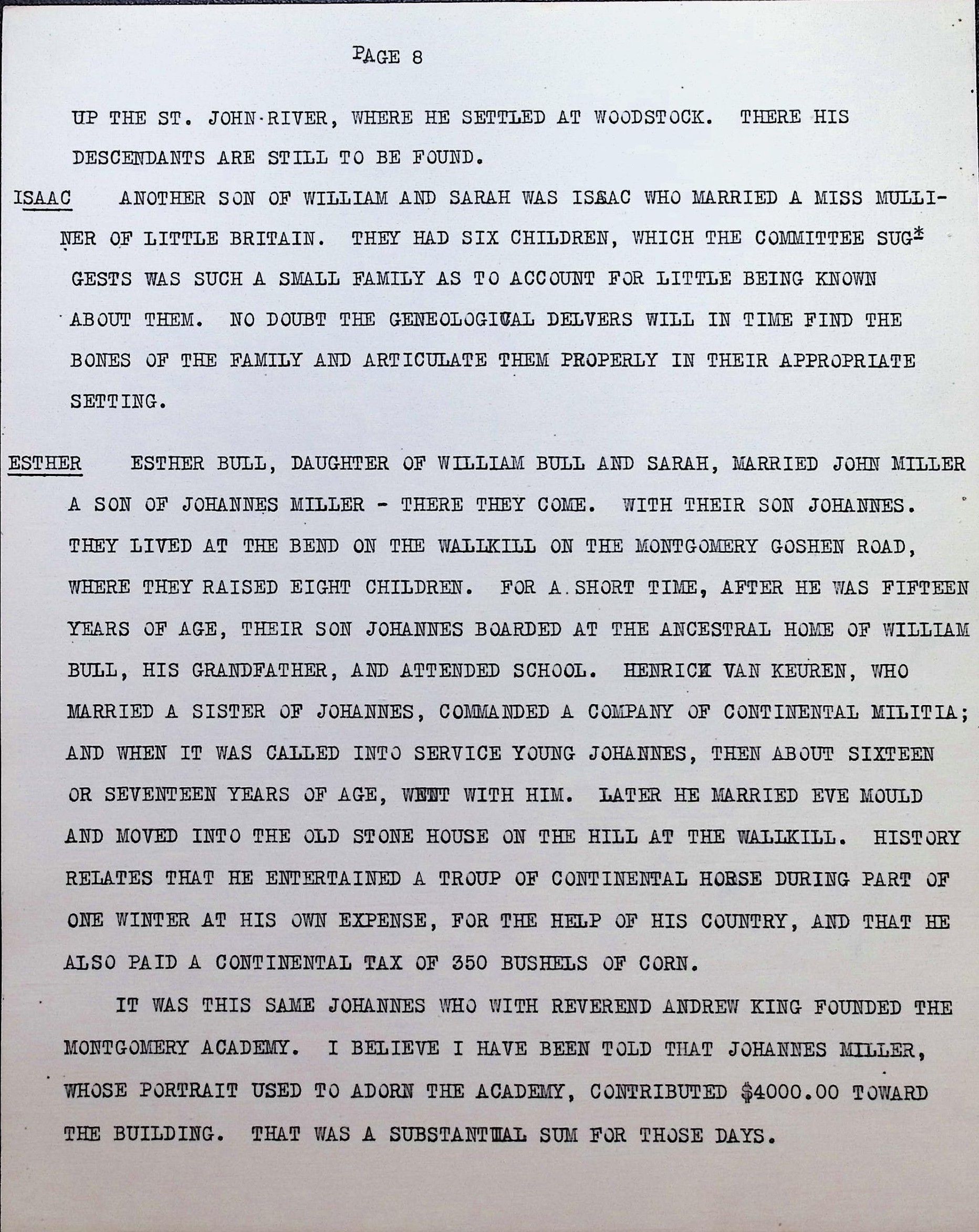
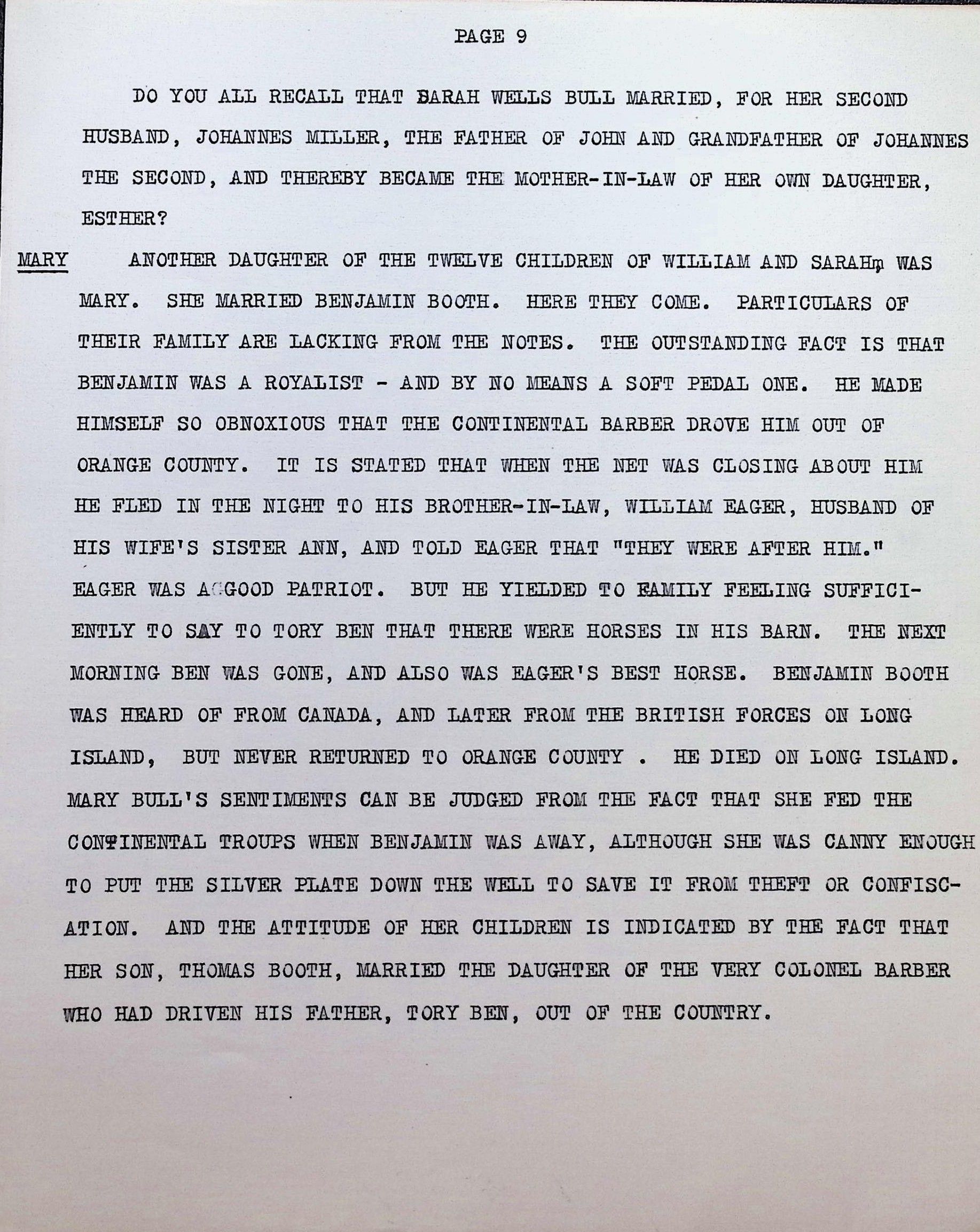
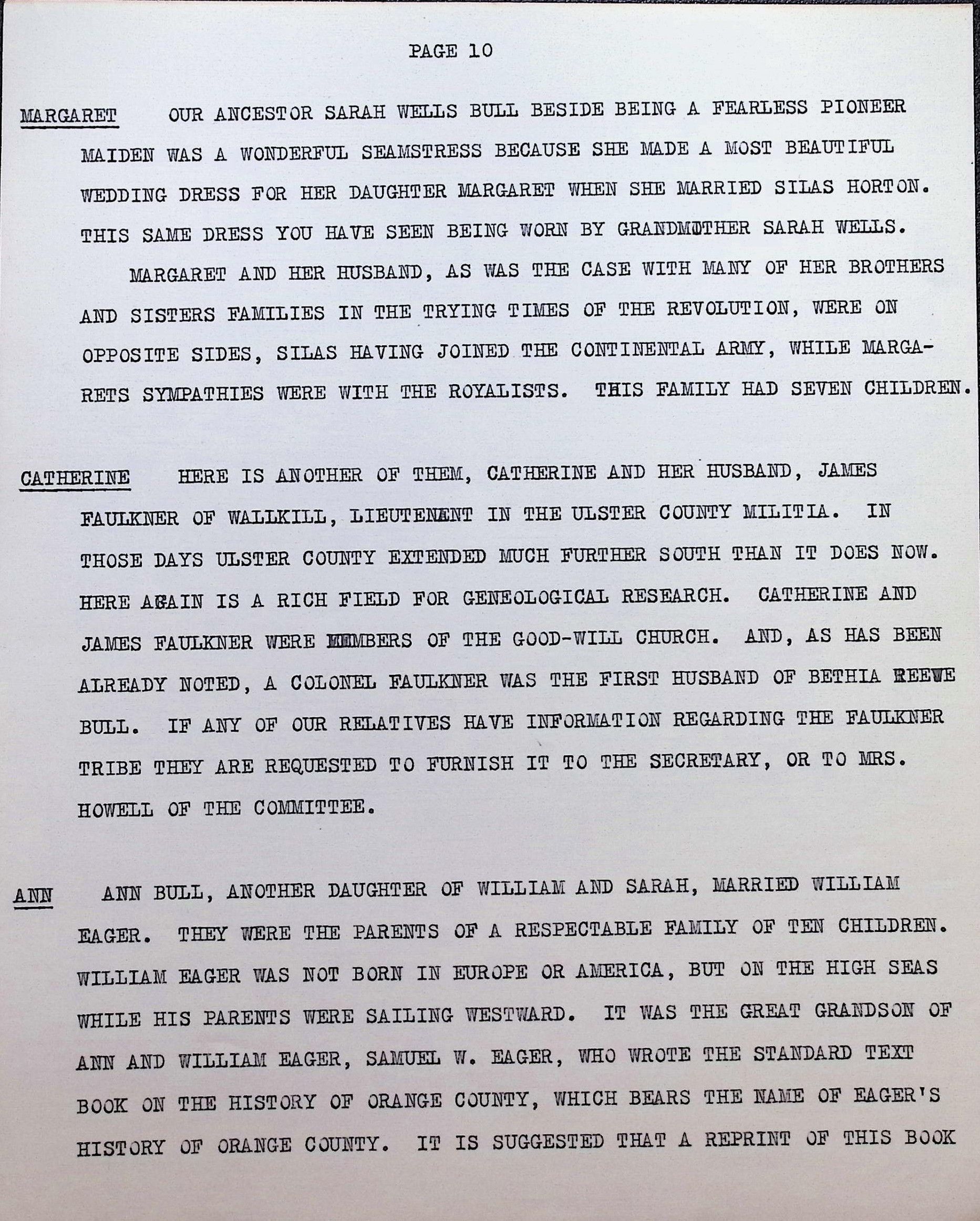
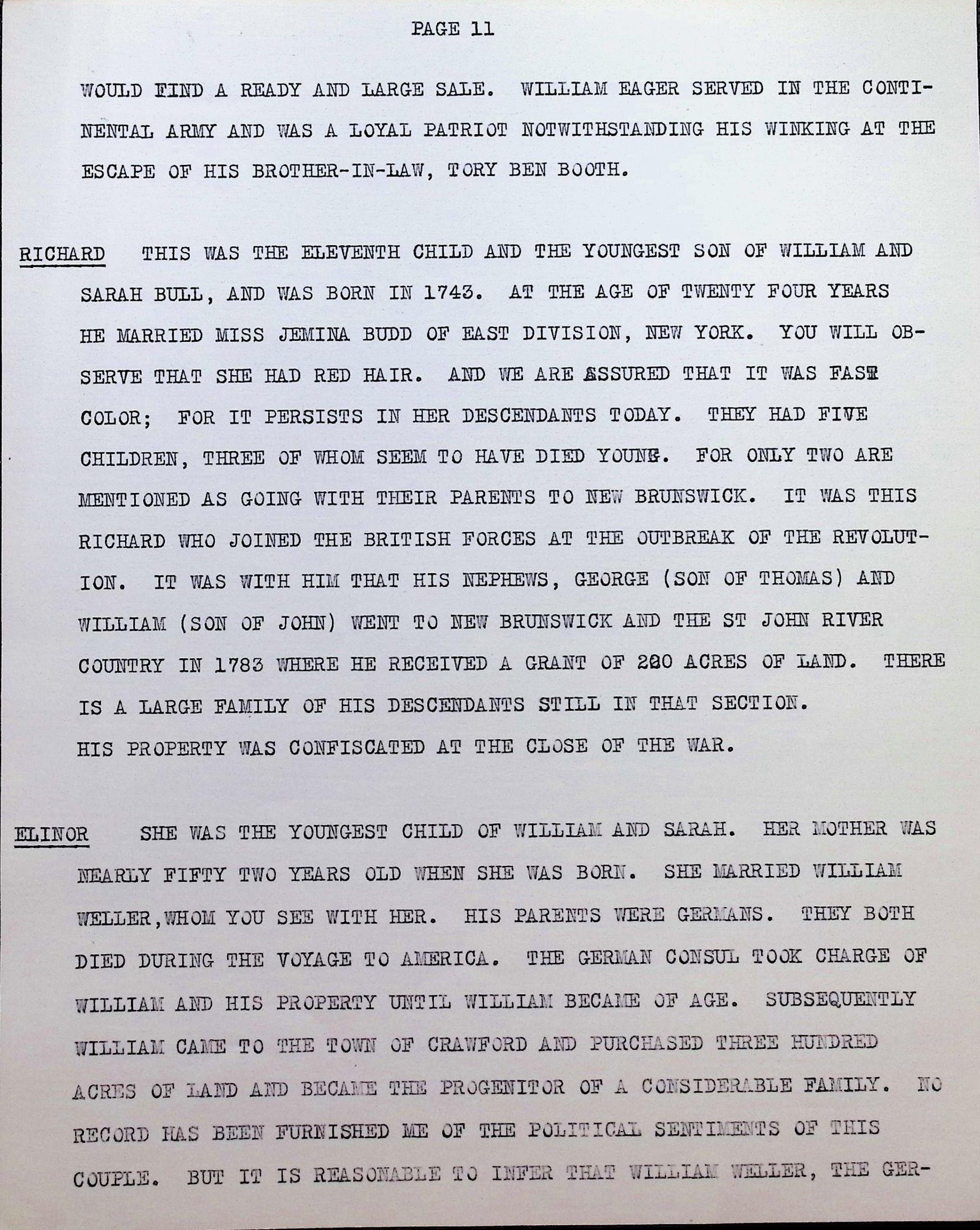
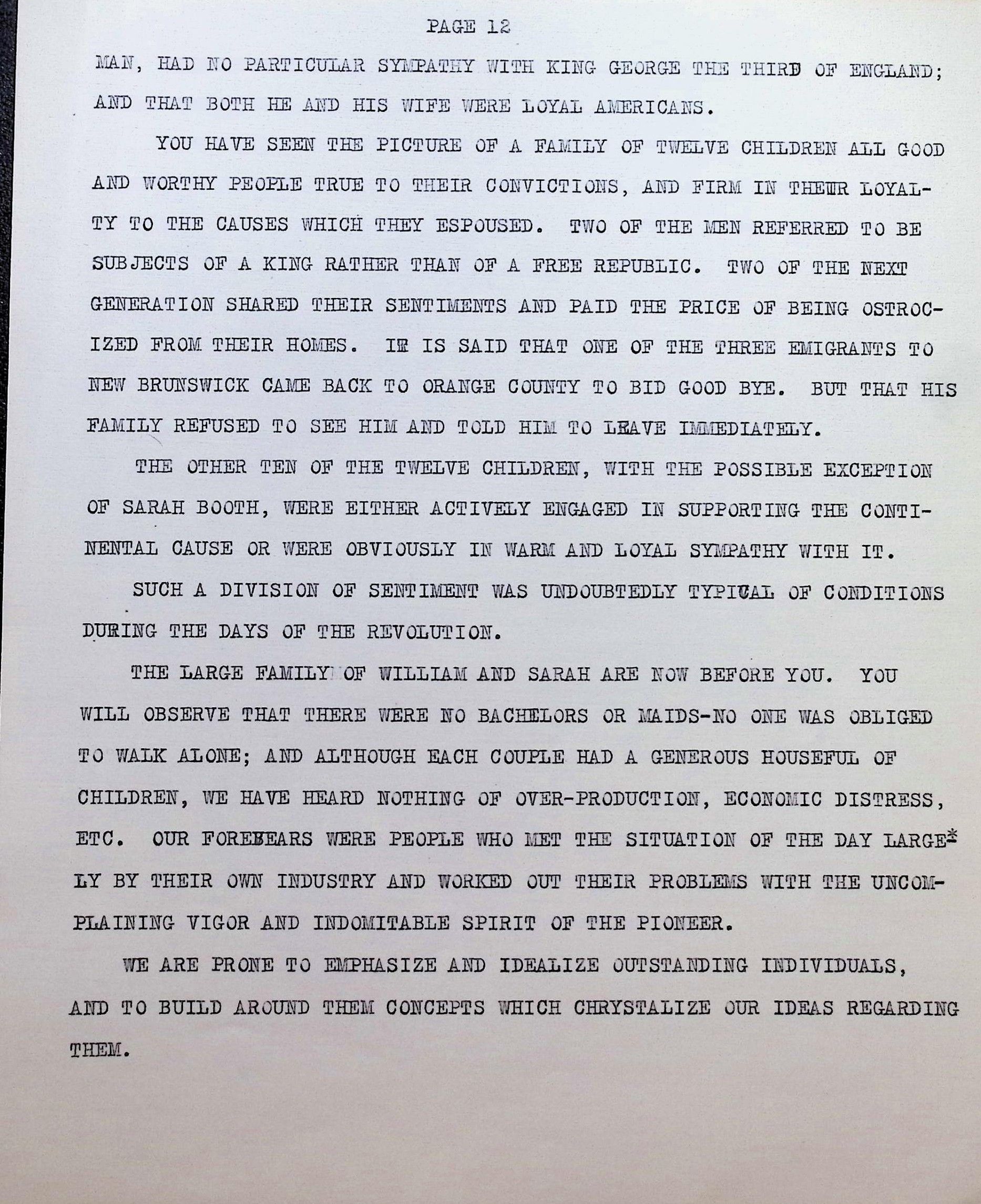
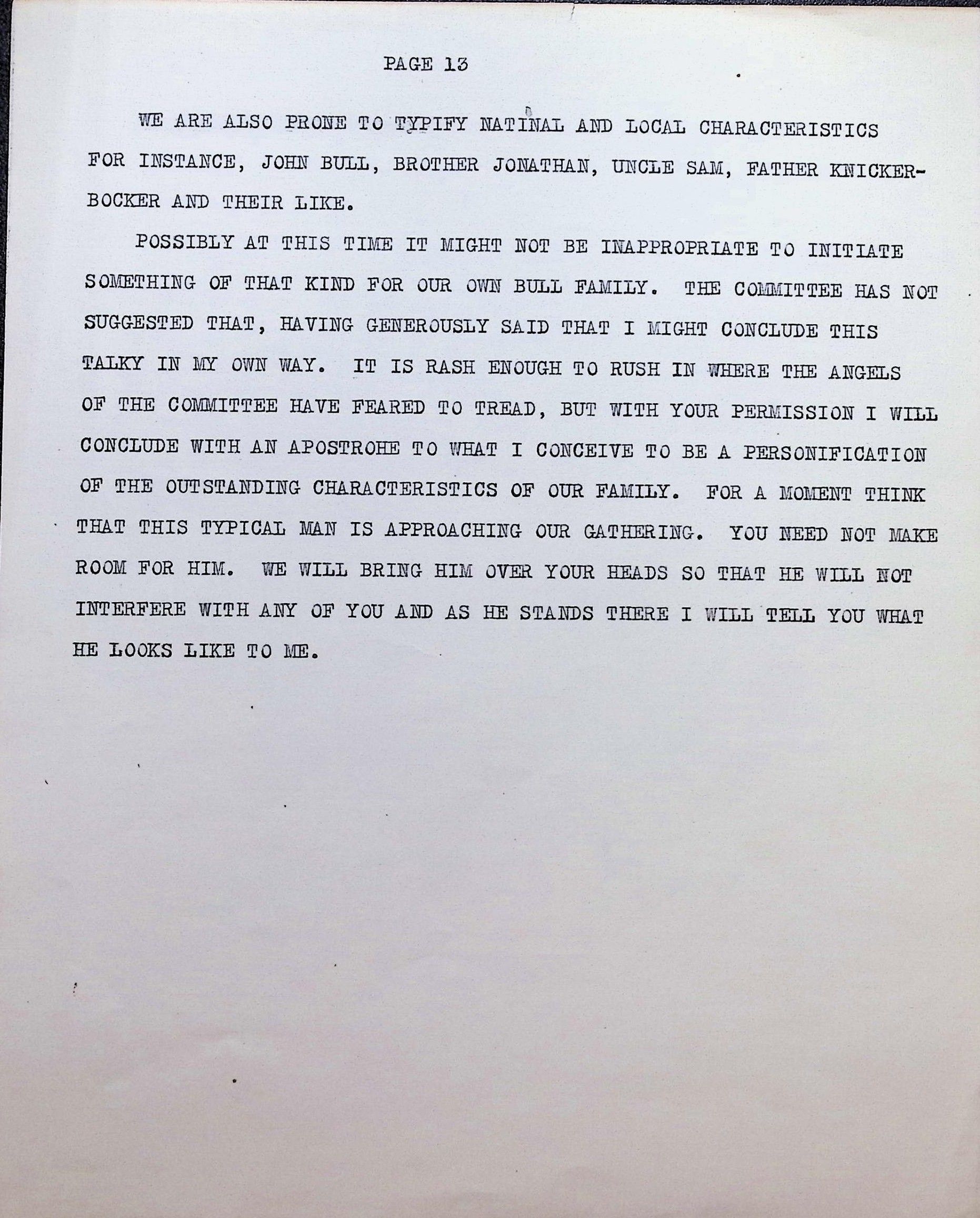
This set of documents appears to be a transcript of a speech or presentation given in 1932 for a family reunion or historical pageant. The text focuses on the history of the William Bull and Sarah Wells family, specifically their children's involvement (on both sides) of the American Revolutionary War.
Here is a summary of the key highlights:
The "Mastodon" Incident and George Washington
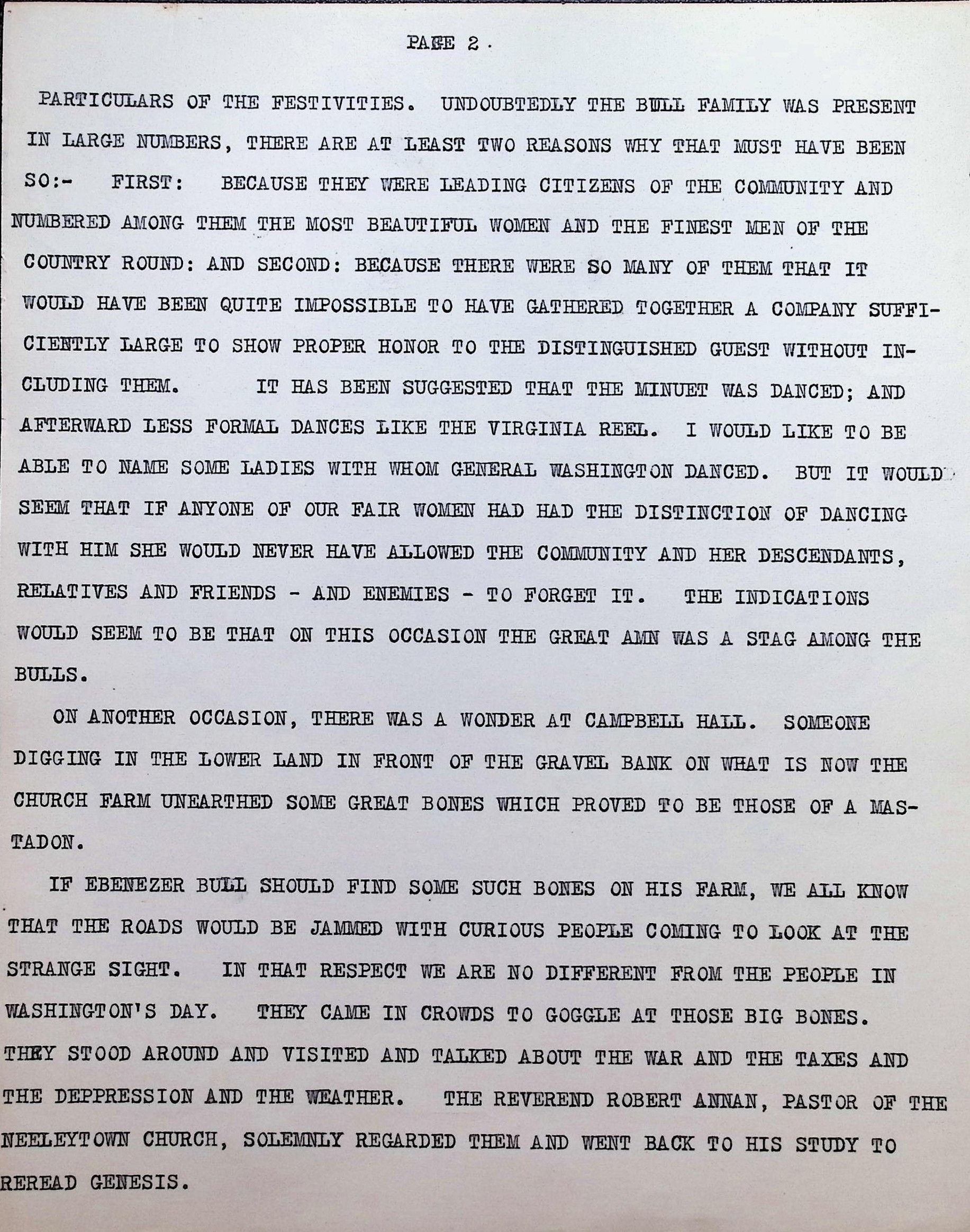
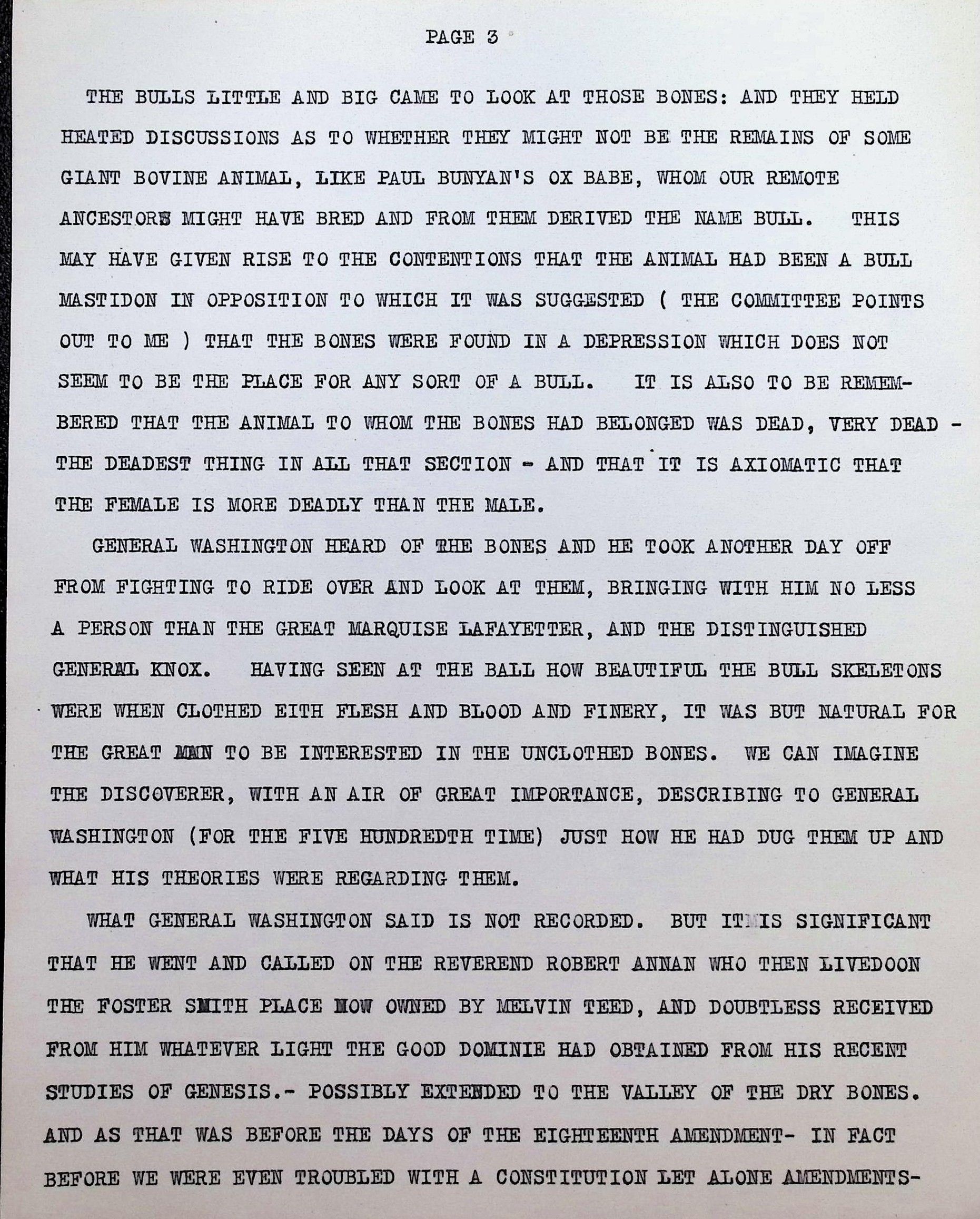
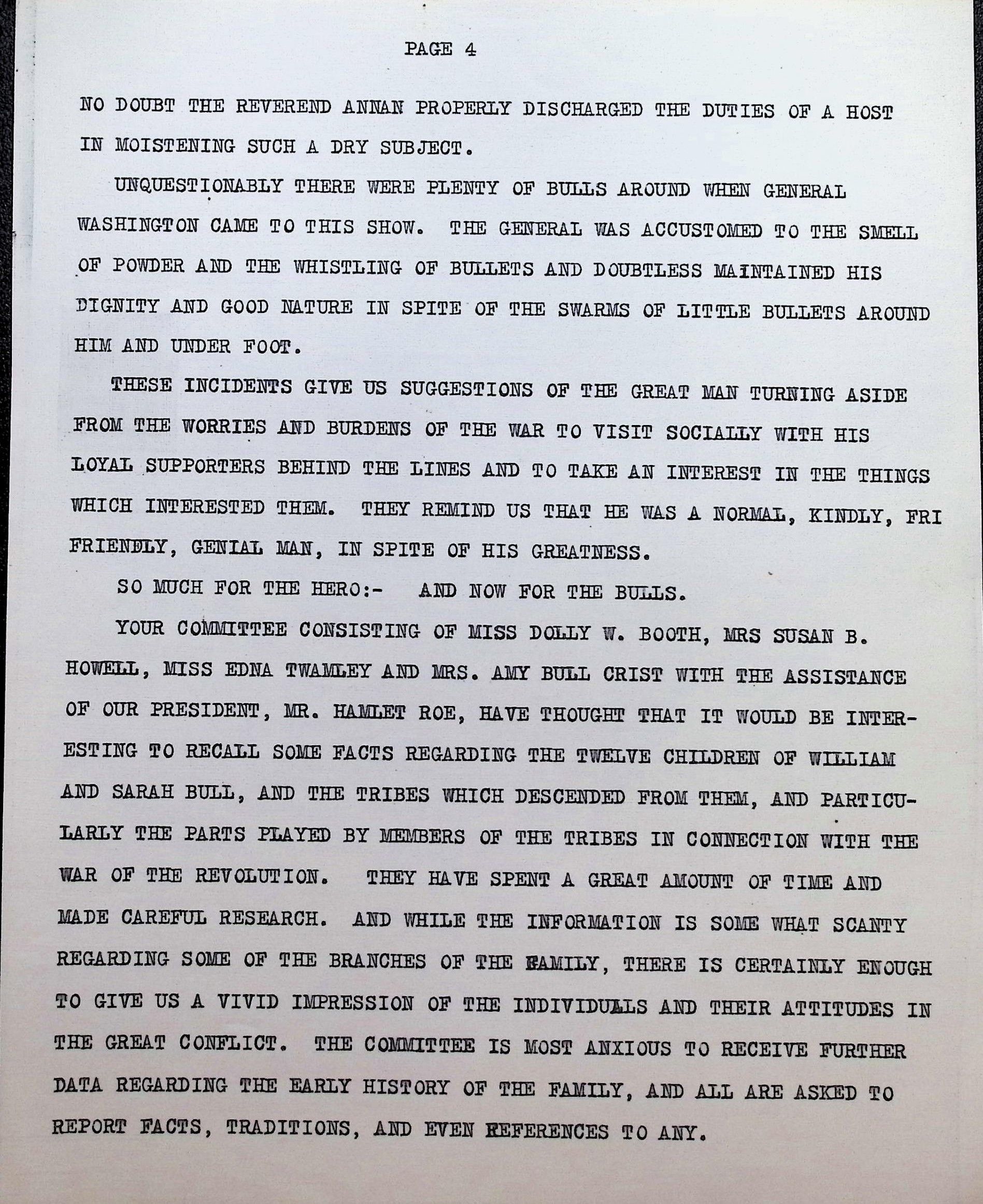
The narrative begins with an account of a mastodon skeleton being unearthed at Campbell Hall. This discovery was so significant that General George Washington, along with the Marquis de Lafayette and General Knox, reportedly visited the site to view the bones. The speaker uses this event to humanize Washington, describing him as a "normal, kindly, friendly, genial man" who socialized with the Bull family during the war.
The Twelve Children of William and Sarah Bull
The core of the documents provides a genealogical and biographical "roll call" of the children of the family and their political leanings during the Revolution:
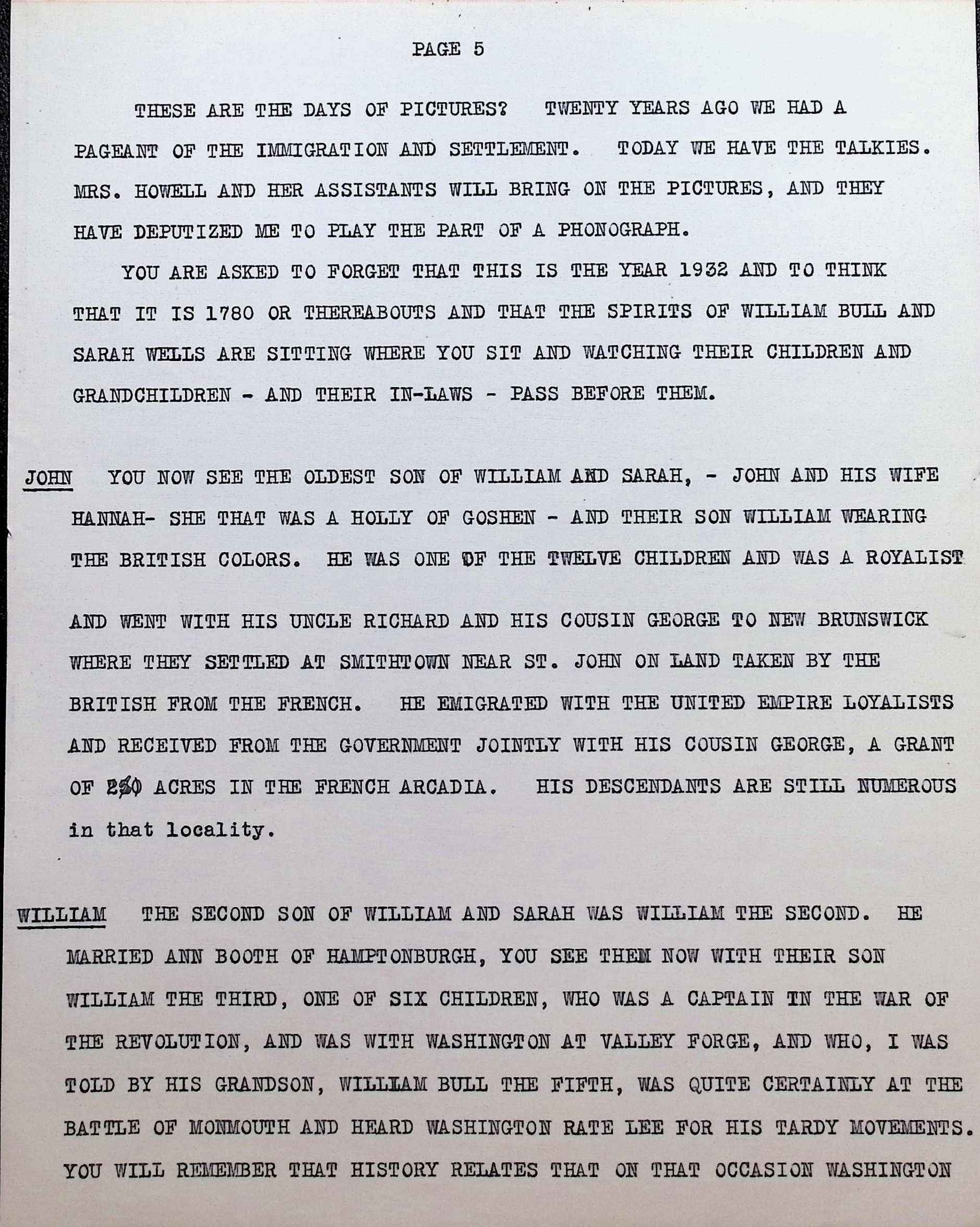
John (Oldest Son): His son, William, was a Royalist (Loyalist) who moved to New Brunswick, Canada, as a United Empire Loyalist.
William (Second Son): His tribe was "splendidly loyal to the cause of freedom." His son, Captain William Bull III, served with Washington at Valley Forge and the Battle of Monmouth.
Sarah: Married George Booth. They were Loyalists, but were allowed to keep their property in Hamptonburgh.
Thomas: A Royalist who was imprisoned in the Goshen jail for his opposition to the Patriots. His son, George, became a Captain in the British Army and allegedly served as a bodyguard to Mrs. Benedict Arnold. Conversely, his other son Daniel Bull supported the Continentals (Bullville is named for him).
Isaac: Had a small family of six children; less is known about his specific branch.
Esther: Married John Miller. Their son, Johannes Miller, was a Patriot who supported the Continental Army at his own expense and later co-founded the Montgomery Academy.
Legacy and Humor
The speaker strikes a witty tone, often poking fun at the family name (referring to "swarms of little Bullets" around Washington) and the "genealogical delvers" who spend their time "finding the bones of the family." The presentation was intended to be immersive, asking the 1932 audience to imagine themselves back in the year 1780.