Name/Title
Richard Jerrard and William Bull 6th day of June last, to our Trustee William BurnetEntry/Object ID
001960Tags
William Burnet, William Bull, Richard JerrardScope and Content
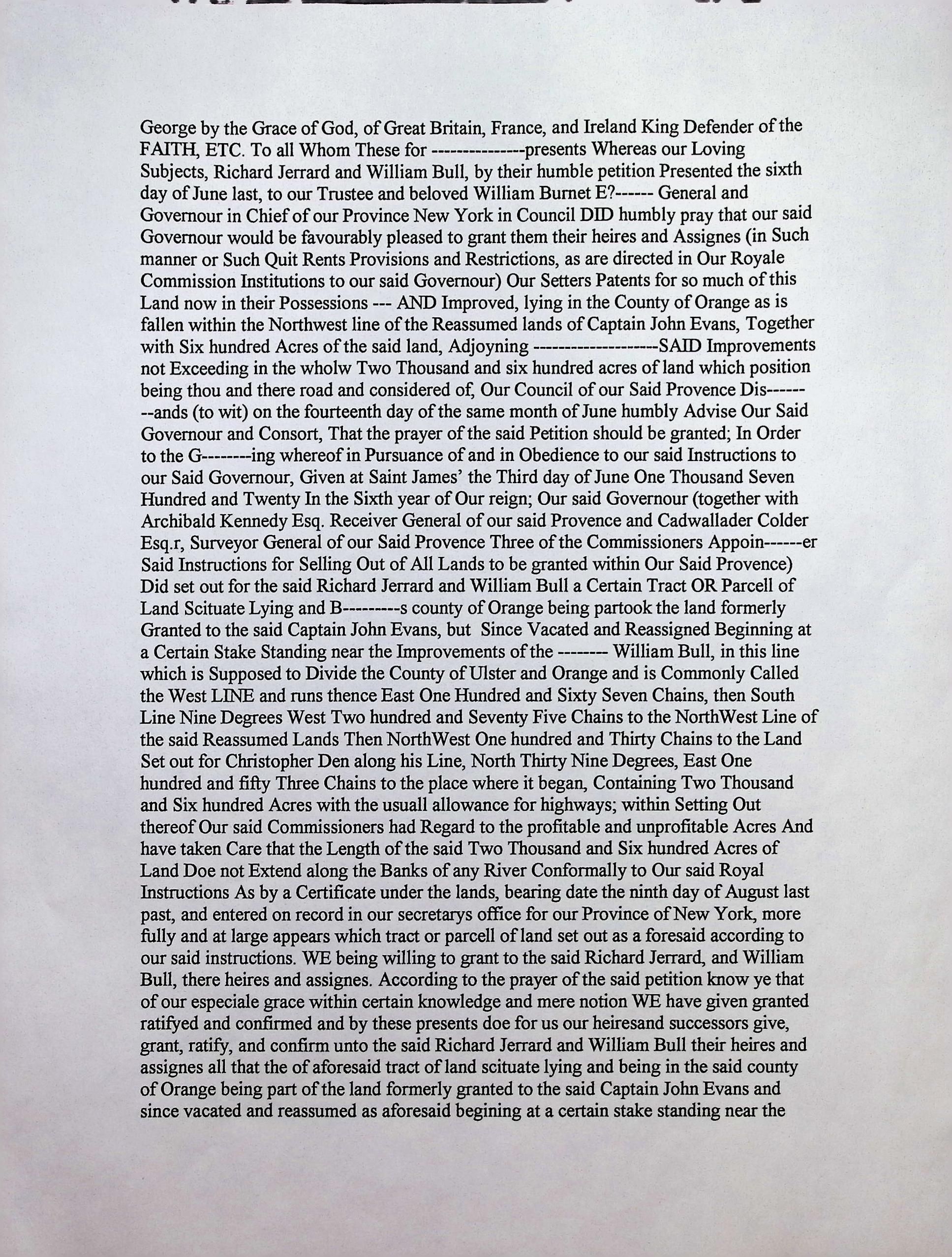
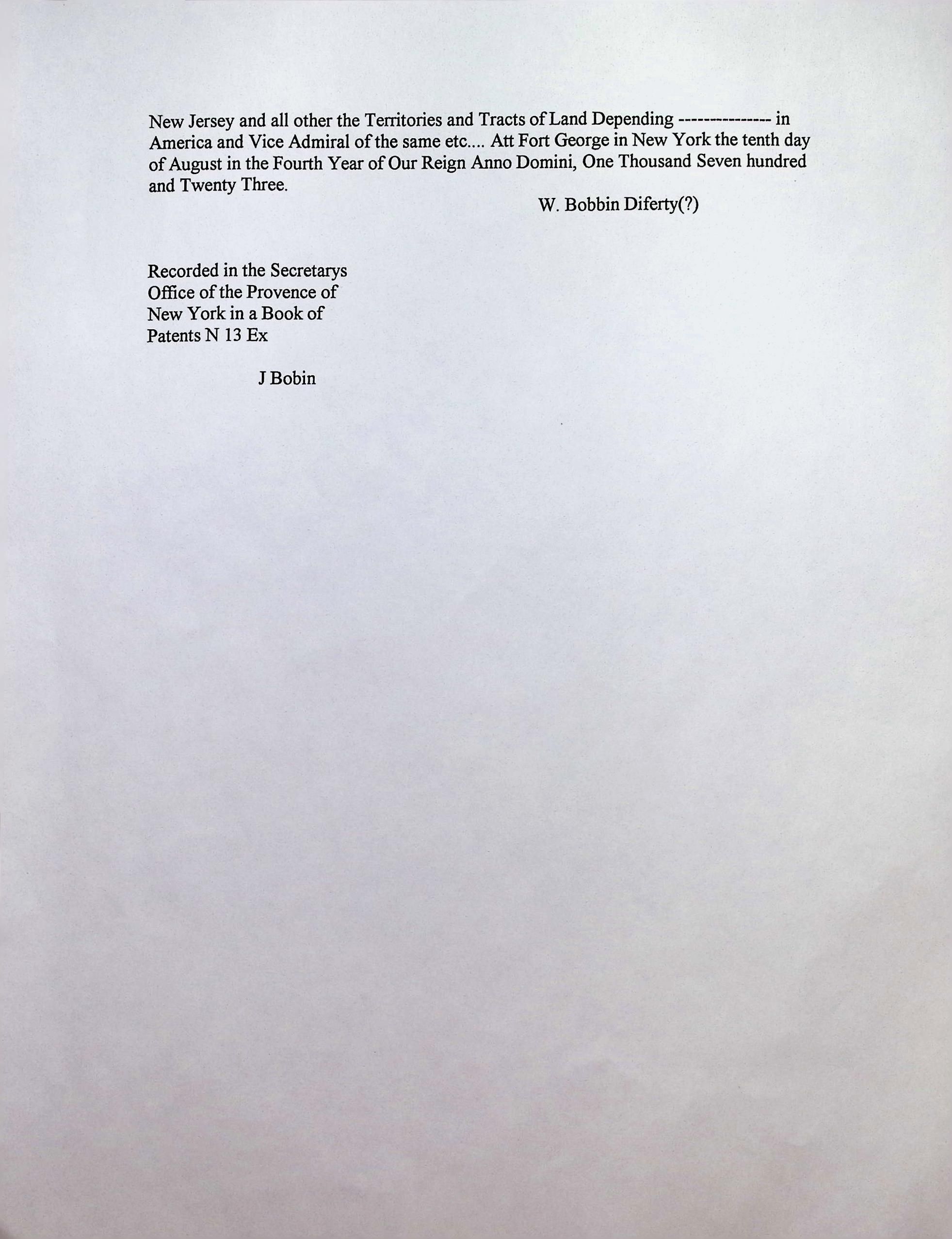
These documents represent a Royal Land Grant issued in August 1723 by the authority of King George I of Great Britain to Richard Jerrard and William Bull.
The grant conveys 2,600 acres of land in Orange County, New York, which was part of a larger tract formerly granted to Captain John Evans but subsequently "reassumed" (reclaimed) by the Crown.
Here is a summary of the key details:
1. The Parties Involved
Grantor: King George I, acting through William Burnet, the Captain General and Governor in Chief of the Province of New York.
Grantees: Richard Jerrard and William Bull.
Key Officials: Archibald Kennedy (Receiver General) and Cadwallader Colden (Surveyor General).
2. The Land and Location
Acreage: 2,600 acres (including allowances for highways).
Location: Orange County, specifically near the "West Line" that divided Ulster and Orange counties.
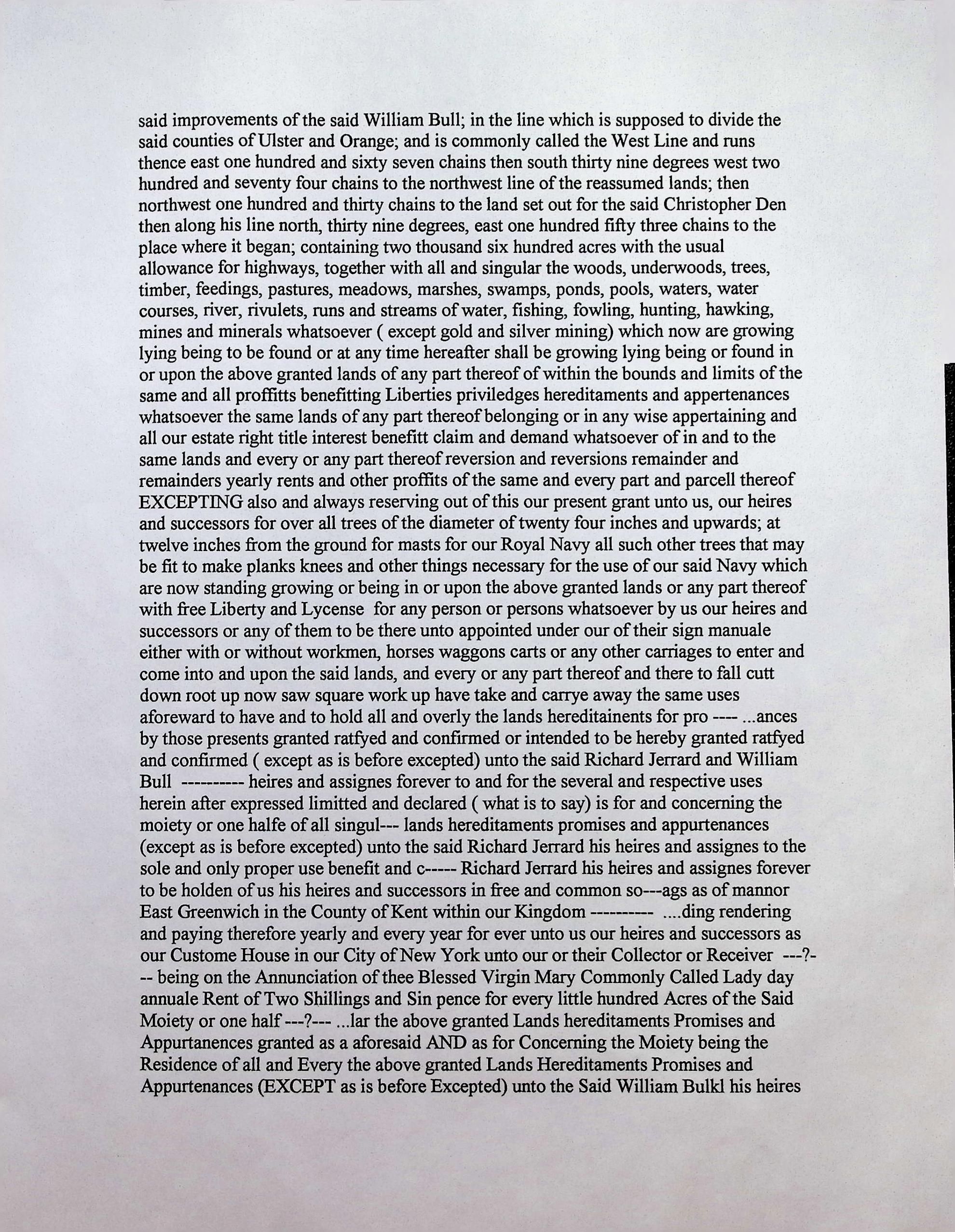
Boundaries: The document provides detailed survey markers, including a "Certain Stake Standing near the Improvements of the said William Bull" and references to the lands of Christopher Den.
3. Conditions and Restrictions (The "Fine Print")
The grant was not a simple gift; it came with several colonial-era requirements:
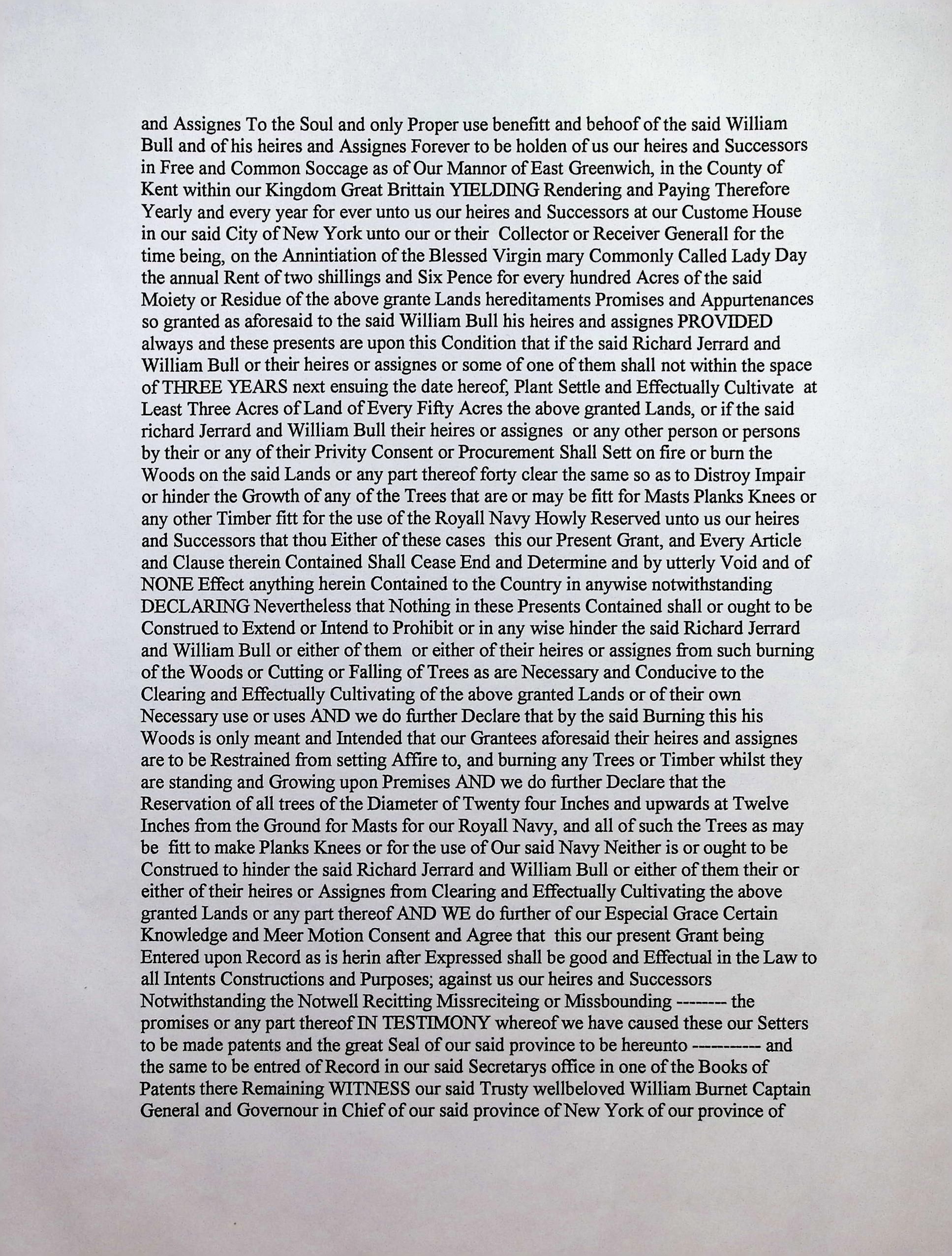
Cultivation Requirement: The grantees were required to "Plant Settle and Effectually Cultivate" at least three acres for every fifty acres granted within three years. Failure to do so would void the grant.
Timber Rights (The "Royal Navy" Clause): The Crown reserved all white pine trees of 24 inches in diameter or greater for use as masts for the Royal Navy.
Mineral Rights: The Crown reserved all gold and silver mines.
Annual Rent ("Quit Rent"): An annual payment of two shillings and sixpence for every hundred acres was due to the Custom House in New York City every "Lady Day" (the Annunciation of the Blessed Virgin Mary).
4. Historical Context
This document reflects the "Small Tract" policy of the early 18th century, which sought to break up massive, unproductive land holdings (like the original John Evans grant) and redistribute them to settlers who would actually develop the land. William Bull, one of the grantees, is a notable figure in Orange County history, particularly known for building the "Bull Stone House" which still stands today.