Name/Title
Sarah Wells AccountEntry/Object ID
001961Tags
Sarah WellsSubject
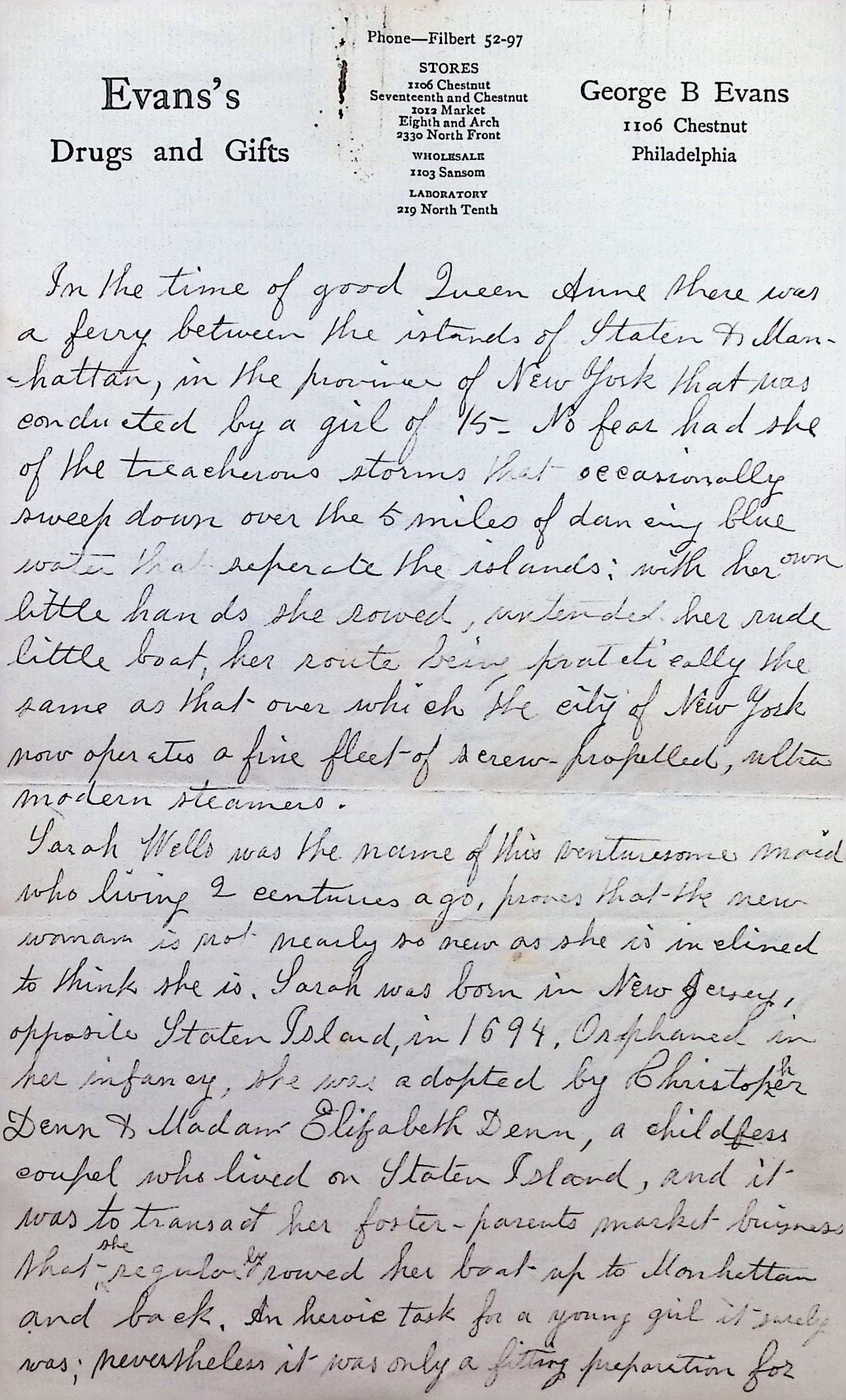
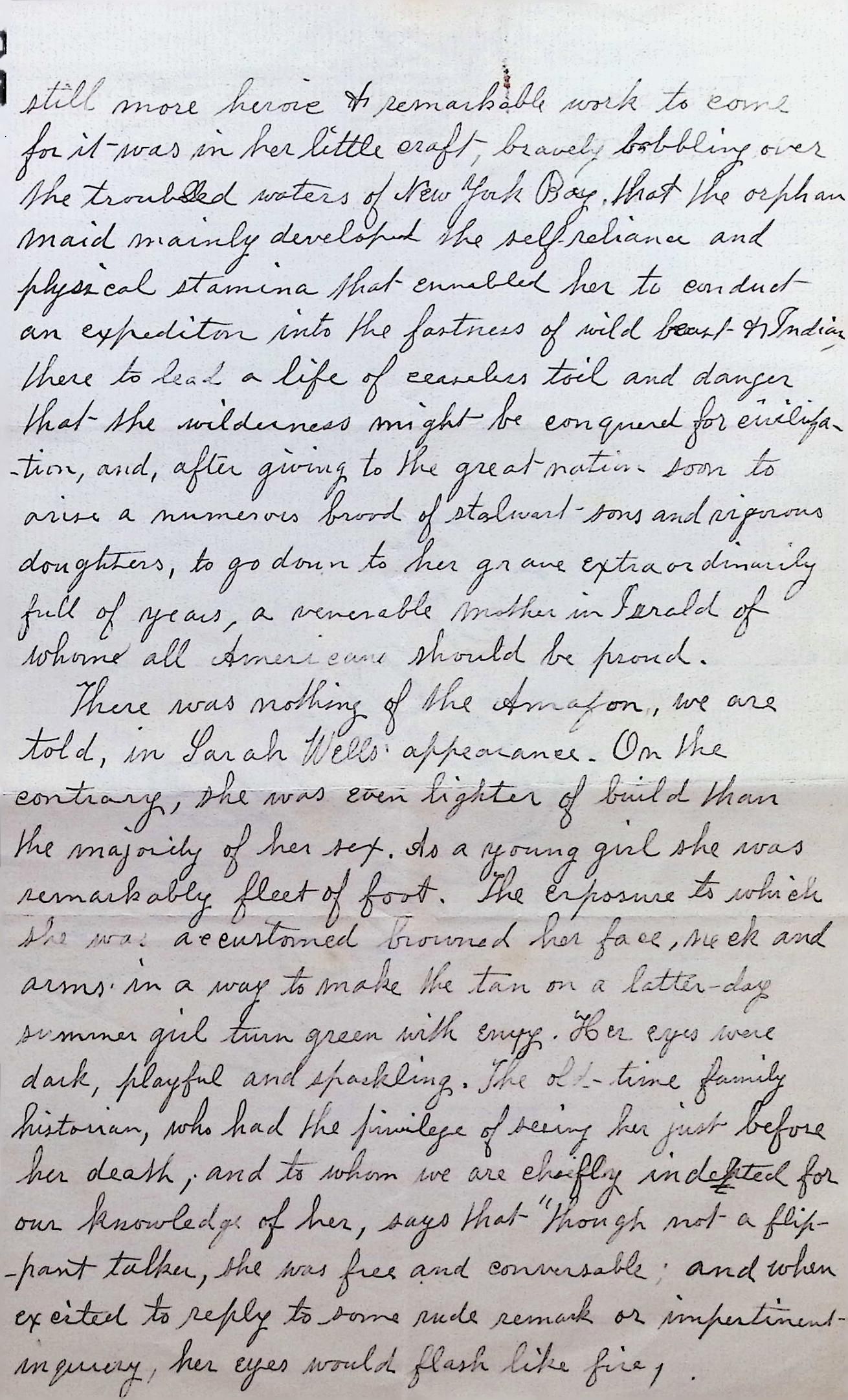
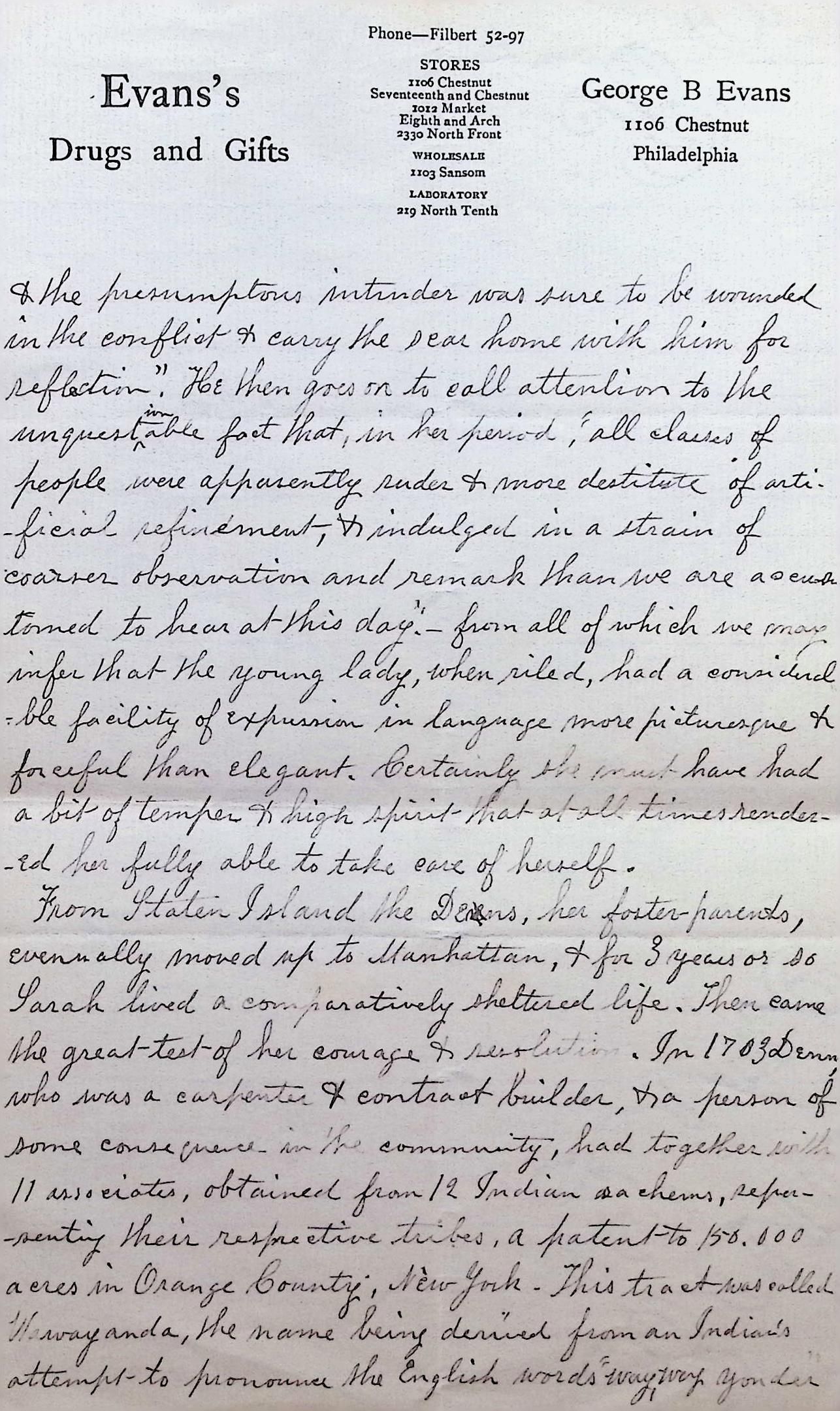
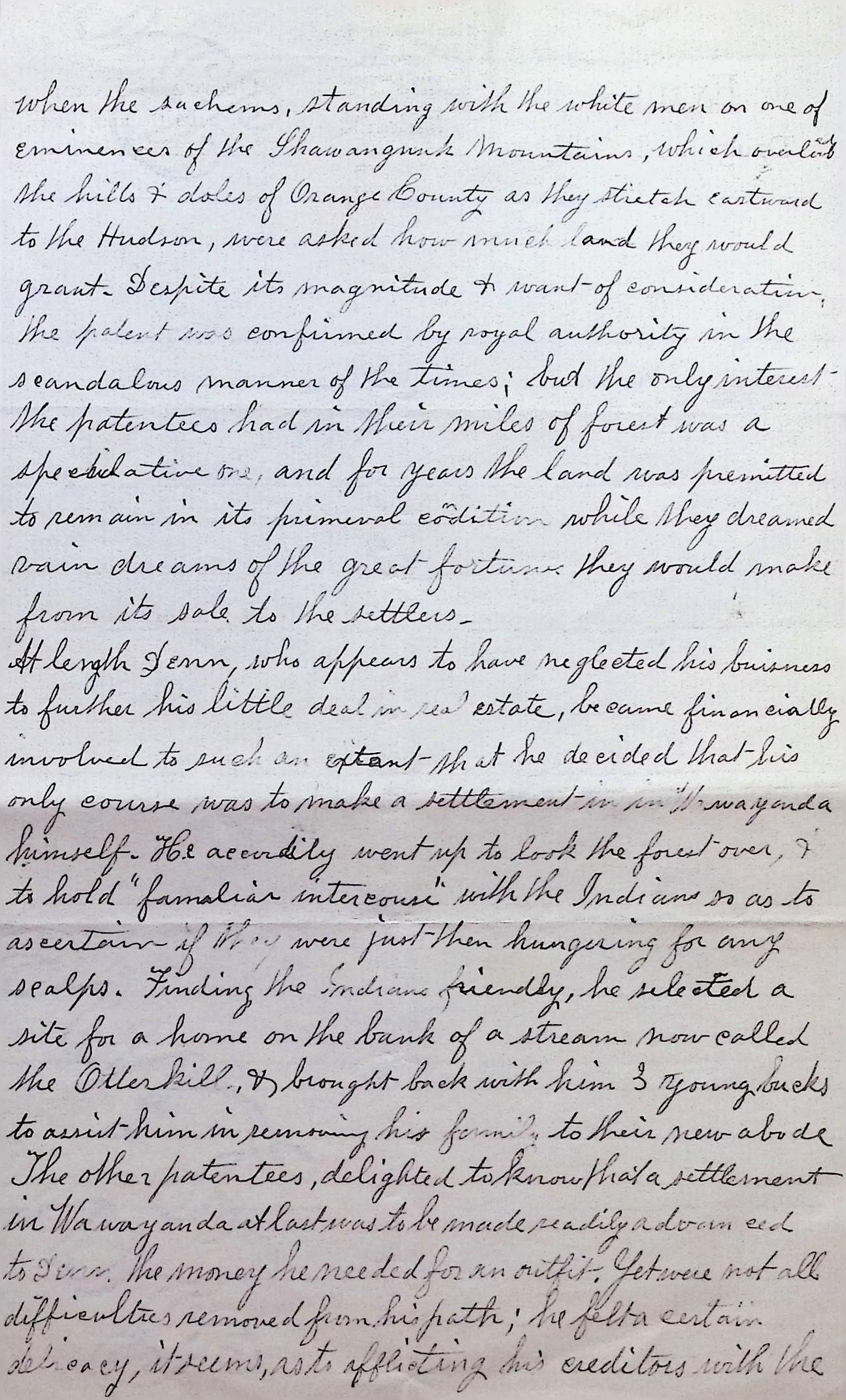
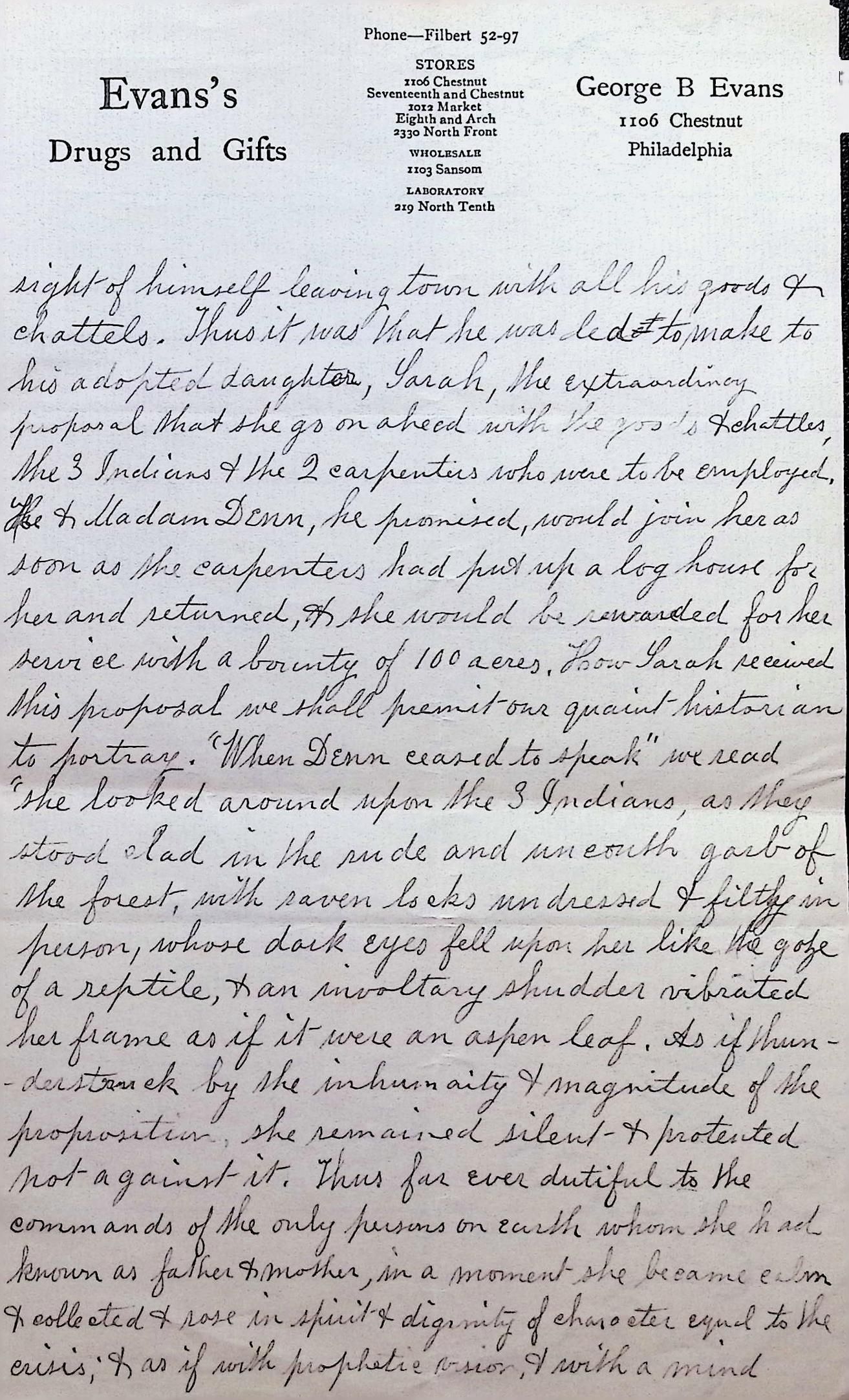
These documents provide a biographical account of Sarah Wells (born 1694), a pioneering figure in the settlement of Orange County, New York. The narrative is written on the letterhead of "Evans’s Drugs and Gifts" in Philadelphia and details her journey from an orphaned girl to a revered "mother in Israel" of the American frontier.
Here is a summary of the key events described:
Early Life and Character
Orphaned Youth: Born in New Jersey and orphaned as an infant, Sarah was adopted by Christopher and Elizabeth Denn, a childless couple living on Staten Island.
A "New Woman": At age 15, she operated a ferry between Staten Island and Manhattan, rowing a small boat across five miles of open water to conduct her foster parents’ market business.
Description: Described as slight of build but "fleet of foot," with dark, sparkling eyes and a spirited temperament. While generally "free and conversable," she was known to have a "high spirit" when provoked.
The Wawayanda Patent
In 1703, Christopher Denn and 11 associates obtained a massive land grant of 150,000 acres in Orange County known as the Wawayanda Patent.
After years of holding the land for speculation, Denn faced financial difficulties and decided to settle the land himself to appease creditors and secure the claim.
The Expedition to the Wilderness (1712)
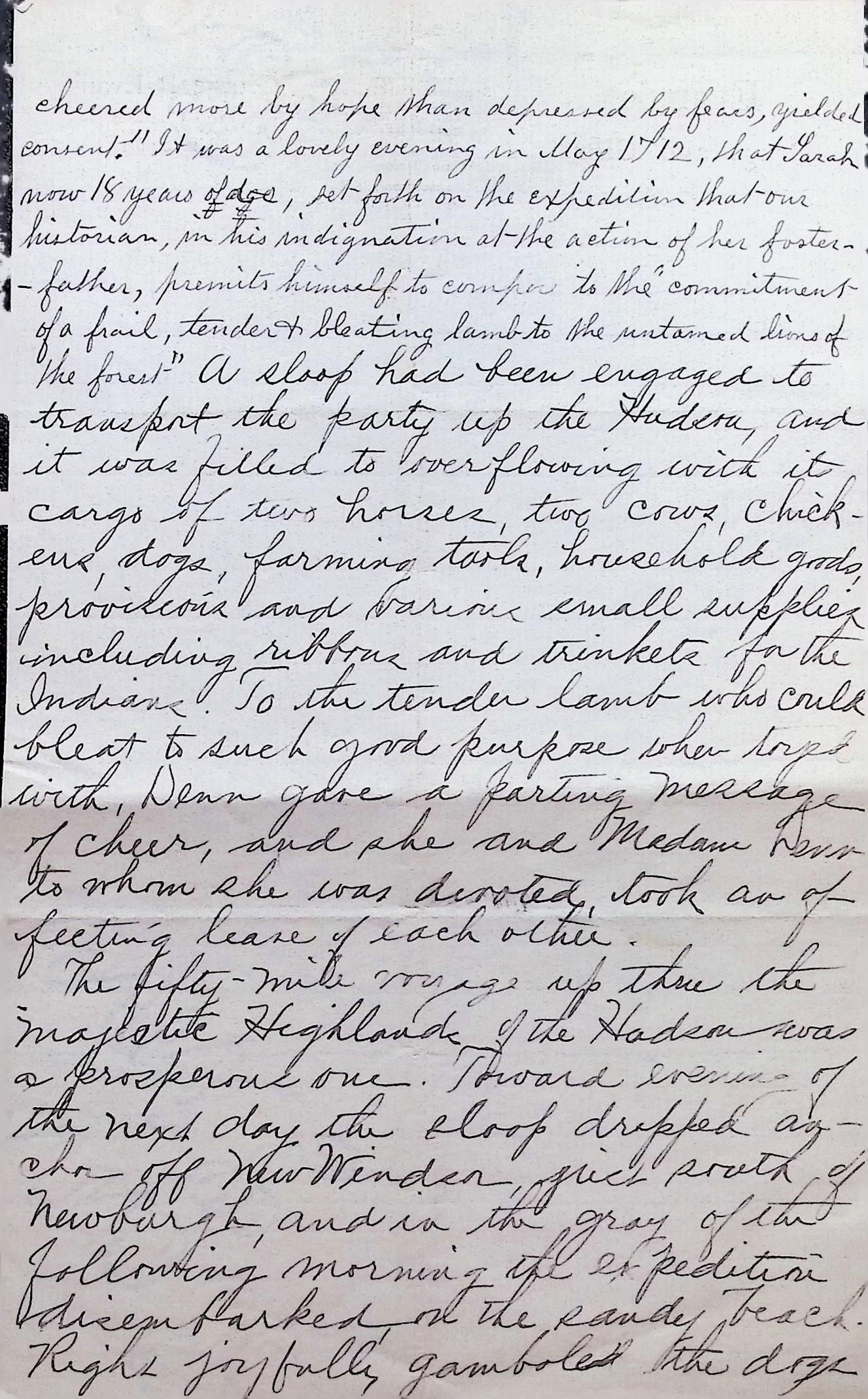
The Proposition: In May 1712, 18-year-old Sarah was asked by Denn to lead an expedition into the wilderness ahead of him. He promised her 100 acres of land as a reward for her service.
The Journey: Sarah traveled up the Hudson River on a sloop filled with horses, cows, farming tools, and "trinkets for the Indians." She was accompanied by three Native American guides and two carpenters.
The Landing: The party sailed through the Highlands and landed at a sandy beach near present-day New Windsor (south of Newburgh). From there, they moved inland to the banks of the Otterkill, where they began the work of establishing a home.
Legacy
The narrative concludes by praising Sarah’s "heroic and remarkable" contribution to the nation. It notes that she survived the "ceaseless toil and danger" of the forest to raise a "numerous brood of stalwart sons and vigorous daughters," eventually dying at an advanced age as a celebrated matriarch of the region.