Name/Title
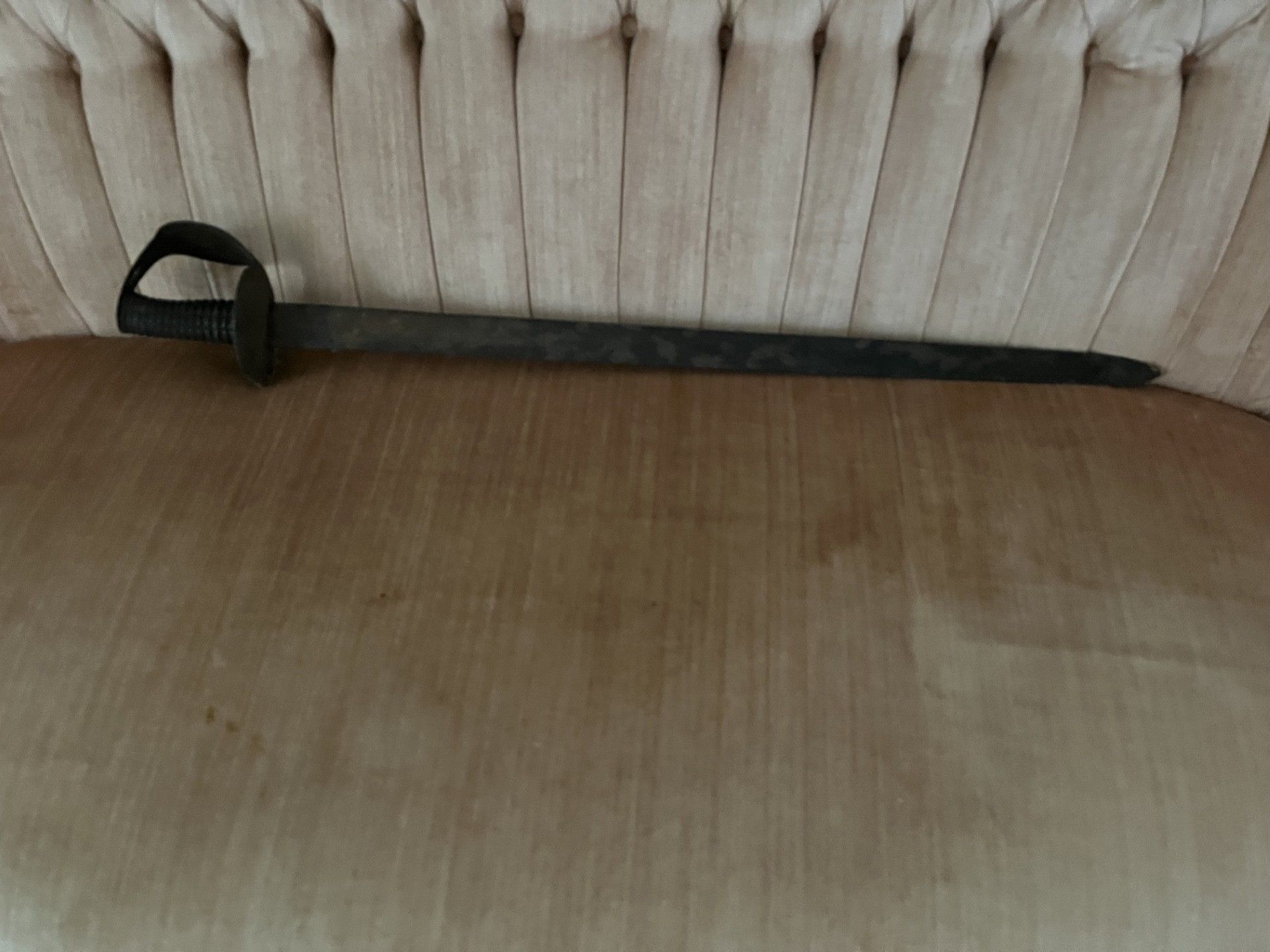
Sword (Naval cutlass) C 1860Entry/Object ID
100097Scope and Content
Value $150.00 in board room
(AI)What you have captured is a vintage naval cutlass. Based on the distinct, solid sheet-metal handguard and the heavy, shorter blade, this looks remarkably like a U.S. Navy Model 1860 Cutlass or a close variant from the mid-to-late 19th century.
⚓ The Anatomy of a Naval Cutlass
Unlike the graceful, sweeping cavalry saber designed for open battlefields, a cutlass was built for one thing: brutal, close-quarters combat on the cramped, slippery decks of a wooden warship.
The Cupped Handguard: The most defining feature of this weapon is the large, dark solid metal basket guard (often referred to as a "soup ladle" guard by collectors). Unlike the slender brass branches of a cavalry saber, this solid cup was designed to completely enclose and protect the sailor's hand from enemy cutlass slashes or flying splinters during a boarding action. It was also heavy enough to be used effectively as a knuckle-duster punch in hand-to-hand combat.
The Short, Straight Blade: Notice how much shorter, thicker, and straighter this blade is compared to the cavalry saber (10096). On a crowded ship surrounded by ropes, rigging, and low wooden beams, a long sword would get caught or tangled instantly. A short, heavy blade allowed for quick hacking and thrusting in tight spaces.
The Ribbed Grip: The handle features a heavily ribbed, textured grip, typically made of wood wrapped in leather and bound with wire to keep the weapon firmly in a sailor's grasp even if the handle became wet with sea spray or blood.