Name/Title
Thomas Bull and Thomas Barkly Indenture Jan. 10, 1822Entry/Object ID
002408Tags
Thomas Bull, Thomas Barkley, Cornelius C. RooseveltScope and Content
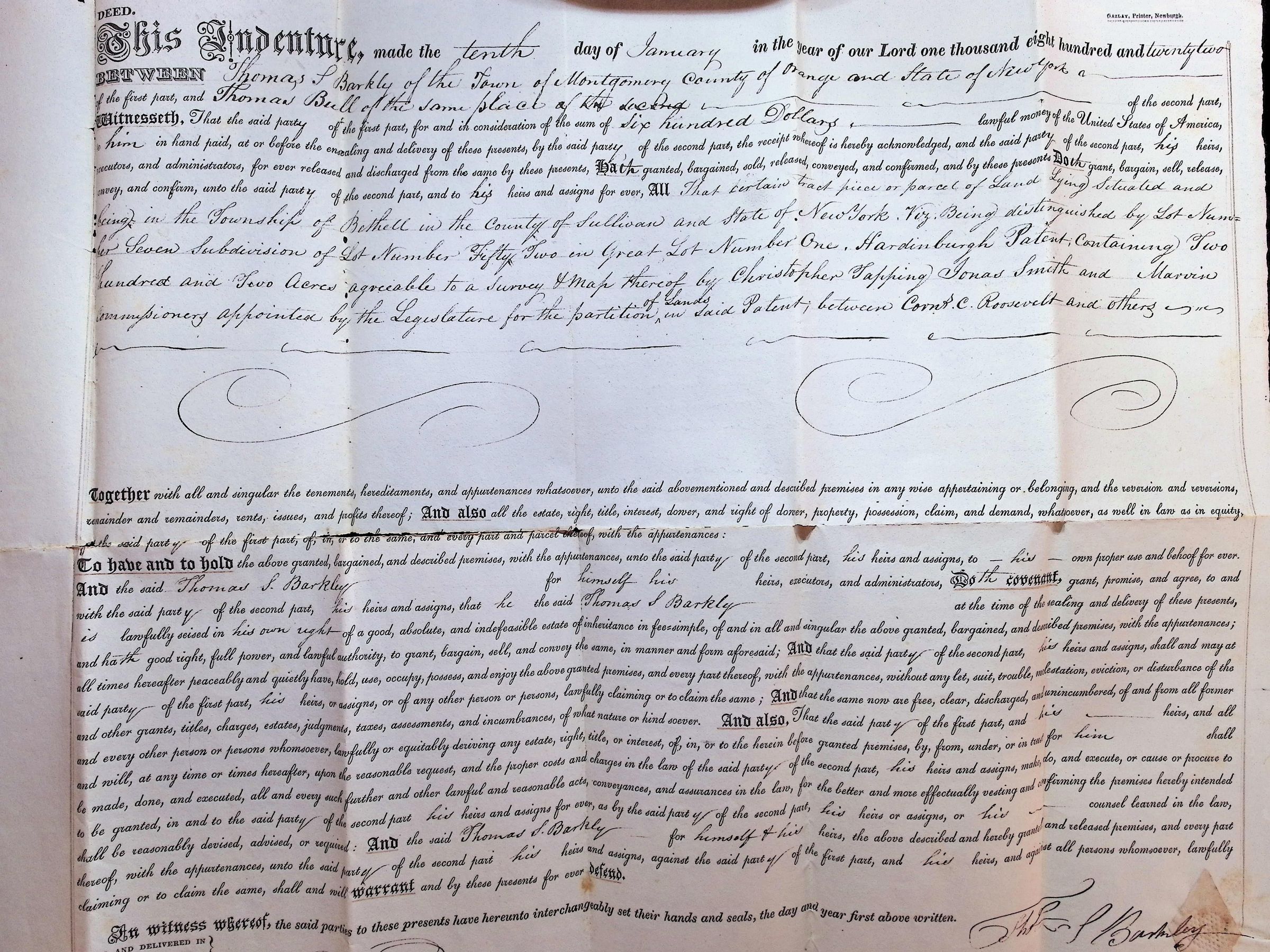
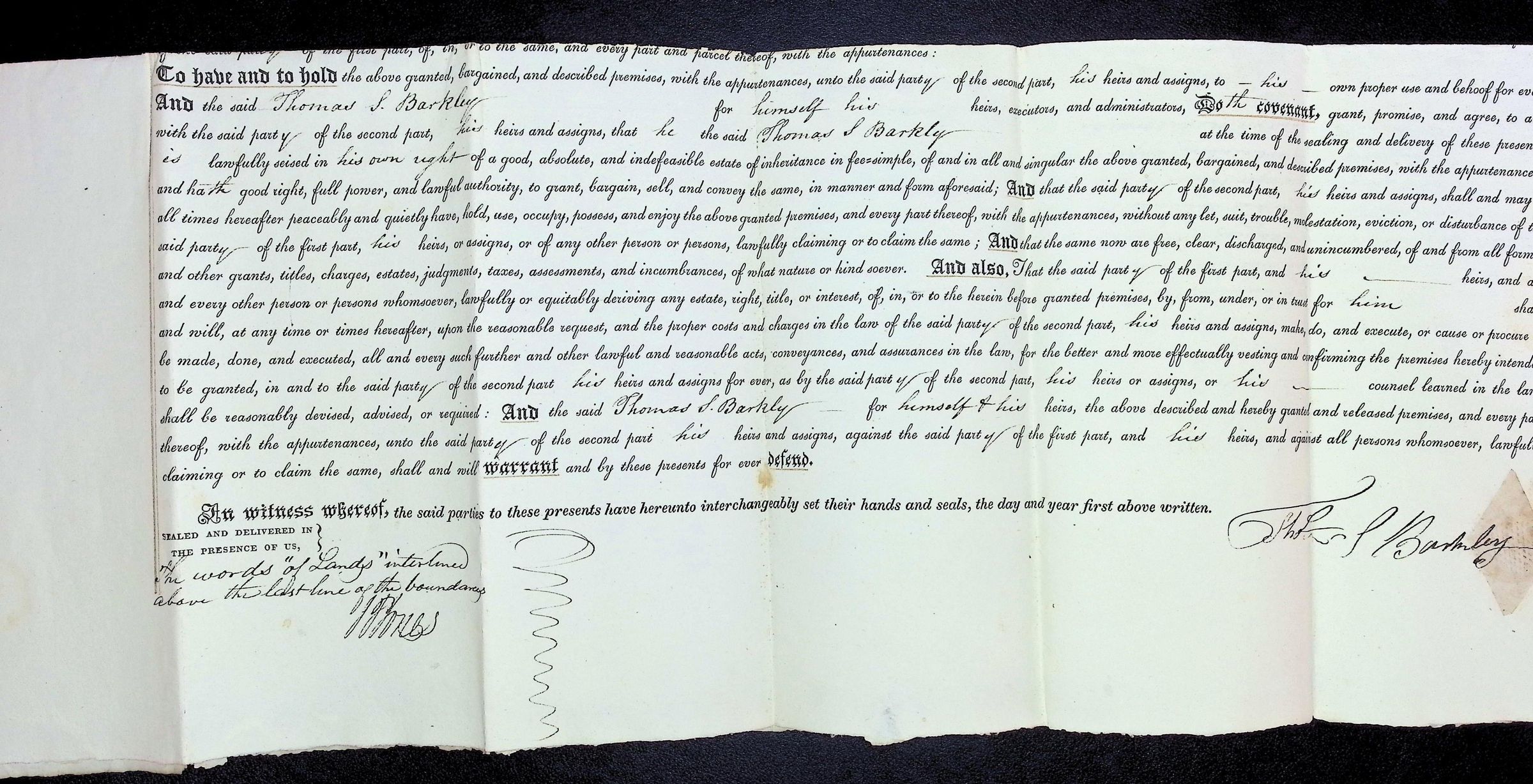
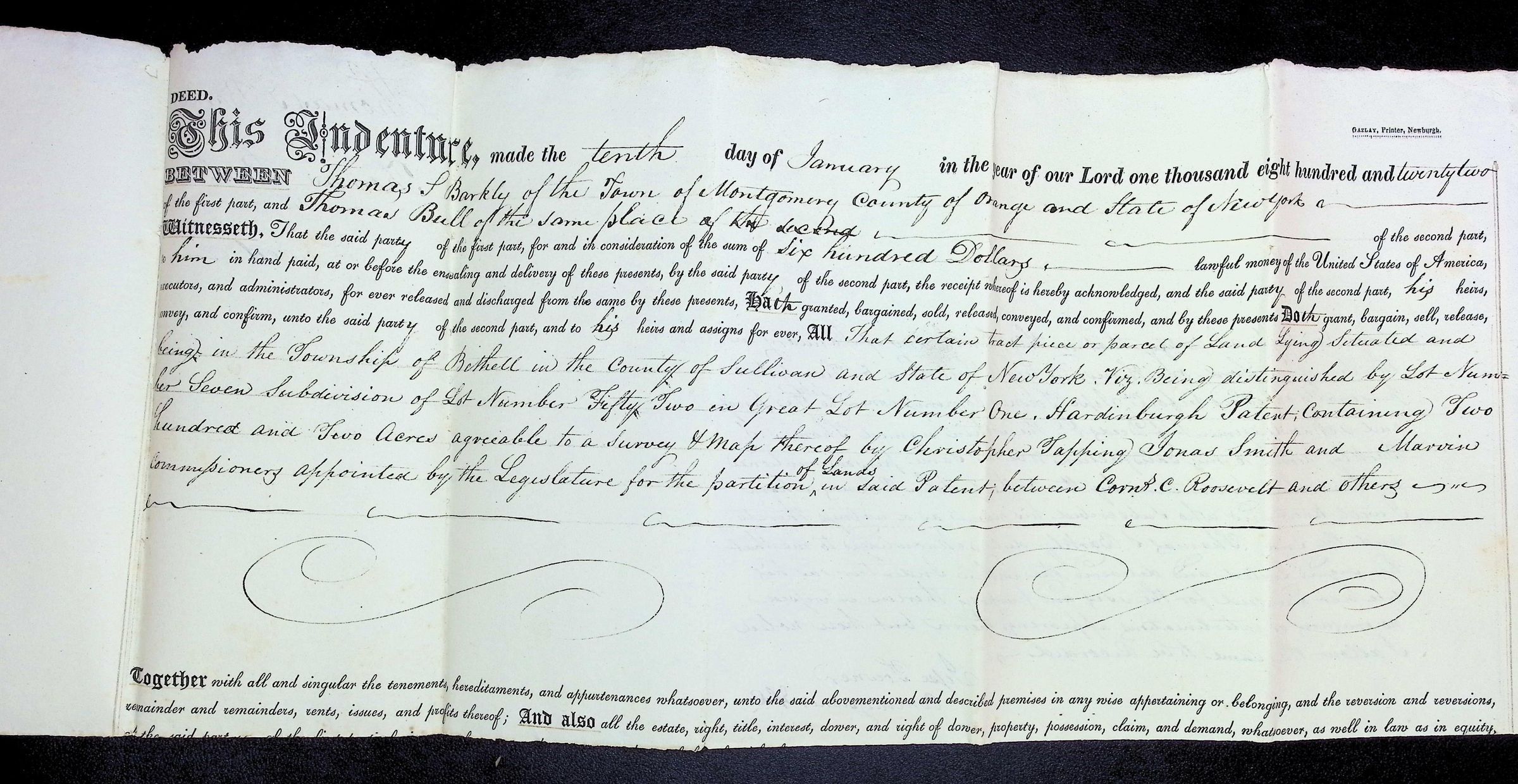
This is a legal property deed (formally called an "Indenture") dating from January 10, 1822. It records the sale of land in Sullivan County, New York, between two individuals.
The document is a classic example of early 19th-century American land records, featuring ornate calligraphy and formal legal "boilerplate" language.
Key Details of the Transaction
The Seller (Grantor): Thomas S. Barkly (of the Town of Montgomery, Orange County, NY).
The Buyer (Grantee): Thomas Bull (of the same place).
Purchase Price: $600.00.
The Property: Located in the Township of Bethel, Sullivan County, New York. Specifically, it describes a 200-acre plot within the Hardenburgh Patent (Lot No. 7, subdivision of Lot No. 52).
The Date: January 10, 1822.
Analysis of the Images
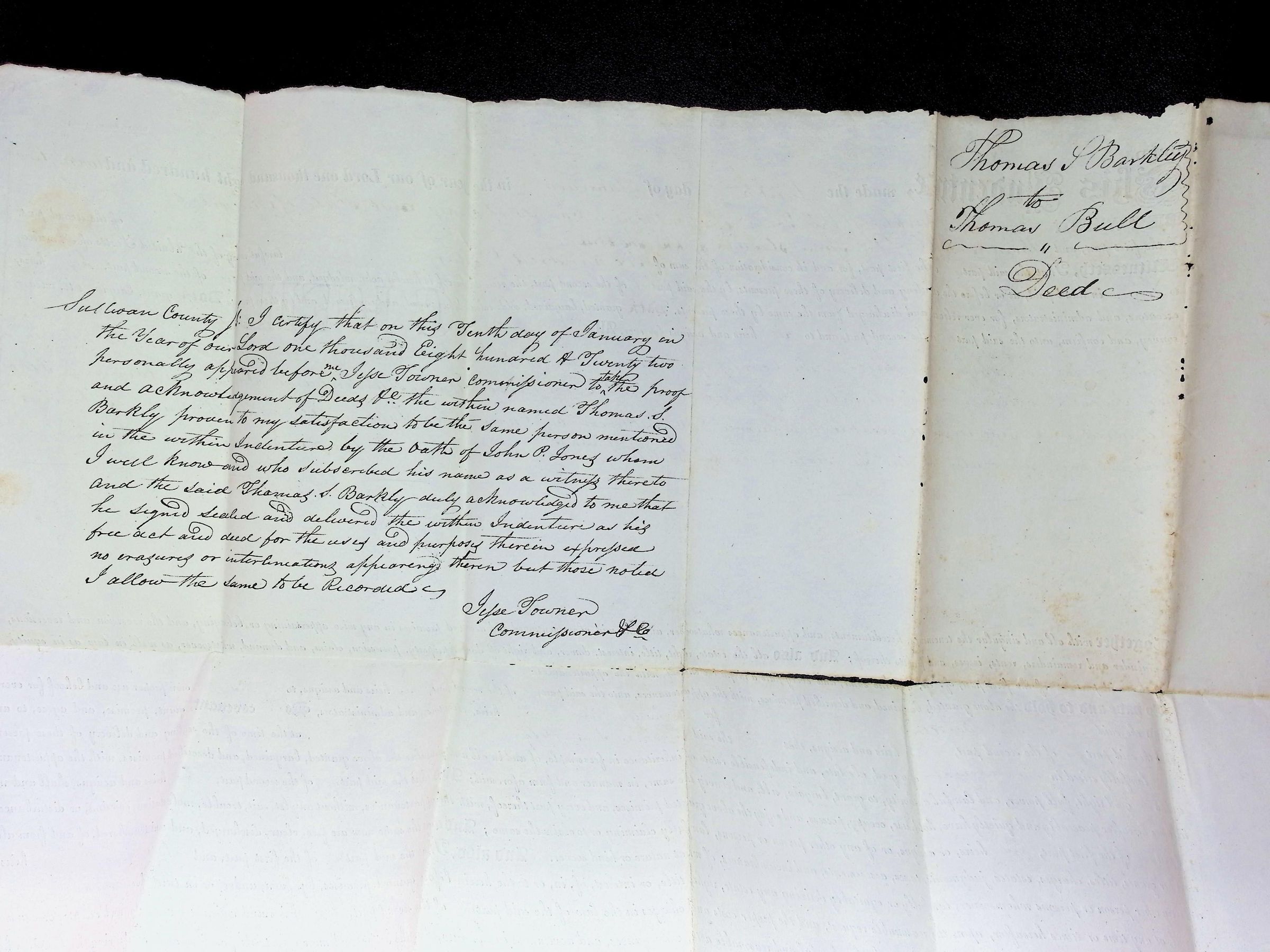
Image 1 (Back/Docket): This shows the "docketing" information, which is what a clerk would see when the paper was folded up on a shelf. It includes a certification by Jesse Towner, a Commissioner, stating that Thomas Barkly personally appeared before him to acknowledge the deed. It also names John P. Jones as a witness who verified Barkly’s identity.
Image 2 (Front/Body): This is the main contract. It uses the standard phrasing "This Indenture," which historically meant the document was written in duplicate on one sheet and then cut with a jagged (indented) edge so the pieces could be matched later to prove authenticity.
Why this is significant
For a historian or genealogist, this is a "gold mine" document. It places these specific men in a precise location at a specific time and links them to the Hardenburgh Patent, which was a massive and historically significant land grant in New York State that led to decades of legal disputes and the "Anti-Rent War" later in the 1830s-40s.
Since you're looking into this, it’s worth noting that the Hardenburgh Patent mentioned in your deed is one of the most famous and controversial land grants in American history. It covered about 2 million acres of the Catskill Mountains and surrounding areas.
To help you piece together what this document means for the land or the people involved, here is a breakdown of the most useful "clues" found in the text:
1. The Land Description (The "Metes and Bounds")
The deed mentions "Lot Number Seven subdivision of Lot Number Fifty Two in Great Lot Number One."
In 1822, land wasn't mapped with GPS. Instead, surveyors used "Great Lots."
Great Lot 1 was a massive slice of the Hardenburgh Patent.
Finding a historical map of Sullivan County from the mid-1800s would allow you to see exactly where "Lot 52" sits in modern-day Bethel (near the site of the 1969 Woodstock festival).
2. The Mentioned Names
Beyond the buyer and seller, the deed mentions:
Christopher Tapping, Jonas Smith, and Marvin (last name obscured): These were commissioners appointed by the NY Legislature to partition the land.
Cornelius C. Roosevelt: A prominent member of the Roosevelt family (distant kin to FDR and Teddy) who was a major landowner in the area.
Jesse Towner: The Commissioner who signed the back. The Towners were a well-known family in early Sullivan County history.
3. The "Anti-Rent" Context
At the time this deed was signed (1822), New York was moving away from a "manorial" system where farmers paid perpetual rent to "Lords of the Manor" (like the Hardenburghs or Van Rensselaers).
Because this document says "in fee-simple," it means Thomas Bull was buying the land outright.
He owned it completely, rather than just leasing it—a major shift in American property rights during that era.
Tips for Further Research
County Records: You can check the Sullivan County Clerk’s Office. Even though you have the original, they will have a "Liber" (record book) copy which might contain notes about when the property was later sold or divided.
Census Records: Look for the 1820 and 1830 Federal Census for Montgomery (Orange County) and Bethel (Sullivan County) to see if Thomas Bull actually moved onto the land or held it as an investment.