Name/Title
Blickensderfer TypewriterEntry/Object ID
2026.27.1Description
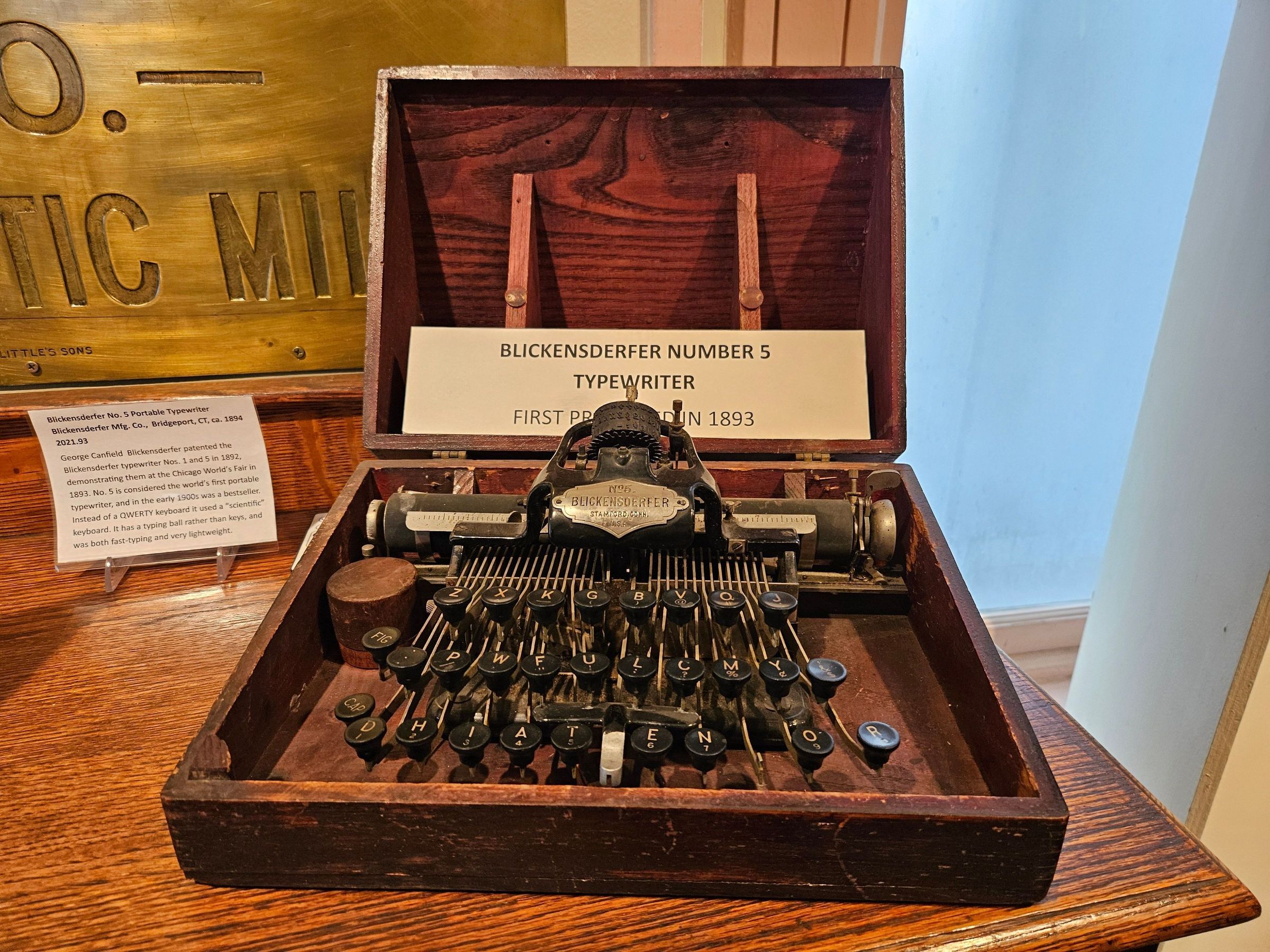
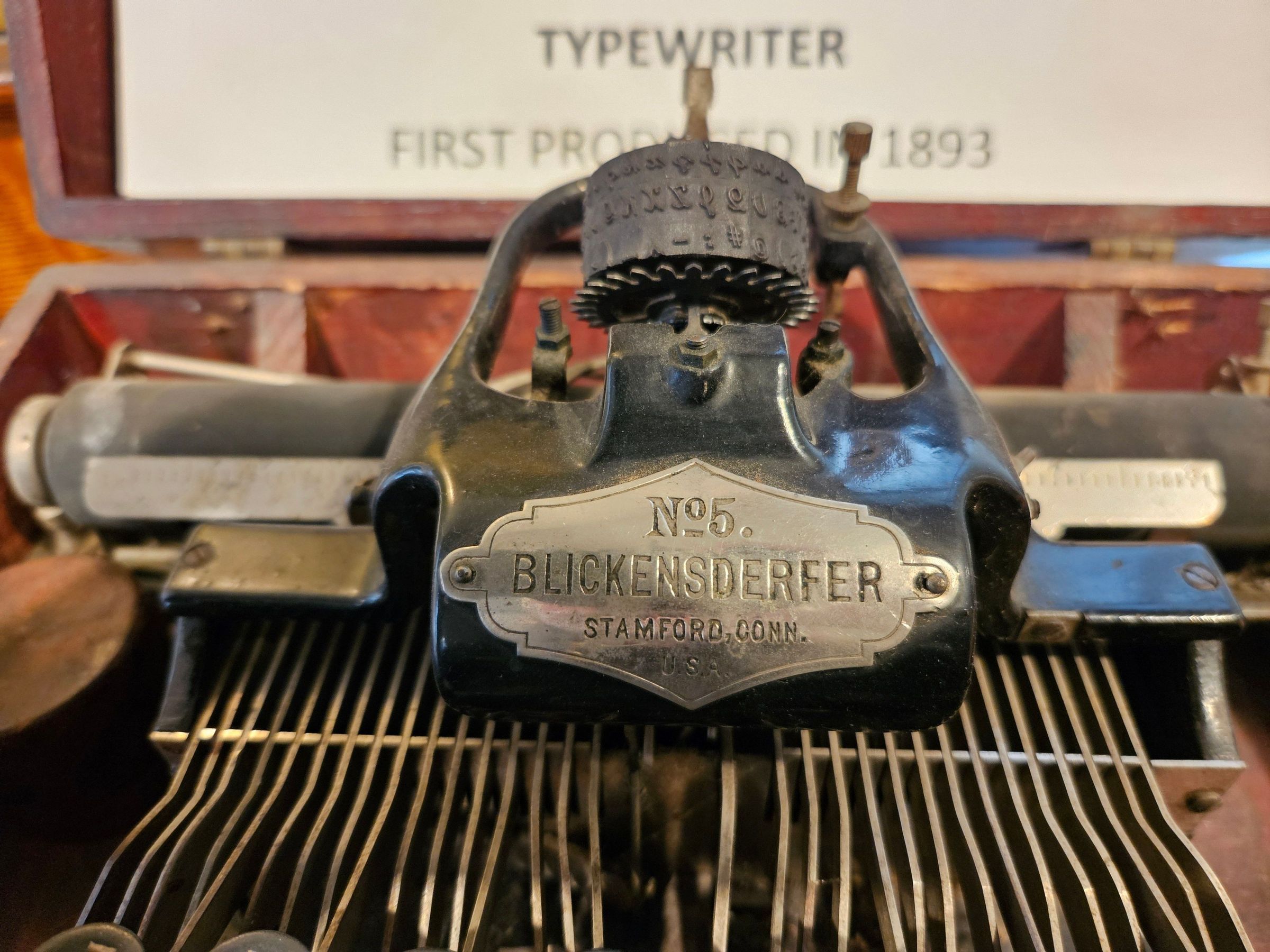
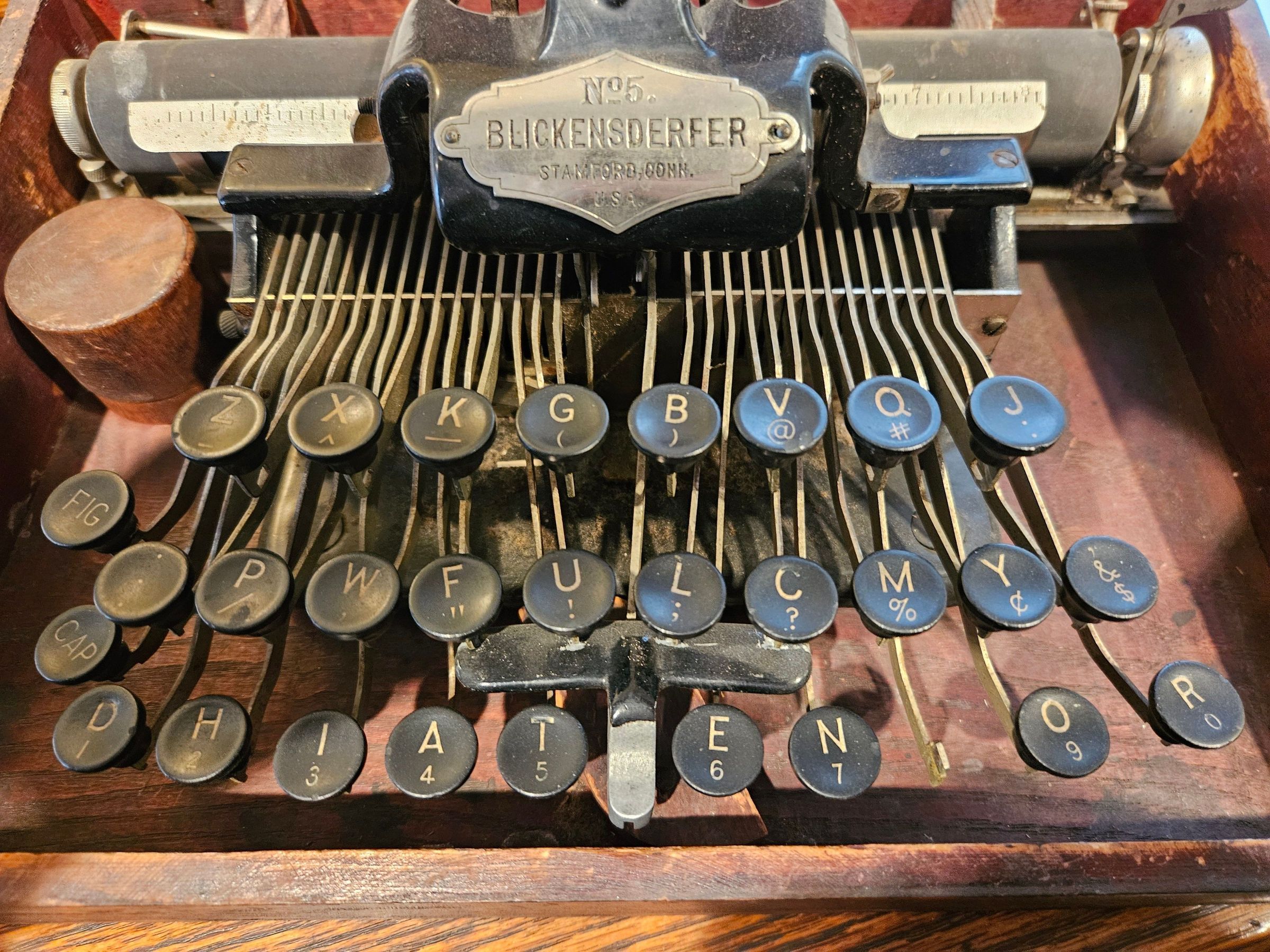
Blickensderfer No. 5 portable typewriter. George Canfield Blickensderfer of Connecticut patented the Blickensderfer typewriters nos. 1 and 5 in 1892, demonstrating them at the Chicago World's Fair (Columbian Exposition) in 1893. No. 5 is considered the world's first portable typewriter, and in the early 1900s was a bestseller. Instead of a QWERTY keyboard, it used a "scientific: keyboard. It has a typing ball rather than keys, and was both fast-typing and very lightweight.Use
Early (20th-century) typewriters were used primarily by businesses that hired trained typists to rapidly produce legible letters and other documents.Context
Invented in the late 19th century, typewriters were a product of the Market Revolution, to which the Industrial Revolution was closely linked. Early typewriters used different, nonstandard keyboards. The QWERTY keyboard was invented specifically to slow the speed of typists, who were sometimes so fast that they caused the machines' keys to jam; under the QWERTY design, often-used tabs were located far apart, hindering too-rapid typing. Blickensderfer's "scientific" system, unlike the QWERTY system, bunched the most-used tabs together on the bottom row, thus facilitating higher typing speeds. Keys did not jam, because Blickensderfer typewriters used typing "balls" (actually, cylinders) rather than keys, thus presaging the later IBM selectric typewriters by decades. Blickensderfer typewriters were also lightweight and portable, designed for reporters or for home use, as opposed to use by secretaries in offices, for whom heavier, more intricate and complex desktop typewriters were more appropriate. Blickensderfer typewriters were manufactured in Stamford, CT, and are symbolic of western Connecticut's role as the precision-machine manufacturing center ("the Silicon Valley of the 19th and early 20th centuries") of North America. Although they sold well, Blickensderfer typewriters were discontinued after George Blickensderfer's death.Collection
General CollectionMade/Created
Manufacturer
Blickensderfer, George CanfieldDate made
circa 1892Time Period
19th CenturyPlace
City
Stamford, CTState/Province
ConnecticutCountry
United States of AmericaContinent
North AmericaInscription/Signature/Marks
Type
Manufacturer's markLocation
Metal plate on topTranscription
No. 5 / Blickensderfer / Stamford, Conn.Language
EnglishLexicon
Nomenclature 4.0
Nomenclature Secondary Object Term
Typewriter, ManualNomenclature Primary Object Term
TypewriterNomenclature Sub-Class
Writing DevicesNomenclature Class
Written Communication T&ENomenclature Category
Category 06: Tools & Equipment for CommunicationLocation
Location
Exhibit Room
Thread City Exhibit, Bev York Room* Untyped Location
Main Museum BuildingCategory
ExhibitMoved By
Eves, JamieDate
November 1, 2025Condition
Overall Condition
FairCondition Type
One key tab missing.Date Examined
Apr 25, 2026Examined By
Eves, JamieProvenance
Provenance Detail
Found ObjectCreate Date
April 25, 2026Update Date
April 25, 2026