Name/Title
Plug BayonetEntry/Object ID
2026.01.01Description
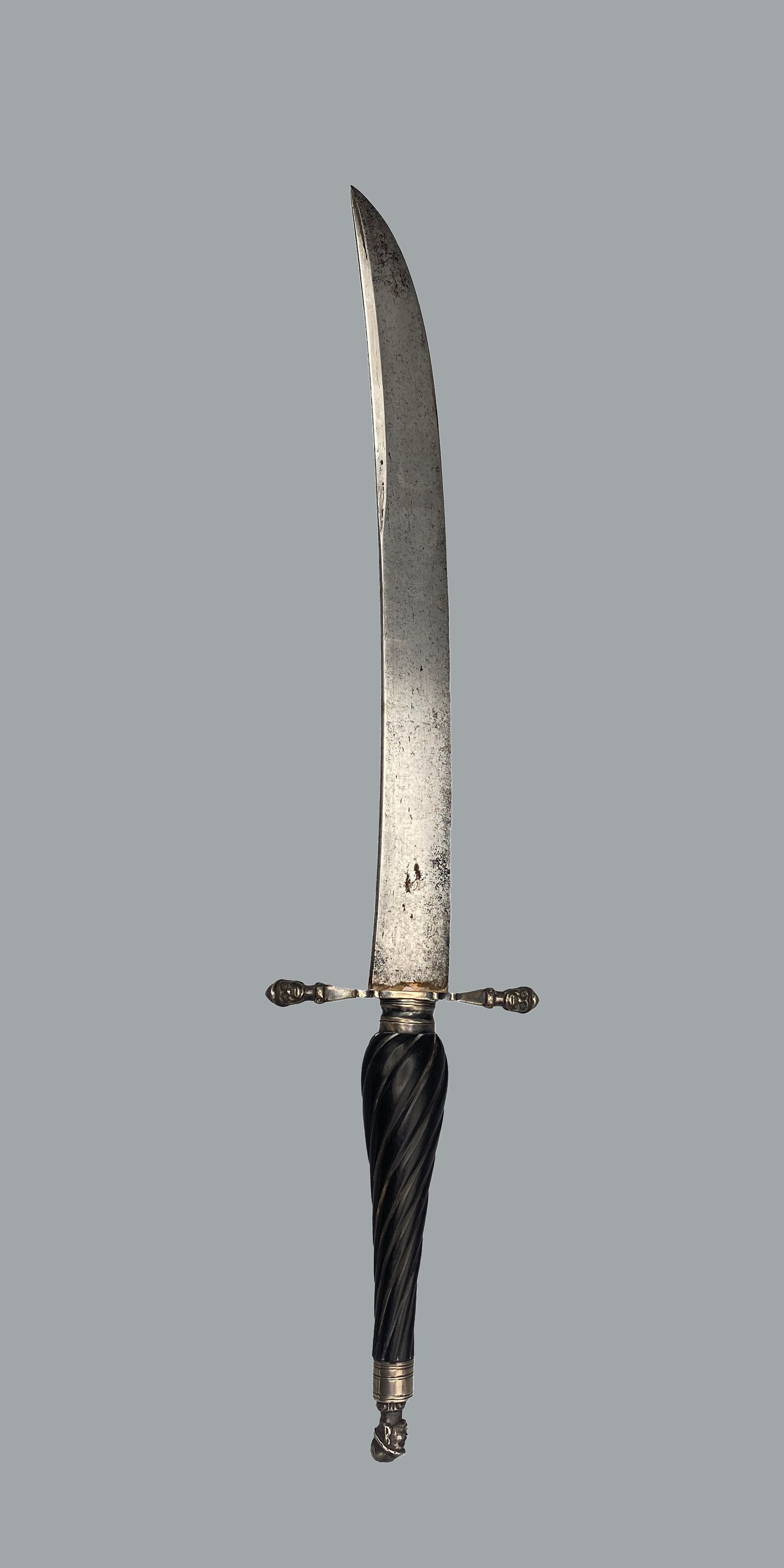
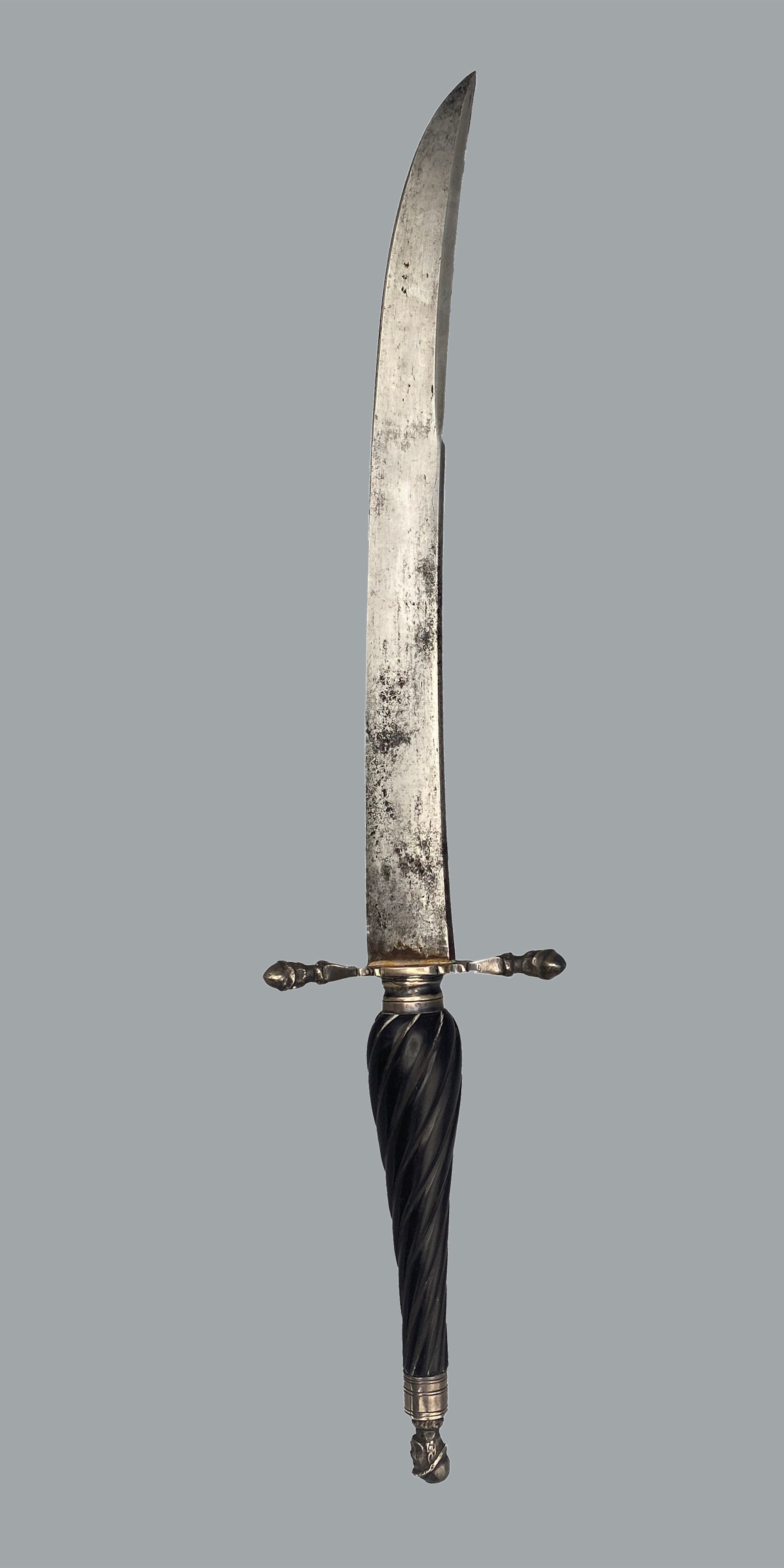
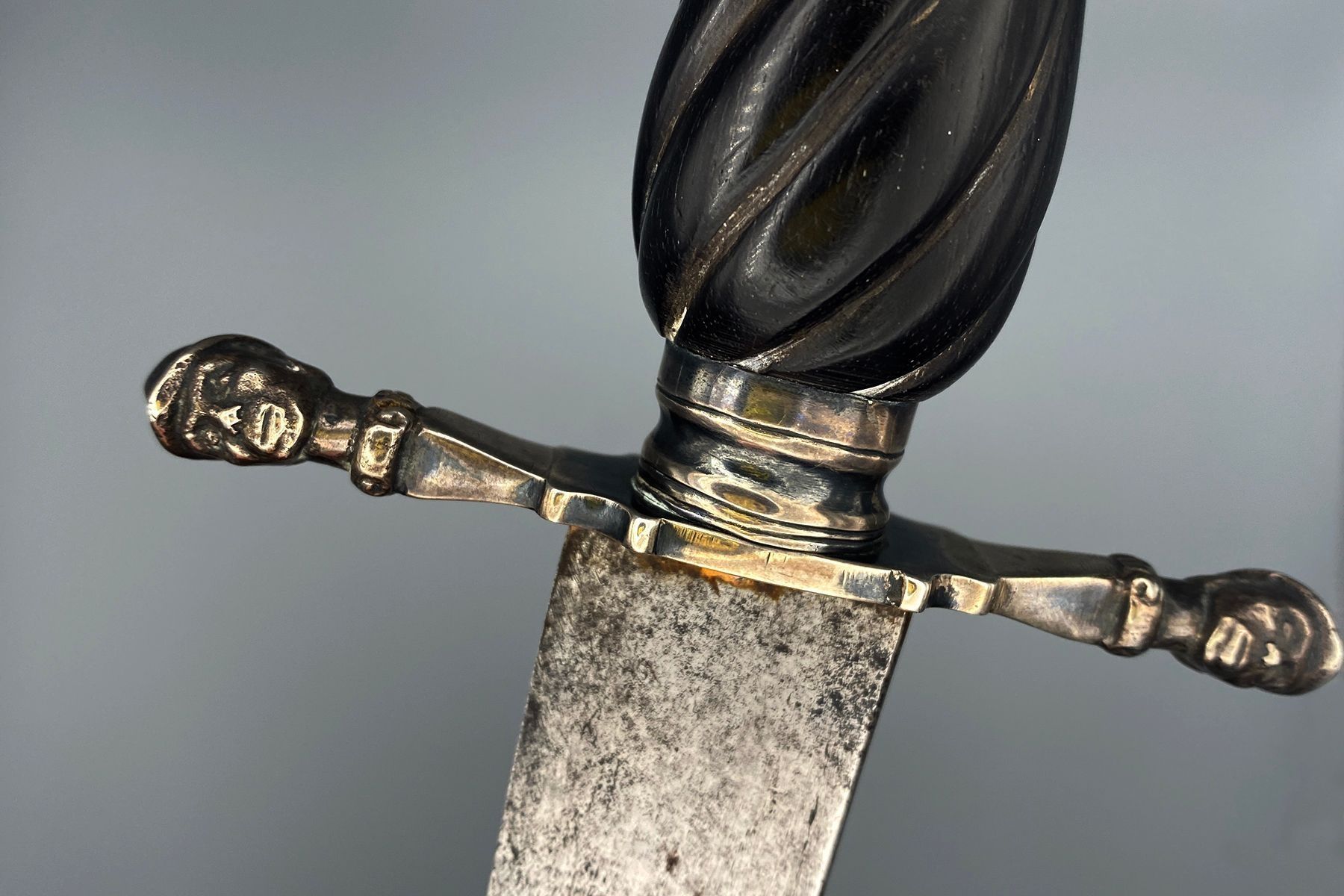
English Silver-Mounted Plug Bayonet
Attributed to John Harrison, London, c. 1695–1710
Steel, silver, ebony (or stained fruitwood), leather
Description:
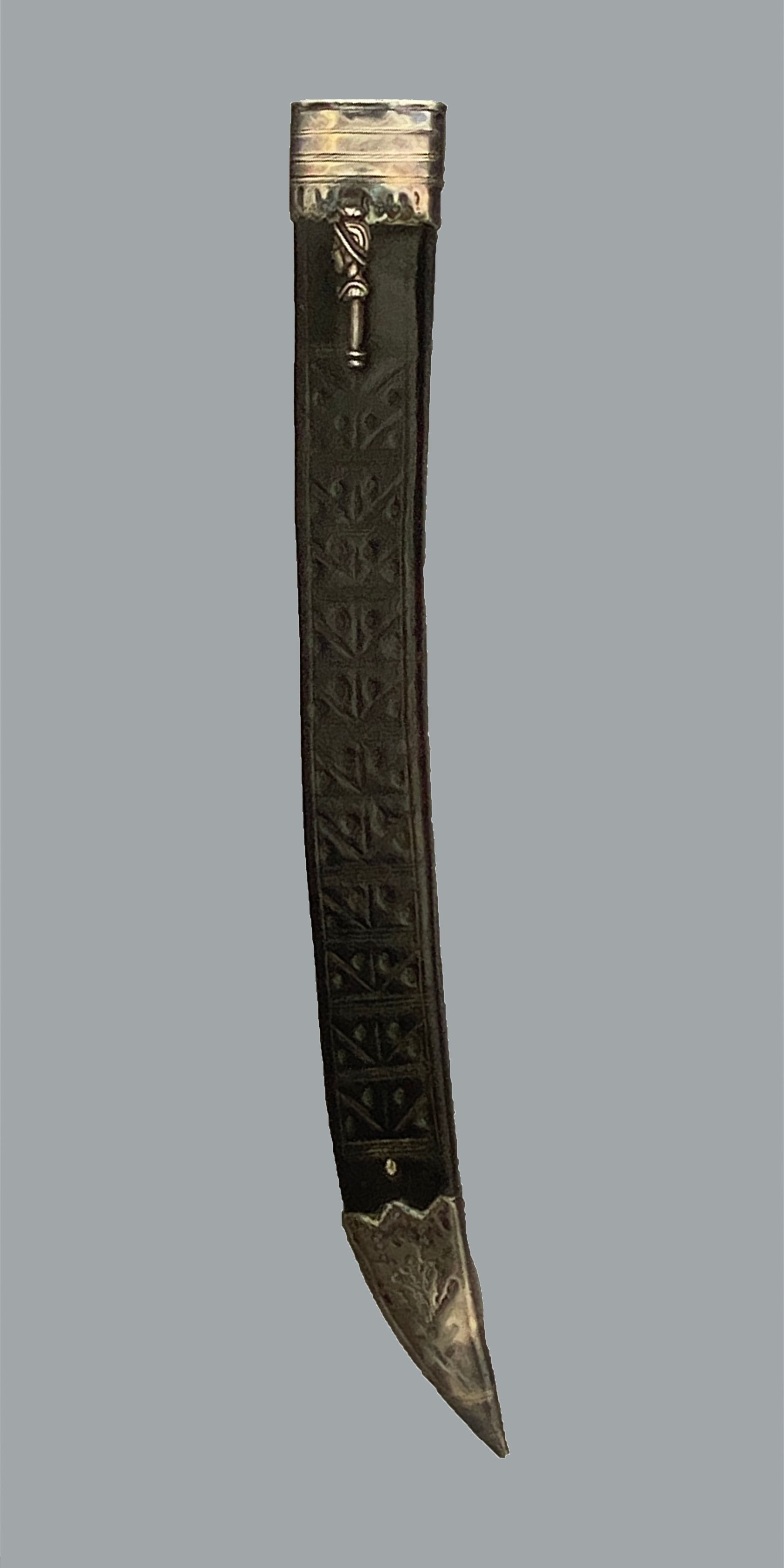
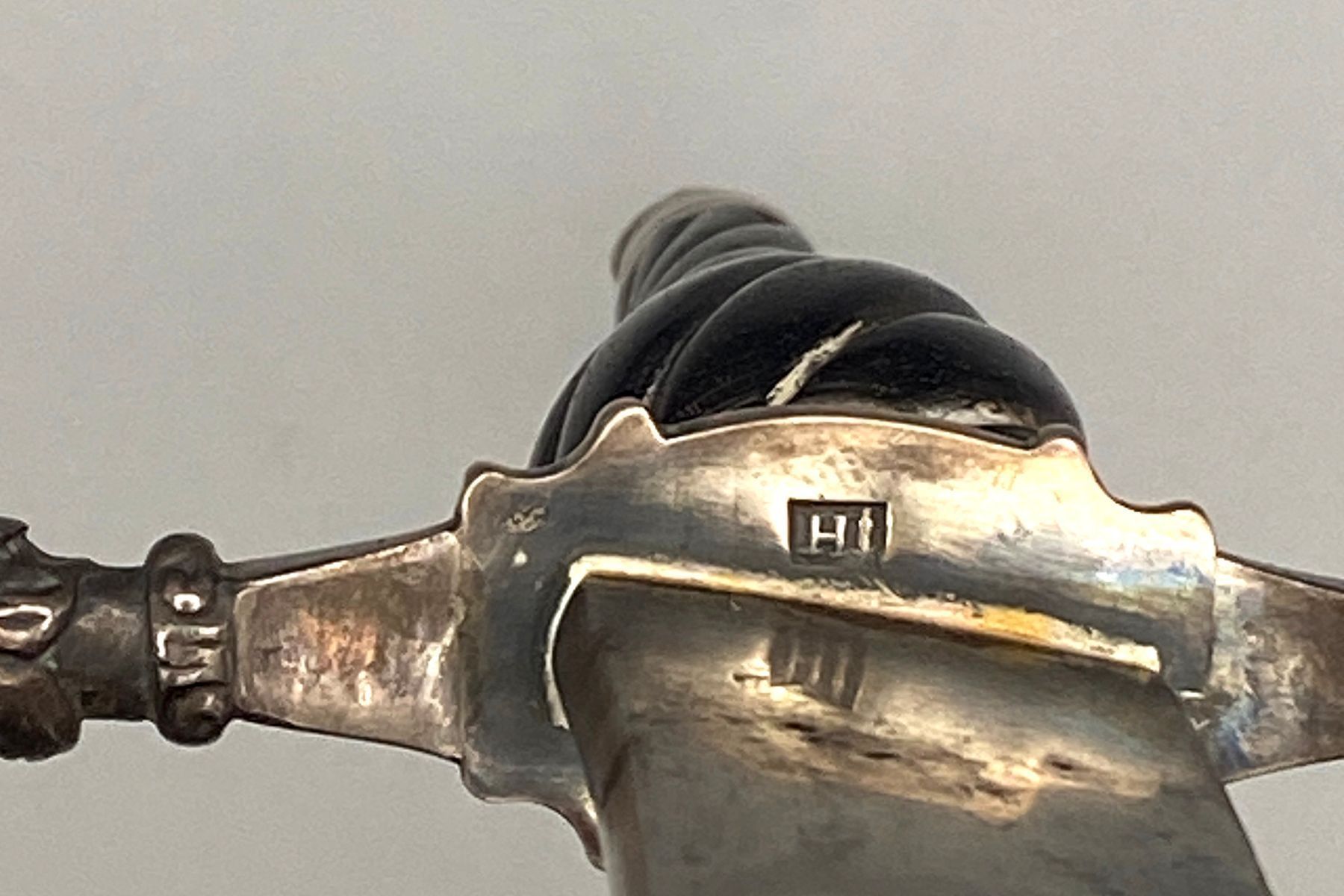
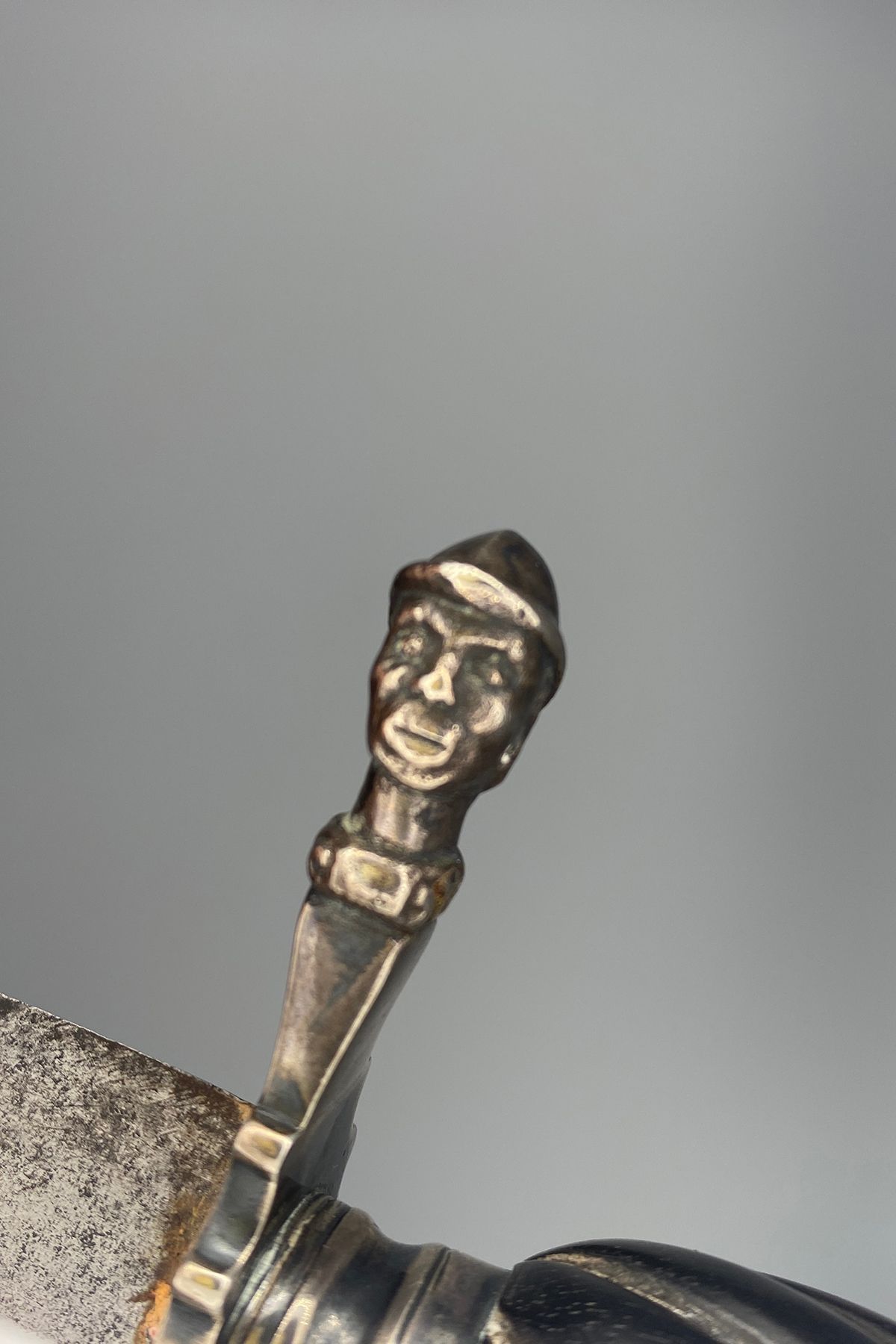
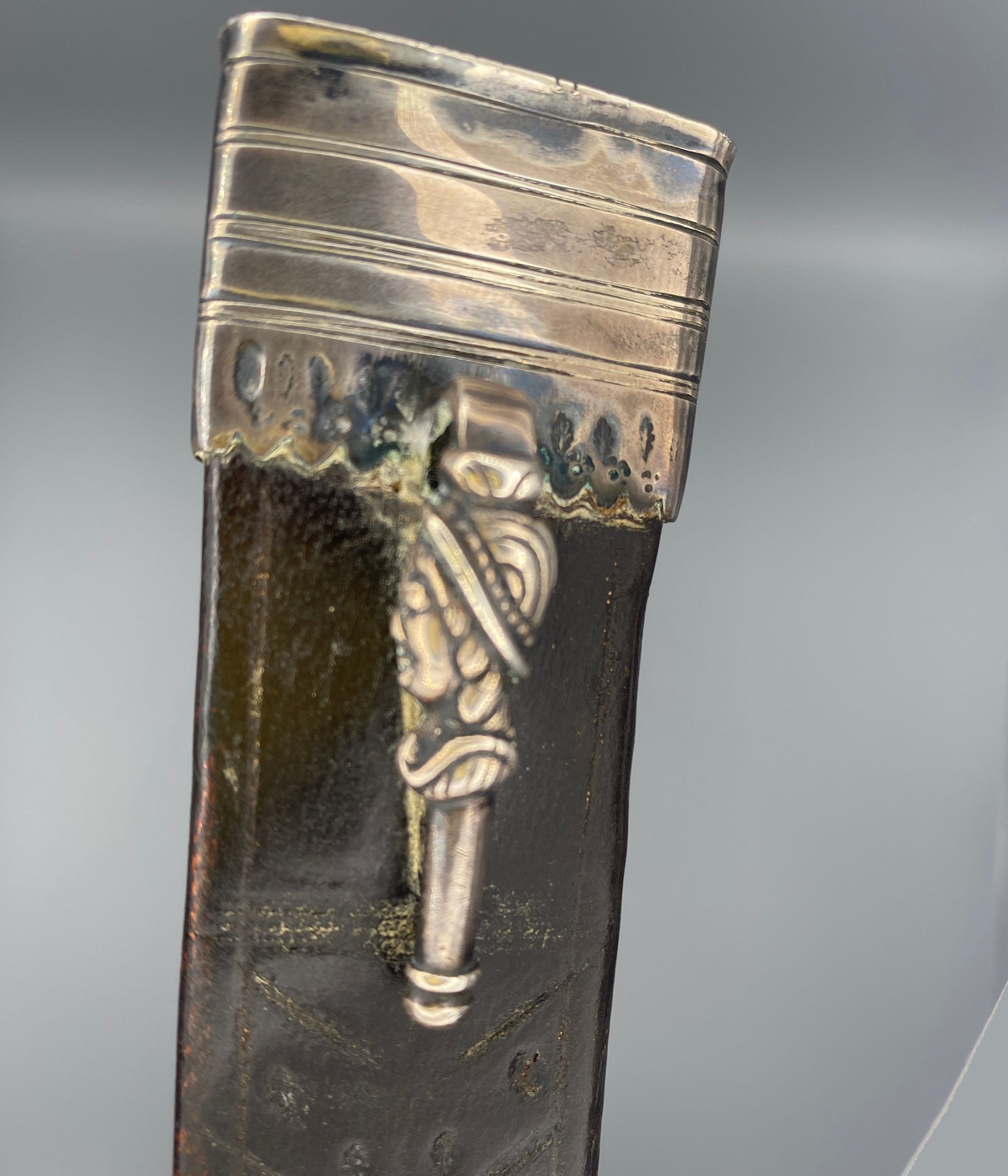
A luxury English plug bayonet with a straight steel blade, finely turned spiral grip of dark hardwood, and elaborately worked silver hilt. The guard and pommel terminals are each cast with relief heads, executed in a restrained late Stuart idiom. The silver furniture bears a maker’s punch reading “HI / IH,” consistent with London craftsmanship of the early 18th century. The bayonet is accompanied by its original tooled leather scabbard, the upper mount of which replicates the same relief head motif found on the hilt, demonstrating that hilt and scabbard were conceived and executed as a unified commission rather than later assembled.
The blade is nearly free of oxidation, with only light tarnishing, and the scabbard itself is in virtually pristine condition, indicating extended storage out of daylight and handling. The high level of preservation elevates this example above the majority of comparable survivals.
Attribution and Comparative Evidence:
This bayonet is attributed to John Harrison, London, based on the hilt maker’s mark and stylistic parallels to documented late-17th/early-18th-century luxury plug bayonets made in London workshops. Harrison is recorded in period London cutler and silversmith directories as a maker active around the turn of the 18th century with initials appearing on weapon furniture of similar quality.
The identical relief head motif appears on other late 17th-century English plug bayonets with silver mounts in museum collections. A well-documented example is illustrated in the Colonial Williamsburg Foundation’s online catalogue: an English silver-mounted plug bayonet with three helmeted heads on hilt fittings, dated to ca. 1690, London (hilt fittings by William Knight, blade by John Hathaway) — viewable here:
🔗 Silver-mounted Plug Bayonet, Colonial Williamsburg Foundation: https://emuseum.history.org/objects/107714/silvermounted-plug-bayonet
While the maker of that example is recorded as William Knight rather than Harrison, the shared decorative vocabulary — especially the helmeted or human head motifs on hilt terminals — confirms a workshop tradition and stylistic milieu in which Harrison’s work can be securely placed.
A further comparandum is a British plug bayonet from the same general period in the Metropolitan Museum of Art’s collection (steel and wood with brass mounts) — see:
🔗 British Plug Bayonet (1685–88), The Met: https://www.metmuseum.org/art/collection/search/32784
The combination of maker’s punch, matching decorative heads, and integrated scabbard design supports the attribution to a high-end London maker such as Harrison, working in the years when plug bayonets were still both functional and status objects before the widespread adoption of the socket bayonet after c. 1700.
Historical Context:
Plug bayonets were first adopted into British service in the late 17th century and became common among officers and gentlemen before being largely superseded by socket bayonets by the first decades of the 18th century. Silver mounts and bespoke scabbard decoration indicate a private purchase, likely for an officer’s promenade, duelling, or hunting gear rather than standard infantry issue.Collection
Cutlery CollectionMade/Created
Date made
1690 - 1715Time Period
17th CenturyInscription/Signature/Marks
Type
Makers MarkTranscription
I HNotes
Possibly John HamiltonOther Names and Numbers
Other Numbers
Number Type
Cutlery Collection Record BookOther Number
CC683Materials
Material
Ebony and silverMaterial Notes
Handle of ebony