Name/Title
Scissors, daggerEntry/Object ID
0000.1.548Description
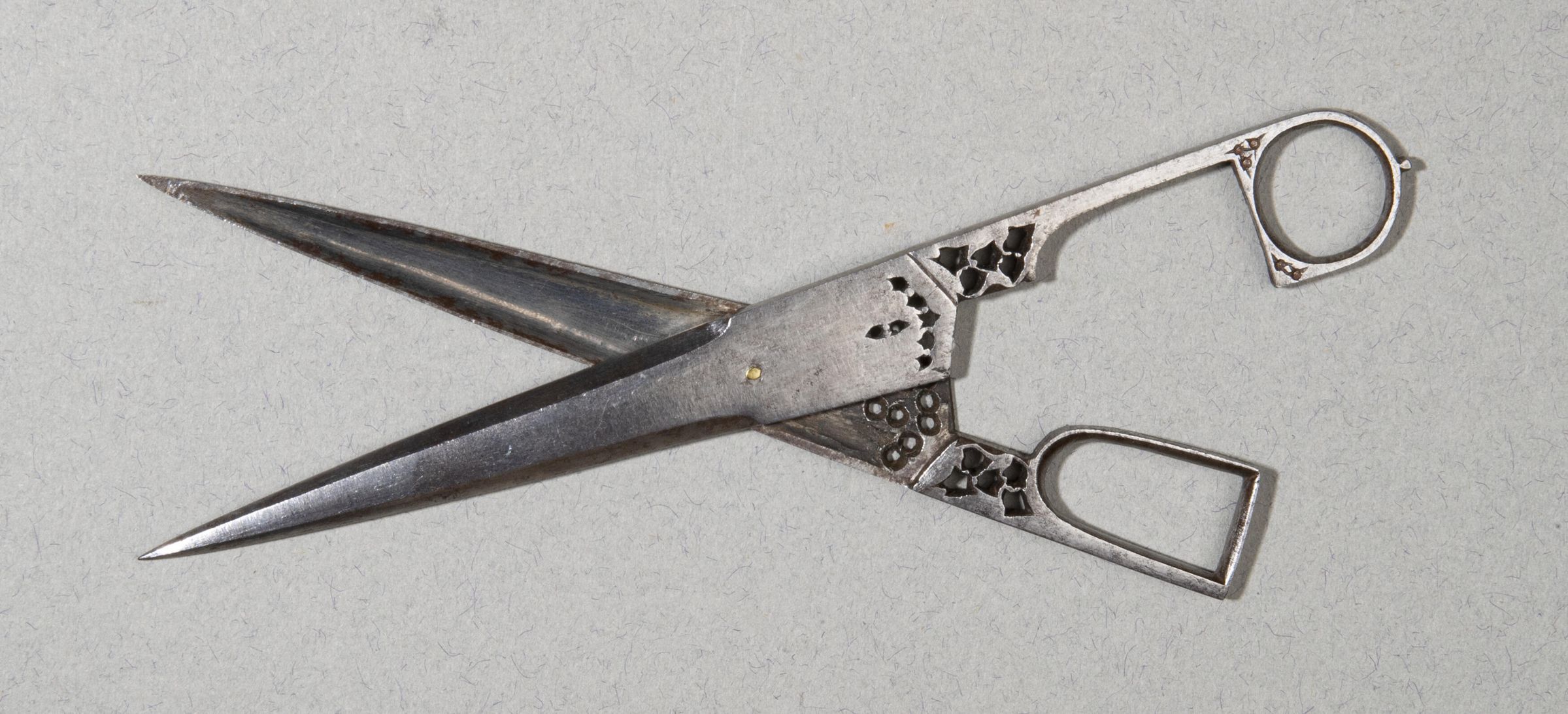
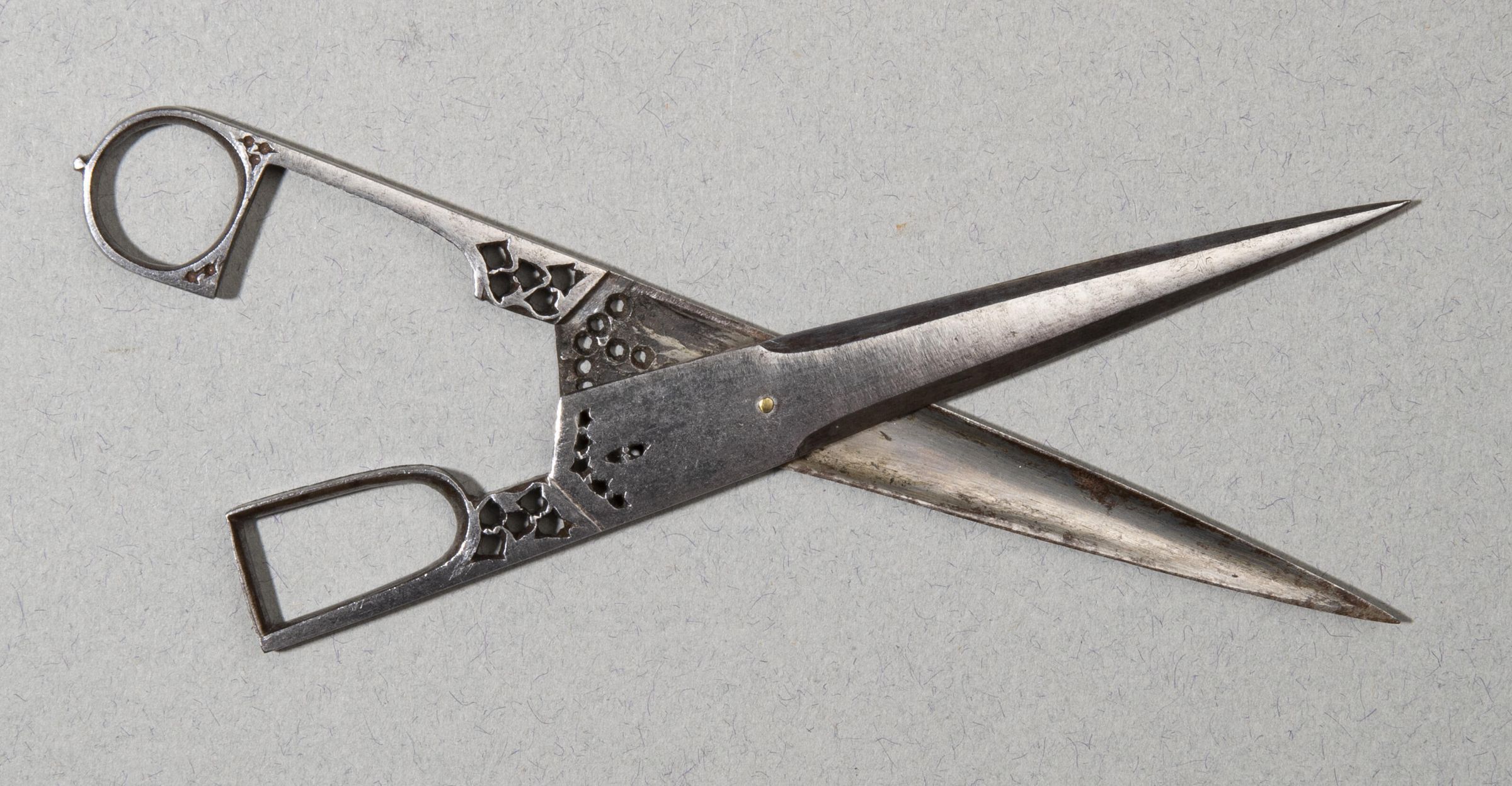
Ottoman Calligraphy Scissors (Makaṣ)
18th–19th Century, Steel
These specialized calligraphy scissors feature long, slender blades designed to converge into a seamless, tapered dagger shape when closed. The blades are characterized by a hollow-ground interior and a convex, "clam shell" cross-section, which minimizes surface contact with the paper—allowing for the incredibly sharp, snag-free cuts required to trim delicate handmade paper and reed pens (qalam).
Key Design Features:
Decorative Piercing: The shanks near the pivot are intricately decorated with openwork (pierced) floral and geometric motifs, a hallmark of master metalworkers in Istanbul.
Nested Bows: The handles are asymmetrical; one finger loop is designed to nest inside the other when closed, creating a flat, compact profile ideal for storage in a calligrapher’s portable tool set (divit).
Pivot Construction: A flush, brass-capped pivot provides smooth tension, ensuring the "bite" of the blades remains consistent through the length of the cut.
Based on the intricate openwork (piercing) visible on the shanks of these Ottoman scissors, the floral motifs belong to a sophisticated decorative system called Hatâyî. This style was the "visual language" of the Ottoman Imperial court workshops (Nakkaşhane).
The specific motifs in this piece include:
1. The Hatâyî (Stylized Lotus/Peony)
This is the primary motif in the pierced section. Unlike a naturalistic flower, the Hatâyî is a "bird’s-eye view" abstraction of a lotus or peony.
Identification: Look for the central, symmetrical heart of the flower with layered, curling petals.
Symbolism: Originating from "Cathay" (Central Asia/China), it represents the "Garden of Paradise" and was a mark of high-status imperial art.
2. Penç (Rosettes)
Interspersed within the scrolls, you will likely see smaller, circular flowers with five or six petals.
Identification: These are called Penç (from the Persian word for "five"). They represent a simplified, stylized wildflower.
Function: In metalwork piercing, these act as "anchors" or pivots for the scrolling vines, providing structural strength to the delicate steel.Collection
Cutlery Collection, ScissorsInscription/Signature/Marks
Other Names and Numbers
Other Numbers
Number Type
Cutlery Collection Record BookOther Number
CC548