Greg Lowe Cam Nut
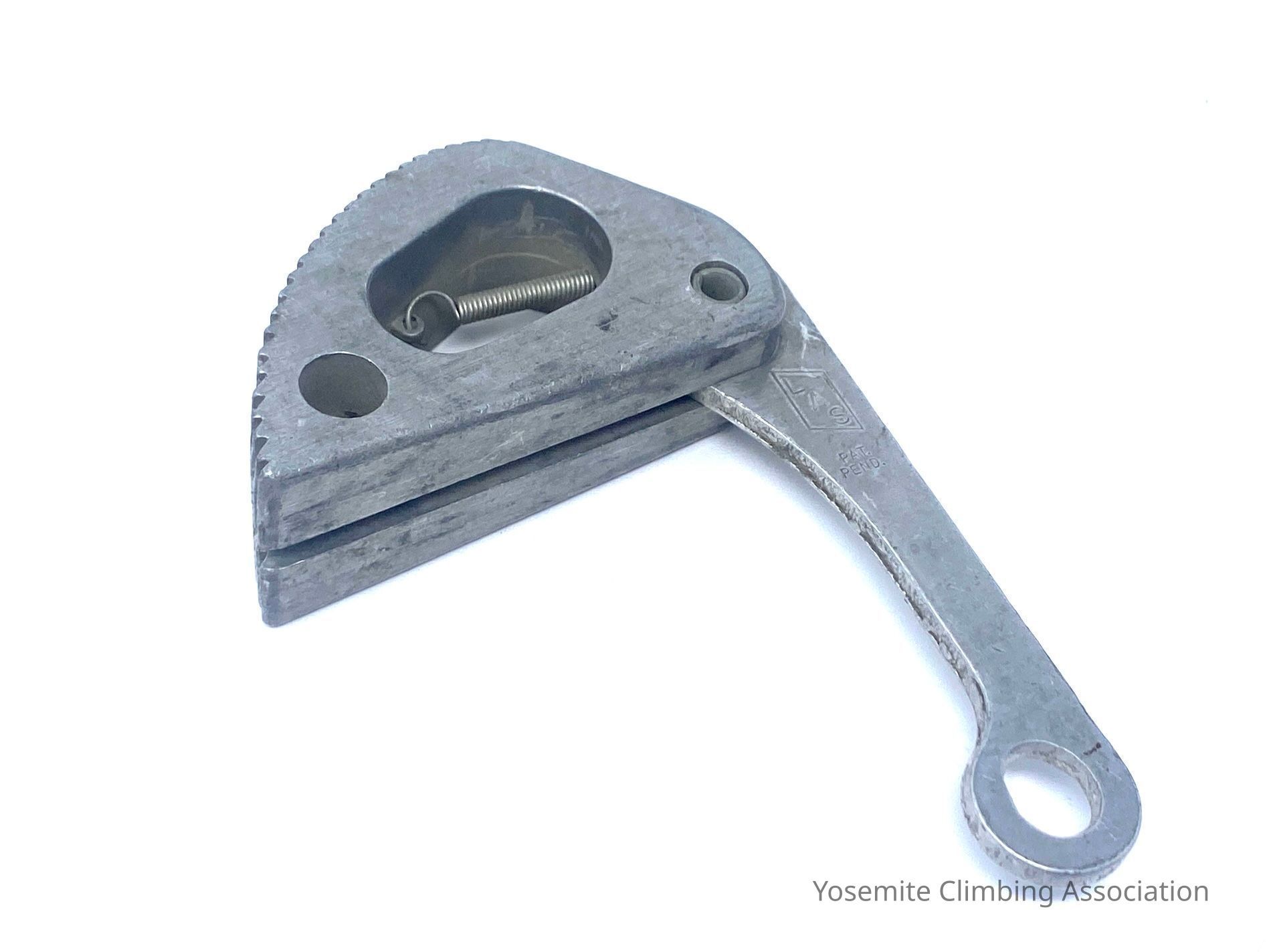
Greg Lowe Cam Nut that he called the Crack Jumar. It is the predecessor to the modern cam. Lowe started designing it in 1967 and in 1973 Lowe showed them to Ray Jardine. Jardine bought 3 of them to try out. He used them once on a climb and all 3 fell out of the crack.
Name/Title
Greg Lowe Cam NutEntry/Object ID
2026.1.133Description
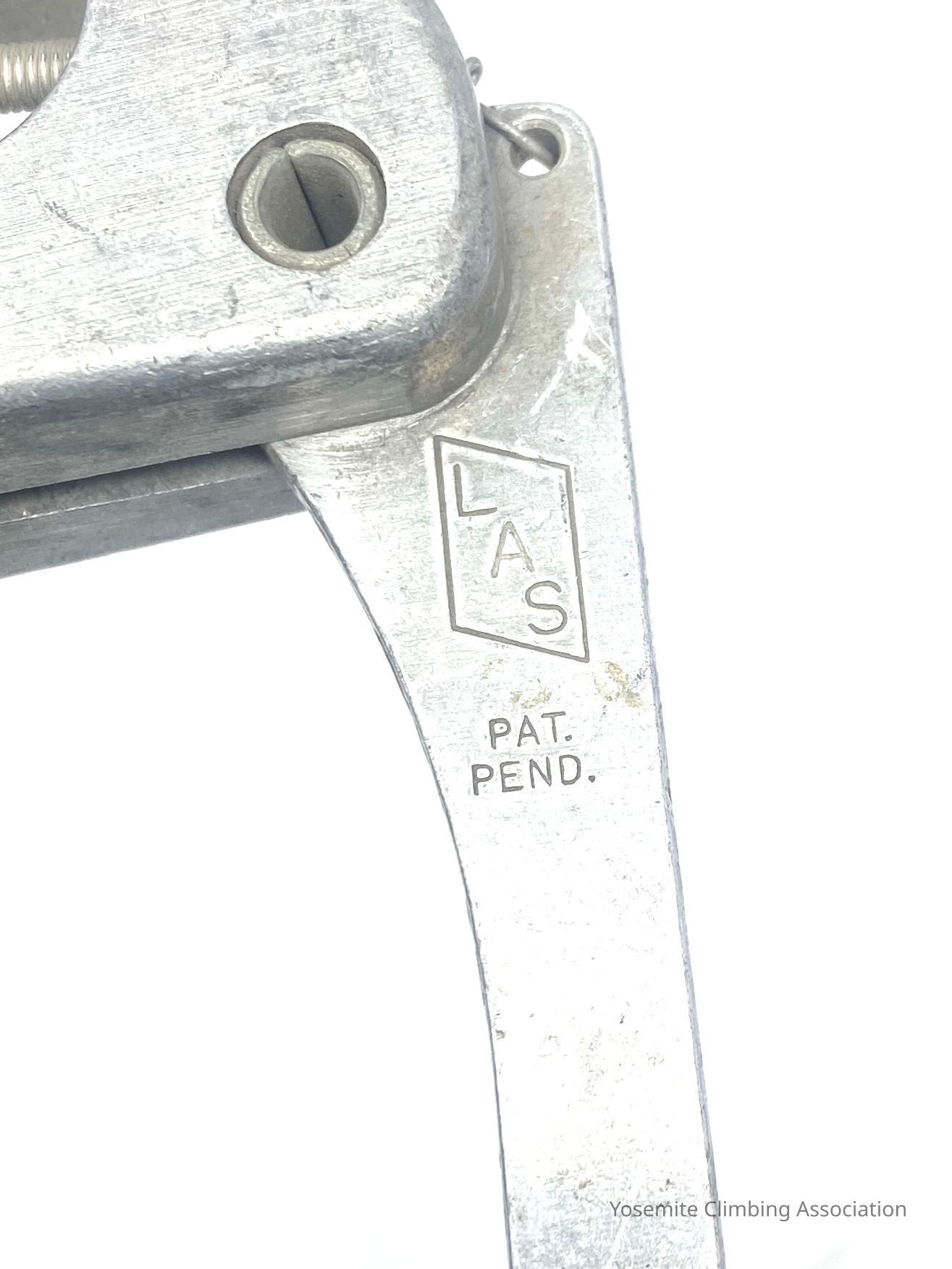
A 1973 prototype designed by Greg LoweUse
A spring-loaded cam designed to wedge in parallel cracksContext
Much of the early 1970s climbing gear did not work in parallel cracks. Nuts and hexes needed cracks that tapered to fit inside the angle. Greg Lowe made this design to fit inside parallel cracks. The devices could be placed in the cracks and expand inside when weighted. Unfortunately, the devices would fall out of the cracks as you continued to climb, leaving the climber unprotected. Greg Lowe showed his design to Ray Jardine in 1971 or 1972. An article from May 27, 2020 in Climbing Magazine states: "Jeff Lowe, posting on supertopo.com, writes, “I was there in ‘71 or ‘72 at my brother Mike’s house . . . Greg was over from Utah to work with Mike on the camming concept, which he’d been developing since 1967 . . . Greg and Mike showed Ray various versions of the Crack Jumar and passive and spring-loaded cams.” At the time, Greg and Mike Lowe asked Jardine to sign a non-disclosure/non-compete agreement. In his essay “The History of Friends . . . ,” Jardine wrote that in summer 1973, Mike Lowe sold him three Cam Nuts. (Jardine also wrote that, seeking protection that would “hold with greater—power the harder the pull,” he’d begun “the inventive process in 1971 with a dual sliding wedge design” that hadn’t panned out.)" Kris Walker, a former minority shareholder and full-time employee at Colorado’s Forrest Mountaineering, recalls that Jardine tested Lowe’s units in Eldorado Canyon, Colorado, but all three units walked out, leaving him to finish a lead unprotected. So, remembers Walker, “[Ray] came back to Forrest Mountaineering, and he said, ‘Can you guys build a cam device that works better than Lowe’s, because Lowe’s fell out of the crack?’”Collection
Yosemite Climbing Museum Permanent CollectionCategory
Climbing Hardware, Cams