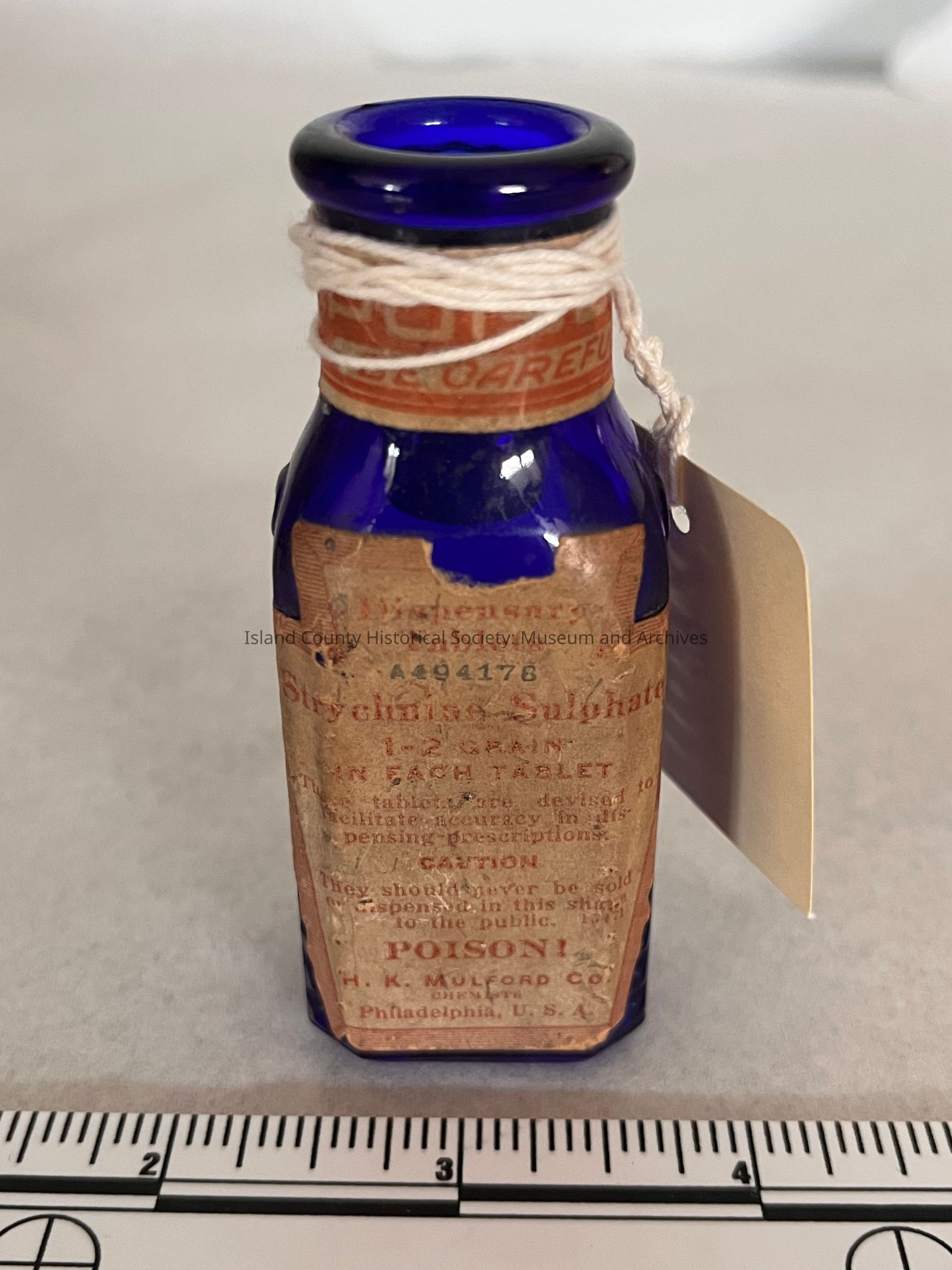
H.K. Mulford Co. Strychnine Sulphate bottle
Name/Title
H.K. Mulford Co. Strychnine Sulphate bottleEntry/Object ID
2026.FIC.011Description
Corked bottle of H.K. Mulford Co. Strychnine Sulphate bottle (1-2 Grain)Use
Despite the dangerous nature of the drug, reports of its therapeutic value have been described. Medicinal uses appear to be linked with its ability to induce muscle contraction: Paralysis: The most common use appears to be in patients with paralysed or palsied limbs. The strychnine was mixed with a tiny quantity of dilute sulphuric acid and up to fifty parts glycerin before being rubbed over the limb(s) or down the spinal cord. This would heighten the sensitivity of the nerves to stimulation. Visual Disturbances: In its liquid form, strychnine was used as eye drops to produce contraction of the pupil and induce muscle accommodation. In patients with loss of vision, it was injected directly into the eye to induce muscle contraction. There is a record to suggest that strychnine could be used in patients with irritable nervous systems. Few details are given although it suggested that the starting dose should be one twenty-fourth of a grain. This could be increased to one-sixteenth or one-twelfth of a grain until the desirable effects were observed. Other: Mention has been made of it being used in patients with rectal prolapse (as an injection). This was presumably to hold the rectum in place and prevent protrusion.Category
Apothecary/Medicine