Name/Title
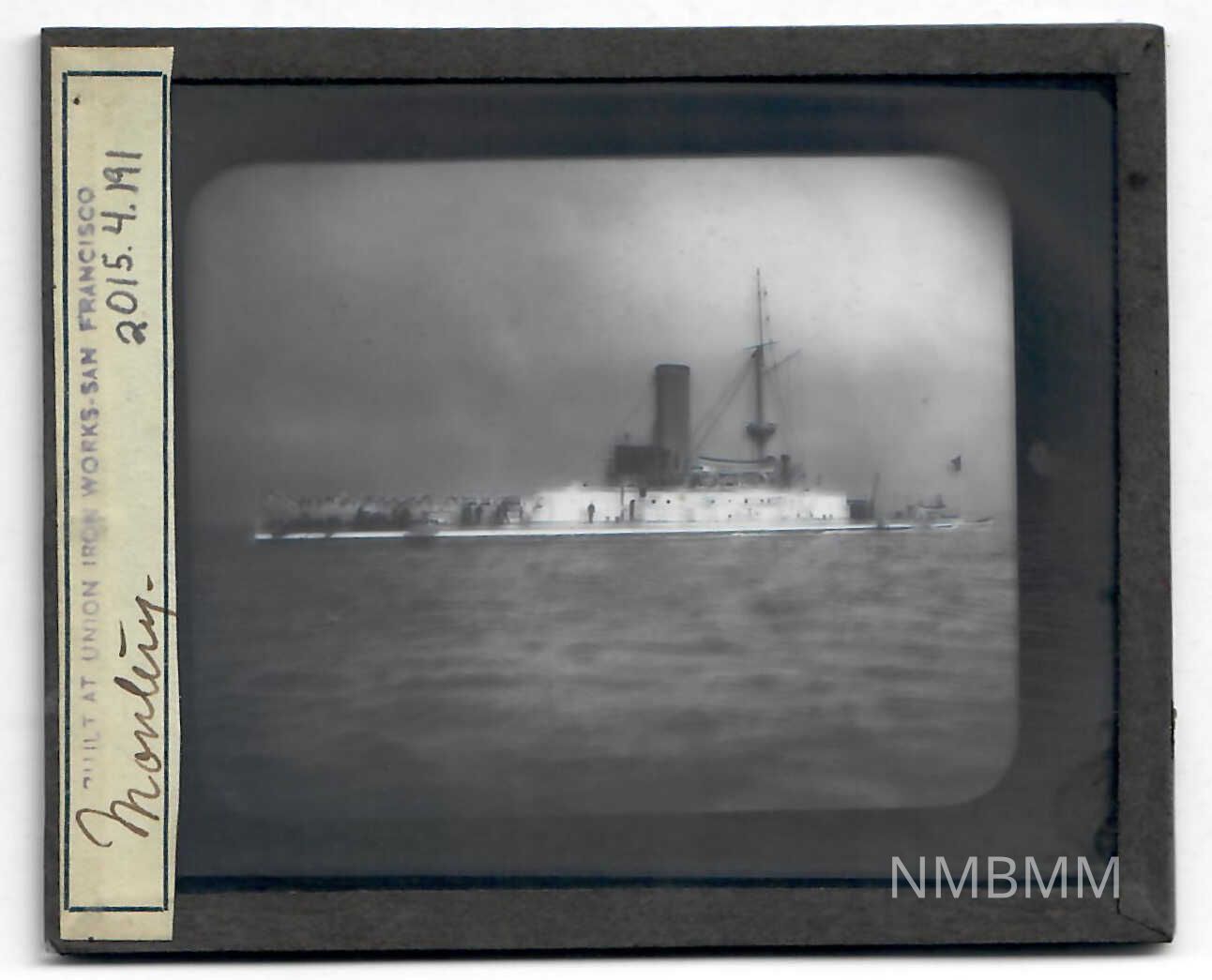
U.S.S. Monterey Built at Union Iron Works San FranciscoEntry/Object ID
2015.4.191Description
Sepia-toned photographic glass lantern slide of the U.S.S. Monterey, built by the Union Iron Works in San Francisco, CA. According to the United States Navy, this is the second ship to be so named. It was Monitor No. 6, which was commissioned in 1893, serving in the Spanish-American War and the Philippine Insurrection.
The backof the slide Includes the maker's mark on the left frame, and the text "Optical Projection-Slides-Lecture Bureau" on the right frame.
The lantern slide has its origins in 17th century optical viewing devices which came to be known as “magic lanterns.” The earliest slides for magic lanterns consisted of hand-painted images on glass, projected by itinerant showmen telling stories about the images that were projected.
They can be recognized by the simple paint areas applied with a brush and the obvious brush strokes.
By the difficult term Decalcomania we describe the technique of transferring pictures from specially prepared paper to surfaces such as glass, china, pottery etc. In the world of magic lanterns we specifically mean the application of this process while making a lantern slide by transferring an image to a square or oblong piece of glass. The technique was used by professional slide makers, but enjoyed a vogue among amateurs too. Images were printed in colors by the chromo-litho principle, and then transfered to glass. Porous paper was coated with a solution of starch, albumen and glycerin. The colored pictures were printed, details first, background last, and then finished by a coat of glue.
http://www.magiclanternsociety.org/about-magic-lanterns/lantern-slides/Collection
ScarmuzziAcquisition
Accession
2015.4.0Source or Donor
Patricia A. ScarmuzziAcquisition Method
Gift