Gaza Dress, Thobe (Early and Mid 20th Century)
Overview
Description
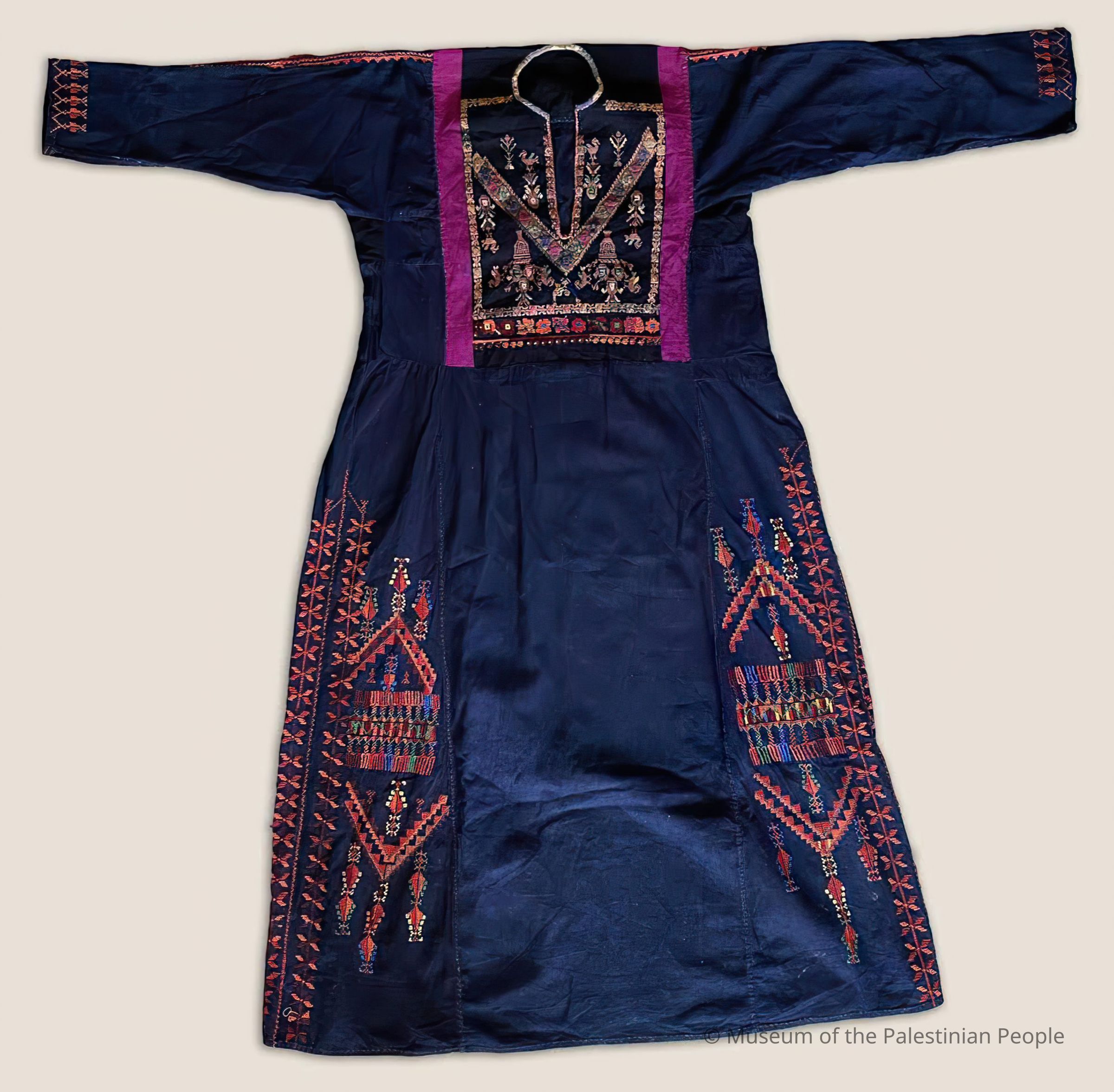
The traditional dresses of the historic Gaza region are recognized by the colorful striped fabrics woven in al-Majdal. Once a thriving center of Palestinian weaving and dressmaking, al-Majdal was ethnically cleansed between 1947 and 1950. The city's fabrics were woven in narrow strips measuring approximately 33 centimeters wide and 7 meters long. Each fabric carried a distinct name, often associated with the family that produced it. The chest panel of this dress is made from a fabric known as jiljileh. It is woven with black and a bright violet-red stripes. The intensity of the color suggests the fabric was likely woven during the 1970s, after displaced weavers from al-Majdal rebuilt their looms following the June 1967 War and began incorporating brighter synthetic colors into their fabrics. The embroidery tells a different story. The skirt appears to have been embroidered earlier than the chest panel, reflecting the longstanding Palestinian practice of preserving and reusing valued embroidery across generations. Worked in silk thread, the skirt follows the embroidery traditions of Gaza City and the southern coastal plain. The gathered waist is cut generously and may have been intended to accommodate the different stages of a woman's life, including pregnancy and later years. Only a small amount of al-Majdal fabric appears in the chest panel, reflecting the increasing scarcity of these handwoven textiles after 1948. Several flowerpots in the chest panel are embroidered upside down. Whether this was an intentional decision by the embroiderer or simply a variation in the design is unknown.Collection
Permanent CollectionCataloged By
Wafa GhnaimCategory
Ethnographic Collection