Untitled (circa 1990s)
Name/Title
Untitled (circa 1990s)Entry/Object ID
2022.156Tags
On ViewDescription
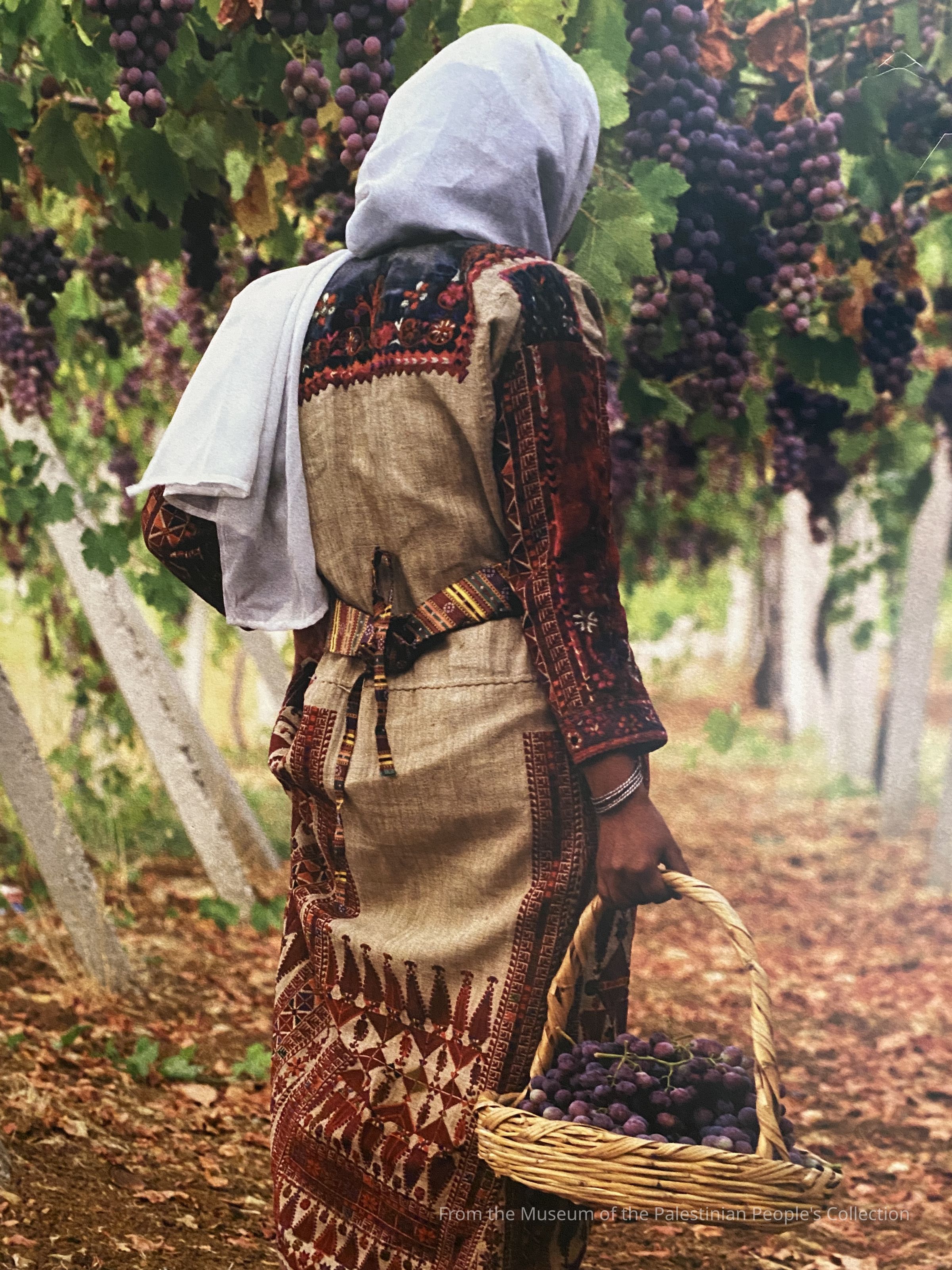
This photograph depicts the back of a Palestinian woman wearing an early twentieth-century traditional dress (thobe) while walking through a vineyard. The dress is regionally consistent with the dress traditions of Beit Dajan. Known as a naʿānī dress, this style takes its name from the village of Al-Naʿānī in the Yaffa region. The back panel of the dress, known in Arabic as the shinyār, is often considered the dressmaker's signature space, where the most accomplished embroidery techniques and stitches are displayed. The headdress and belt, however, reflect contemporary styling rather than historically documented Palestinian dress practices. The dress is constructed from locally woven linen and embroidered with pearl cotton thread; likely embroidered between the 1920s and 1930s. The photograph appears to have been taken during Lily Bandak's visit to the Hashemite Kingdom of Jordan in 1995, as a guest of the Hashemite Royal Family. This photograph is part of a set, also untitled, that includes a companion image depicting the woman from the front while picking grapes (object no. 2022.157), also shown in the gallery. Authored by Wafa GhnaimPhotograph Details
Subject Place
Village
Continent
Collection
Permanent CollectionCataloged By
Wafa GhnaimCategory
Photographs